
On 3 December, we made a submission in response to the UK government’s economic and finance ministry’s call for information on digital currencies.
In an effort to make Britain the global centre of financial innovation, the HM Treasury’s consultation focussed the function of digital currencies as a payment method, rather than as a speculative investment. As published on their website, the call for information is led by their desire to promote innovation and competition in the banking sector, learn more about digital currencies and hear the public’s views on regulation.
As suggested, our submission responded to the 13 questions posed by the HM Treasury around benefits, risks and regulation of digital currencies. Here are some excerpts:
- Some of the benefits of digital currencies are felt at a functional, use-case level: the speed, efficiency, and flexibility of transactions. These are dependent on efficient gateways, reasonable tax treatment, and market depth. Some benefits are felt at a more systemic level, the resilience and transparency of a public secured ledger, and these are only meaningful if the currency is being used.
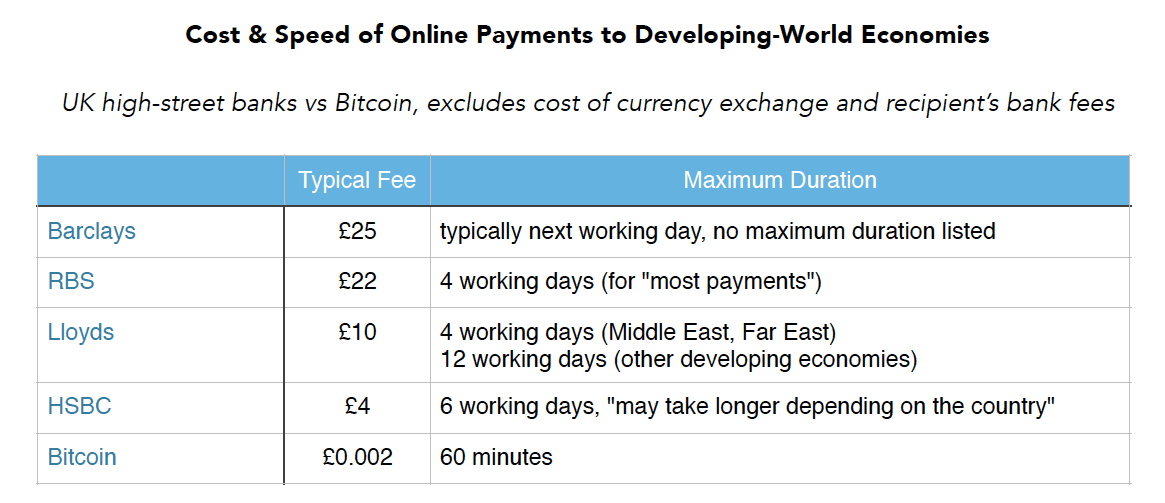
- Bitcoin poses a huge challenge to international financial products which have remained stubbornly uncompetitive, most notably remittances, as well as basic banking for underbanked populations in both developing and developed economies.
- The biggest boon policymakers could give to the industry would be to find a way to give the industry access to banking services. The largest barrier to business in the UK is the blanket refusal of British banks to provide banking services to companies like ours.
- Most user risks of digital currencies are comparable to the risks inherent in storing national currencies in an online bank account. Digital currencies do not offer an effective channel for money laundering or terrorist financing, given the permanent digital trail transactions leave in the public ledger.
“In communities such as Bitcoin these risks are actively tackled by researchers, developers, bounty hunters and ‘white hat’ hackers who endeavour to educate users, fix code vulnerabilities and document incidents of fraud and theft. In this sense the community, like any open source community, is already self-policing.”
- For most digital currencies, it is effectively impossible to regulate the protocol that underlies the technology. The possible unintended consequence of this is that it could saddle early-stage technology companies with legal and regulatory costs that render them uncompetitive. Regulators should instead work with community players to ensure that the currency’s infrastructure is being responsibly managed and used.
If you have a moment, read the submission in full here. In November, we also made a submission to the Australian Senate, which can be found here.
Thank you for your support as we expand internationally to offer you a better global service.
CoinJar Australia Pty Ltd ACN 648 570 807 is a registered Virtual Asset Service Provider (VASP) with the Australian Transaction Reports and Analysis Centre (AUSTRAC) in accordance with the Anti-Money Laundering and Counter-Terrorism Financing Act 2006 (Cth).
This material is general information only and does not consider your objectives, financial situation or needs. You should consider the Product Disclosure Statement and Target Market Determination (TMD) relating to the CoinJar Card product before making any decision. The CoinJar Card is a prepaid, reloadable Mastercard issued by EML Payment Solutions Limited ABN 30 131 436 532 AFSL 404131 (EML). CoinJar Australia Pty Ltd ABN 75 648 570 807 (Authorised Representative Number 1290193) is involved in the promotion and distribution of the Card and is a Corporate Authorised Representative of EML. Please consider the Financial Services Guide.
Apple Pay is a trademark of Apple Inc., registered in the U.S. and other countries. Google Pay is a trademark of Google LLC. Mastercard and the circles design are registered trademarks of Mastercard International Incorporated.
This site is protected by reCAPTCHA and the Google Privacy Policy and Terms of Service apply.