
Buy Litecoin
LTCPast performance is not indicative of future results. All prices are sourced from CoinJar Indices.
What is Litecoin?
Litecoin (LTC) is a cryptocurrency built for fast, low cost payments. It launched on October 7, 2011, and was created by Charlie Lee, a computer scientist who later worked as an engineer at Google and Coinbase. Litecoin runs on its own public blockchain, built from Bitcoin's open source code with different settings: a new block roughly every 2.5 minutes instead of every 10, and a maximum supply of 84 million LTC instead of 21 million.
That design is why Litecoin is often called the silver to Bitcoin's gold. It shares Bitcoin's core rules, including a fixed supply and no central issuer, but it is tuned for moving value quickly and cheaply rather than for settling large amounts.
How does Litecoin work?
Litecoin is secured by proof of work. Miners compete to solve a cryptographic puzzle using the Scrypt hashing algorithm, and the winner adds the next block of transactions to the chain. Anyone can run a Litecoin node, verify the ledger and check the rules for themselves. The software is maintained as an open source project rather than by a company. You can read the protocol documentation at litecoin.org.
Two practical consequences follow from that design:
- Faster confirmations. With a 2.5 minute target block time, a Litecoin transaction typically receives its first confirmation about four times faster than an equivalent Bitcoin transaction.
- Low fees. Litecoin blocks have historically had spare capacity, so network fees have usually been a fraction of a cent, although they can rise when the network is busy.
Litecoin is also merge mined with Dogecoin, which means miners can secure both networks with the same Scrypt work. This adds hashing power to Litecoin without changing its supply schedule.
What is Litecoin used for?
Litecoin is mainly used as a payment and transfer asset. Its three most common uses are:
- Spending with merchants. Payment processors such as BitPay let US customers spend Litecoin with participating merchants and purchase gift cards using LTC.
- Sending value across borders. Litecoin fees are based on the size of a transaction in data, not the dollar amount being sent, so a small transfer and a large one usually cost about the same.
- Moving between platforms. Traders use Litecoin as a low cost way to move value between exchanges and wallets when Bitcoin network fees are high.
Litecoin has also served as a proving ground for Bitcoin technology. It activated Segregated Witness in May 2017, ahead of Bitcoin, and became compatible with the Lightning Network in 2018.
Litecoin vs Bitcoin: what is the difference?
| Litecoin | Bitcoin | |
|---|---|---|
| Launched | October 2011 | January 2009 |
| Maximum supply | 84,000,000 LTC | 21,000,000 BTC |
| Target block time | 2.5 minutes | 10 minutes |
| Mining algorithm | Scrypt | SHA-256 |
| Supply halving | Every 840,000 blocks | Every 210,000 blocks |
| Optional privacy layer | Yes, MWEB | No |
| Typical role | Payments and transfers | Store of value and settlement |
The two networks are close relatives rather than competitors in the technical sense. Litecoin adopts a similar monetary design with parameters weighted toward everyday transactions. If you are new to proof of work networks, our guide to what Bitcoin is covers the shared foundations in more detail.
How is new Litecoin created, and what is the halving?
Litecoin has a fixed maximum supply of 84 million LTC, and new coins enter circulation only as mining rewards. That reward is cut in half every 840,000 blocks, which works out to approximately every four years.
The reward started at 50 LTC per block. The August 2023 halving at block 2,520,000 reduced it from 12.5 to 6.25 LTC. Halvings continue until the reward reaches zero, at which point miners are paid from transaction fees alone. Because the schedule is written into the protocol and measured in blocks rather than dates, the issuance rate is predictable and cannot be changed by any single participant. A falling issuance rate does not guarantee a rising price. Our explainer on the Bitcoin halving event describes how the same mechanism works on Bitcoin.
What is MWEB on Litecoin?
MWEB, short for MimbleWimble Extension Blocks, is an optional privacy layer that activated on Litecoin in May 2022. Transactions inside MWEB hide the amounts being sent, which improves fungibility, meaning one LTC is harder to distinguish from another based on its history.
Two points matter in practice. MWEB is opt in, so ordinary Litecoin transactions remain transparent on the public blockchain unless you deliberately move coins into it. Support is not universal: several exchanges and some jurisdictions restrict MWEB deposits and withdrawals for anti-money laundering reasons, so check the policy of any platform or wallet before using it. The technical specification is published as Litecoin Improvement Proposal 0003.
Litecoin on CoinJar in the US
CoinJar has operated since 2013 and lists Litecoin against US dollars, so you can buy, sell and hold LTC without first converting to another cryptocurrency. Converting between US dollars and cryptocurrency on CoinJar costs 1%. ACH purchases cost 1%, while Fedwire deposits cost $10. If you trade on the order book instead, CoinJar Exchange fees start at 0.10% for USD pairs and fall as your 30 day volume grows. Current charges are listed on our fees page, and you can see live US dollar rates on our cryptocurrency prices page.
Recurring Buy can automate Litecoin purchases weekly, biweekly or monthly. Litecoin also appears alongside other assets in our supported cryptocurrency list.
Litecoin held with CoinJar is kept within our custody infrastructure, which uses multisignature and multiparty computation technology so no single party can move assets on its own. You can read more about our controls on the CoinJar security page. You can also withdraw LTC to a compatible wallet you control.
CoinJar, Inc. is registered with FinCEN as a money services business, NMLS ID 2492913, and holds money transmitter licenses in a growing number of states. Registration and licensing are legal requirements, not government endorsement of CoinJar or Litecoin. Availability varies by location, so check whether CoinJar operates in your state.
What should US customers consider before buying Litecoin?
Litecoin is a volatile asset and has experienced several deep price declines across its history. Consider the following before you buy:
- Price risk. Litecoin's value can fall sharply and quickly, and past performance does not predict future returns.
- Competition. Other networks also target fast, inexpensive payments, including Bitcoin's Lightning Network and various stablecoin payment systems. Litecoin operates in a competitive market.
- Regulatory friction around MWEB. Privacy features have led some overseas exchanges to restrict or delist Litecoin, which can affect liquidity and access in those markets.
- No FDIC or SIPC protection. Litecoin held through a cryptocurrency exchange is not a bank deposit and is not insured by the Federal Deposit Insurance Corporation. It is also not protected by the Securities Investor Protection Corporation.
How is Litecoin taxed in the United States?
The IRS generally treats Litecoin as property for federal tax purposes. A taxable event can occur when you sell it for US dollars, exchange it for another cryptoasset or spend it on goods or services. A genuine gift is generally treated differently and does not usually create an income tax gain or loss for the giver, although separate gift tax reporting rules may apply.
The IRS explains these rules on its official digital assets page. CoinJar does not currently have a US-specific cryptocurrency tax guide to link here. This is general information, not tax advice. Consider speaking to a qualified tax professional about your circumstances.
Bank transfer (ACH and wire), or crypto?
Buy Litecoin instantly with your bank account via ACH or deposit with wire transfer. Easily buy with ACH, wire cash to your account, or swap one cryptocurrency for another in a single click.


How to buy Litecoin with CoinJar
Start your cryptocurrency portfolio with CoinJar by following these simple steps.
Download the app
Get the CoinJar app on iOS or Android.
Create an account
Sign up and verify your ID – it only takes a couple of minutes.
Make a purchase
Buy Litecoin and more than 60 other cryptos using ACH or wire transfer.
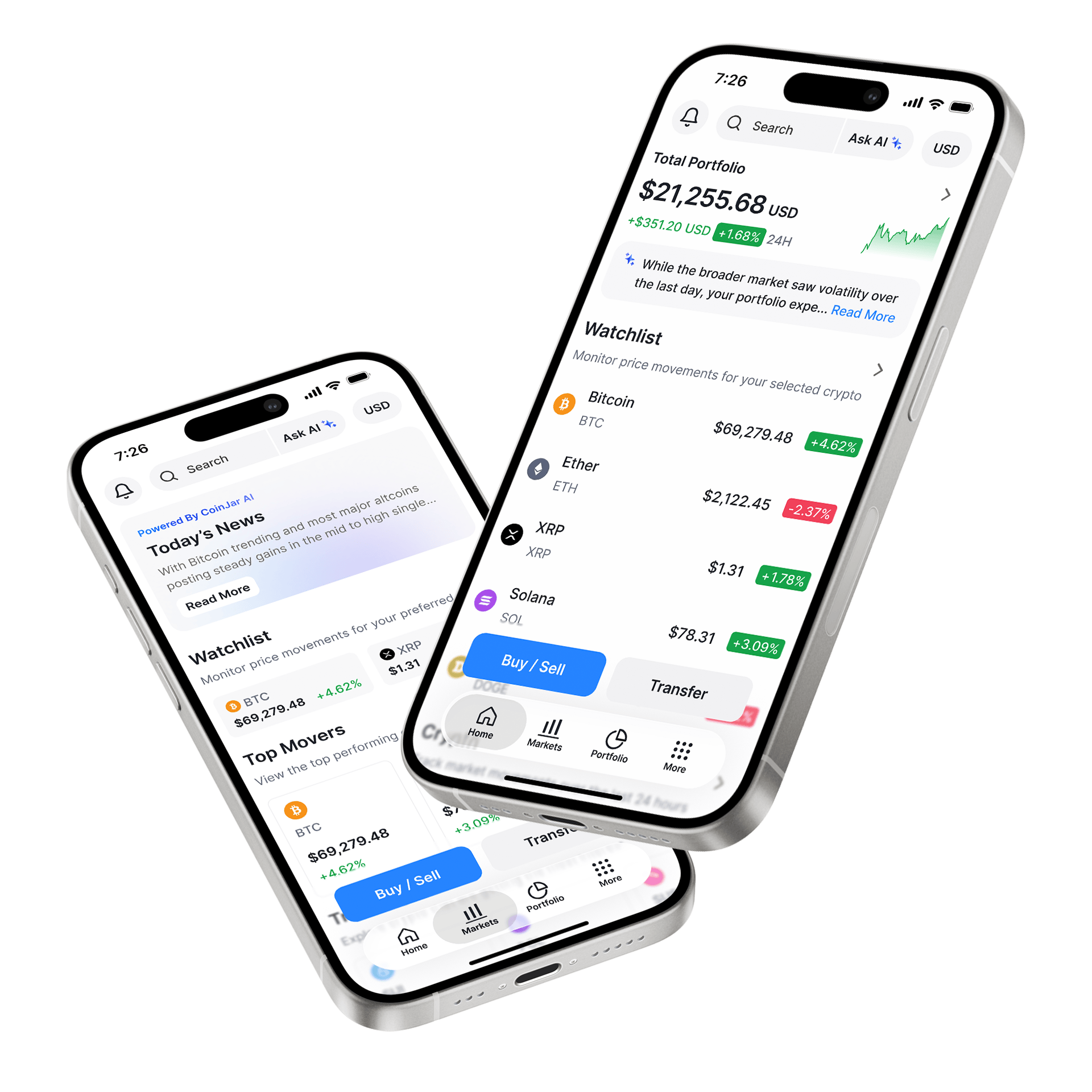
CoinJar App
Buy, sell and send your crypto with the favorite cryptocurrency app in the US.
Get the CoinJar appCoinJar App
Buy, sell and send your crypto with the favorite cryptocurrency app in the US.
Get the CoinJar app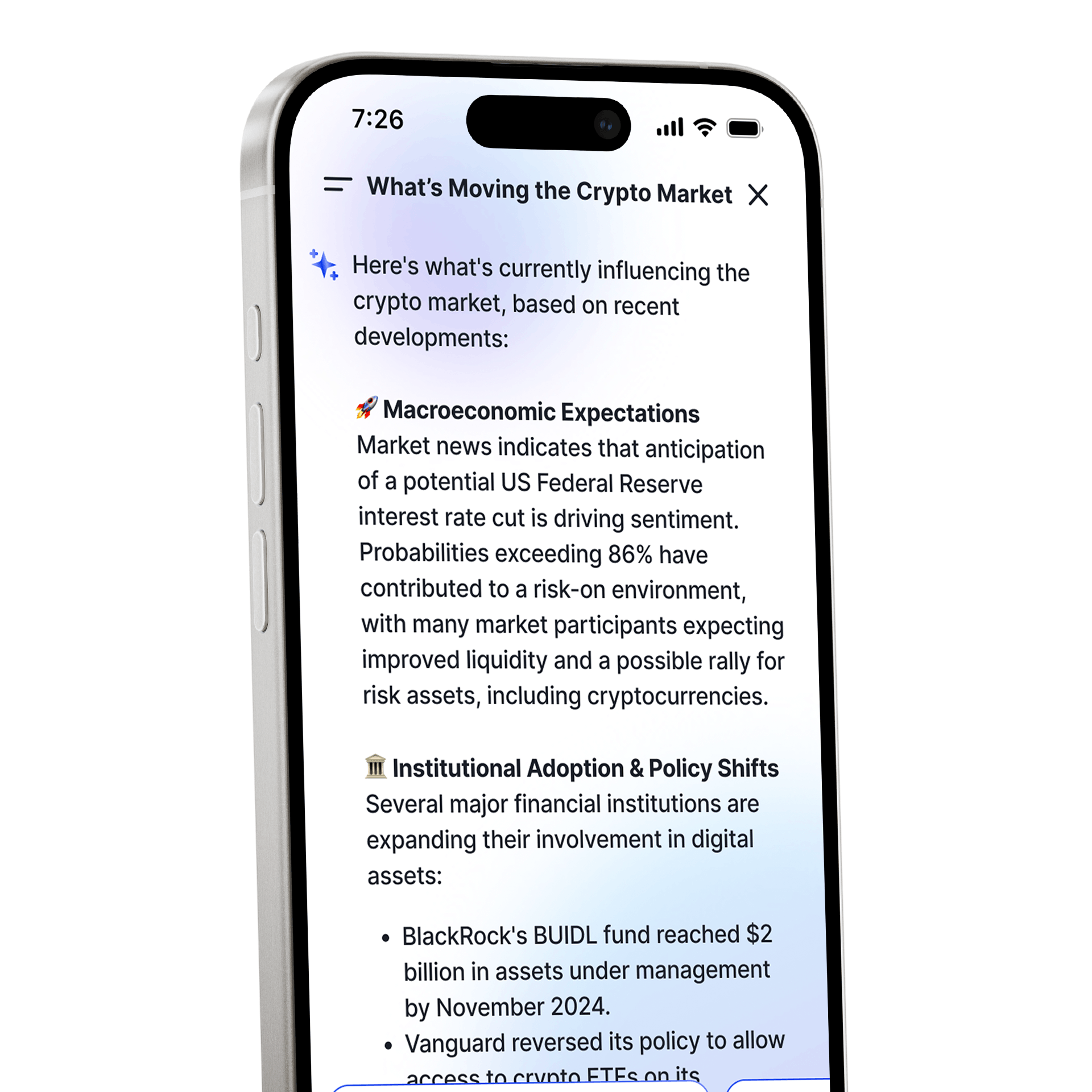
CoinJar AI
CoinJar AI understands your portfolio, tracks the market, and gives you insights that matter. Instead of searching for answers, simply ask a question to get the specific information you need.
Learn moreCoinJar AI
CoinJar AI understands your portfolio, tracks the market, and gives you insights that matter. Instead of searching for answers, simply ask a question to get the specific information you need.
Learn moreBuying, selling, and holding cryptocurrencies is subject to high market risk. The volatile and unpredictable nature of the price of cryptocurrencies may result in a significant loss. CoinJar, inc. is not responsible for any loss that you may incur from price fluctuations when you buy, sell, or hold cryptocurrencies. CoinJar, Inc. does not provide any investment, tax or legal advice; before making the decision to buy, sell or hold any cryptocurrencies, you should conduct your own due diligence and consult your financial, tax and/or legal advisor.
It is your responsibility to determine whether any investment, investment strategy or related transaction is appropriate for you according to your personal investment objectives, financial circumstances, and risk tolerance. Enter into a transaction only if you fully understand its nature, the contractual relationship into which you are entering, all relevant terms and conditions, and the nature and extent of your exposure to loss. Past performance is not a reliable indicator of future results. Geographic restrictions may apply. CoinJar does not endorse the content of, and cannot guarantee or verify the safety of any third party websites. Visit these websites at your own risk.

CoinJar
Get the app.