
Buy Band
BANDPast performance is not indicative of future results. All prices are sourced from CoinJar Indices.
What is Band?
Band Protocol, now branded simply as Band, is a decentralised oracle network. It collects information from outside blockchains, such as asset prices, combines reports from multiple sources and delivers a result that smart contracts can use.
BAND is the native asset of BandChain, the dedicated blockchain that coordinates this work. Validators stake it, delegators use it to support validators, governance uses it for voting and some oracle delivery costs are paid with it. An ordinary person using a lending app powered by Band usually does not need to own BAND. Our guide to blockchain explains the systems Band supplies with data, and our guide to decentralised finance covers the applications that depend on oracles.
Where did Band Protocol come from?
Band Protocol was founded by Soravis Srinawakoon, Sorawit Suriyakarn and Paul Nattapatsiri. The project began in 2017, launched its first token through Binance Launchpad in 2019 and moved to its own Cosmos-based BandChain in 2020.
The original token existed on Ethereum and BNB Beacon Chain. Native BAND was later created for BandChain because validator staking and governance require a coin that the chain itself can account for.
In August 2025 the project shortened its brand from Band Protocol to Band. The team said the BAND token, existing integrations and long-term support remained unchanged. There was no token swap, redenomination or new ticker, and holders did not need to take action.
Why do blockchains need Band?
A blockchain can confirm what happened inside its own ledger, but it cannot directly know the market price of an asset, the result of a sporting event or the value returned by a web application programming interface.
An oracle transports that information. Band does this through several components.
Data sources. Instructions tell node software where and how to obtain information from an external source. Oracle or data scripts. Logic defines how reports should be requested, checked and combined. Validators. BandChain validators fetch and report data while also producing blocks for the network. Aggregation. The protocol combines validator reports to produce one result rather than trusting a single website or operator. Delivery. The result is sent to another blockchain through IBC, a relay, a data tunnel or another supported route.
This design reduces dependence on one source but does not turn data into objective truth. If several sources share the same error, markets are manipulated or an integration requests the wrong symbol, the aggregated result can still be wrong.
What changed with Band v3?
Band v3 is the current BandChain architecture. It went live on mainnet in 2025 after staged test networks and a validator upgrade.
Earlier BandChain versions focused heavily on applications making individual oracle requests. V3 adds continuous price streams: validators repeatedly collect selected market prices, aggregate them and make the latest result available for delivery to other chains.
Signalling Hub. Staked BAND helps signal which assets should receive price feeds. Concurrent Price Streams. Validators collect and process many price reports in parallel rather than waiting for one request at a time. Data Tunnels. A tunnel delivers aggregated prices to a destination chain according to time or price-change conditions. Its creator funds the cost of delivery. Threshold signatures. A group of validators can collectively sign data for efficient verification on another chain. IBC and external routes. Cosmos chains can communicate through IBC, while EVM and other networks may use supported relayers or interoperability providers.
The Band v3 mainnet announcement describes the upgrade as live. Some delivery routes and integrations remain specific to particular networks, so it would be wrong to assume every v3 feed is available everywhere.
Are older Band feeds still used?
Yes. An upgraded BandChain does not instantly replace every contract already deployed on other networks.
The Standard Dataset and reference contracts remain part of many integrations. A smart contract can read the latest reference value already delivered to its network, while a newer v3 tunnel can push updates according to configured conditions.
Legacy documentation also covers custom oracle scripts and Band's verifiable randomness service. Those products still explain parts of the system, but v3's main emphasis is high-frequency price feeds.
Laozi was the name of the previous major BandChain generation. V3 supersedes it at the chain level, but old destination contracts and integration patterns may continue until each application migrates. Users should assess the exact feed and contract an application consumes rather than relying only on the phrase “powered by Band”.
What does BAND do?
Staking. Validators bond native BAND to participate in consensus and oracle reporting. Holders can delegate to a validator instead of running one themselves.
Governance. Staked BAND is used to vote on software upgrades, parameter changes, spending and other BandChain proposals.
Transaction fees. Activity on BandChain uses native BAND for network fees.
Oracle delivery. Data requests and tunnels can involve BAND-funded costs paid to the network and participants delivering the information.
Feed signalling. The v3 design uses staked voting power to express demand for supported price symbols.
End users do not normally pay BAND simply to use an application that reads a Band feed. The application, data-tunnel creator or integration provider handles the oracle and delivery costs. Product usage and retail token demand are therefore connected indirectly.
How staking and inflation work
BandChain uses delegated proof of stake. Validators run the chain and oracle software, while delegators assign BAND to them and share rewards after the validator's commission.
BAND is inflationary and has no fixed maximum supply. The chain adjusts issuance according to how much of the supply is staked, historically within an annual range of 7 to 20 per cent and around a target bonded ratio. These are protocol parameters rather than promises and can be changed through governance.
Delegation carries several risks.
Unbonding takes time. Native BandChain staking uses a waiting period before tokens become transferable again. During that period they cannot be sold immediately. Validator commission. Each validator keeps a percentage of rewards and can change its rate within chain rules. Slashing. Downtime or conflicting signatures can penalise the validator and the people delegating to it. Inflation is not profit by itself. Rewards paid through new issuance can be offset by dilution and a falling token price.
Staking an ERC-20 version of BAND is not the same as delegating native BAND on BandChain. Conversion or bridging is required before the chain can recognise it as stake.
Who controls Band?
BandChain governance is onchain. Validators and delegators vote on proposals, including network upgrades and parameter changes. Delegators can override the vote cast by their validator with their own choice.
The 2025 v3 upgrade and subsequent 2026 software proposals show that this process remains active. Validators still have to install approved software, and enough voting power must adopt an upgrade for the chain to continue coherently.
The Band Foundation and core development team write much of the software, maintain documentation, pursue integrations and propose roadmap changes. Token voting does not operate the company's website or force another blockchain to integrate a feed.
Data control is also shared. Band's network aggregates reports, but applications choose which feed, symbol, update interval and fallback logic to trust. A protocol integrating Band remains responsible for how it uses the answer.
Supply and token history
The original launch described a supply of 100 million BAND. That figure was an initial supply, not a permanent cap.
Ongoing BandChain inflation increases the total. New issuance is intended to reward validators and delegators, encourage enough tokens to be bonded and fund network security.
BAND has existed in several technical forms:
Native BandChain BAND. The coin used for staking, governance and chain fees. Ethereum ERC-20 BAND. A token representation widely supported by trading platforms and wallets. Legacy BNB Beacon Chain BAND. An early version associated with the project's Binance Launchpad period. BNB Beacon Chain has since been retired, making old transfer instructions particularly dangerous.
Conversion routes can change. A shared ticker does not make the forms interchangeable, and an exchange may support only one.
Security and oracle risk
I found no publicly documented Band Protocol exploit causing a material direct loss of protocol funds between 2024 and August 2026 in the sources reviewed for this page. The v3 transition required coordinated chain upgrades, but it was not a replacement token or a reported theft event.
That record does not make an oracle safe by default. The main risks include:
Bad source data. An exchange application programming interface can fail, report stale values or be manipulated. Validator errors. Node software can use incorrect configuration, miss updates or report outliers. Delivery failure. A tunnel, relayer or destination contract can stop updating even when BandChain itself is operating. Integration mistakes. A lending protocol can read the wrong decimals, accept stale data or set unsafe liquidation rules. Consensus concentration. If enough voting power coordinates dishonestly, it can affect chain consensus and reported data.
An application should use freshness checks, circuit breakers and multiple sources. Band supplies data; it does not control every financial decision made from that data.
Regulatory position
I found no current enforcement action naming Band or BAND as the issuer of an unlawful asset in the sources reviewed for this page.
BAND was not among the crypto assets named as digital commodities in the joint interpretation published by the United States Securities and Exchange Commission and Commodity Futures Trading Commission on 17 March 2026. That is not a finding against BAND. It means the asset was not addressed either way.
Oracle providers serve applications across lending, derivatives and payments. Regulatory action against those applications can reduce demand for data even when Band itself is not targeted.
What are the risks of holding BAND?
Inflation. BAND is not hard capped. New issuance dilutes holders who do not stake or whose rewards fail to keep pace. Staking risk. Delegators can be penalised with their validator and must wait through the unbonding period before native tokens become liquid. No compulsory end-user demand. People using an application powered by Band do not normally need BAND. Integration operators handle oracle costs. Oracle failure. Bad, stale or manipulated data can cause liquidations and losses in connected applications. Delivery dependence. Cross-chain feeds rely on tunnels, relayers, destination contracts and external interoperability systems in addition to BandChain. Validator concentration. A limited active validator set controls consensus and data reporting in proportion to delegated stake. Governance concentration. Large holders and validators can have substantial influence over upgrades, inflation and treasury decisions. Migration complexity. Native BandChain, Ethereum and legacy token forms use different networks. Bridge or conversion failures can strand funds. Competition. Band competes with Chainlink, Pyth, RedStone, API3, Chronicle and application-specific oracle designs. Adoption risk. Announced integrations may use only a limited feed or can switch providers. The number of partnerships does not reveal durable fee demand. Liquidity. BAND trades thinly compared with major assets, which can widen spreads and increase the cost of getting out. Volatility. BAND is not a stablecoin. Its value moves sharply and can fall substantially. No consumer protection. Crypto assets are not covered by the Australian Government's Financial Claims Scheme, and AUSTRAC registration is not an endorsement of any asset listed on an exchange. You should be prepared to lose the money you put in.
Buying BAND with Australian dollars on CoinJar
CoinJar has operated since 2013 and lists BAND against Australian dollars, so you can buy, sell and hold it without converting through another cryptocurrency first. Current charges are on our fees page, and live Australian dollar rates are on our cryptocurrency prices page.
CoinJar Australia Pty Ltd is registered with AUSTRAC as a digital currency exchange provider, Registration Number DCE100749118-001.
How is BAND taxed in Australia?
The ATO generally treats BAND as a capital gains tax asset. A disposal can occur when you sell it for Australian dollars, trade it for another crypto asset, spend it or give it away.
The ATO sets out its approach in its crypto asset investments guidance. Our guide to crypto tax in Australia provides a practical overview. This is general information, not tax advice. Consider speaking to a qualified tax adviser about your circumstances.
Fund Your Account Your Way
Buy Band instantly using Visa or Mastercard, or deposit Australian dollars via bank transfer, PayID or PayPal. Buy, sell and convert between supported cryptocurrencies through your CoinJar account.


How to buy Band with CoinJar
Start your portfolio with Australia's longest-running crypto exchange with these simple steps.
Sign up to CoinJar
Get the CoinJar app on iOS or Android, create an account and verify your ID.
Deposit funds
Deposit AUD fee-free via PayID, Osko or bank transfer. You can also use PayPal or pay instantly by card.
Buy your first crypto
Buy Band and other popular cryptos using cash or credit card in minutes.


CoinJar Card
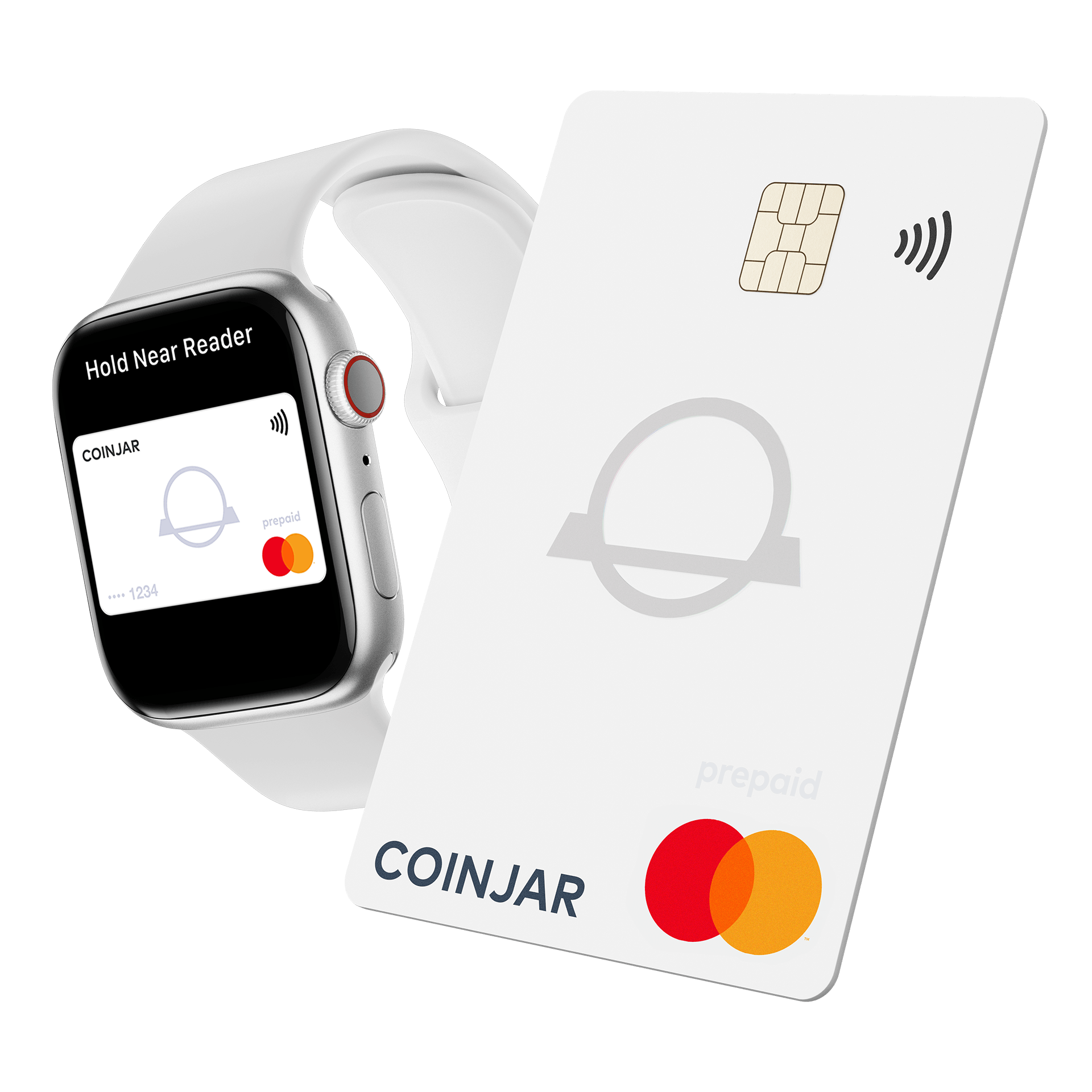
Use CoinJar Card, powered by Mastercard, for purchases online and in store, including through Apple Pay and Google Pay. No setup or monthly fee. A 1% purchase fee applies and is returned as CoinJar Rewards points, with one point earned per $1 spent. Available in Australia only.
Get your CoinJar Card for freeCoinJar Card
Use CoinJar Card, powered by Mastercard, for purchases online and in store, including through Apple Pay and Google Pay. No setup or monthly fee. A 1% purchase fee applies and is returned as CoinJar Rewards points, with one point earned per $1 spent. Available in Australia only.
Get your CoinJar Card for free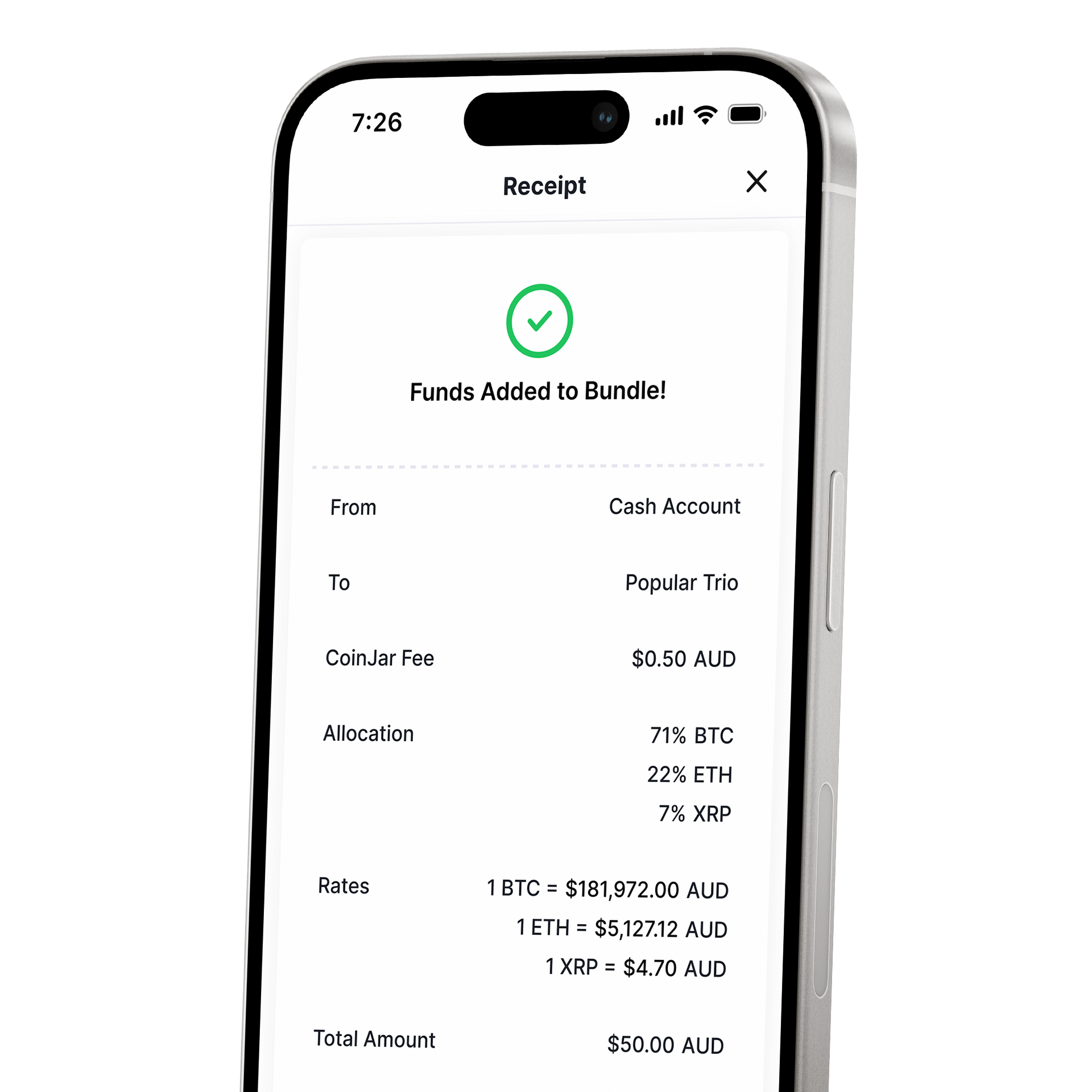
CoinJar Recurring Buy
Schedule automatic purchases weekly, fortnightly or monthly to dollar-cost average into individual cryptocurrencies or CoinJar Bundles. Manage your investment amount and schedule, with the flexibility to adjust or pause purchases as your circumstances change.
DCA with Recurring BuyCoinJar Recurring Buy
Schedule automatic purchases weekly, fortnightly or monthly to dollar-cost average into individual cryptocurrencies or CoinJar Bundles. Manage your investment amount and schedule, with the flexibility to adjust or pause purchases as your circumstances change.
DCA with Recurring Buy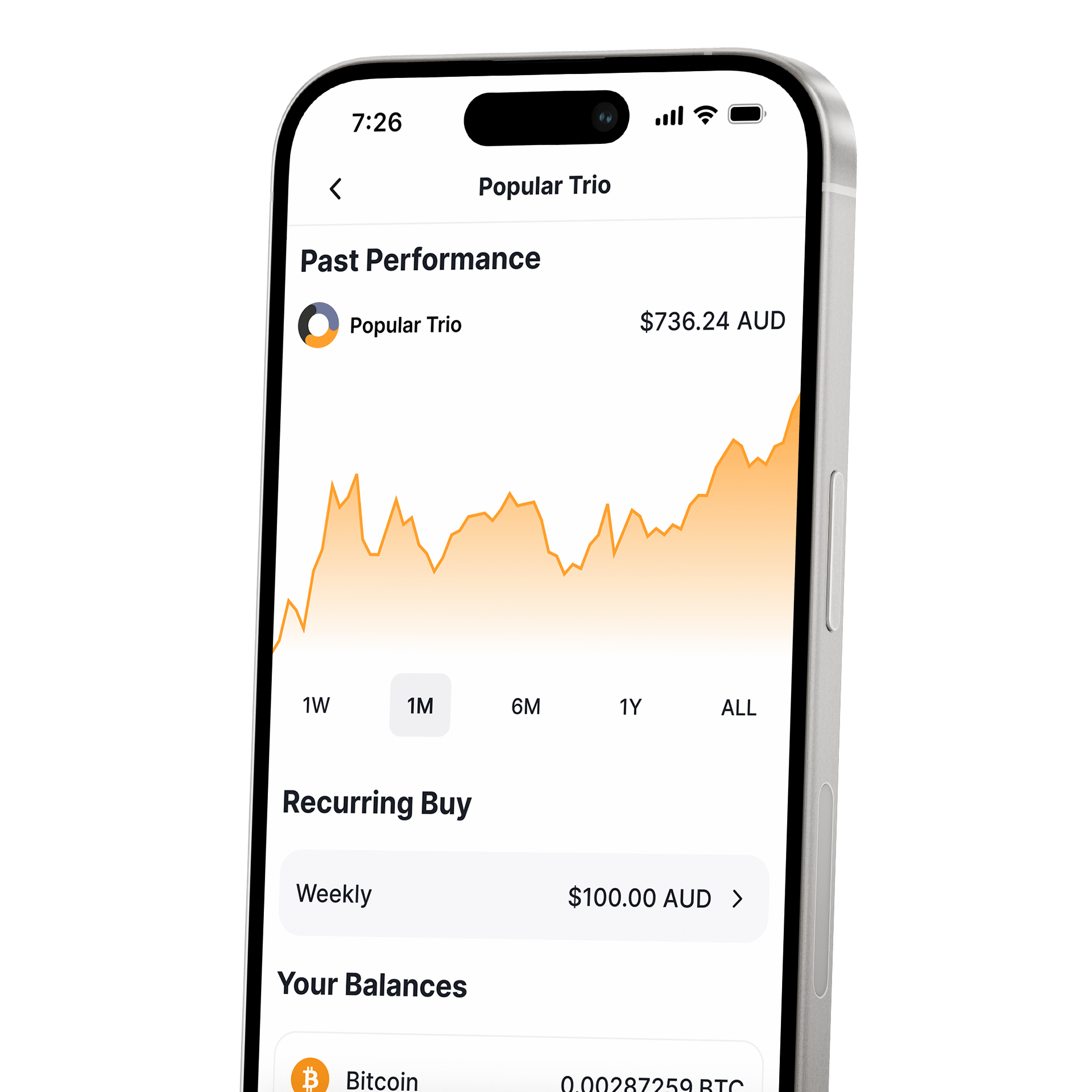
CoinJar Bundles
Pick your Bundle in the CoinJar app. Review each Bundle’s asset allocation, add to your holdings and rebalance when required. Sell your Bundle or unbundle it to manage the assets individually.
Learn moreCoinJar Bundles
Pick your Bundle in the CoinJar app. Review each Bundle’s asset allocation, add to your holdings and rebalance when required. Sell your Bundle or unbundle it to manage the assets individually.
Learn more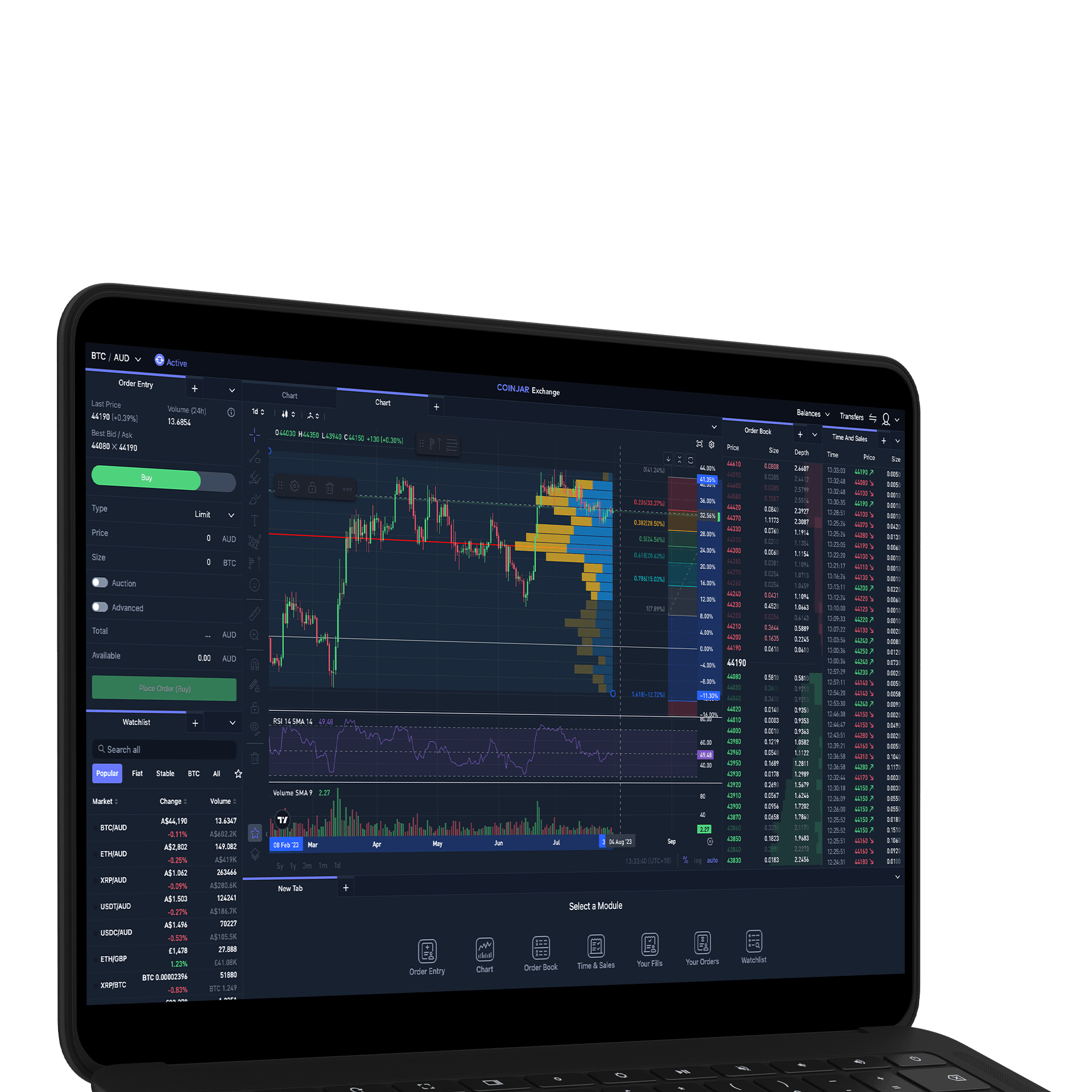
CoinJar Exchange
Trade with fees from 0-0.1%, using market, limit and stop-limit orders. Connect to TradingView to trade directly from your charts, or use CoinJar Exchange’s high-performance interface, built for active traders, market makers and institutions.
Explore CoinJar ExchangeCoinJar Exchange
Trade with fees from 0-0.1%, using market, limit and stop-limit orders. Connect to TradingView to trade directly from your charts, or use CoinJar Exchange’s high-performance interface, built for active traders, market makers and institutions.
Explore CoinJar Exchange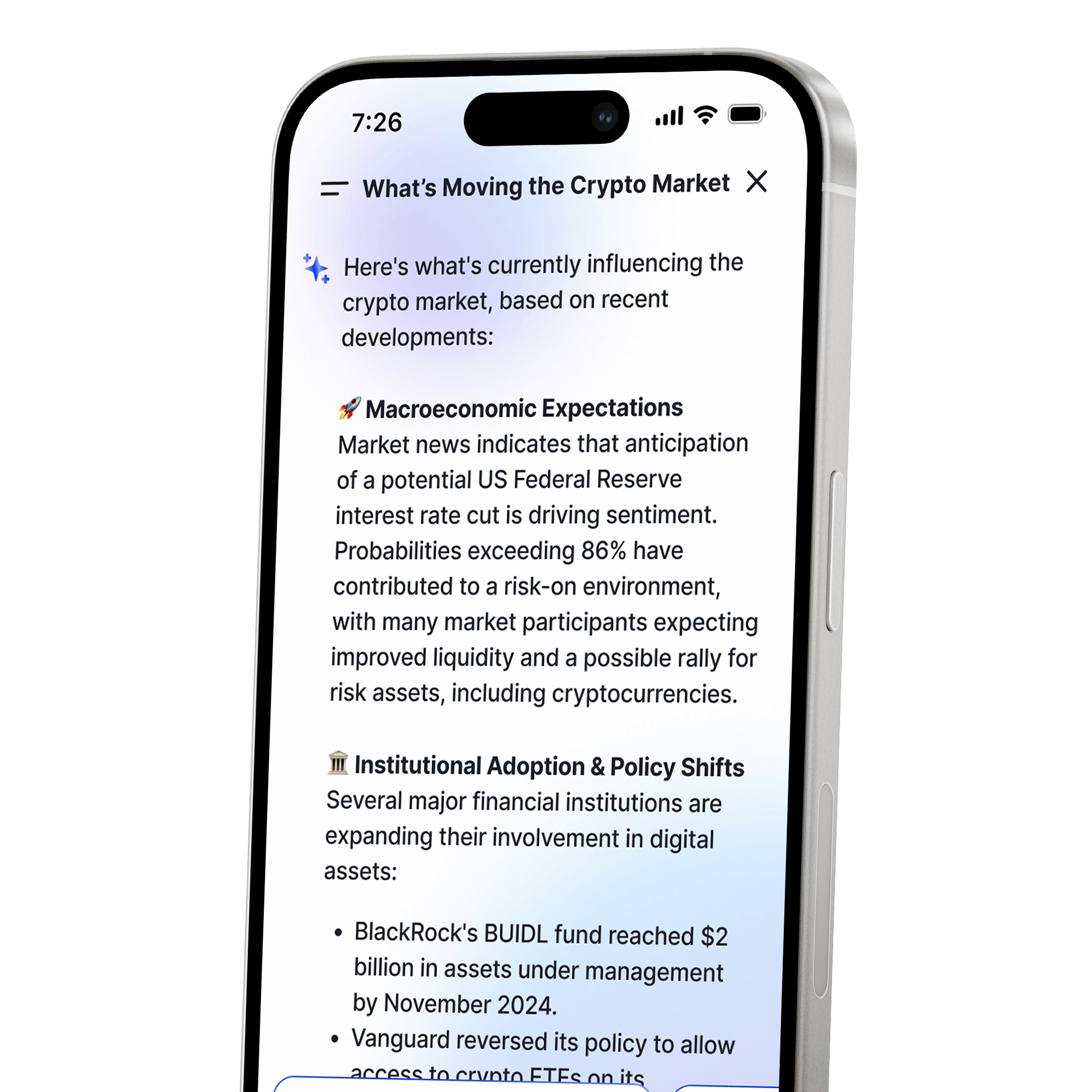
CoinJar AI
Access information about your holdings and the wider cryptocurrency market through CoinJar AI. Ask questions about portfolio changes, market developments or individual cryptocurrencies, with responses informed by your CoinJar holdings.
Learn moreCoinJar AI
Access information about your holdings and the wider cryptocurrency market through CoinJar AI. Ask questions about portfolio changes, market developments or individual cryptocurrencies, with responses informed by your CoinJar holdings.
Learn more
CoinJar OTC
For cryptocurrency trades above $50,000, CoinJar’s OTC desk provides personalised service and access to globally sourced liquidity. Work directly with a dedicated team to arrange and execute your purchase or sale. Discover OTC Services
Learn moreCoinJar OTC
For cryptocurrency trades above $50,000, CoinJar’s OTC desk provides personalised service and access to globally sourced liquidity. Work directly with a dedicated team to arrange and execute your purchase or sale. Discover OTC Services
Learn moreCoinJar does not endorse the content of, and cannot guarantee or verify the safety of any third-party websites. Visit these websites at your own risk.

CoinJar
Get the app.