Buy Chainlink
LINKPast performance is not indicative of future results. All prices are sourced from CoinJar Indices.
What is Chainlink?
Chainlink is a decentralised oracle network. It supplies blockchains and smart contracts with data and services they cannot obtain on their own, such as asset prices, interest rates, proof that reserves exist, verifiable randomness and messages sent between different blockchains.
Chainlink is not a blockchain. It is infrastructure that runs alongside many blockchains, which is why the same Chainlink services appear on Ethereum, Solana, Avalanche and dozens of other networks. The project was outlined in a 2017 whitepaper by Steve Ellis, Sergey Nazarov and Cornell professor Ari Juels, and its first main network went live in May 2019. Development is led by Chainlink Labs, while the oracle nodes themselves are operated by independent organisations.
LINK is the network's token. It is used to pay node operators and to back service quality through Chainlink Staking.
What problem does Chainlink solve?
Blockchains cannot reach outside themselves. A smart contract on Ethereum has no way to look up the AUD price of gold, check whether a payment cleared or read a weather report, because every node must be able to reproduce the same result independently. Anything from the outside world has to be delivered on chain by an oracle.
That creates the oracle problem. If a contract holding hundreds of millions of dollars trusts a single data source, that source becomes the weakest link. Corrupt or break it and the contract behaves exactly as an attacker wants, no matter how well written the contract is. Most large losses attributed to smart contracts have come from bad data or manipulated prices rather than flawed contract logic.
How does Chainlink work?
Chainlink answers the oracle problem with decentralised oracle networks, usually shortened to DONs.
- A group of independent node operators each retrieve the same information from several sources.
- The nodes compare results off chain and agree on a single value, typically by taking the median so one bad source cannot drag the answer away from reality.
- The agreed value is signed and written on chain in one transaction, where any contract can read it.
Node operators are independent businesses rather than Chainlink employees, and the group includes telecommunications and technology firms alongside dedicated infrastructure providers. Because the result depends on many operators and many data sources, there is no single point of failure for an attacker to target. The technical detail is documented in Chainlink's developer documentation.
What is LINK used for?
LINK is an Ethereum based token, issued under the ERC-677 standard, which is backwards compatible with ERC-20. It has three main roles.
- Paying for oracle services. Applications pay node operators in LINK for data and computation.
- Backing service quality. Node operators and holders can lock LINK in Chainlink Staking, which supports a decentralised alerting system for oracle performance. Node operators who fail their commitments can lose part of their stake.
- Aligning node operators with the network. Operators who hold and stake LINK have something to lose if they provide poor data.
Total supply is fixed at 1 billion LINK and no more can be created. Not all of it is circulating. A share remains reserved for node operator incentives and for Chainlink Labs, and it is released gradually, so circulating supply rises over time even though total supply does not. Chainlink publishes the current position on its circulating supply page. LINK does not carry on chain voting rights over the protocol.
What does Chainlink actually provide?
| Service | What it does |
|---|---|
| Data Feeds | Regularly updated on chain prices for cryptocurrencies, commodities, currencies and indices |
| Data Streams | Low latency data pulled on demand, used by derivatives and other fast moving applications |
| VRF | Verifiable random numbers that anyone can check, used in gaming and fair allocation |
| Automation | Triggers contract functions when conditions are met, without a person pressing a button |
| Proof of Reserve | Automated checks that tokenised assets are backed by the reserves their issuers claim |
| CCIP | A protocol for sending messages and transferring tokens between separate blockchains |
Who uses Chainlink?
Lending protocols, derivatives platforms, stablecoin issuers and tokenised asset projects rely on Chainlink price data to decide when loans are undercollateralised, how contracts settle and whether assets remain backed. Chainlink is commonly measured by the total value secured across the applications that depend on it, a figure that moves with the market rather than staying still.
Institutional testing is also public and documented. In 2023 Swift ran experiments with more than a dozen financial institutions, including Australia's ANZ, using Chainlink's cross-chain protocol to move tokenised assets between networks. In 2024 the Depository Trust and Clearing Corporation piloted delivery of fund net asset value data on chain with Chainlink and ten financial institutions. ANZ has separately demonstrated cross-border settlement of a tokenised asset using CCIP and its own Australian dollar stablecoin.
These are pilots and demonstrations rather than finished, mainstream systems, and it is worth reading them as evidence of interest rather than of completed adoption. Our explainer on real world asset tokenisation covers the wider trend they belong to.
How does Chainlink compare with other oracle networks?
Chainlink is the oldest and most widely integrated oracle network, and it offers the broadest product range. It is not the only option.
- Pyth publishes data sourced directly from trading firms and exchanges and is designed for very frequent price updates.
- API3 has data providers run their own oracle nodes, so information comes from the source rather than through an intermediary.
- Band Protocol operates its own blockchain and supplies data to applications on other networks.
Oracles compete on how data is sourced, how quickly it updates, how many blockchains they reach and how they handle failure. Chainlink's advantage is incumbency and breadth. That position is contested rather than guaranteed, which matters if you are assessing LINK on the basis of long-term demand for the network. For background on the applications that consume this data, see our guide to decentralised finance.
Chainlink on CoinJar in Australia
CoinJar has operated since 2013 and lists LINK against Australian dollars, so you can buy, sell and hold it without converting through another cryptocurrency first. LINK also trades against Australian dollars on CoinJar Exchange. Current rates are on our fees page, and live Australian dollar rates are on our cryptocurrency prices page.
LINK sits alongside the rest of our supported cryptocurrency list, and because it is an Ethereum based token you can move it to any wallet that supports the Ethereum network. Our guide to crypto transfers explains what to check before you send.
LINK you hold with CoinJar is kept in our custody infrastructure, where private keys are split across offline and hardware protected systems so no single party can move assets on its own. You can read how that works on our security page.
CoinJar Australia Pty Ltd is registered with AUSTRAC as a digital currency exchange provider, Registration No. DCE100749118-001.
What should Australians consider before buying LINK?
LINK is a volatile asset and has fallen sharply in past market cycles. Consider the following before you buy:
- Usage does not automatically mean price. LINK pays for oracle services, but there is no mechanism that converts network activity into a proportional increase in token value, and there is no fee burn. Adoption headlines and token demand are not the same thing.
- Supply still entering circulation. A meaningful share of the fixed 1 billion supply is yet to be released, which adds ongoing supply while it continues.
- Oracle risk is real. Decentralised aggregation makes manipulation harder, not impossible, and applications built on top of oracle data have suffered losses when feeds behaved unexpectedly during extreme market conditions.
- Concentrated development. The network is open and permissionless, but most research, upgrades and partnerships are driven by Chainlink Labs.
- Competition. Rival oracle networks are growing and target the same customers.
- No government compensation scheme. Cryptocurrency is not a bank deposit. Digital assets held with CoinJar are not covered by the Australian Government's Financial Claims Scheme, and AUSTRAC registration does not mean AUSTRAC has approved or endorsed LINK or CoinJar.
How is Chainlink taxed in Australia?
The ATO generally treats LINK as a capital gains tax asset. A CGT event can occur when you sell it for Australian dollars, exchange it for another cryptoasset, spend it or give it away.
The ATO explains these rules on its official guidance page. Our guide to crypto tax in Australia provides a practical overview. This is general information, not tax advice. Consider speaking to a registered tax agent about your circumstances.
Cash, credit or crypto?
Buy Chainlink instantly using Visa or Mastercard. Get cash in your account fast with bank transfer, PayID or PayPal. Convert crypto-to-crypto with a single click.
How to buy Chainlink with CoinJar
Start your portfolio with Australia's longest running crypto exchange with these simple steps.


Sign up to CoinJar
Get the CoinJar app on iOS or Android, create an account and verify your ID.
Deposit funds
Transfer funds from your bank account using bank transfer, PayID, Osko or Faster Payments.
Buy your first crypto
Buy Bitcoin and more than 60 other cryptos using cash or credit card.

CoinJar Card
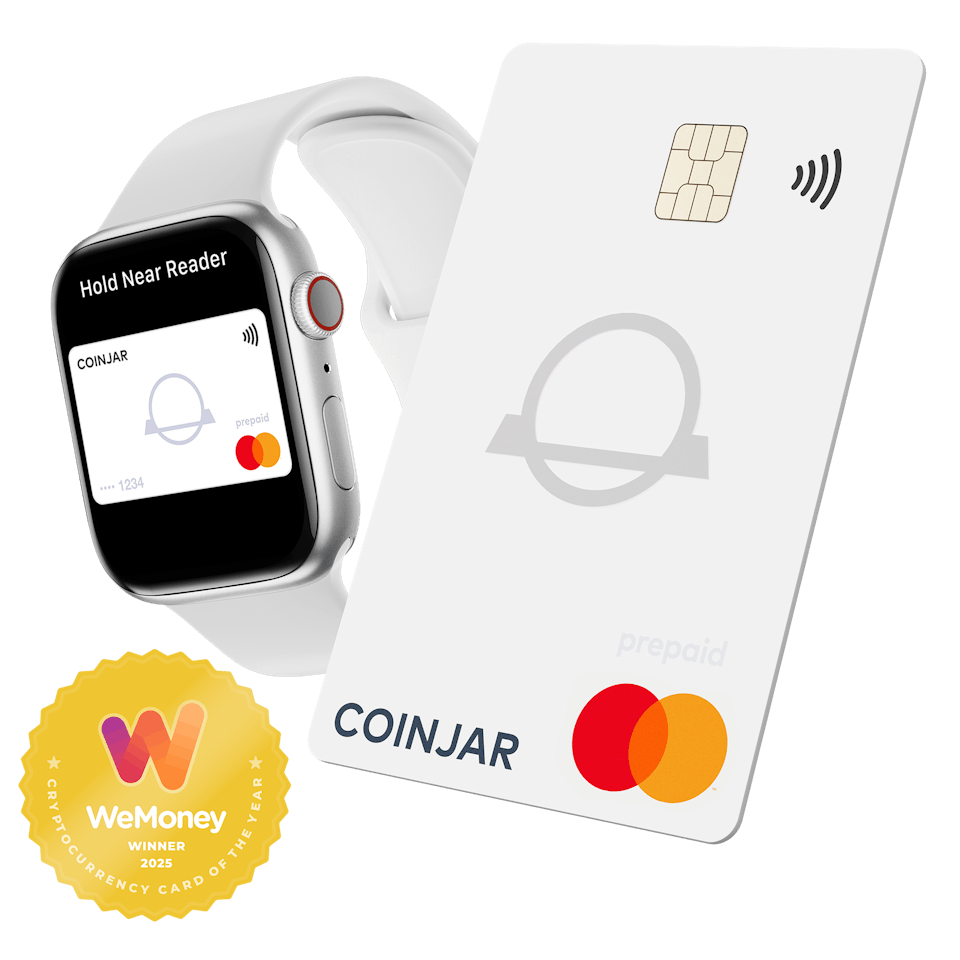
CoinJar Card lets you spend your crypto like cash, online and in-store – with both Apple Pay and Google Pay™. It’s free to set up, has no monthly fees and you earn CoinJar Rewards every time you spend.
Get your free CoinJar Card
CoinJar Card
CoinJar Card lets you spend your crypto like cash, online and in-store – with both Apple Pay and Google Pay™. It’s free to set up, has no monthly fees and you earn CoinJar Rewards every time you spend.
Get your free CoinJar Card
CoinJar DCA & Bundles
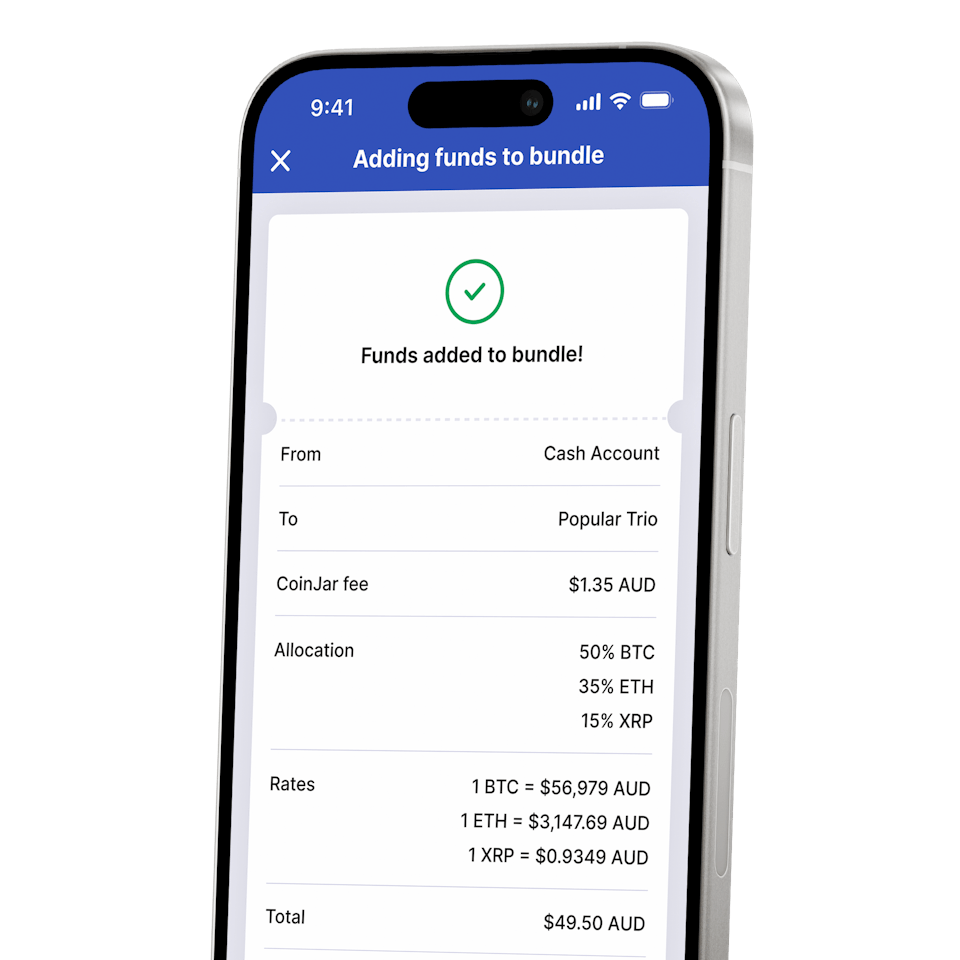
Dollar Cost Average (DCA) into individual cryptocurrencies or CoinJar Bundles. Choose your assets or Bundles with themed baskets of crypto in the CoinJar app and set up automated weekly, fortnightly, or monthly purchases at your preferred rate. Easily buy, sell, rebalance, and manage your portfolio with Recurring Buy to stay on track with your investment strategy.
DCA with Recurring BuyCoinJar DCA & Bundles
Dollar Cost Average (DCA) into individual cryptocurrencies or CoinJar Bundles. Choose your assets or Bundles with themed baskets of crypto in the CoinJar app and set up automated weekly, fortnightly, or monthly purchases at your preferred rate. Easily buy, sell, rebalance, and manage your portfolio with Recurring Buy to stay on track with your investment strategy.
DCA with Recurring Buy

CoinJar Exchange
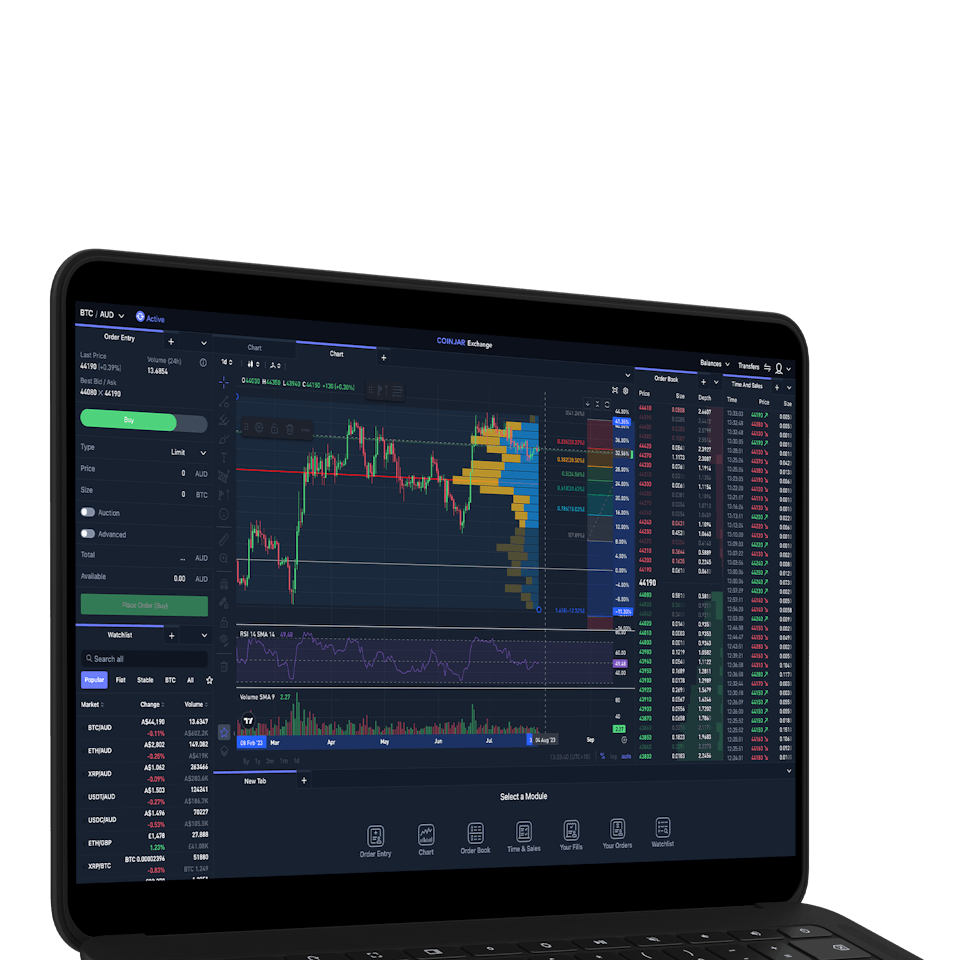
With one of the fastest matching engines in the world, CoinJar Exchange is purpose-built for institutions, market makers and professional traders. Features global liquidity, ultra-thin spreads and some of Australia’s most competitive fees.
Explore CoinJar Exchange
CoinJar Exchange
With one of the fastest matching engines in the world, CoinJar Exchange is purpose-built for institutions, market makers and professional traders. Features global liquidity, ultra-thin spreads and some of Australia’s most competitive fees.
Explore CoinJar Exchange
CoinJar AI
CoinJar AI understands your portfolio, tracks the market, and gives you insights that matter. Instead of searching for answers, simply ask a question to get the specific information you need.
Learn moreCoinJar AI
CoinJar AI understands your portfolio, tracks the market, and gives you insights that matter. Instead of searching for answers, simply ask a question to get the specific information you need.
Learn more
CoinJar does not endorse the content of, and cannot guarantee or verify the safety of any third-party websites. Visit these websites at your own risk.