
Buy Dogecoin
DOGEPast performance is not indicative of future results. All prices are sourced from CoinJar Indices.
What is Dogecoin?
Dogecoin is a peer to peer cryptocurrency that started as a joke and became one of the longest running networks in the industry. DOGE is designed to be spent rather than saved: blocks arrive about once a minute, transaction fees are small, and the network has run without a major interruption since 2013.
Software engineers Billy Markus and Jackson Palmer launched Dogecoin on 6 December 2013, wrapping serious payment technology in the Doge meme, a photograph of a Shiba Inu named Kabosu surrounded by Comic Sans captions. The idea was to make cryptocurrency approachable at a time when most projects took themselves very seriously.
Dogecoin is often described as a Bitcoin fork, which is not quite right. Its code descends from Bitcoin through two intermediate projects: Bitcoin came first, Litecoin adapted it, Luckycoin adapted Litecoin, and Dogecoin was built from Luckycoin and Litecoin. That inheritance is why Dogecoin behaves like a simple payments chain rather than a smart contract platform. The project's official home is dogecoin.com.
Both founders stepped away from active development in 2014. Dogecoin is now maintained by open source contributors rather than a company.
How does Dogecoin work?
Dogecoin is a proof of work blockchain, so miners compete to add blocks and are paid in newly issued DOGE. It uses the Scrypt hashing algorithm rather than the SHA-256 algorithm Bitcoin uses, and it targets one new block every minute instead of every ten.
Three details set it apart:
- A fixed block reward. Miners receive 10,000 DOGE per block plus fees. Early Dogecoin paid a random reward that could be anywhere from zero up to a very large amount, which is part of the meme lore. The fixed reward has applied since block 600,000.
- No halvings. Bitcoin cuts its block reward roughly every four years. Dogecoin does not, so issuance continues at a steady pace.
- Merged mining with Litecoin. Since 2014, Dogecoin has allowed miners to submit work done while mining Litecoin, a design known as auxiliary proof of work. Litecoin miners can earn on both chains from the same effort, which lifted Dogecoin's hashrate far above what it could attract alone.
Merged mining is the single most important fact about Dogecoin's security. It is well protected for a network of its type, but that protection is borrowed from the Scrypt mining industry rather than generated entirely on its own.
How many Dogecoin are there, and is there a supply cap?
There is no supply cap. Dogecoin issues 10,000 DOGE per block with no scheduled reduction, which works out at roughly 5 billion new DOGE each year.
That sounds alarming until you look at how it behaves over time. The number of new coins each year stays about the same while the total supply keeps growing, so the percentage added each year gets smaller. It is steady, predictable issuance rather than an accelerating one, and it was a deliberate choice: a small, constant stream of new coins suits a currency meant to be spent and replaces coins lost to forgotten wallets.
The practical takeaway is that Dogecoin has no built in scarcity story. Anyone buying it is relying on demand rather than on a shrinking supply.
Dogecoin vs Bitcoin: what is the difference?
| Dogecoin | Bitcoin | |
|---|---|---|
| Live since | 2013 | 2009 |
| Mining algorithm | Scrypt, merge mined with Litecoin | SHA-256 |
| Target block time | About 1 minute | About 10 minutes |
| Block reward | 10,000 DOGE, fixed | Halves roughly every four years |
| Maximum supply | None | 21 million |
| Typical use | Small payments, tipping, transfers | Long term holding and settlement |
| Smart contracts | Not natively supported | Not natively supported |
The two networks share a common ancestor and a similar transaction model, so both are simpler and more payment focused than platforms such as Ethereum. Our guide to Bitcoin explains the model Dogecoin inherited, and our guide to altcoins covers where coins like DOGE sit in the wider market.
What is Dogecoin used for?
- Tipping and small payments. Dogecoin's first real use was tipping people online for posts, art and help. Fast blocks and small fees make amounts that would be uneconomic on other networks practical.
- Fundraising. The community has a long record of collective campaigns, including sending the Jamaican bobsled team to the 2014 Winter Olympics, funding clean water projects through charity: water, and sponsoring a NASCAR car in 2014.
- Merchant payments. Some retailers accept DOGE directly or through a payment processor. Tesla has accepted Dogecoin for selected merchandise since 2021. Acceptance changes over time, so check with the merchant before relying on it.
- Moving value between platforms. One minute blocks and low fees make DOGE a quick way to move value between wallets and exchanges.
What Dogecoin does not do is run applications. There is no native smart contract layer, so lending markets, decentralised exchanges and similar services are not built directly on it.
Is Dogecoin still being developed?
Yes, though at a quieter pace than the biggest networks and without a company behind it.
Dogecoin Core, the reference software, is maintained by volunteer contributors in the open on GitHub. Recent releases have focused on security fixes, networking improvements and lower recommended fees rather than dramatic new features. Releases arrive when they are ready instead of on a fixed schedule.
The Dogecoin Foundation, a non profit that supports development and defends the trademarks, was re established in 2021 with advisors including Ethereum co-founder Vitalik Buterin. It funds and coordinates projects such as Libdogecoin, a code library that makes it easier for developers to build Dogecoin support into their own software, and GigaWallet, a backend service aimed at businesses that want to accept DOGE. Both are working projects rather than finished products, and neither changes how the blockchain itself operates.
Why is Dogecoin associated with Elon Musk?
Musk has posted about Dogecoin regularly since 2019, and Tesla began accepting DOGE for some merchandise in 2021. That association cuts both ways: it brings attention and it ties sentiment to one person's public statements.
Two things are worth separating from the noise. A class action filed in 2022 accusing Musk and Tesla of manipulating Dogecoin was dismissed with prejudice in August 2024, and the plaintiffs later dropped their appeal. Separately, the United States government body abbreviated as DOGE, the Department of Government Efficiency, has no connection to the cryptocurrency beyond the shared acronym.
What should Australian customers consider before buying DOGE?
DOGE is volatile and its price has fallen sharply in past market cycles. Consider the following before you buy.
- There is no supply cap. New DOGE is issued every minute forever. Buying DOGE is a bet on demand, not on scarcity.
- Attention is a risk factor. Dogecoin's price has historically moved on social media posts and celebrity interest. Attention can fade as quickly as it arrives.
- Security is shared, not self sufficient. Dogecoin depends on merged mining with Litecoin. Anything that reduces Scrypt mining activity affects Dogecoin's protection too.
- Limited functionality. Dogecoin does not support smart contracts, so it does not benefit from the application ecosystems that drive activity on other chains.
- Development is volunteer led. There is no company obliged to keep improving Dogecoin, and several ecosystem projects remain works in progress.
- No government protection. DOGE is not covered by the Australian Government's Financial Claims Scheme, which protects certain bank deposits and insurance policies but does not extend to cryptoassets.
Dogecoin on CoinJar in Australia
CoinJar has operated since 2013 and lists DOGE against Australian dollars, so you can buy, sell and hold it without converting through another cryptocurrency first. Current charges are on our fees page, and live Australian dollar rates are on our cryptocurrency prices page.
DOGE sits alongside the rest of our supported cryptocurrency list, and you can withdraw it to any wallet that supports the Dogecoin network. Our guide to crypto transfers explains what to check before you send.
DOGE you hold with CoinJar is kept in our custody infrastructure, where private keys are split across offline and hardware protected systems so no single party can move assets on its own. You can read how that works on our security page.
CoinJar is registered with AUSTRAC as a digital currency exchange provider, Registration No. DCE100749118-001. Registration is a legal requirement for exchanges operating in Australia. It is not a government endorsement of CoinJar or of Dogecoin.
How is Dogecoin taxed in Australia?
The ATO generally treats DOGE as a capital gains tax asset. A CGT event can occur when you sell it for Australian dollars, exchange it for another cryptoasset, spend it or give it away.
The ATO explains these rules on its official guidance page. Our guide to crypto tax in Australia provides a practical overview. This is general information, not tax advice. Consider speaking to a registered tax agent about your circumstances.
Fund Your Account Your Way
Buy Dogecoin instantly using Visa or Mastercard, or deposit Australian dollars via bank transfer, PayID or PayPal. Buy, sell and convert between supported cryptocurrencies through your CoinJar account.


How to buy Dogecoin with CoinJar
Start your portfolio with Australia's longest-running crypto exchange with these simple steps.
Sign up to CoinJar
Get the CoinJar app on iOS or Android, create an account and verify your ID.
Deposit funds
Deposit AUD fee-free via PayID, Osko or bank transfer. You can also use PayPal or pay instantly by card.
Buy your first crypto
Buy Dogecoin and other popular cryptos using cash or credit card in minutes.



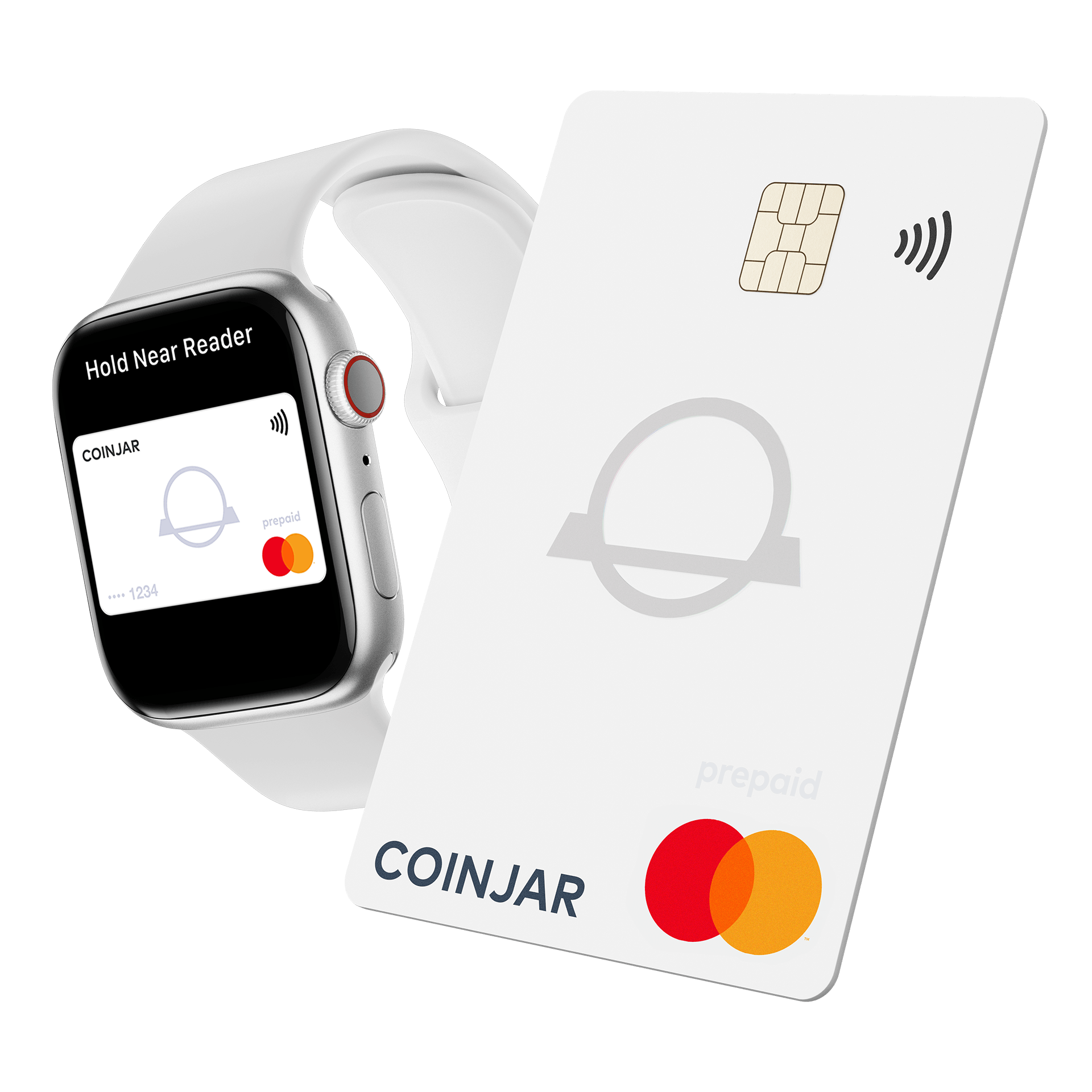
CoinJar Card
Use CoinJar Card, powered by Mastercard, for purchases online and in store, including through Apple Pay and Google Pay. No setup or monthly fee. A 1% purchase fee applies and is returned as CoinJar Rewards points, with one point earned per $1 spent. Available in Australia only.
Get your CoinJar Card for freeCoinJar Card
Use CoinJar Card, powered by Mastercard, for purchases online and in store, including through Apple Pay and Google Pay. No setup or monthly fee. A 1% purchase fee applies and is returned as CoinJar Rewards points, with one point earned per $1 spent. Available in Australia only.
Get your CoinJar Card for free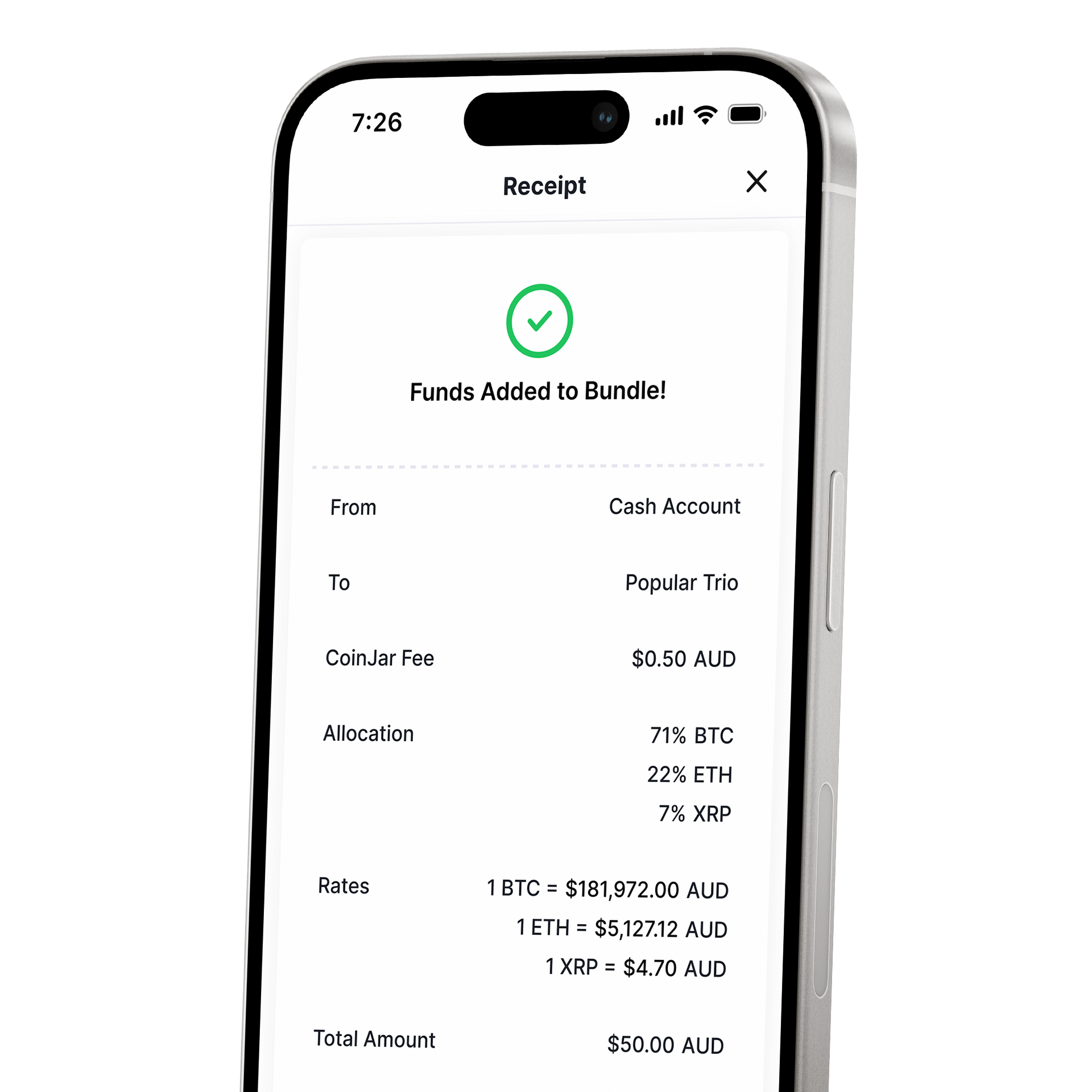
CoinJar Recurring Buy
Schedule automatic purchases weekly, fortnightly or monthly to dollar-cost average into individual cryptocurrencies or CoinJar Bundles. Manage your investment amount and schedule, with the flexibility to adjust or pause purchases as your circumstances change.
DCA with Recurring BuyCoinJar Recurring Buy
Schedule automatic purchases weekly, fortnightly or monthly to dollar-cost average into individual cryptocurrencies or CoinJar Bundles. Manage your investment amount and schedule, with the flexibility to adjust or pause purchases as your circumstances change.
DCA with Recurring Buy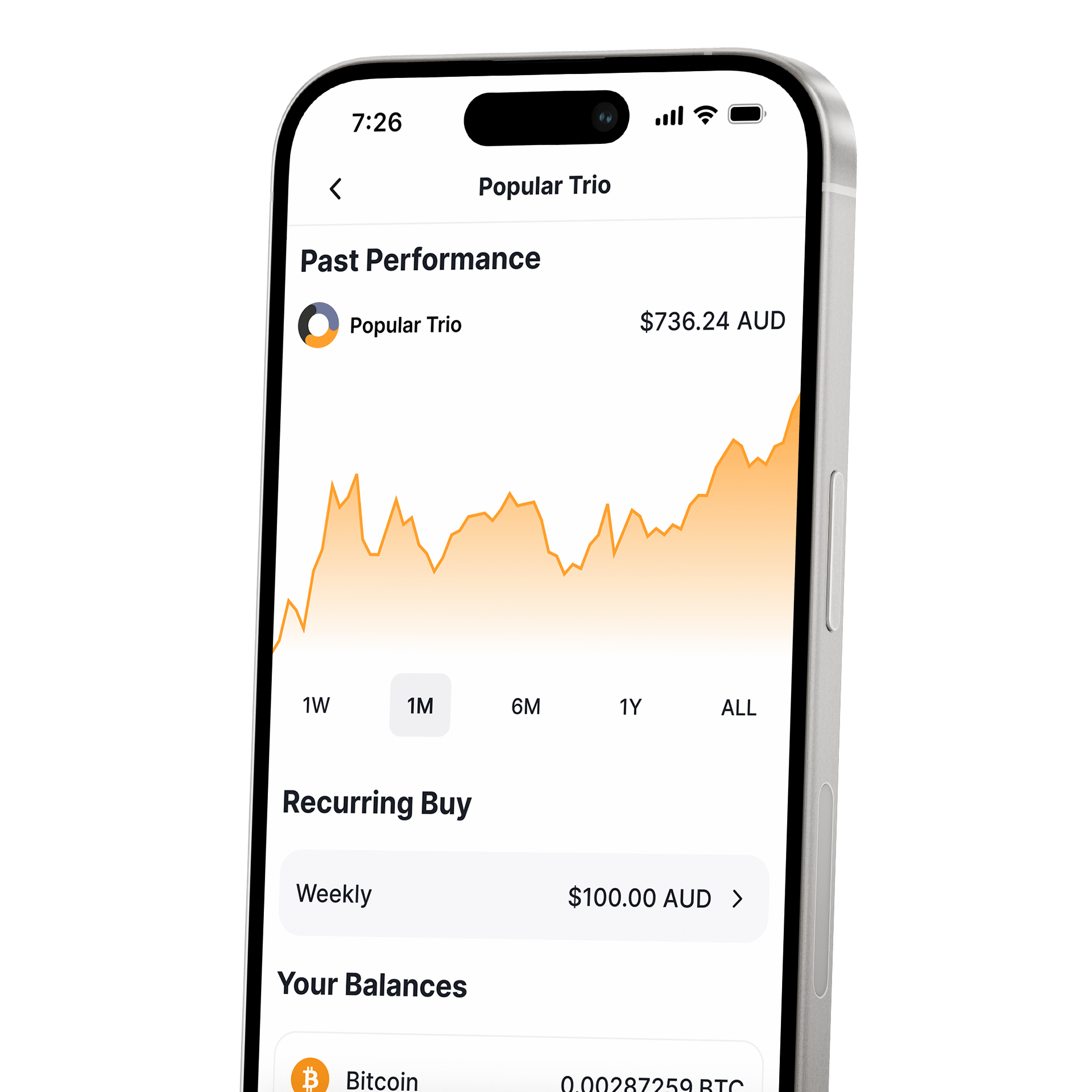
CoinJar Bundles
Pick your Bundle in the CoinJar app. Review each Bundle’s asset allocation, add to your holdings and rebalance when required. Sell your Bundle or unbundle it to manage the assets individually.
Learn moreCoinJar Bundles
Pick your Bundle in the CoinJar app. Review each Bundle’s asset allocation, add to your holdings and rebalance when required. Sell your Bundle or unbundle it to manage the assets individually.
Learn more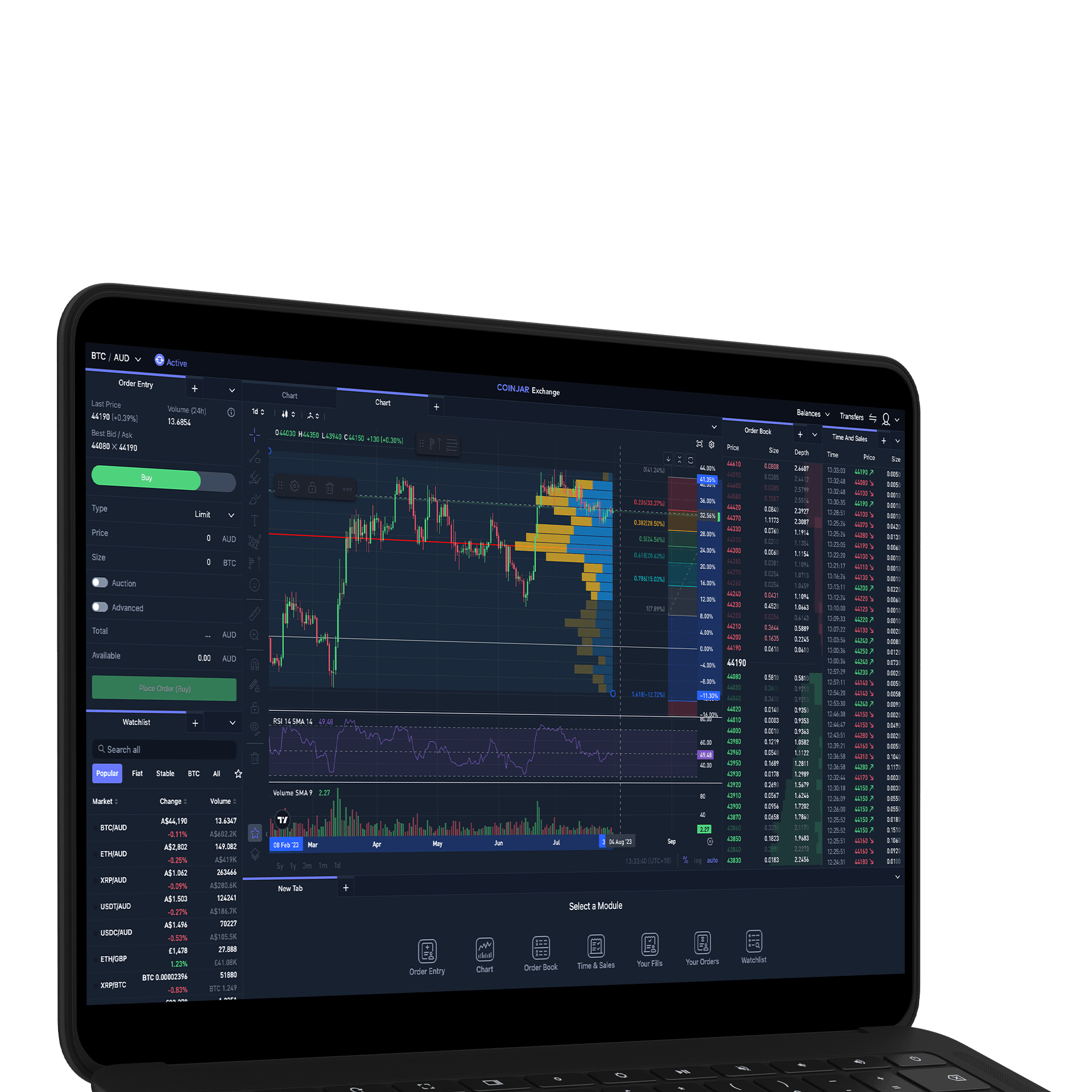
CoinJar Exchange
Trade with fees from 0-0.1%, using market, limit and stop-limit orders. Connect to TradingView to trade directly from your charts, or use CoinJar Exchange’s high-performance interface, built for active traders, market makers and institutions.
Explore CoinJar ExchangeCoinJar Exchange
Trade with fees from 0-0.1%, using market, limit and stop-limit orders. Connect to TradingView to trade directly from your charts, or use CoinJar Exchange’s high-performance interface, built for active traders, market makers and institutions.
Explore CoinJar Exchange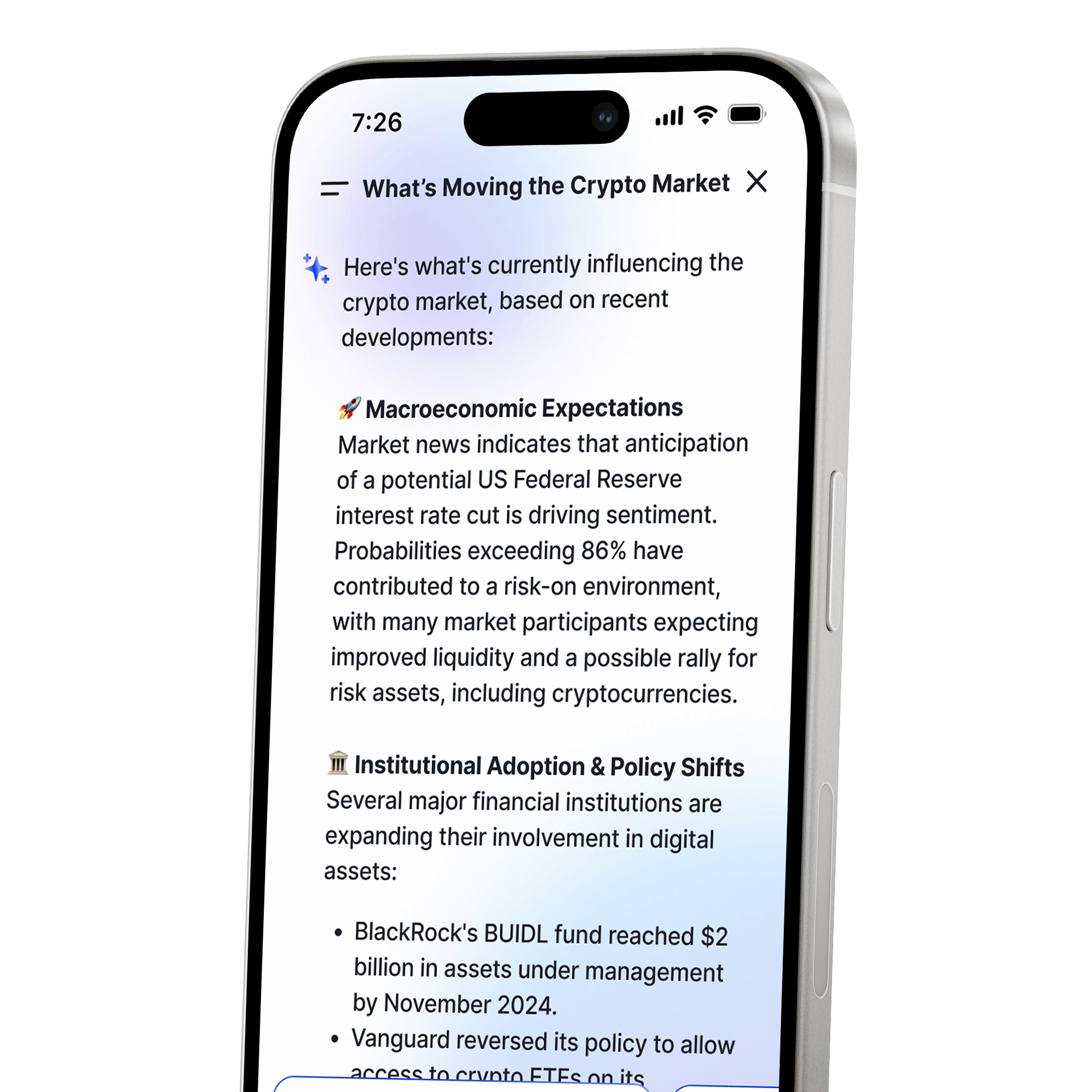
CoinJar AI
Access information about your holdings and the wider cryptocurrency market through CoinJar AI. Ask questions about portfolio changes, market developments or individual cryptocurrencies, with responses informed by your CoinJar holdings.
Learn moreCoinJar AI
Access information about your holdings and the wider cryptocurrency market through CoinJar AI. Ask questions about portfolio changes, market developments or individual cryptocurrencies, with responses informed by your CoinJar holdings.
Learn more
CoinJar OTC
For cryptocurrency trades above $50,000, CoinJar’s OTC desk provides personalised service and access to globally sourced liquidity. Work directly with a dedicated team to arrange and execute your purchase or sale. Discover OTC Services
Learn moreCoinJar OTC
For cryptocurrency trades above $50,000, CoinJar’s OTC desk provides personalised service and access to globally sourced liquidity. Work directly with a dedicated team to arrange and execute your purchase or sale. Discover OTC Services
Learn moreCoinJar does not endorse the content of, and cannot guarantee or verify the safety of any third-party websites. Visit these websites at your own risk.

CoinJar
Get the app.