
Buy Solana
SOLPast performance is not indicative of future results. All prices are sourced from CoinJar Indices.
What is Solana?
Solana is a public blockchain designed to process large numbers of transactions at a low cost. SOL is its native cryptocurrency and is used to pay network fees, secure the blockchain through staking and interact with applications built on Solana.
The network launched in 2020 and is widely used for decentralised finance, payments, digital collectibles, games and tokenised assets. Solana can produce new blocks in less than a second, but stronger transaction finality takes longer and performance can decline during periods of heavy demand.
SOL is a volatile crypto asset. Its price can change sharply, and low transaction fees do not make it a low-risk investment.
How does Solana work?
Solana combines Proof of Stake with a timing system called Proof of History. Validators stake SOL and vote on the state of the blockchain, while Proof of History gives transactions a verifiable order before validators reach consensus.
The network also uses a parallel processing system known as Sealevel. If two transactions do not need to change the same account data, Solana can process them at the same time rather than one after another. This helps the network support high activity without relying on a separate layer 2 network for routine transactions.
Solana programs are similar to smart contracts on other blockchains. They contain the rules used by decentralised exchanges, lending markets, games and other on-chain applications.
What is Proof of History?
Proof of History is a cryptographic clock, not a separate consensus mechanism. It creates a sequence that proves events occurred in a particular order and that time passed between them. Validators can use this shared timeline instead of repeatedly communicating to establish the order of every transaction.
Proof of Stake and Solana's Tower BFT consensus rules still provide network security. Validators vote on blocks, and their influence is weighted by the SOL staked and delegated to them. The Solana documentation provides a more technical explanation of the network's architecture.
Solana at a glance
- Native cryptocurrency: SOL
- Network launched: March 2020
- Blockchain type: layer 1 smart contract network
- Consensus: Proof of Stake using Tower BFT
- Timing system: Proof of History
- Block production: typically less than one second
- Maximum supply: no fixed maximum
- Smallest unit: one lamport, equal to 0.000000001 SOL
- Transaction fees: paid in SOL and typically low, but they can rise during congestion
What is SOL used for?
- Network fees. SOL pays for transfers and interactions with Solana programs.
- Staking. SOL can be delegated to validators that help secure the network.
- Decentralised finance. Solana supports exchanges, lending markets, liquid staking protocols and other financial applications. Our guide to decentralised finance explains how these services work and the risks involved.
- Tokens and digital collectibles. Developers can issue fungible tokens, stablecoins and non-fungible tokens using Solana's token standards.
- Payments. Low fees can make SOL and Solana-based stablecoins practical for smaller or frequent transfers.
- Applications and games. Fast block production allows developers to record frequent user actions on-chain.
Using an application built on Solana is not the same as holding SOL. Each token, program and service has its own security, liquidity and issuer risks.
Does SOL have a maximum supply?
No. Unlike Bitcoin, SOL does not have a fixed maximum supply. New SOL is issued as staking rewards under a disinflationary schedule. The annual issuance rate was designed to begin at 8%, decline by 15% each year and eventually settle at a long-term rate of 1.5%.
Part of Solana's base transaction fee is permanently destroyed, which offsets some new issuance. Priority fees paid during busy periods go to validators. Fee burning does not necessarily make SOL deflationary because new staking rewards may still exceed the amount burned.
The supply therefore changes over time. When assessing SOL, consider both the declining issuance rate and the amount of SOL entering circulation through staking rewards or other distributions.
Can SOL be staked?
Yes. Solana uses Proof of Stake, so SOL holders can delegate tokens to a validator. Validators process transactions and vote on the blockchain, while delegators may receive a share of network rewards after the validator deducts its commission.
Staking returns are variable rather than guaranteed. They depend on network issuance, validator performance, commission and the total amount of SOL staked. Activating or deactivating a stake can also take time because changes occur around network epoch boundaries.
Staking introduces risks beyond changes in the SOL price. These include validator performance, protocol faults, custody arrangements and the tax treatment of rewards. If a service offers liquid staking tokens, those tokens also carry smart contract, liquidity and price-tracking risks.
How is Solana different from Ethereum?
Solana and Ethereum are both layer 1 blockchains that support smart contracts, tokens and decentralised applications. They use different technical designs.
Solana processes independent transactions in parallel and aims to keep most activity on the base network. Ethereum processes base-layer transactions differently and increasingly relies on layer 2 networks to handle more activity at lower cost. Solana programs commonly use Rust, while Ethereum applications often use Solidity.
SOL and ETH are separate assets on different networks. A Solana address is not an Ethereum address, and tokens cannot move between the networks without a supported bridge or platform. Neither design removes the risks of smart contract bugs, congestion or user error.
Which network does CoinJar use for SOL?
CoinJar supports native SOL on the Solana network. SOL sent using another blockchain or an unsupported wrapped version may not arrive. Likewise, an SPL token built on Solana should only be sent to CoinJar if that specific asset and deposit method are supported.
Always confirm the asset, network and current deposit address on both sides before transferring. Our list of supported cryptocurrencies and networks explains where to check, while our guide to wrong-network crypto transfers covers possible recovery limitations.
Solana accounts used to store tokens or program data must also maintain a small rent-exempt SOL balance. This is closer to a refundable account deposit than a recurring fee, and the required amount depends on the account's data size.
Has Solana experienced outages?
Yes. Solana has experienced full network outages and periods of degraded performance, particularly during intense transaction activity. Some incidents required validators to coordinate a network restart after block production stopped.
Software upgrades, changes to transaction handling and the development of additional validator clients are intended to improve resilience. However, previous improvements do not guarantee future uptime. Congestion can still cause failed transactions, slower confirmations or higher priority fees even when the blockchain continues producing blocks.
This history is an important trade-off to consider. Solana prioritises high throughput and low fees, but its complexity and hardware demands can create operational and concentration risks.
What are the risks of buying SOL?
- Volatility. SOL can gain or lose substantial value over a short period.
- Network reliability. Outages, software bugs or congestion may interrupt transfers and applications.
- No fixed supply. SOL issuance continues under an inflation schedule, although the rate is designed to decline over time.
- Validator concentration. Running a competitive validator requires specialised hardware, bandwidth and delegated stake. Concentration among operators, hosting providers or software clients can weaken resilience.
- Smart contract risk. Solana applications and tokens may contain software flaws, insecure permissions or malicious code.
- Token and scam risk. Anyone can create a token on Solana. A token appearing in a wallet does not mean it is genuine, liquid or approved by CoinJar.
- Staking risk. Rewards can vary, and staking services or liquid staking tokens introduce additional validator, custody and smart contract risks.
- Transfer and custody risk. Blockchain transactions are generally irreversible, while losing control of a self-custody wallet can mean losing the assets permanently.
- No government guarantee. SOL is not covered by Australia's Financial Claims Scheme, which protects eligible deposits with Australian authorised deposit-taking institutions.
Our guide on how to store cryptocurrency compares platform custody and self-custody. ASIC's Moneysmart guidance on crypto assets provides independent information about volatility, scams and consumer protections.
Is Solana legal in Australia?
Yes. Buying, holding and selling SOL are legal in Australia. SOL is not legal tender, and businesses are not required to accept it as payment.
Australian requirements generally apply to the businesses and services dealing with crypto rather than approving individual assets. CoinJar Australia Pty Ltd is a registered digital currency exchange provider with AUSTRAC. This registration concerns anti-money laundering and counter-terrorism financing obligations. It does not mean AUSTRAC has approved SOL or guaranteed its value.
Other laws may apply when a cryptoasset, staking arrangement or related service has the features of a financial product. Australia's digital asset framework continues to develop.
How is Solana taxed in Australia?
The ATO generally treats SOL as a capital gains tax asset. A CGT event can occur when you sell SOL for Australian dollars, exchange it for another cryptoasset, spend it or give it away. Staking rewards are generally ordinary income based on their Australian dollar value when you receive them.
The ATO explains these rules on its crypto asset investments page. Our guide to crypto tax in Australia provides a practical overview. This is general information, not tax advice. Consider speaking to a registered tax agent about your circumstances.
Why Solana matters
Solana takes a distinctive approach to blockchain scaling. Proof of History provides a shared timeline, parallel processing increases capacity, and SOL aligns network fees and staking with the operation of the blockchain.
Those features have attracted payment services, decentralised applications and token projects, but they also come with trade-offs. SOL has no fixed supply, the network has experienced outages, and applications built on Solana can fail independently of the blockchain. Understanding both the technology and the risks is more useful than judging Solana on speed alone.
Fund Your Account Your Way
Buy Solana instantly using Visa or Mastercard, or deposit Australian dollars via bank transfer, PayID or PayPal. Buy, sell and convert between supported cryptocurrencies through your CoinJar account.


How to buy Solana with CoinJar
Start your portfolio with Australia's longest-running crypto exchange with these simple steps.
Sign up to CoinJar
Get the CoinJar app on iOS or Android, create an account and verify your ID.
Deposit funds
Deposit AUD fee-free via PayID, Osko or bank transfer. You can also use PayPal or pay instantly by card.
Buy your first crypto
Buy Solana and other popular cryptos using cash or credit card in minutes.



CoinJar Card
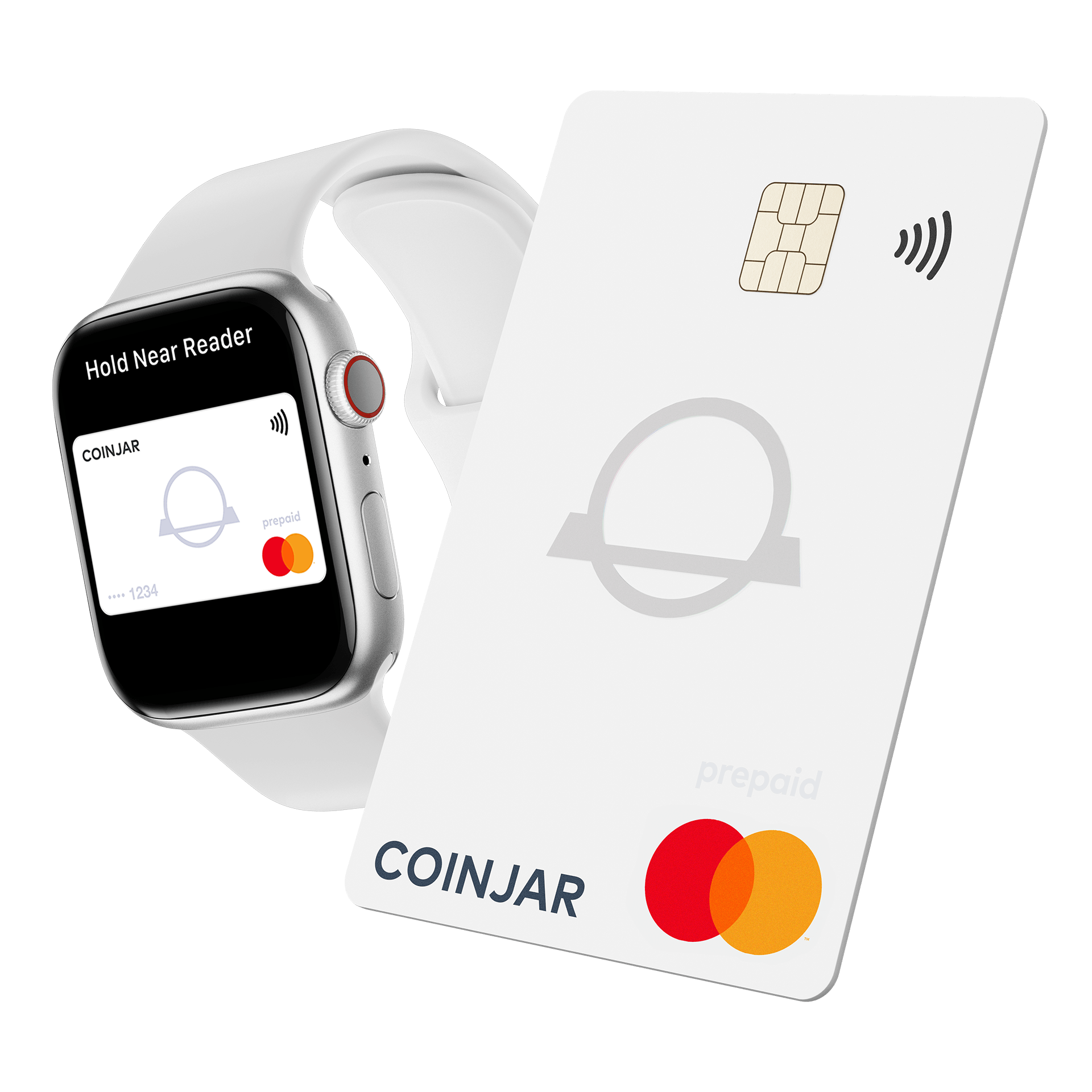
Use CoinJar Card, powered by Mastercard, for purchases online and in store, including through Apple Pay and Google Pay. No setup or monthly fee. A 1% purchase fee applies and is returned as CoinJar Rewards points, with one point earned per $1 spent. Available in Australia only.
Get your CoinJar Card for freeCoinJar Card
Use CoinJar Card, powered by Mastercard, for purchases online and in store, including through Apple Pay and Google Pay. No setup or monthly fee. A 1% purchase fee applies and is returned as CoinJar Rewards points, with one point earned per $1 spent. Available in Australia only.
Get your CoinJar Card for free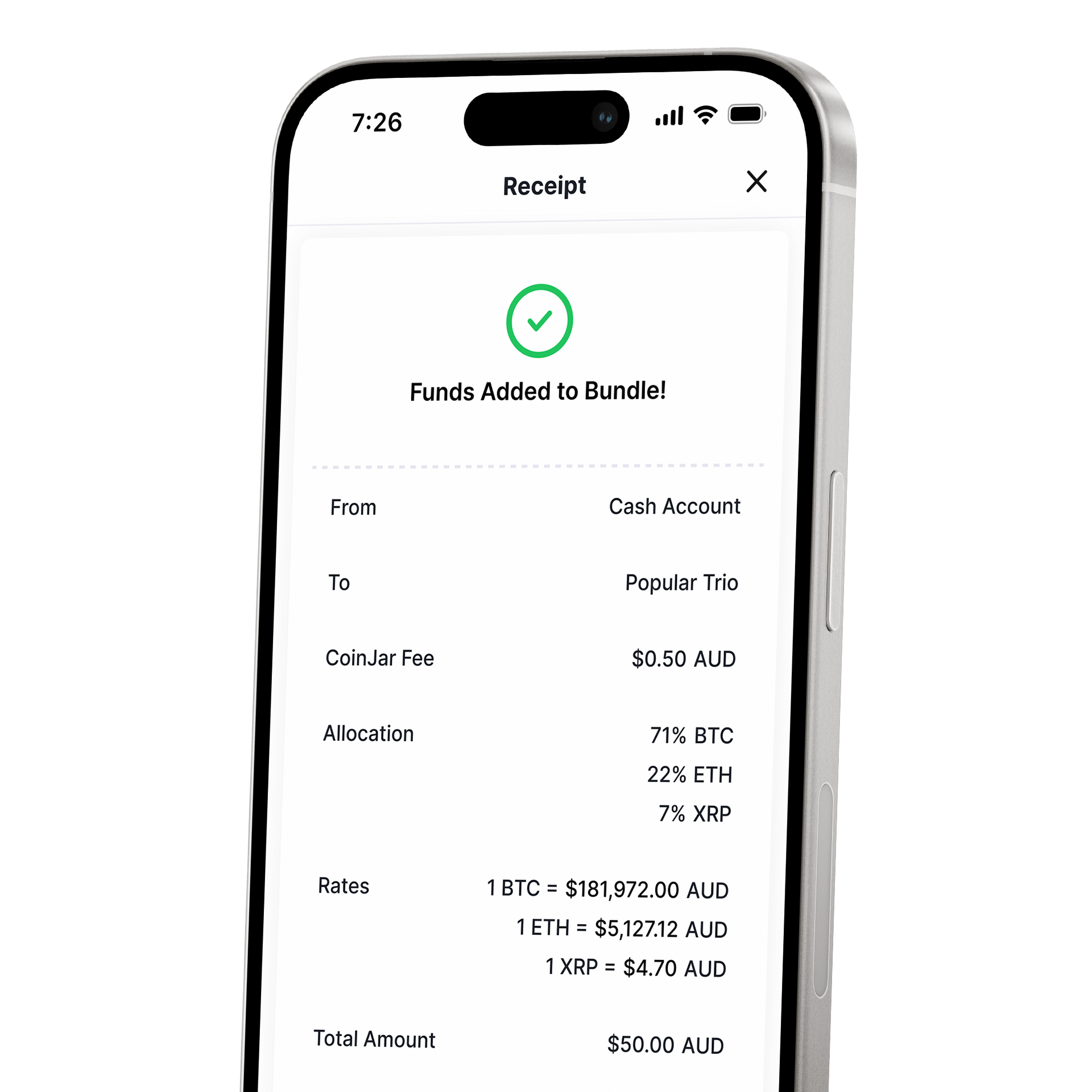
CoinJar Recurring Buy
Schedule automatic purchases weekly, fortnightly or monthly to dollar-cost average into individual cryptocurrencies or CoinJar Bundles. Manage your investment amount and schedule, with the flexibility to adjust or pause purchases as your circumstances change.
DCA with Recurring BuyCoinJar Recurring Buy
Schedule automatic purchases weekly, fortnightly or monthly to dollar-cost average into individual cryptocurrencies or CoinJar Bundles. Manage your investment amount and schedule, with the flexibility to adjust or pause purchases as your circumstances change.
DCA with Recurring Buy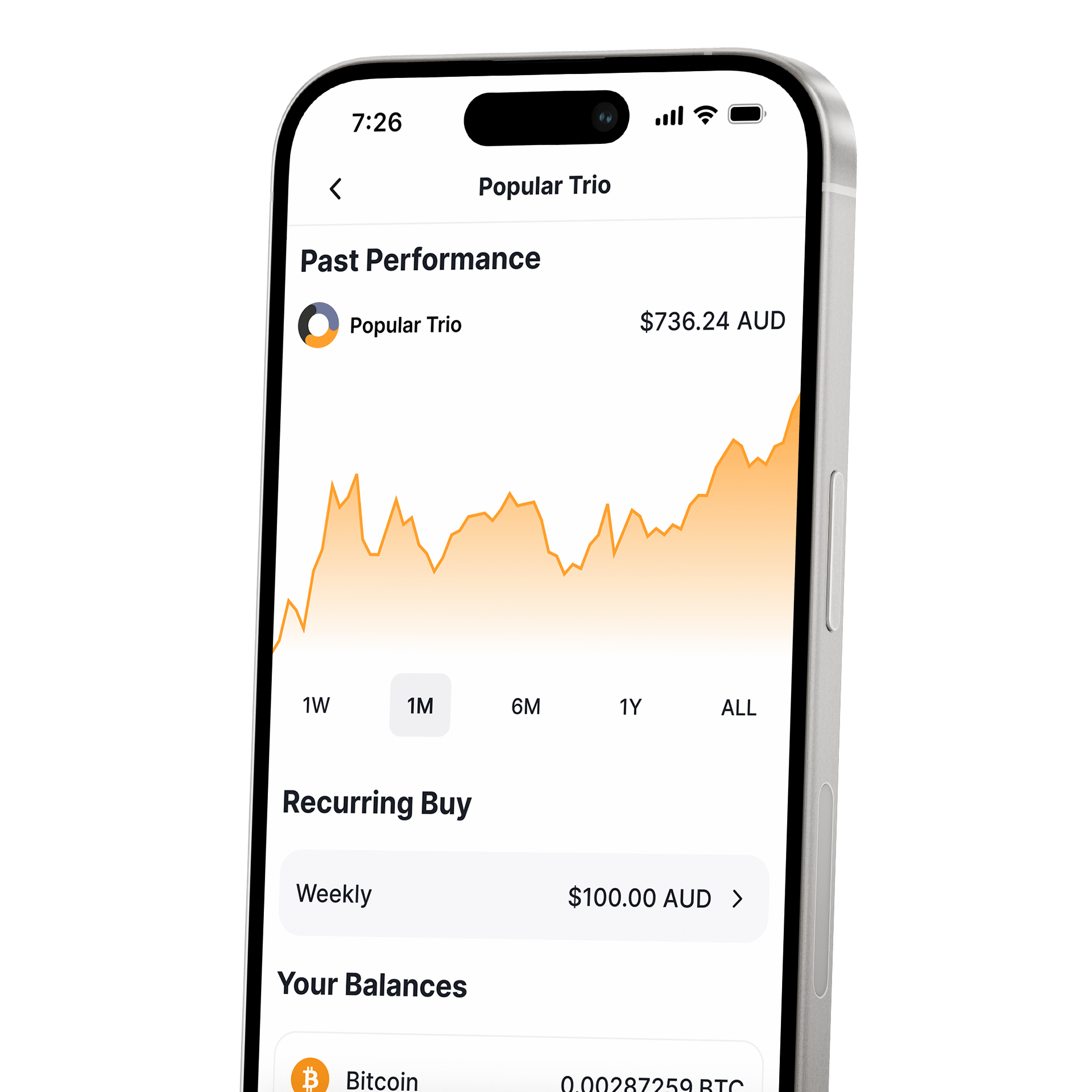
CoinJar Bundles
Pick your Bundle in the CoinJar app. Review each Bundle’s asset allocation, add to your holdings and rebalance when required. Sell your Bundle or unbundle it to manage the assets individually.
Learn moreCoinJar Bundles
Pick your Bundle in the CoinJar app. Review each Bundle’s asset allocation, add to your holdings and rebalance when required. Sell your Bundle or unbundle it to manage the assets individually.
Learn more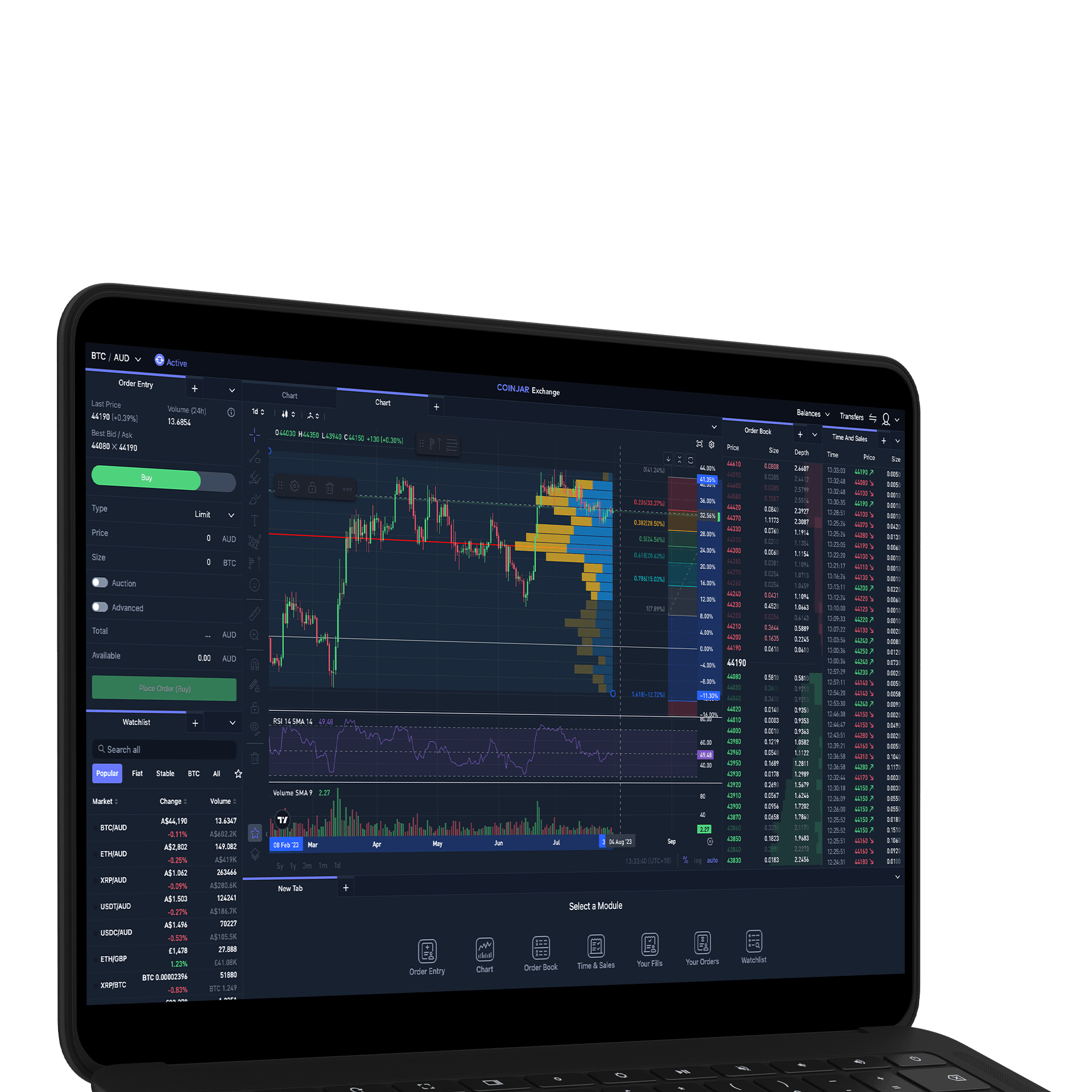
CoinJar Exchange
Trade with fees from 0-0.1%, using market, limit and stop-limit orders. Connect to TradingView to trade directly from your charts, or use CoinJar Exchange’s high-performance interface, built for active traders, market makers and institutions.
Explore CoinJar ExchangeCoinJar Exchange
Trade with fees from 0-0.1%, using market, limit and stop-limit orders. Connect to TradingView to trade directly from your charts, or use CoinJar Exchange’s high-performance interface, built for active traders, market makers and institutions.
Explore CoinJar Exchange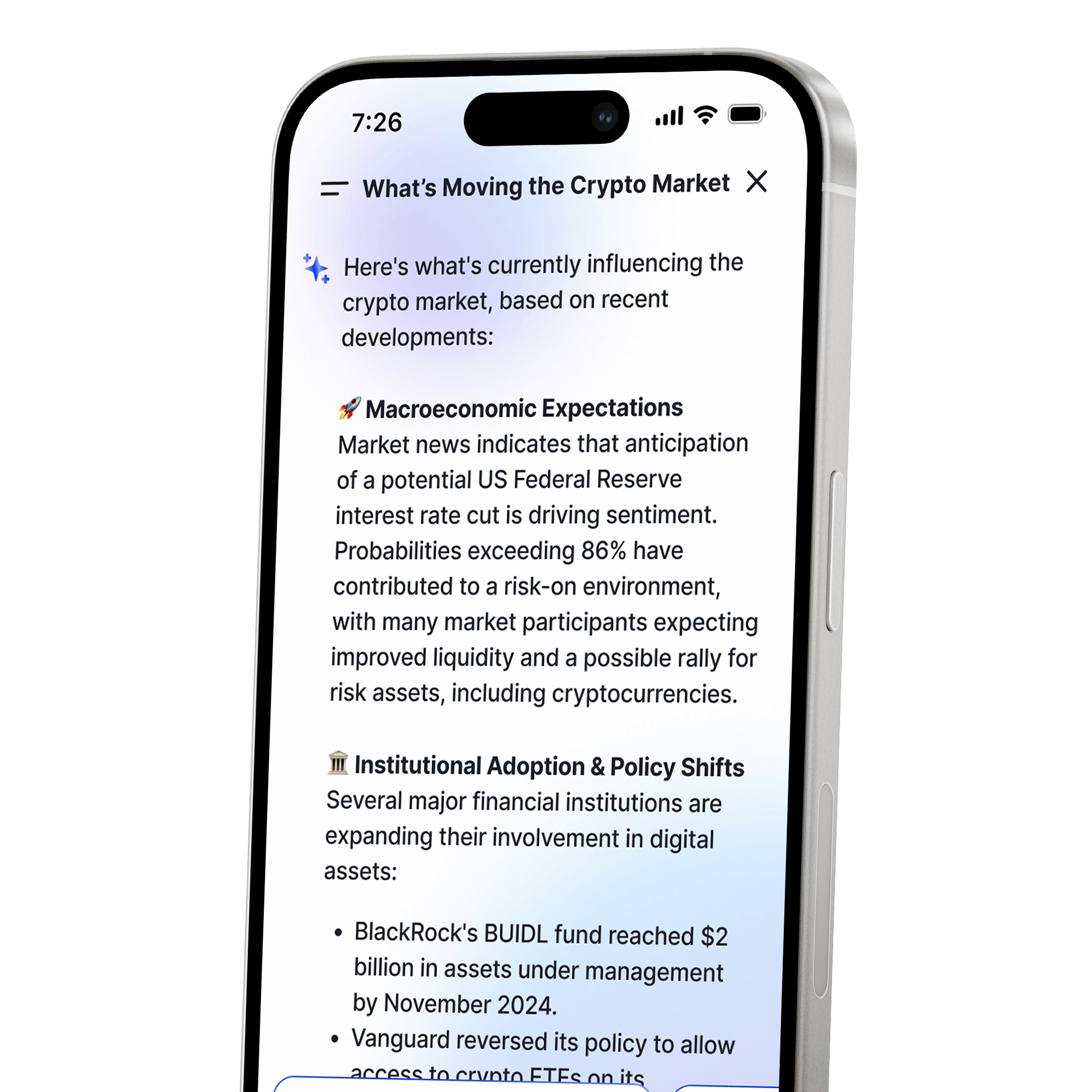
CoinJar AI
Access information about your holdings and the wider cryptocurrency market through CoinJar AI. Ask questions about portfolio changes, market developments or individual cryptocurrencies, with responses informed by your CoinJar holdings.
Learn moreCoinJar AI
Access information about your holdings and the wider cryptocurrency market through CoinJar AI. Ask questions about portfolio changes, market developments or individual cryptocurrencies, with responses informed by your CoinJar holdings.
Learn more
CoinJar OTC
For cryptocurrency trades above $50,000, CoinJar’s OTC desk provides personalised service and access to globally sourced liquidity. Work directly with a dedicated team to arrange and execute your purchase or sale. Discover OTC Services
Learn moreCoinJar OTC
For cryptocurrency trades above $50,000, CoinJar’s OTC desk provides personalised service and access to globally sourced liquidity. Work directly with a dedicated team to arrange and execute your purchase or sale. Discover OTC Services
Learn moreCoinJar does not endorse the content of, and cannot guarantee or verify the safety of any third-party websites. Visit these websites at your own risk.

CoinJar
Get the app.