
Buy Sui
SUIPast performance is not indicative of future results. All prices are sourced from CoinJar Indices.
What is Sui?
Sui is a public layer 1 blockchain built for fast, low cost transactions, and SUI is the cryptocurrency that runs it. SUI is used to pay network fees, to cover the cost of storing data on the chain and to secure the network through staking.
The network was built by Mysten Labs, founded in 2021 by five engineers who had worked on Meta's Diem and Novi projects: Evan Cheng, Sam Blackshear, Adeniyi Abiodun, Kostas Chalkias and George Danezis. Blackshear created Move, the programming language Diem used, and Sui runs an object focused version of it. Sui's main network went live on 3 May 2023. Mysten Labs remains the original contributor to the software, and the separate Sui Foundation supports the wider ecosystem.
What makes Sui unusual is how it stores information. Most blockchains track balances inside accounts. Sui treats every coin, token, collectible and piece of application data as an individual object with its own owner, which lets the network process unrelated transactions at the same time rather than one after another.
How does Sui work?
Every object on Sui has a unique ID, an owner and a version number, and every transaction has to declare which objects it will touch. Because the network knows in advance what a transaction will read or change, it can safely run transactions that have nothing to do with each other in parallel.
Ownership decides how a transaction is handled:
- Address owned objects belong to a single address. Transactions that only involve these can take Sui's fast path, where validators verify and certify the transaction without ordering it against everything else happening on the network.
- Shared objects can be used by anyone, such as a trading pool or a shared game state. Transactions that touch them have to be ordered by consensus, because several people may try to use the same object at once.
- Immutable objects cannot be changed, transferred or deleted, which suits published code and reference data.
Sui's consensus protocol is Mysticeti, which replaced the earlier Narwhal and Bullshark design on the main network during 2024. Sui is a delegated proof of stake network, so holders delegate SUI to validators and voting power follows the stake behind each validator. The validator set is fixed for the length of an epoch, which runs for roughly 24 hours, and staking rewards are worked out at each epoch boundary. Validators that perform badly can have their rewards for that epoch reduced. Our guide to staking covers the general idea, and the Sui documentation has the technical detail.
Transactions are submitted as programmable transaction blocks. A single block can hold an ordered list of steps, such as splitting a coin, calling several smart contract functions and transferring the result, and either the whole block succeeds or none of it does.
What is SUI used for?
SUI has four main roles on the network.
- Paying for computation. Every transaction pays a gas fee in SUI. Validators submit the lowest price they are willing to accept at the start of each epoch, and the protocol sets a stake weighted reference price from those quotes.
- Paying for storage. Transactions that add data to the chain also pay a storage fee. This goes into a storage fund that compensates future validators for holding historical data.
- Securing the network. SUI delegated to validators determines who produces and orders blocks, and delegators share in the rewards.
- Influencing protocol decisions. Validators vote on protocol changes with weight based on stake, so where holders delegate affects who gets a say.
How is Sui different from Ethereum and Solana?
Sui competes with other smart contract platforms rather than with payment focused coins. The design differences matter more than the marketing.
| Sui | Ethereum | Solana | |
|---|---|---|---|
| Main network live since | 2023 | 2015 | 2020 |
| Smart contract language | Move | Solidity and Vyper | Rust, C and others |
| How state is stored | Individual objects, each with an owner | Account balances and contract storage | Accounts, with program code stored separately |
| Transaction ordering | Simple owned object transfers can skip consensus, shared object transactions are ordered by Mysticeti | Every transaction is ordered in one sequence of blocks | Every transaction is ordered by one leader per slot |
| Main scaling approach | Parallel execution on the base layer | Mainly layer 2 rollups | Parallel execution on the base layer |
| Native token roles | Fees, storage, staking | Fees, staking | Fees, staking |
If you are new to smart contract platforms, our guide to Ethereum explains the model that most of these networks are measured against.
What can you do on Sui?
- Trading and lending. Sui launched with DeepBook, a central limit order book built into the network itself rather than run as a separate application, and lending and trading protocols build on top of it. Our guide to decentralised finance explains how these services work.
- Stablecoin payments. Circle has issued native USDC on Sui since October 2024, which means the token is issued directly on the network rather than bridged from another chain. Our guide to stablecoins covers the basics.
- Collectibles and in game items. Because assets are objects held by an address, a collectible can be transferred directly rather than tracked as an entry inside a contract. Sui also has a shop standard called Kiosk that lets creators attach transfer rules, such as royalties, to items they issue. Our guide to NFTs is a useful starting point.
- Consumer applications and games. The object model and low fees suit apps that create and move large numbers of small items, which is why gaming and social projects make up a visible share of the ecosystem.
How is new SUI created, and is the supply capped?
SUI has a fixed maximum supply of 10 billion tokens. Unlike bitcoin, SUI is not mined into existence over time. The full supply was created at launch and is released gradually under published schedules covering the community reserve, early contributors, funding sale investors, the Mysten Labs treasury and the Community Access Program, with more than half originally allocated to the community reserve.
Staking rewards are funded by transaction fees plus temporary stake subsidies drawn from that existing supply, so rewards do not lift the 10 billion cap. Supply can also move the other way. When data stored on chain is deleted, part of the original storage deposit is returned to the user and the remainder stays in the storage fund or leaves circulation for good. Sui's tokenomics documentation sets out how the fund works.
The practical point for buyers is that the cap is fixed but the amount of SUI available to trade grows as scheduled releases unlock.
What should Australian customers consider before buying SUI?
SUI is volatile and its price has fallen sharply in past market cycles. Consider the following before you buy.
- The network is young. Sui has been live since 2023, which is far less operating history than Bitcoin or Ethereum have. Newer designs carry more unknowns.
- The network has stopped before. Sui has had incidents where block production halted and had to be restarted by validators. In the cases Sui has documented, no user funds were lost and settled transactions were not reversed, but uptime is not guaranteed.
- Validators have intervened once already. After an exploit drained a large amount from the Cetus trading protocol in May 2025, validators blocked the attacker's addresses and later voted to move the frozen funds to a recovery wallet. Some saw this as protecting users. Others saw proof that a relatively small validator set can act on balances, which cuts against the idea that transactions are final no matter what.
- Validation is concentrated. Sui's validator set is smaller than those of older networks and joining requires a large stake, so influence sits with a limited number of operators and the platforms that delegate to them.
- Scheduled unlocks add supply. Tokens still being released can increase the amount available on the market regardless of how the network is performing.
- Application risk is separate from network risk. The Cetus exploit was caused by a bug in an application, not in Sui itself. Using apps built on a fast, cheap chain does not remove smart contract risk.
- No government protection. SUI is not covered by the Australian Government's Financial Claims Scheme, which protects certain bank deposits and insurance policies but does not extend to cryptoassets.
Sui on CoinJar in Australia
CoinJar has operated since 2013 and lists SUI against Australian dollars, so you can buy, sell and hold it without converting through another cryptocurrency first. Current charges are on our fees page, and live Australian dollar rates are on our cryptocurrency prices page.
SUI sits alongside the rest of our supported cryptocurrency list, and you can withdraw it to any wallet that supports the Sui network. Our guide to crypto transfers explains what to check before you send.
SUI you hold with CoinJar is kept in our custody infrastructure, where private keys are split across offline and hardware protected systems so no single party can move assets on its own. You can read how that works on our security page.
CoinJar is registered with AUSTRAC as a digital currency exchange provider, Registration No. DCE100749118-001. Registration is a legal requirement for exchanges operating in Australia. It is not a government endorsement of CoinJar or of SUI.
How is SUI taxed in Australia?
The ATO generally treats SUI as a capital gains tax asset. A CGT event can occur when you sell it for Australian dollars, exchange it for another cryptoasset, spend it or give it away.
The ATO explains these rules on its official guidance page. Our guide to crypto tax in Australia provides a practical overview. This is general information, not tax advice. Consider speaking to a registered tax agent about your circumstances.
Fund Your Account Your Way
Buy Sui instantly using Visa or Mastercard, or deposit Australian dollars via bank transfer, PayID or PayPal. Buy, sell and convert between supported cryptocurrencies through your CoinJar account.


How to buy Sui with CoinJar
Start your portfolio with Australia's longest-running crypto exchange with these simple steps.
Sign up to CoinJar
Get the CoinJar app on iOS or Android, create an account and verify your ID.
Deposit funds
Deposit AUD fee-free via PayID, Osko or bank transfer. You can also use PayPal or pay instantly by card.
Buy your first crypto
Buy Sui and other popular cryptos using cash or credit card in minutes.




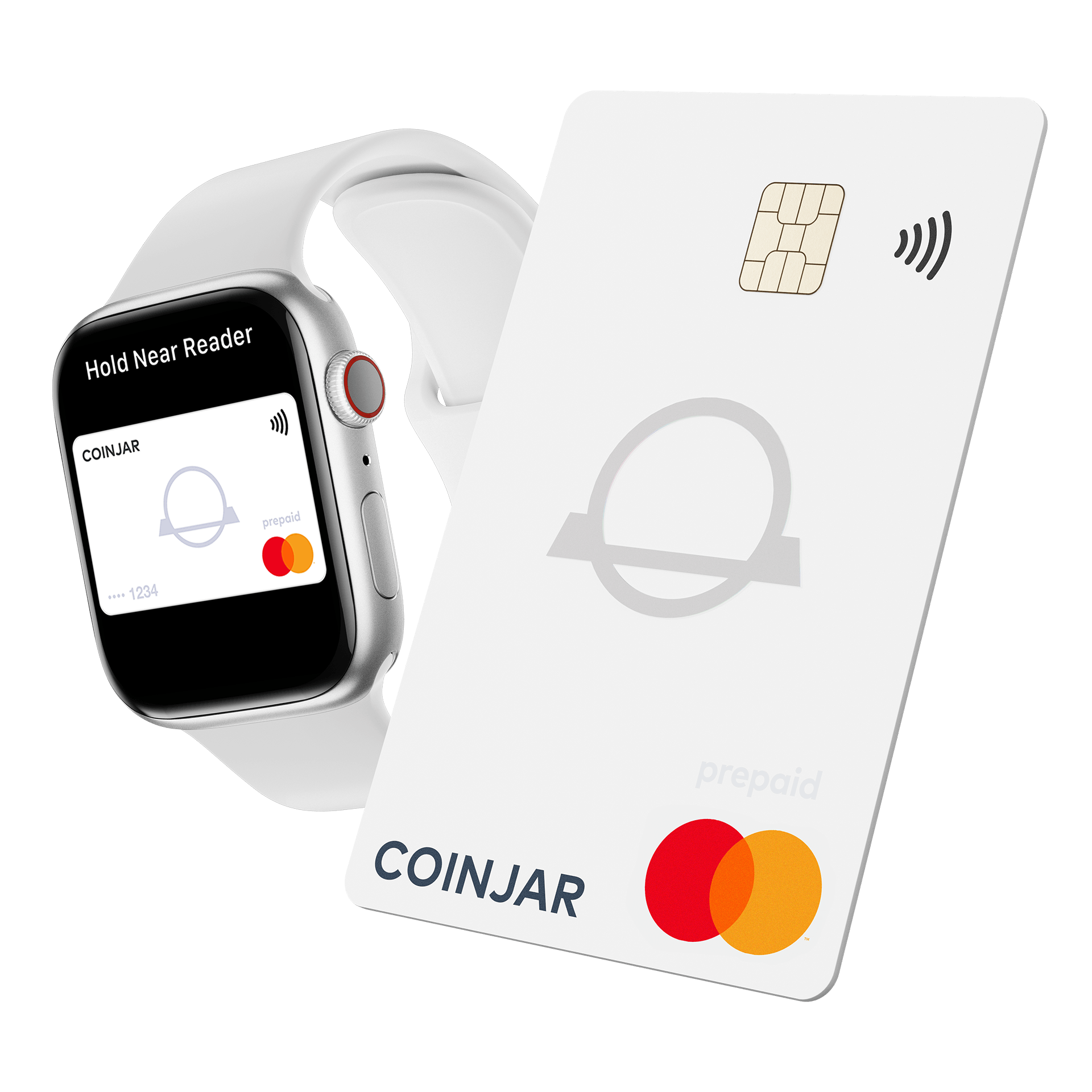
CoinJar Card
Use CoinJar Card, powered by Mastercard, for purchases online and in store, including through Apple Pay and Google Pay. No setup or monthly fee. A 1% purchase fee applies and is returned as CoinJar Rewards points, with one point earned per $1 spent. Available in Australia only.
Get your CoinJar Card for freeCoinJar Card
Use CoinJar Card, powered by Mastercard, for purchases online and in store, including through Apple Pay and Google Pay. No setup or monthly fee. A 1% purchase fee applies and is returned as CoinJar Rewards points, with one point earned per $1 spent. Available in Australia only.
Get your CoinJar Card for free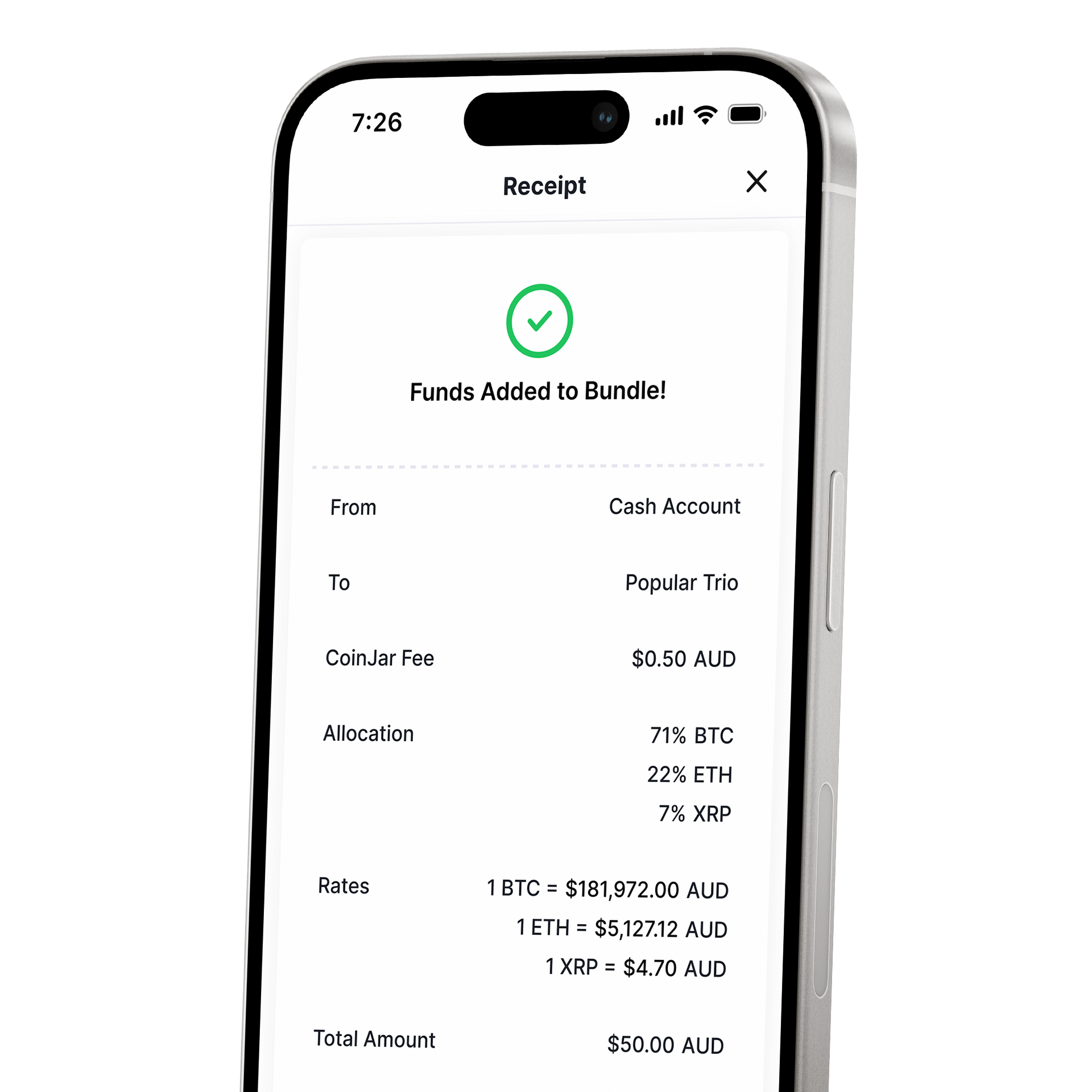
CoinJar Recurring Buy
Schedule automatic purchases weekly, fortnightly or monthly to dollar-cost average into individual cryptocurrencies or CoinJar Bundles. Manage your investment amount and schedule, with the flexibility to adjust or pause purchases as your circumstances change.
DCA with Recurring BuyCoinJar Recurring Buy
Schedule automatic purchases weekly, fortnightly or monthly to dollar-cost average into individual cryptocurrencies or CoinJar Bundles. Manage your investment amount and schedule, with the flexibility to adjust or pause purchases as your circumstances change.
DCA with Recurring Buy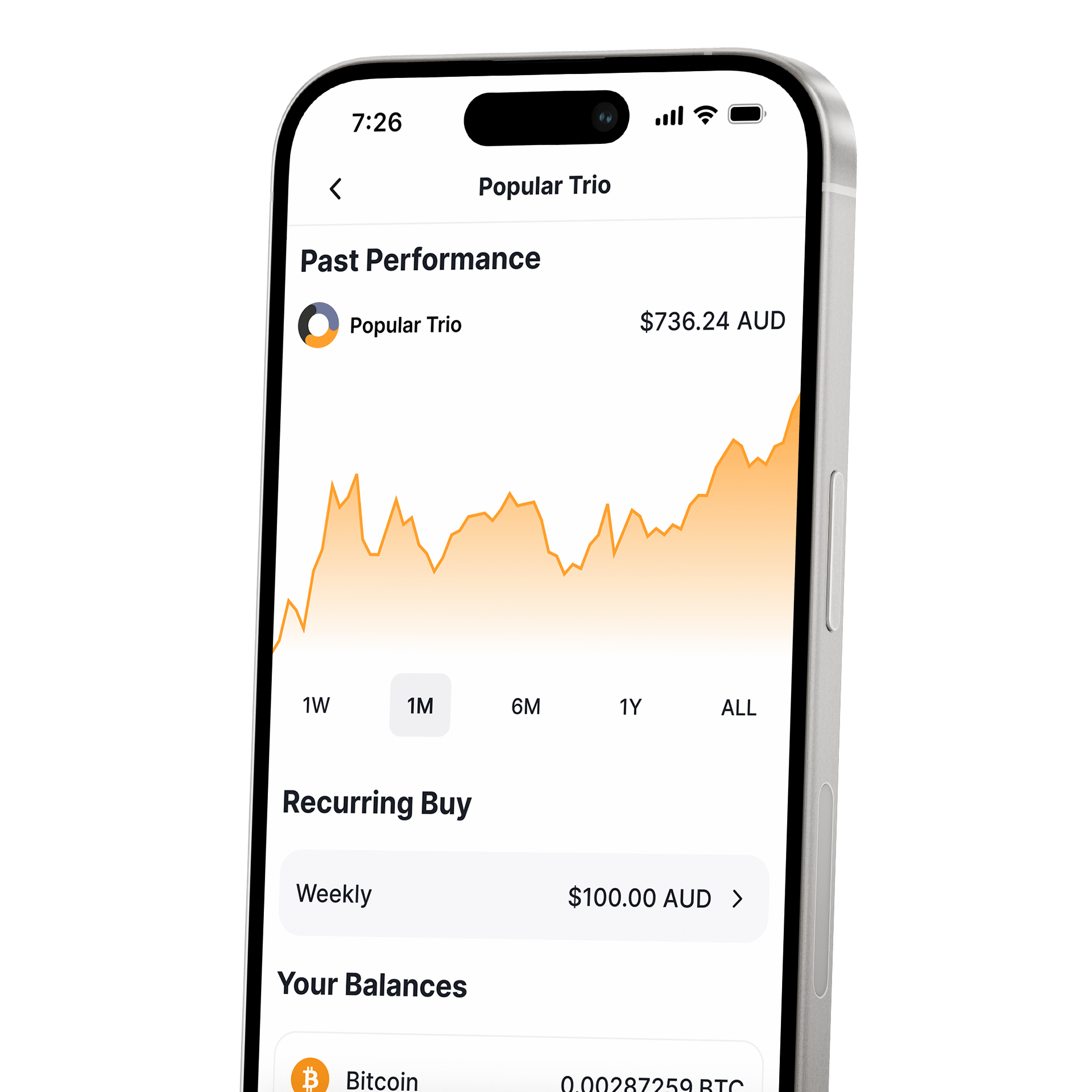
CoinJar Bundles
Pick your Bundle in the CoinJar app. Review each Bundle’s asset allocation, add to your holdings and rebalance when required. Sell your Bundle or unbundle it to manage the assets individually.
Learn moreCoinJar Bundles
Pick your Bundle in the CoinJar app. Review each Bundle’s asset allocation, add to your holdings and rebalance when required. Sell your Bundle or unbundle it to manage the assets individually.
Learn more
CoinJar Exchange
Trade with fees from 0-0.1%, using market, limit and stop-limit orders. Connect to TradingView to trade directly from your charts, or use CoinJar Exchange’s high-performance interface, built for active traders, market makers and institutions.
Explore CoinJar ExchangeCoinJar Exchange
Trade with fees from 0-0.1%, using market, limit and stop-limit orders. Connect to TradingView to trade directly from your charts, or use CoinJar Exchange’s high-performance interface, built for active traders, market makers and institutions.
Explore CoinJar Exchange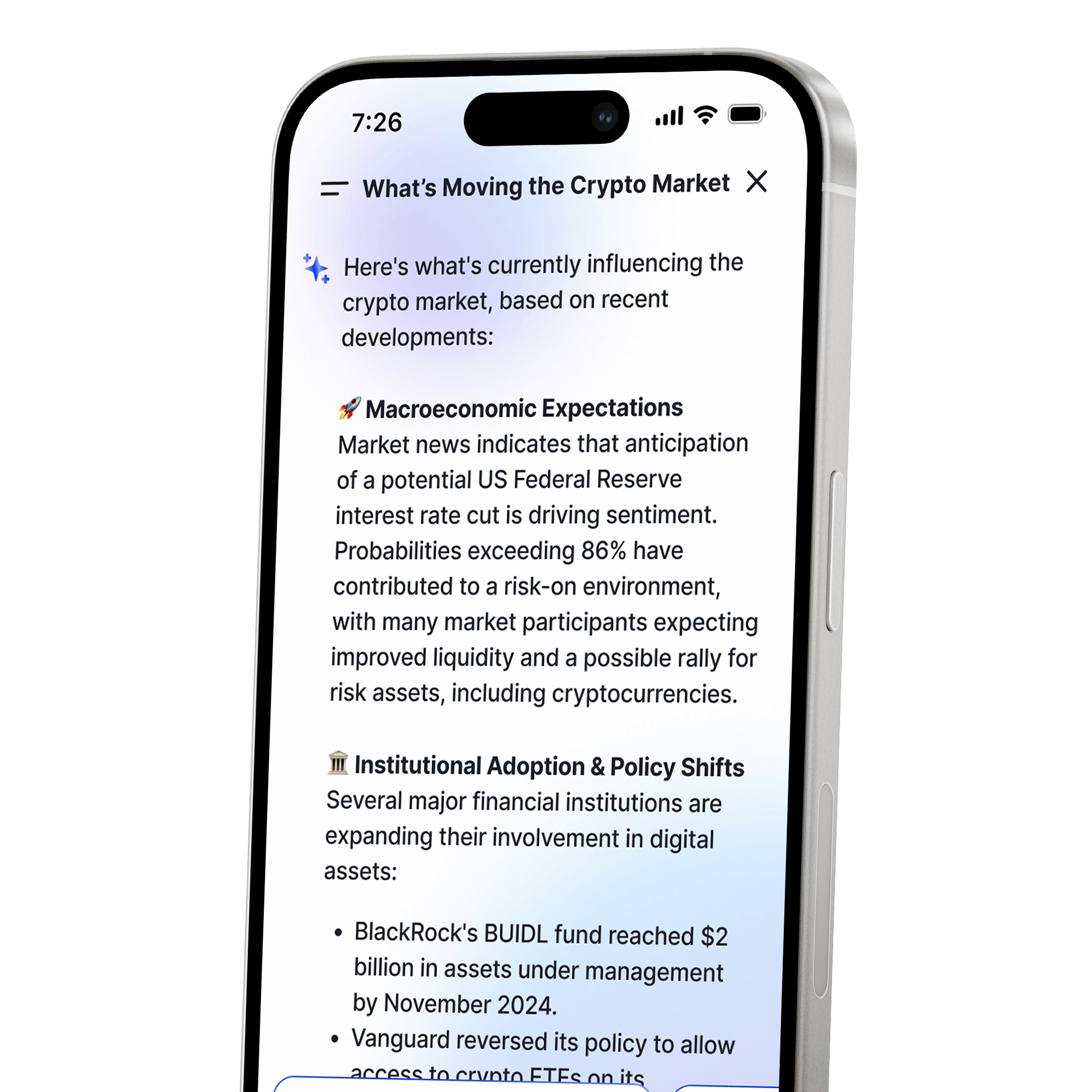
CoinJar AI
Access information about your holdings and the wider cryptocurrency market through CoinJar AI. Ask questions about portfolio changes, market developments or individual cryptocurrencies, with responses informed by your CoinJar holdings.
Learn moreCoinJar AI
Access information about your holdings and the wider cryptocurrency market through CoinJar AI. Ask questions about portfolio changes, market developments or individual cryptocurrencies, with responses informed by your CoinJar holdings.
Learn more
CoinJar OTC
For cryptocurrency trades above $50,000, CoinJar’s OTC desk provides personalised service and access to globally sourced liquidity. Work directly with a dedicated team to arrange and execute your purchase or sale. Discover OTC Services
Learn moreCoinJar OTC
For cryptocurrency trades above $50,000, CoinJar’s OTC desk provides personalised service and access to globally sourced liquidity. Work directly with a dedicated team to arrange and execute your purchase or sale. Discover OTC Services
Learn moreCoinJar does not endorse the content of, and cannot guarantee or verify the safety of any third-party websites. Visit these websites at your own risk.

CoinJar
Get the app.