
Buy USDC
USDCPast performance is not indicative of future results. All prices are sourced from CoinJar Indices.
What is USDC?
USDC is a stablecoin designed to maintain a value of one US dollar. It is issued by Circle, a US financial technology company, and backed by reserves held in cash and short-term US government assets. Australians commonly hold USDC to trade against a dollar-denominated asset, transfer value between supported platforms, or use applications built on public blockchains.
USDC aims to reduce price volatility, but it is not the same as cash in a bank account. Its value depends on Circle's reserves, redemption arrangements and the market's confidence in the token.
How does USDC work?
USDC launched in 2018 through Centre, a consortium established by Circle and Coinbase. Circle became the token's sole issuer and operator after the consortium was dissolved in 2023.
Eligible institutional customers can create USDC by depositing US dollars with Circle and redeem it for US dollars at a one-to-one rate. This minting and redemption process helps keep its market price close to one dollar. If USDC trades below one dollar, eligible traders can buy it at the lower price and redeem it at par. If it trades above one dollar, they can create new USDC at par and sell it at the higher market price.
Retail customers generally access USDC through exchanges rather than redeeming directly with Circle. This means its price can move slightly above or below one dollar when supply, demand or access to redemptions changes. Our guide to what a stablecoin is explains how this model compares with crypto-backed and algorithmic stablecoins.
Why the Australian dollar price of USDC moves
USDC tracks the US dollar, not the Australian dollar. One USDC is worth roughly one US dollar converted into AUD at the prevailing exchange rate. Its AUD price can therefore rise or fall with the AUD/USD exchange rate even when the US dollar peg is working as intended.
Holding USDC in Australia gives you exposure to the US dollar as well as to the risks of the token itself. A stronger Australian dollar can reduce the AUD value of USDC, while a weaker Australian dollar can increase it.
What backs USDC?
Circle reports that USDC is fully backed by highly liquid reserves. Most of the reserves are held through the Circle Reserve Fund, a government money market fund managed by BlackRock that invests in short-dated US Treasury securities and overnight Treasury repurchase agreements. The remainder is held as cash at major banks.
Circle publishes reserve information on its USDC transparency page. Deloitte provides monthly independent assurance over Circle's statements about the USDC in circulation and the assets held in reserve. Circle is also a publicly listed US company that files financial reports with the US Securities and Exchange Commission.
A reserve attestation and a financial statement audit serve different purposes. An attestation examines a specific statement about the reserves at a particular date, while an audit considers a company's broader financial statements across a reporting period. Neither removes issuer, banking or market risk.
What is USDC used for?
- Trading. USDC provides a dollar-denominated pair for buying and selling other cryptocurrencies.
- Moving value between platforms. Compatible blockchain transfers can settle at any time, including weekends and public holidays.
- Cross-border payments. Individuals and businesses can transfer USDC internationally without relying on conventional correspondent banking for the blockchain leg of the payment.
- Decentralised finance. USDC is used in lending markets, decentralised exchanges and liquidity pools, which introduce additional smart contract and counterparty risks.
- Onchain settlement. Businesses and financial institutions use USDC for payments and settlement on supported blockchain networks.
Which blockchain network is USDC on?
Circle issues native USDC on multiple blockchains, including Ethereum, Solana, Base, Arbitrum, Polygon and Avalanche. Each version operates on its own network, so a receiving wallet or exchange must support the specific network you select.
Native USDC is issued directly by Circle. Bridged versions, sometimes labelled USDC.e, are created by locking tokens on one network and issuing corresponding tokens on another. Bridged USDC depends on the security and solvency of the bridge as well as Circle, so it carries additional smart contract and counterparty risk.
CoinJar supports USDC transfers on Ethereum and Solana. Always confirm that the sending and receiving platforms use the same network before transferring. Our list of supported cryptocurrencies and networks shows the current options, while our guide to wrong-network transfers explains why some mistakes cannot be reversed.
What are the risks of holding USDC?
A stable price target does not make USDC risk free. The main risks include:
- Depeg risk. USDC can trade below one dollar. In March 2023, it briefly fell to about US$0.87 after Circle disclosed that part of its reserves was held at the failed Silicon Valley Bank. The peg recovered after US authorities protected the bank's depositors and Circle resumed redemptions.
- Issuer risk. USDC depends on Circle maintaining sufficient reserves and honouring eligible redemption requests.
- Banking and reserve risk. Cash reserves rely on banks, custodians and money market infrastructure. Problems affecting those organisations can affect confidence in USDC.
- No deposit protection. USDC is not an Australian bank deposit and is not covered by the Financial Claims Scheme or another government deposit guarantee.
- Freezing risk. Circle can freeze addresses and make their USDC untransferable when required by law, sanctions or court orders.
- Network risk. Sending USDC over an unsupported network can result in permanent loss. Bridged versions also depend on third-party smart contracts.
- Smart contract risk. A bug or exploit affecting USDC, a wallet, an exchange or a decentralised finance protocol may put funds at risk.
- No automatic return. Holding USDC does not generate interest by itself. Services offering a return introduce separate lending, protocol or counterparty risks.
Is USDC regulated in Australia?
USDC is issued by Circle in the United States rather than by an Australian bank or an Australian Government agency. It is not Australian legal tender, and Circle does not issue it under an Australian banking licence or deposit guarantee.
Australian regulation generally applies to the businesses providing cryptocurrency services. Exchanges must register with AUSTRAC and meet anti-money laundering and counter-terrorism financing obligations. ASIC also considers whether stablecoins and related services fall within Australia's financial product laws. Registration of an exchange does not amount to government approval of USDC or protection against losses.
How is USDC taxed in Australia?
The ATO treats cryptocurrency, including stablecoins, as capital gains tax assets rather than foreign currency. Holding USDC is not generally a taxable event, but disposing of it can be. Disposals include selling USDC for Australian dollars, swapping it for another cryptocurrency and using it to pay for goods or services.
The ATO provides general information about crypto asset investments, and our guide to crypto tax in Australia explains common taxable events and record-keeping requirements. This is general information, not tax advice, so speak to a registered tax agent about your circumstances.
USDC compared with USDT
USDC and USDT are both designed to track the US dollar, but they have different issuers, reserves and reporting arrangements. Circle issues USDC and publishes monthly reserve assurance reports from Deloitte. Tether issues USDT and publishes quarterly reserve attestations from BDO Italia.
USDC's reported reserves consist of cash and short-term US government assets. Tether reports a broader reserve mix that also includes assets such as gold, Bitcoin and secured loans. USDT generally has deeper liquidity across global cryptocurrency markets, while USDC is widely integrated with US-regulated platforms and decentralised finance. Neither token is a bank deposit or guaranteed to maintain its peg.
Why USDC matters
USDC connects the US dollar with public blockchain networks. Its reserve disclosures, broad network support and integration with payments and decentralised finance make it useful for trading and settlement. Those benefits still depend on Circle, its banking partners, the selected blockchain and the platform holding or transferring the tokens. Check the current reserve reports and confirm the network before moving USDC.
Fund Your Account Your Way
Buy USDC instantly using Visa or Mastercard, or deposit Australian dollars via bank transfer, PayID or PayPal. Buy, sell and convert between supported cryptocurrencies through your CoinJar account.


How to buy USDC with CoinJar
Start your portfolio with Australia's longest-running crypto exchange with these simple steps.
Sign up to CoinJar
Get the CoinJar app on iOS or Android, create an account and verify your ID.
Deposit funds
Deposit AUD fee-free via PayID, Osko or bank transfer. You can also use PayPal or pay instantly by card.
Buy your first crypto
Buy USDC and other popular cryptos using cash or credit card in minutes.




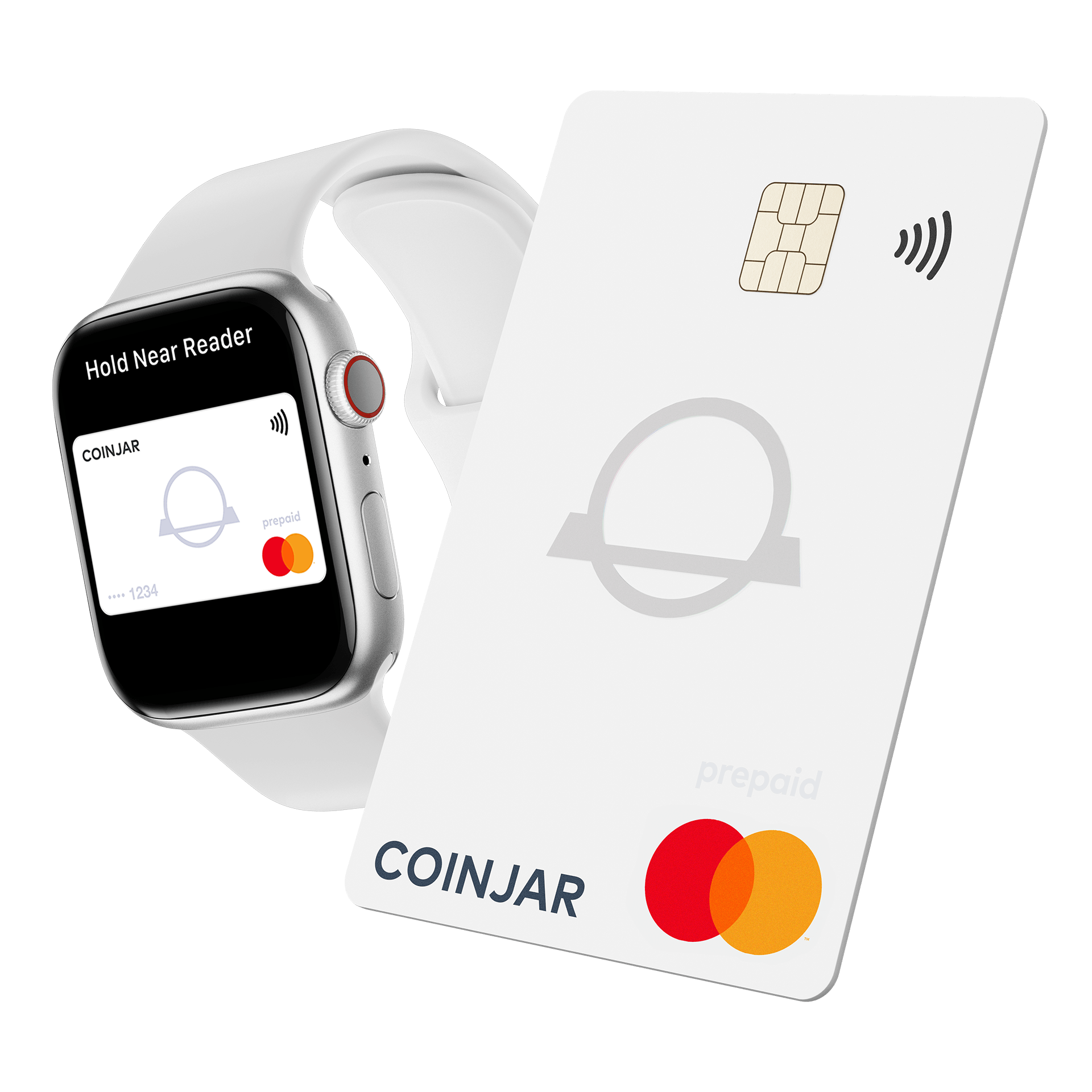
CoinJar Card
Use CoinJar Card, powered by Mastercard, for purchases online and in store, including through Apple Pay and Google Pay. No setup or monthly fee. A 1% purchase fee applies and is returned as CoinJar Rewards points, with one point earned per $1 spent. Available in Australia only.
Get your CoinJar Card for freeCoinJar Card
Use CoinJar Card, powered by Mastercard, for purchases online and in store, including through Apple Pay and Google Pay. No setup or monthly fee. A 1% purchase fee applies and is returned as CoinJar Rewards points, with one point earned per $1 spent. Available in Australia only.
Get your CoinJar Card for free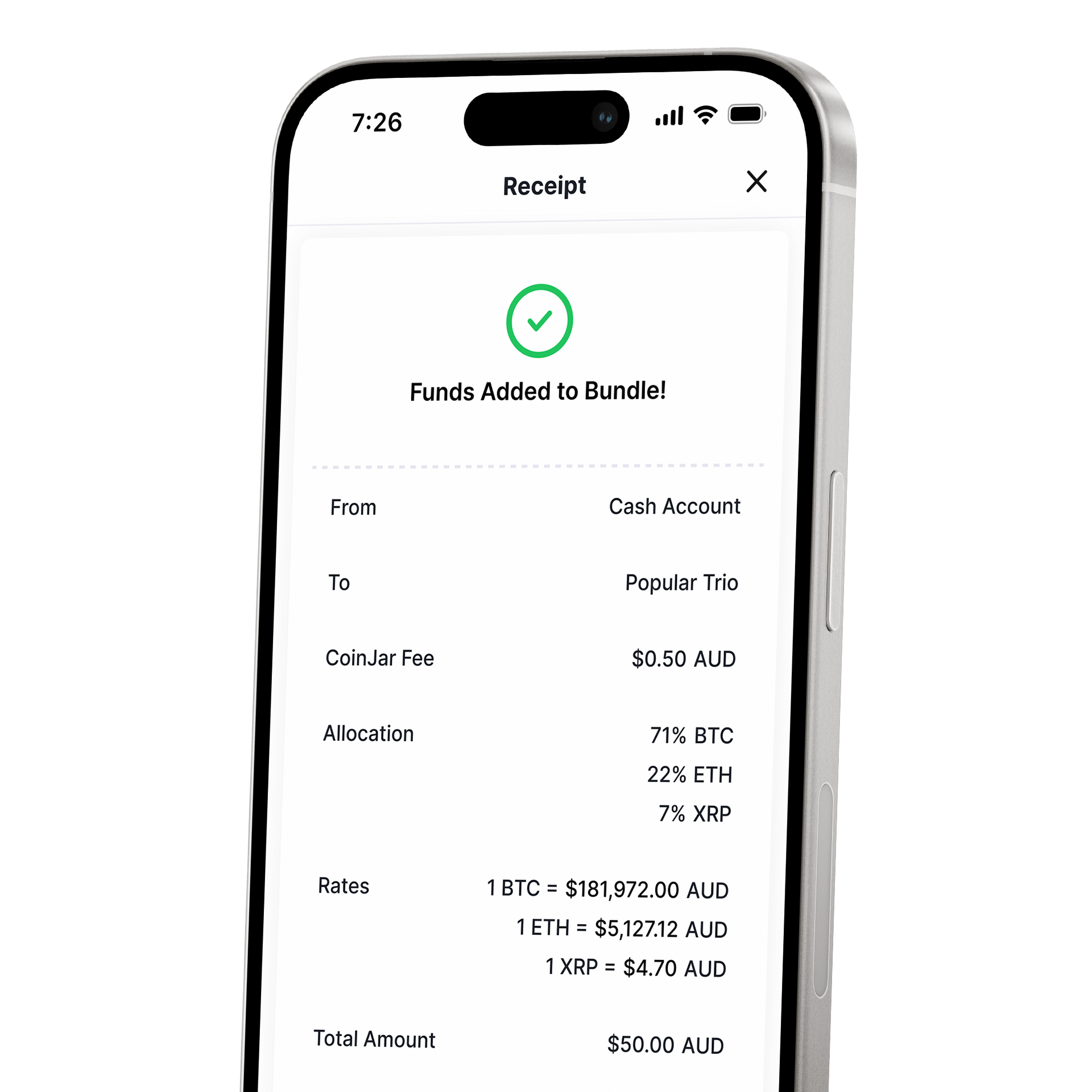
CoinJar Recurring Buy
Schedule automatic purchases weekly, fortnightly or monthly to dollar-cost average into individual cryptocurrencies or CoinJar Bundles. Manage your investment amount and schedule, with the flexibility to adjust or pause purchases as your circumstances change.
DCA with Recurring BuyCoinJar Recurring Buy
Schedule automatic purchases weekly, fortnightly or monthly to dollar-cost average into individual cryptocurrencies or CoinJar Bundles. Manage your investment amount and schedule, with the flexibility to adjust or pause purchases as your circumstances change.
DCA with Recurring Buy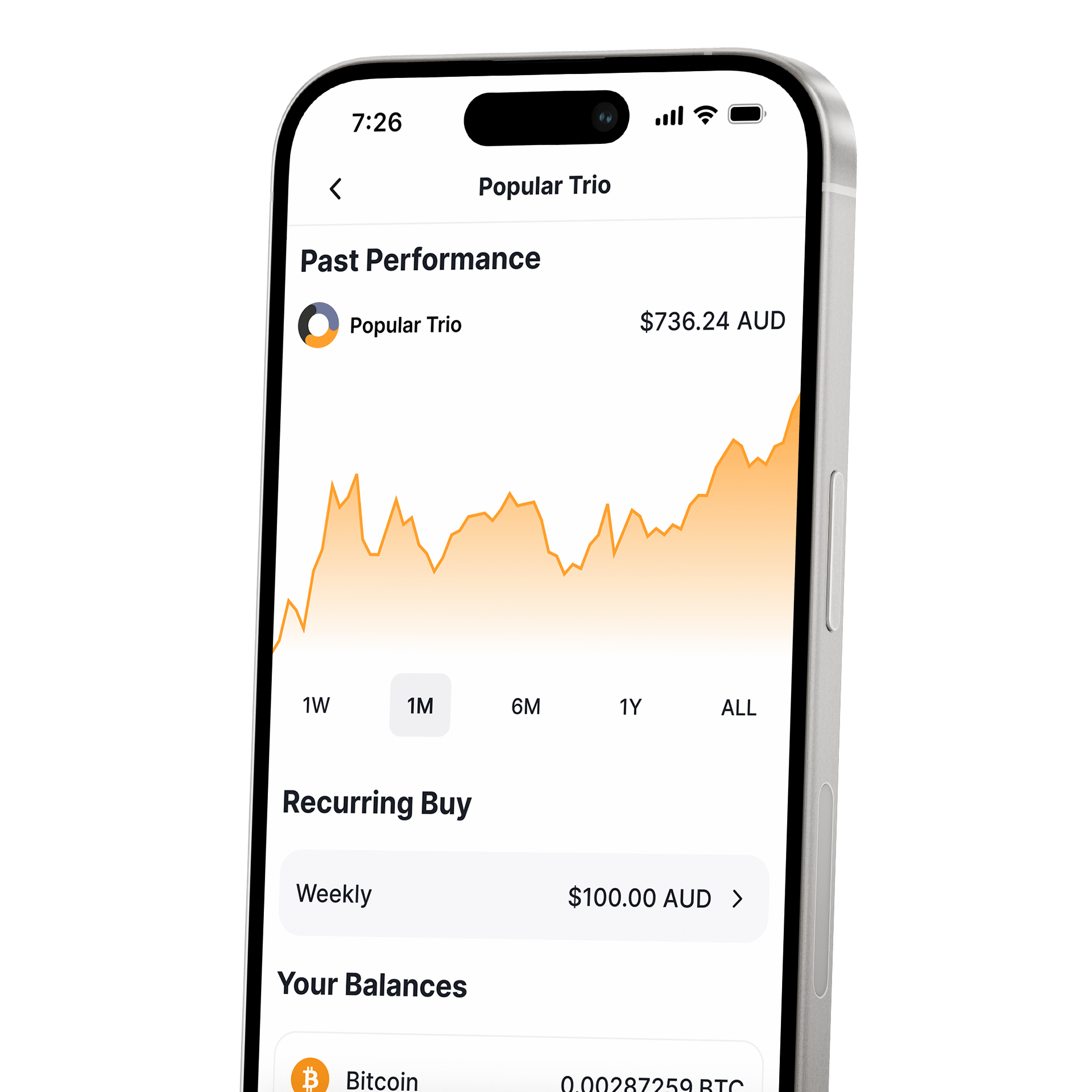
CoinJar Bundles
Pick your Bundle in the CoinJar app. Review each Bundle’s asset allocation, add to your holdings and rebalance when required. Sell your Bundle or unbundle it to manage the assets individually.
Learn moreCoinJar Bundles
Pick your Bundle in the CoinJar app. Review each Bundle’s asset allocation, add to your holdings and rebalance when required. Sell your Bundle or unbundle it to manage the assets individually.
Learn more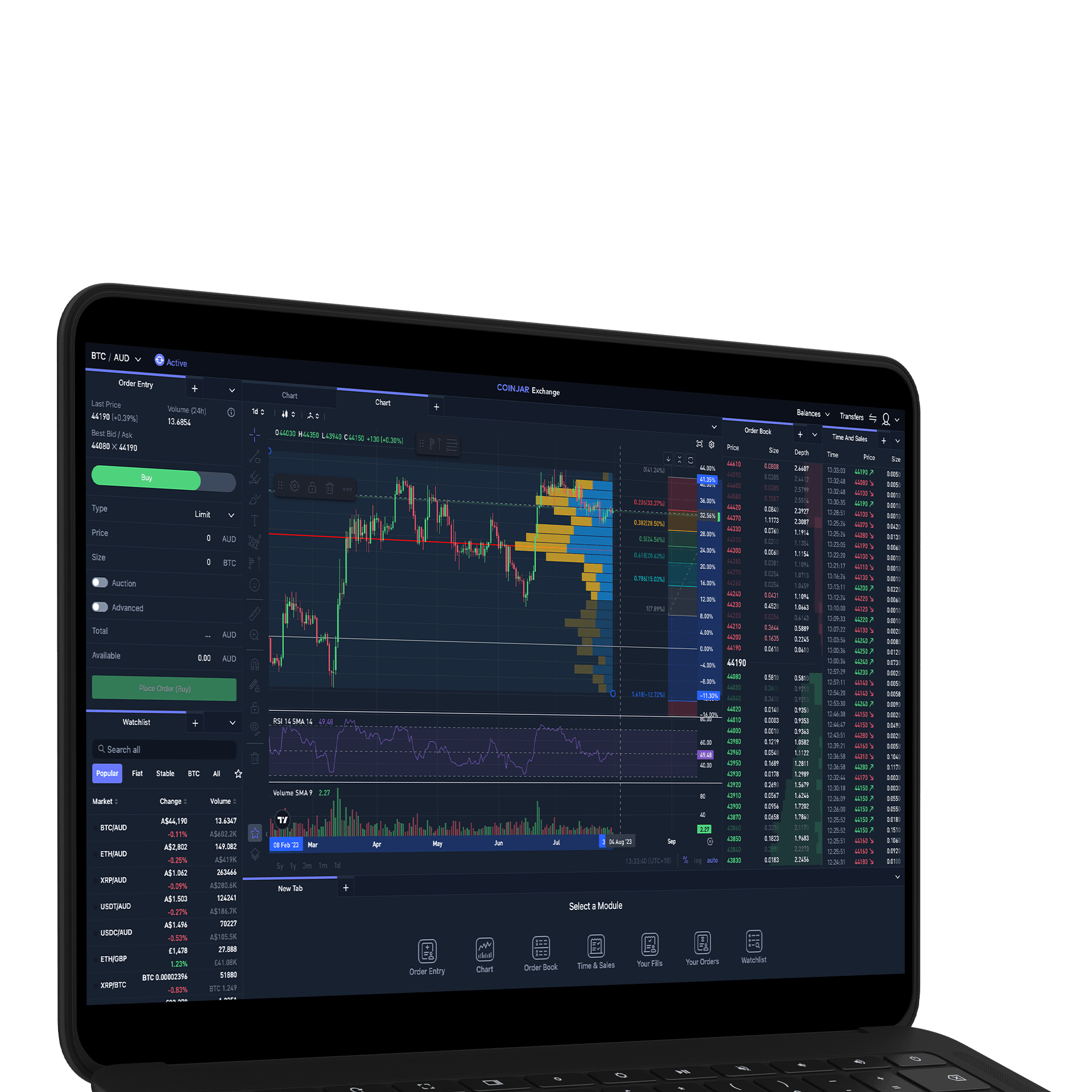
CoinJar Exchange
Trade with fees from 0-0.1%, using market, limit and stop-limit orders. Connect to TradingView to trade directly from your charts, or use CoinJar Exchange’s high-performance interface, built for active traders, market makers and institutions.
Explore CoinJar ExchangeCoinJar Exchange
Trade with fees from 0-0.1%, using market, limit and stop-limit orders. Connect to TradingView to trade directly from your charts, or use CoinJar Exchange’s high-performance interface, built for active traders, market makers and institutions.
Explore CoinJar Exchange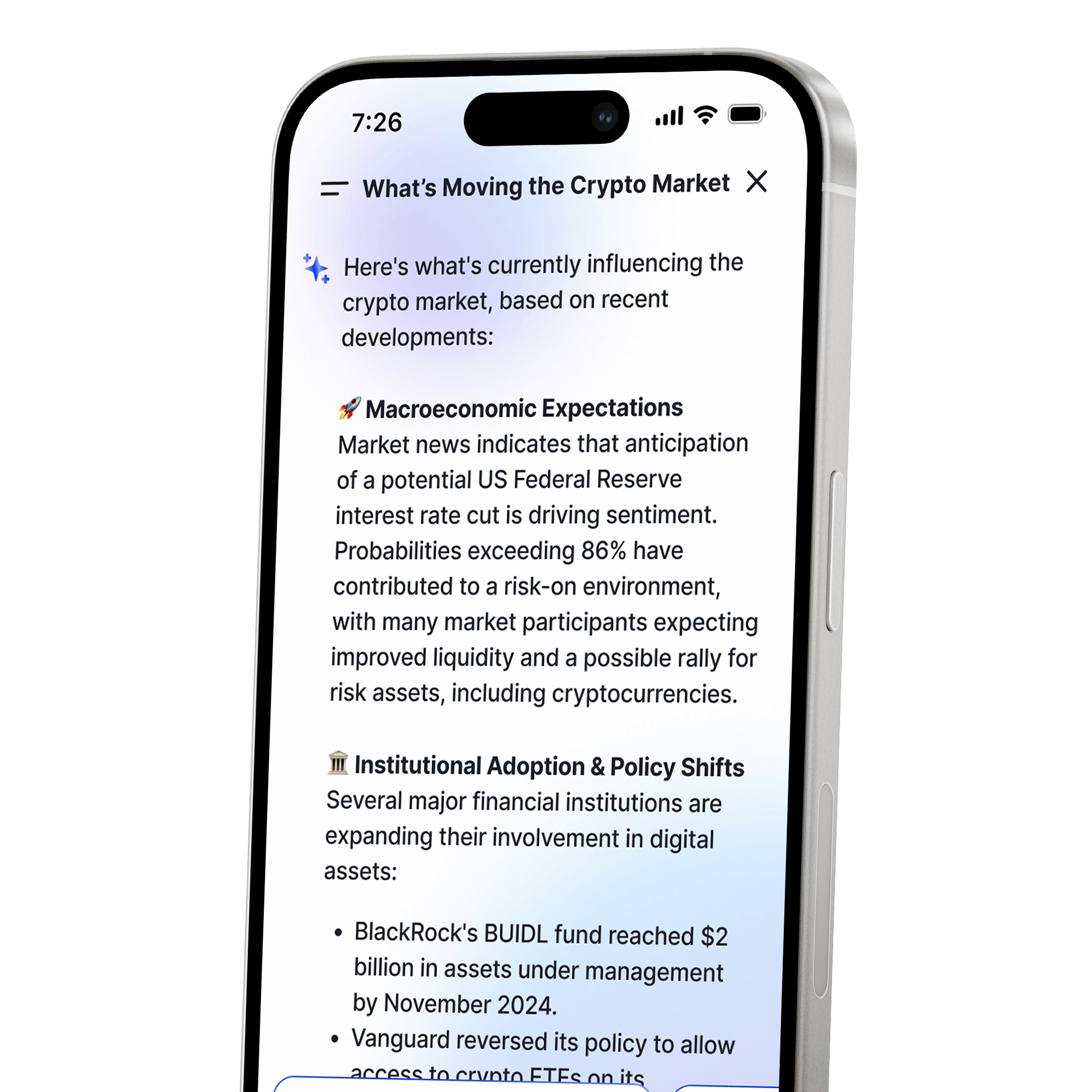
CoinJar AI
Access information about your holdings and the wider cryptocurrency market through CoinJar AI. Ask questions about portfolio changes, market developments or individual cryptocurrencies, with responses informed by your CoinJar holdings.
Learn moreCoinJar AI
Access information about your holdings and the wider cryptocurrency market through CoinJar AI. Ask questions about portfolio changes, market developments or individual cryptocurrencies, with responses informed by your CoinJar holdings.
Learn more
CoinJar OTC
For cryptocurrency trades above $50,000, CoinJar’s OTC desk provides personalised service and access to globally sourced liquidity. Work directly with a dedicated team to arrange and execute your purchase or sale. Discover OTC Services
Learn moreCoinJar OTC
For cryptocurrency trades above $50,000, CoinJar’s OTC desk provides personalised service and access to globally sourced liquidity. Work directly with a dedicated team to arrange and execute your purchase or sale. Discover OTC Services
Learn moreCoinJar does not endorse the content of, and cannot guarantee or verify the safety of any third-party websites. Visit these websites at your own risk.

CoinJar
Get the app.