
Buy Ethereum Name Service
ENSPast performance is not indicative of future results. All prices are sourced from CoinJar Indices.
What is Ethereum Name Service?
Ethereum Name Service is the naming layer for Ethereum. It turns a long hexadecimal address into something a person can read and remember, and it has grown into a general purpose identity record: a name that can hold your addresses across several networks, a profile, an avatar and a pointer to a website.
ENS is the token that governs it. That distinction is the single most important thing on this page. Buying ENS does not buy you a .eth name, and the token does not receive the fees that name registrations generate. Our guide to Ethereum covers the network ENS is built on, and our guide to NFTs covers the standard .eth names are issued under.
What does an ENS name actually do?
A .eth name is a record, not just a nickname. Its resolver can hold:
Addresses. The name maps to an Ethereum address, and to addresses on other networks, so one name can be the destination for several assets.
A reverse record. Set your primary name and applications that support ENS will display the name instead of your address.
Text records. Arbitrary fields such as a website, an email, social handles or a description, which applications read to build a profile.
An avatar and a content hash. An image used as your profile picture across supporting apps, and a pointer to content stored on a decentralized system, which is how .eth names can serve websites.
Subnames. The owner of a name controls everything beneath it, so a project or a community can issue names to its members without going back to the registrar.
ENS can also represent conventional domains. If a DNS name supports DNSSEC, its owner can prove control and bring it into ENS, which gives it ENS records without changing its ordinary registration. The protocol documentation sets out how the registry, registrars and resolvers fit together.
Where did ENS come from?
ENS launched in May 2017, built by Nick Johnson out of work at the Ethereum Foundation. Development moved to a dedicated organization, True Names Limited, since renamed ENS Labs, and the DAO that now governs the protocol is represented legally by the ENS Foundation, a Cayman Islands entity.
The ENS token arrived in November 2021, when the project handed governance to a DAO and airdropped a share of the supply to people who had registered .eth names before a snapshot at the end of October that year. It was one of the more widely praised airdrops of that period, largely because it went to people who had already paid to use the protocol rather than to speculators farming it.
What is the ENS token, and what does it not do?
One hundred million tokens were created. A quarter went to the airdrop, a quarter to contributors, core developers and ecosystem partners under vesting, and half to the DAO treasury.
It is a governance token and nothing else. ENS carries a vote in the ENS DAO. It does not entitle you to a name, a discount on a name, a claim on the treasury, interest or any share of protocol income.
Registration money goes to the treasury, not to holders. Payments for .eth registrations and renewals are forwarded to the ENS treasury, which the DAO spends on development, ecosystem work and public goods. There is no mechanism that routes any of it to a token holder, and the ENS Constitution treats fees as funding for the protocol rather than a return to be extracted.
The supply is not permanently fixed. The token contract allows the DAO to mint a small additional share of the supply, capped at once a year. It is a governance power rather than a schedule, but it exists.
If you are buying ENS, be clear that you are buying a vote in how a public naming system is run, in the hope that the value of that vote rises. You are not buying a claim on its revenue.
How .eth names work commercially
This part is unusual for crypto, because it looks like the domain business rather than a token economy.
Names are rented, not bought outright. Registration and renewal are paid annually in ETH, priced against dollars, and short names cost dramatically more than ordinary ones. Anyone can renew a name on someone else's behalf, which is a small but genuinely useful design choice.
Expiry has a deliberate cliff. When a registration lapses, the owner keeps a ninety day grace period in which they can still renew. After that, the name is released through a temporary premium: a Dutch auction lasting twenty one days that starts at an absurd level, around one hundred million dollars, and decays exponentially to zero. The point is to stop bots from claiming valuable expired names the instant they free up. Once the premium reaches zero the name registers at the ordinary annual price. The registrar documentation covers the mechanics.
The practical warning: a .eth name is not yours forever. It is yours while it is paid for.
ENSv2, and the layer two that was canceled
This is the part where most existing writing about ENS is now wrong, and it is worth getting right.
In November 2024 ENS announced Namechain, a dedicated Ethereum layer two built on Linea's zero knowledge stack, intended to make registrations, renewals and record updates far cheaper. It was the centerpiece of the ENSv2 plan for roughly a year.
In February 2026 ENS canceled it. The stated reason was that Ethereum itself had scaled faster than anyone expected: the gas limit had risen sharply, the cost of an ENS registration had fallen by around ninety nine percent over the preceding year, and running a separate network would have cost more than simply subsidizing transactions on Ethereum. ENS also argued that a rollup would have added trust assumptions it did not want in a naming system, including upgradeable contracts and a small set of block producers. The announcement is worth reading in full, because it is unusually candid about reversing a public roadmap.
ENSv2 itself is still coming, and will deploy entirely on Ethereum. It is a rebuild of the protocol rather than a new product: every name gets its own registry, subnames and permissions become far more flexible, and existing owners keep their names through the upgrade. New applications, an ENS App and an ENS Explorer, went into public beta on a test network in 2026 ahead of the mainnet deployment, alongside a security audit competition. The ENSv2 page is the project's own summary.
Two things follow for anyone buying the token. The protocol is mid rebuild, and mid rebuild is when things slip or break. And the cancelation of Namechain shows that a well publicized roadmap can be discarded outright, which is a reasonable thing for engineers to do and an uncomfortable thing to hold a token against.
Who actually controls ENS?
The ENS DAO does, within limits it wrote for itself.
Token holders either vote directly or delegate their voting power to someone else, which is how most of the supply participates. Proposals come in two forms: off chain signaling votes used to settle direction, and executable proposals that pass through on chain governance and move funds or change contracts. Day to day work is run by working groups with elected stewards and their own budgets, and a long term endowment funded by the DAO is managed by an external treasury manager under a governance approved mandate.
The Constitution sits above all of it. It commits the DAO to keeping ENS a neutral, decentralized naming system, restricts what governance can do to fees and to the namespace, and requires a supermajority and a minimum turnout to amend.
The DAO's authority is real but narrower than it sounds. It can change protocol parameters, spend the treasury and, as it demonstrated in 2022 when token holders voted to remove a director of the ENS Foundation, change the people who represent it. It cannot take a name away from its owner, and it cannot make .eth work in places that do not choose to support it.
Where ENS names are actually used
This is ENS's genuine strength. Support is broad and largely invisible: major wallets resolve .eth names, a great many applications display them instead of addresses, and the standard has become the default way to attach a human readable identity to an Ethereum account. Social applications have adopted ENS names as usernames.
The clearest evidence is competitive. Basenames, the naming system on Coinbase's Base network, are issued as subnames of a .eth name and built to ENS specifications, so ordinary ENS tooling resolves them. Other networks have built to the same standard. That is the position of a protocol that won the argument about how naming should work.
It is not the same thing as growth in the token. Registrations, integrations and treasury income can all rise without any of it flowing to a holder, which is precisely the gap the risks below describe.
What are the risks of holding ENS?
The token has no cash flow. ENS pays nothing and receives no share of registration income. Its value rests entirely on what a vote in the protocol's governance is worth to someone else.
Usage does not mechanically support the price. Every new .eth registration funds the treasury, not holders. A protocol can succeed while its governance token does not.
Dilution. The DAO retains authority to mint a limited amount of new supply, and holds a large share of the tokens already, which can be spent into the market through grants and programs.
Governance concentration. Voting power is delegated, and delegation concentrates influence in a relatively small number of addresses.
Rebuild risk. ENSv2 is not fully live on the main network. Rebuilds of working systems carry migration, contract and compatibility risk.
Roadmap reversals. Namechain was announced, promoted for over a year and then canceled. The decision looks defensible, but it is a reminder that stated plans are not commitments.
Dependence on Ethereum. ENS is Ethereum infrastructure. Anything that damages Ethereum's usage, cost profile or credibility damages ENS with it.
Namespace competition. Basenames, .sol names and commercial providers all compete for the same job. Winning the technical standard does not guarantee capturing the value.
Outside the domain name system. .eth is not recognized by ICANN, so it does not resolve in an ordinary browser without help. That caps how far it reaches into everyday use.
Legal and intellectual property risk. ENS Labs challenged a competitor's patent covering blockchain name resolution and the challenge was refused by the United States patent office in 2024. Naming systems also attract trademark and impersonation disputes that the protocol itself cannot adjudicate.
Impersonation. Lookalike names using similar or substituted characters are a persistent phishing technique, which is a risk to users of names rather than to the token, but it is a real one.
Volatility. ENS is not a stablecoin. Its value moves sharply and can fall substantially.
No consumer protection. Cryptocurrency held with CoinJar is not covered by FDIC or SIPC protection. If the value of ENS falls, there is no compensation scheme to make you whole.
Buying ENS with US dollars on CoinJar
CoinJar has operated since 2013 and lists ENS against US dollars, so you can buy, sell and hold it without converting through another cryptocurrency first. Current charges are on our fees page, and live US dollar rates are on our cryptocurrency prices page.
CoinJar, Inc. is registered with the Financial Crimes Enforcement Network as a money services business, NMLS ID 2492913, and holds money transmitter licenses in a growing number of states. That registration covers anti money laundering obligations. It is not an endorsement of CoinJar's products and it is not approval of any cryptocurrency listed on the platform. You can check whether CoinJar operates in your state before signing up.
How is ENS taxed in the US?
The IRS treats cryptocurrency as property. A disposal can occur when you sell ENS for US dollars, trade it for another cryptocurrency, spend it or give it away.
The IRS sets out its approach on its digital assets page. Our guide to pulling your transaction history together at tax time provides a practical overview. This is general information, not tax advice. Consider speaking to a qualified tax professional about your circumstances.
Cash, credit or crypto?
Buy Ethereum Name Service instantly using Visa or Mastercard. Get cash in your account fast with bank transfer, Faster Payments, PayID or Osko. Convert crypto-to-crypto with a single click.







How to buy Ethereum Name Service with CoinJar
Start your cryptocurrency portfolio with CoinJar by following these simple steps.
Download the app
Get the CoinJar app on iOS or Android.
Create an account
Sign up and verify your ID – it only takes a couple of minutes.
Make a purchase
Buy Bitcoin and more than 60 other cryptos using cash or credit card.
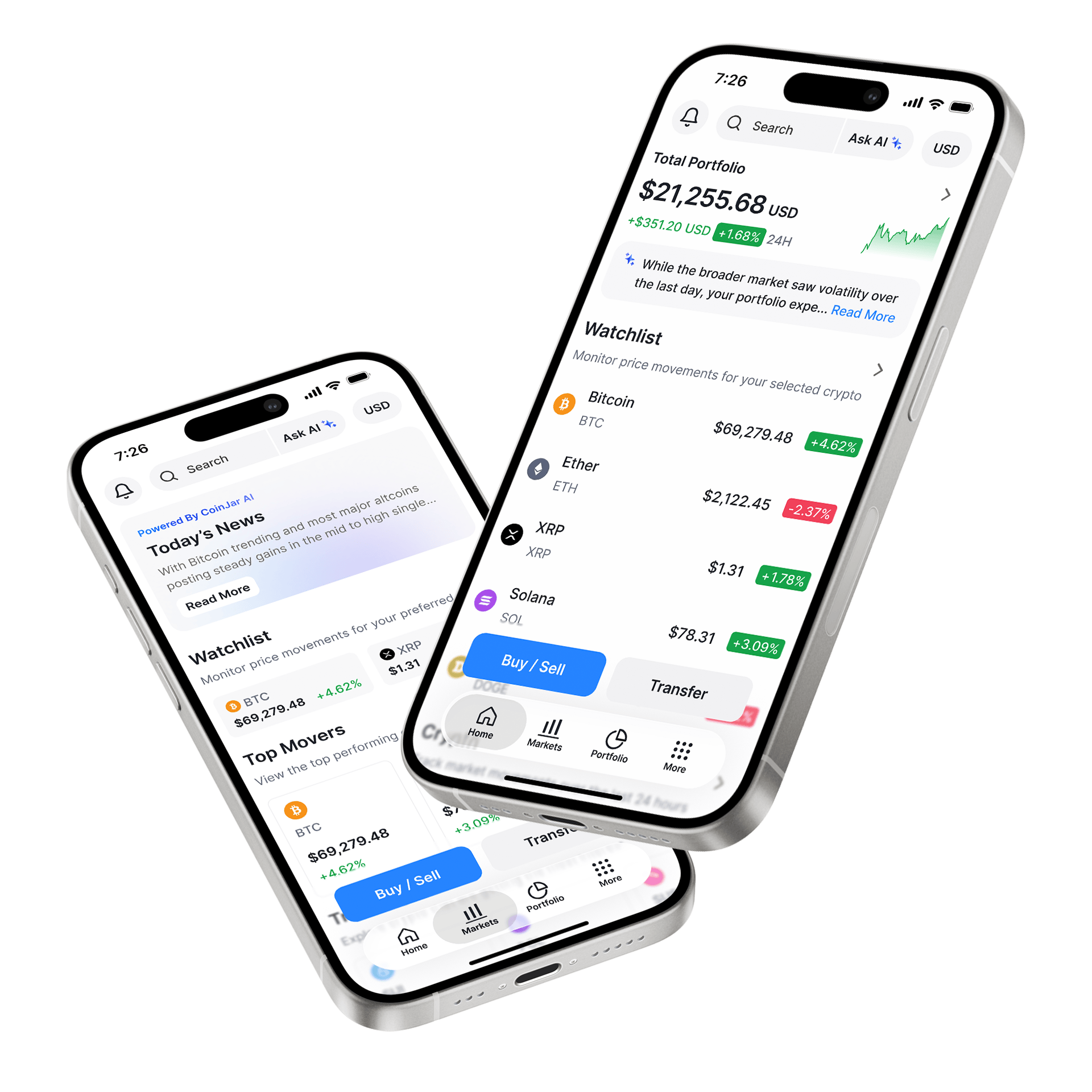
CoinJar App
Buy, sell, send and even spend your crypto with Australia’s favourite cryptocurrency app.
Get the CoinJar appCoinJar App
Buy, sell, send and even spend your crypto with Australia’s favourite cryptocurrency app.
Get the CoinJar app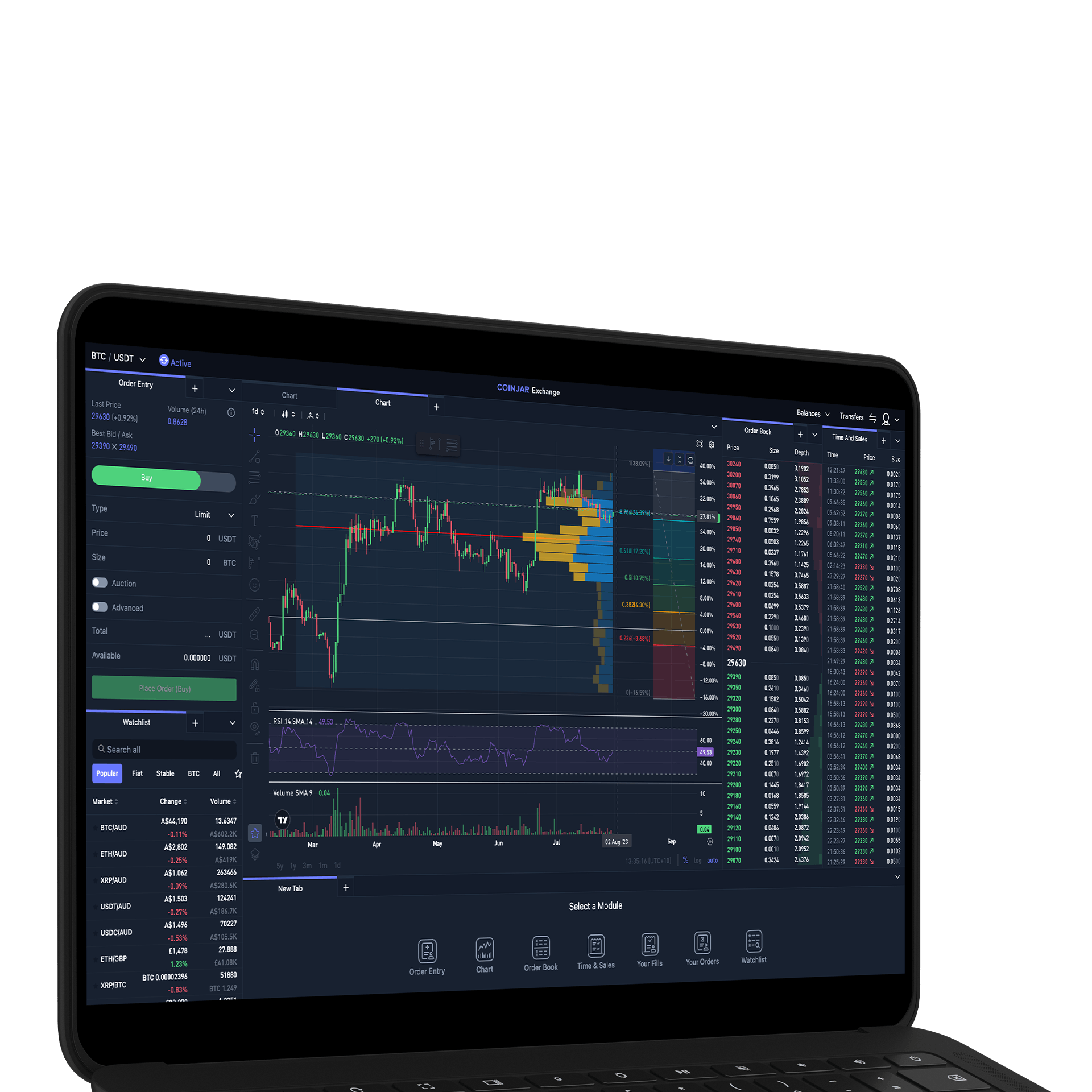
CoinJar Exchange
With one of the fastest matching engines in the world, CoinJar Exchange is purpose-built for institutions, market makers and professional traders. Features global liquidity, ultra-thin spreads and some of Australia and the UK’s most competitive fees.
Explore CoinJar ExchangeCoinJar Exchange
With one of the fastest matching engines in the world, CoinJar Exchange is purpose-built for institutions, market makers and professional traders. Features global liquidity, ultra-thin spreads and some of Australia and the UK’s most competitive fees.
Explore CoinJar Exchange
CoinJar
Get the app.