
Buy Kyber Network
KNCPast performance is not indicative of future results. All prices are sourced from CoinJar Indices.
What is Kyber Network?
Kyber Network is one of the older pieces of infrastructure in decentralized finance. It began in 2017 with the goal of making token liquidity available to any application that needed it, and today its main product is KyberSwap, a trading platform whose most used feature is an aggregator: software that searches across many decentralized exchanges at once and splits a single trade between them to get a better price. KNC is the network's token.
That distinction is worth holding on to, because it separates Kyber from most tokens in the same category. Kyber's core business is routing trades rather than holding the liquidity itself. Our guide to decentralized finance explains the wider category, and our guide to Ethereum covers the network Kyber started on.
What an aggregator does, and why it matters
Liquidity in decentralized finance is scattered. The same pair of tokens might trade across dozens of separate venues on a single network, each with its own depth and pricing, and a large order sent to any one of them moves the price against the person placing it.
An aggregator solves that by treating all of those venues as one pool. It searches the available routes, breaks an order into pieces, sends each piece where it will get the best execution, and returns the combined result. For a trader the benefit is less slippage. For the software, the hard part is doing that search quickly and cheaply enough to be worth it, across many networks at once.
Kyber has built this into a service that other applications and wallets plug into rather than only a website people visit. That is the strongest part of the business, and it is also the part with the least direct connection to the token.
KyberSwap's other pieces
Alongside the aggregator, KyberSwap has run its own liquidity pools and features aimed at people supplying liquidity rather than trading.
Classic pools. Standard automated market maker pools with amplification settings for assets that are meant to trade close to each other. Elastic pools. A concentrated liquidity design, where providers choose a price range for their capital. This is the product that was exploited in 2023, covered below. Trading tools. Limit orders, cross chain swaps and analytics built on top of the routing engine.
The November 2023 exploit
On 22 and 23 November 2023 an attacker drained KyberSwap Elastic pools across multiple networks, taking assets valued at roughly forty seven million dollars at the time.
The flaw was in the math of the concentrated liquidity design. By manipulating the price to sit precisely at the boundary between two liquidity ranges, and exploiting a precision issue in how the contract handled that boundary, the attacker was able to make the pool count the same liquidity twice and withdraw far more than it should have released.
Kyber's response was to launch a treasury funded grant program and, according to its own post mortem, to cover one hundred percent of affected funds for users who applied. The KNC token contract and the KyberDAO were not themselves affected by the exploit. The company also cut a substantial part of its team in the aftermath, and its development focus since has been on the aggregator and routing side of the business.
Two things are worth taking from this. Users were made whole, which is not the usual outcome after an exploit of that size and reflects a treasury being spent to protect a reputation. And the vulnerability was another precision and rounding failure in complex pool math, the same class of bug that has cost other major protocols very large sums since.
What is KNC used for?
Governance. KNC is staked in the KyberDAO to vote on proposals covering protocol parameters, fee levels, supported networks and how treasury funds are used. Voting rewards. A share of trading fees generated by KyberSwap is directed to the DAO and distributed to stakers who actually vote. Rewards follow participation, not merely holding. Protocol incentives. KNC has been used to bootstrap liquidity and support ecosystem programs, at governance's discretion.
Two limits are worth stating plainly. KNC is not gas, so using KyberSwap does not require you to hold it. And rewards depend on trading activity on Kyber's own venues and on decisions the DAO makes, neither of which is guaranteed.
KNC's supply is not fixed
KNC was upgraded to a new contract in 2021, replacing the original token. Holders had to migrate, and the old token is generally now referred to as KNCL.
The point of that upgrade was flexibility. The current KNC contract allows the DAO to mint new tokens or burn existing ones as part of managing incentives and fees. That means supply is a governance decision rather than a fixed schedule set in code.
For a holder this cuts both ways. Fee driven burns can reduce supply, and minting to fund growth or incentives can dilute it. Neither is guaranteed in either direction, and the current settings matter more than any historical supply figure.
Which network is your KNC on?
KNC is natively an ERC-20 token on Ethereum, and representations of it exist on other networks compatible with the Ethereum Virtual Machine where KyberSwap operates.
Addresses are not interchangeable between networks. Sending KNC to an address on a network the receiving wallet or exchange does not support is one of the most common ways people permanently lose tokens, and it usually cannot be reversed. Before any transfer, confirm which network the destination expects and make sure the network you are sending from matches. Our guide to sending crypto on the wrong network covers what can and cannot be recovered.
What are the risks of holding KNC?
Demonstrated smart contract risk. Kyber lost a very large sum to an exploit of its concentrated liquidity pools, and the wider sector keeps finding similar precision bugs in similar code. Treasury depletion. Compensating users in full was good for trust and expensive. A treasury that has been drawn down has less capacity to fund development, incentives and any future incident. Reduced capacity. The team was cut significantly after the exploit, which affects how much can be built and maintained. Weak link between product and token. The aggregator can be used without KNC, so growth in routing volume does not automatically create demand for the token. Fee dependence. Staking rewards depend on trading fees earned by Kyber's own venues, which fluctuate with market activity and competition. Adjustable supply. The DAO can mint KNC. Dilution is a governance decision rather than an impossibility. Competition. Aggregation and routing are crowded, with several well funded competitors, and much of the volume flows through interfaces that can switch providers. Governance concentration. Voting is token weighted and turnout is typically low, so a small number of holders can decide outcomes. Liquidity and volatility. KNC can move sharply, and market depth can be thin in a downturn. No consumer protection. Crypto assets are high risk and your capital is at risk. KNC is not insured by the Federal Deposit Insurance Corporation and it is not protected by the Securities Investor Protection Corporation. You should be prepared to lose all the money you put in.
Buying KNC with US dollars on CoinJar
CoinJar has operated since 2013 and lists KNC against US dollars, so you can buy, sell and hold it without converting through another cryptocurrency first. Current charges are on our fees page, and live US dollar rates are on our cryptocurrency prices page.
CoinJar, Inc. is registered with FinCEN as a money services business and holds money transmitter licenses in a growing number of states, NMLS ID 2492913. You can check whether CoinJar operates in your state before you sign up.
How is KNC taxed in the US?
The IRS generally treats KNC as property. A taxable event can occur when you sell it for US dollars, exchange it for another cryptocurrency, spend it or give it away.
The IRS explains these rules on its digital assets guidance page. Our guide to downloading your transaction history for tax shows how to get the records you need. This is general information, not tax advice. Consider speaking to a qualified tax professional about your circumstances.
Bank transfer (ACH and wire), or crypto?
Buy Kyber Network instantly with your bank account via ACH or deposit with wire transfer. Easily buy with ACH, wire cash to your account, or swap one cryptocurrency for another in a single click.

How to buy Kyber Network with CoinJar
Start your cryptocurrency portfolio with CoinJar by following these simple steps.
Download the app
Get the CoinJar app on iOS or Android.
Create an account
Sign up and verify your ID – it only takes a couple of minutes.
Make a purchase
Buy Kyber Network and more than 60 other cryptos using ACH or wire transfer.
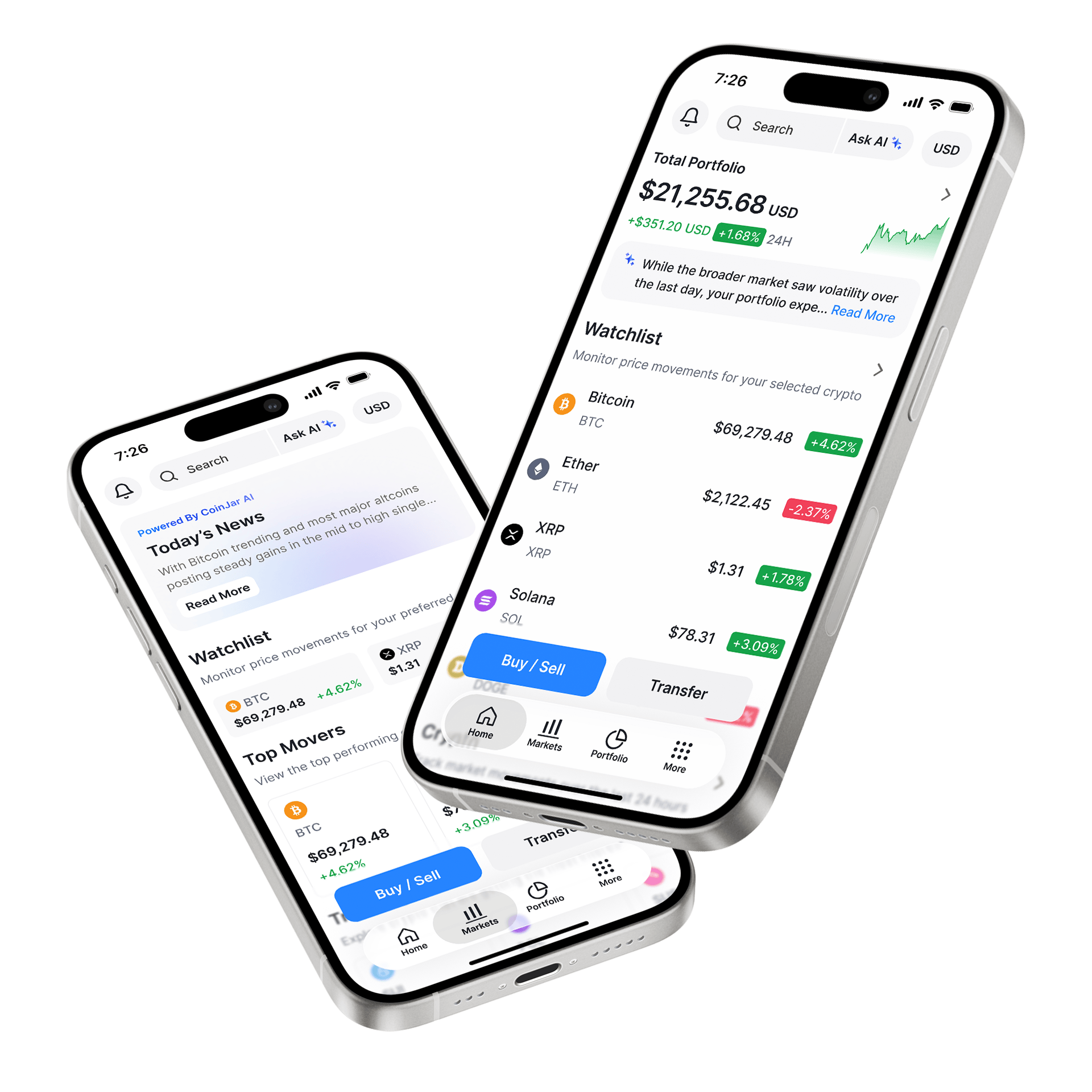
CoinJar App
Buy, sell and send your crypto with the favorite cryptocurrency app in the US.
Get the CoinJar appCoinJar App
Buy, sell and send your crypto with the favorite cryptocurrency app in the US.
Get the CoinJar app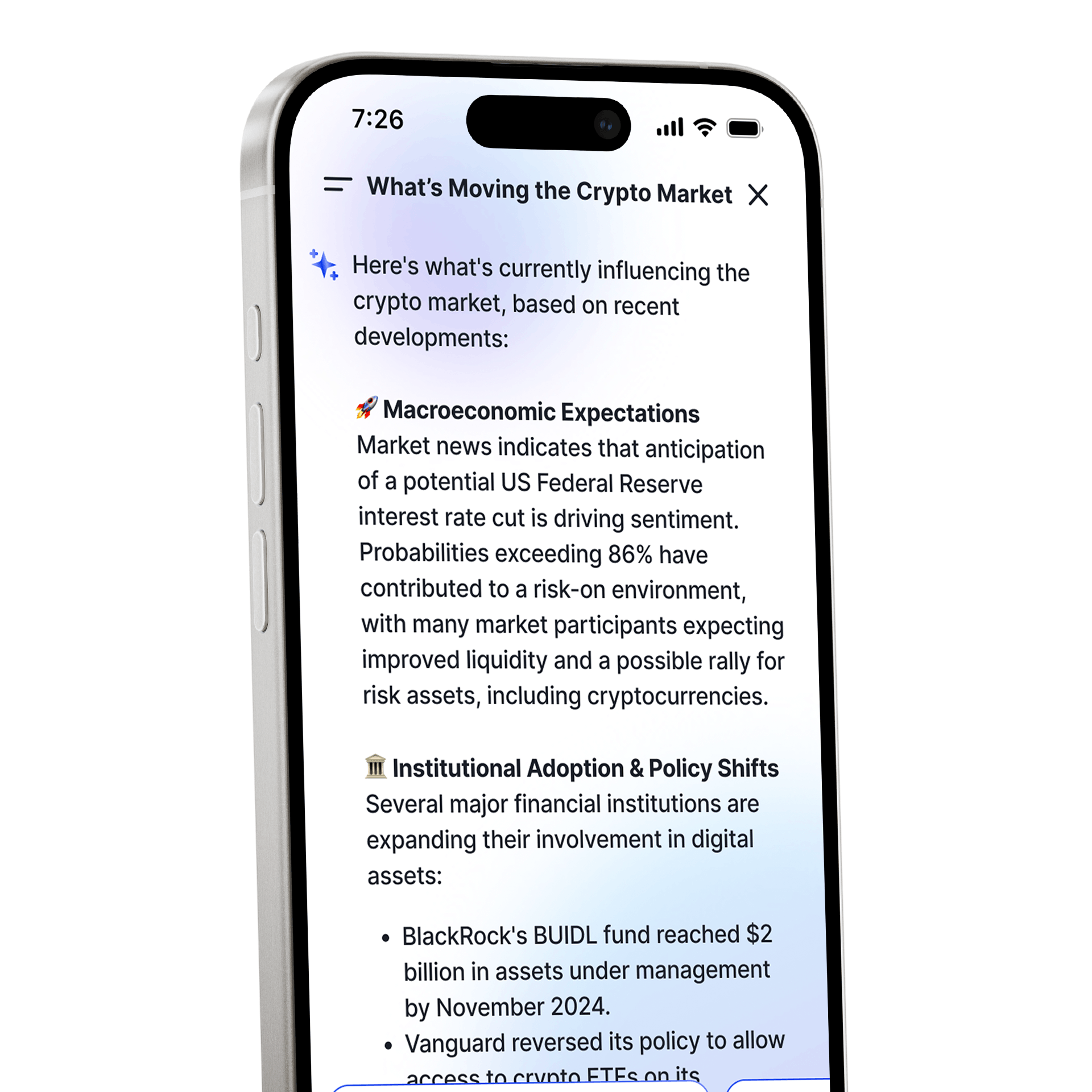
CoinJar AI
CoinJar AI understands your portfolio, tracks the market, and gives you insights that matter. Instead of searching for answers, simply ask a question to get the specific information you need.
Learn moreCoinJar AI
CoinJar AI understands your portfolio, tracks the market, and gives you insights that matter. Instead of searching for answers, simply ask a question to get the specific information you need.
Learn moreBuying, selling, and holding cryptocurrencies is subject to high market risk. The volatile and unpredictable nature of the price of cryptocurrencies may result in a significant loss. CoinJar, inc. is not responsible for any loss that you may incur from price fluctuations when you buy, sell, or hold cryptocurrencies. CoinJar, Inc. does not provide any investment, tax or legal advice; before making the decision to buy, sell or hold any cryptocurrencies, you should conduct your own due diligence and consult your financial, tax and/or legal advisor.
It is your responsibility to determine whether any investment, investment strategy or related transaction is appropriate for you according to your personal investment objectives, financial circumstances, and risk tolerance. Enter into a transaction only if you fully understand its nature, the contractual relationship into which you are entering, all relevant terms and conditions, and the nature and extent of your exposure to loss. Past performance is not a reliable indicator of future results. Geographic restrictions may apply. CoinJar does not endorse the content of, and cannot guarantee or verify the safety of any third party websites. Visit these websites at your own risk.

CoinJar
Get the app.