
Buy The Graph
GRTWarning: Past performance is not a reliable guide to future performance. Pricing data is provided by CoinJar - For more information on this data and our pricing, please read our Commercial and Pricing Disclosure: https://www.coinjar.com/ie/commercial-pricing-mechanism-disclosure
Recent Trades
Past 72 hours activity
| Time | Instrument | Quantity | Price | Side |
|---|---|---|---|---|
What is The Graph?
The Graph is a decentralised protocol that organises and makes blockchain data easy to search, and GRT is the cryptocurrency that powers it. It is often described as a tool that helps applications find and use information stored on blockchains.
It helps to separate two names. The Graph is the protocol and project, while GRT is its native cryptocurrency. People often use the names interchangeably, but you buy and hold GRT, while The Graph is the underlying network.
Blockchains store huge amounts of data, but that data can be difficult and slow to search directly. The Graph solves this by indexing blockchain data into organised collections called subgraphs, which applications can then query quickly and reliably. This is why developers across decentralised finance (DeFi) and other areas use The Graph to power their apps.
What is The Graph used for?
The Graph is mainly used to index and query data from blockchains so that applications can access it easily. GRT is the asset used to pay for and coordinate this indexing and querying.
GRT is used to:
- pay for the indexing and querying of blockchain data on the network
- be staked by Indexers, who run the network and process data requests
- be delegated to Indexers by holders to help secure the network and earn rewards
The Graph relies on a community of participants with different roles, including Indexers who provide data services, Curators who help highlight useful subgraphs, and Delegators who support Indexers. GRT is the token that ties these roles together and rewards people for keeping the network running.
GRT launched with a supply of around 10 billion tokens. New GRT is created over time to reward those who help run the network, while a portion of fees is removed from circulation, or burned. This means the overall supply can change over time rather than being fixed.
The history of The Graph
The Graph was founded in 2018 by Yaniv Tal, Brandon Ramirez and Jannis Pohlmann, who wanted to make blockchain data easier for developers to access. Its main network launched in December 2020, moving the protocol toward a decentralised model run by its community.
Because it helps applications find and organise information, The Graph is sometimes called the "Google of blockchains." You can find out more on the official The Graph website.
Since launching, The Graph has become an important piece of infrastructure in crypto, with many decentralised applications relying on it to access blockchain data. People buy GRT for many reasons, including taking part in the network, paying for its services, or gaining exposure to The Graph ecosystem.
How to buy The Graph with CoinJar
Get started with CoinJar by following these steps.
Create your account
Sign up and securely verify your identity.
Fund your account
Pay with an eligible debit or credit card, or deposit EUR via SEPA bank transfer.
Start investing
Access The Graph and other popular crypto assets through CoinJar.
CoinJar App
Buy, sell and send your cryptocurrency with the CoinJar App. Track popular cryptocurrencies, swap one for another in a single step, and store everything securely in your CoinJar Wallet.
Get the CoinJar appCoinJar App
Buy, sell and send your cryptocurrency with the CoinJar App. Track popular cryptocurrencies, swap one for another in a single step, and store everything securely in your CoinJar Wallet.
Get the CoinJar app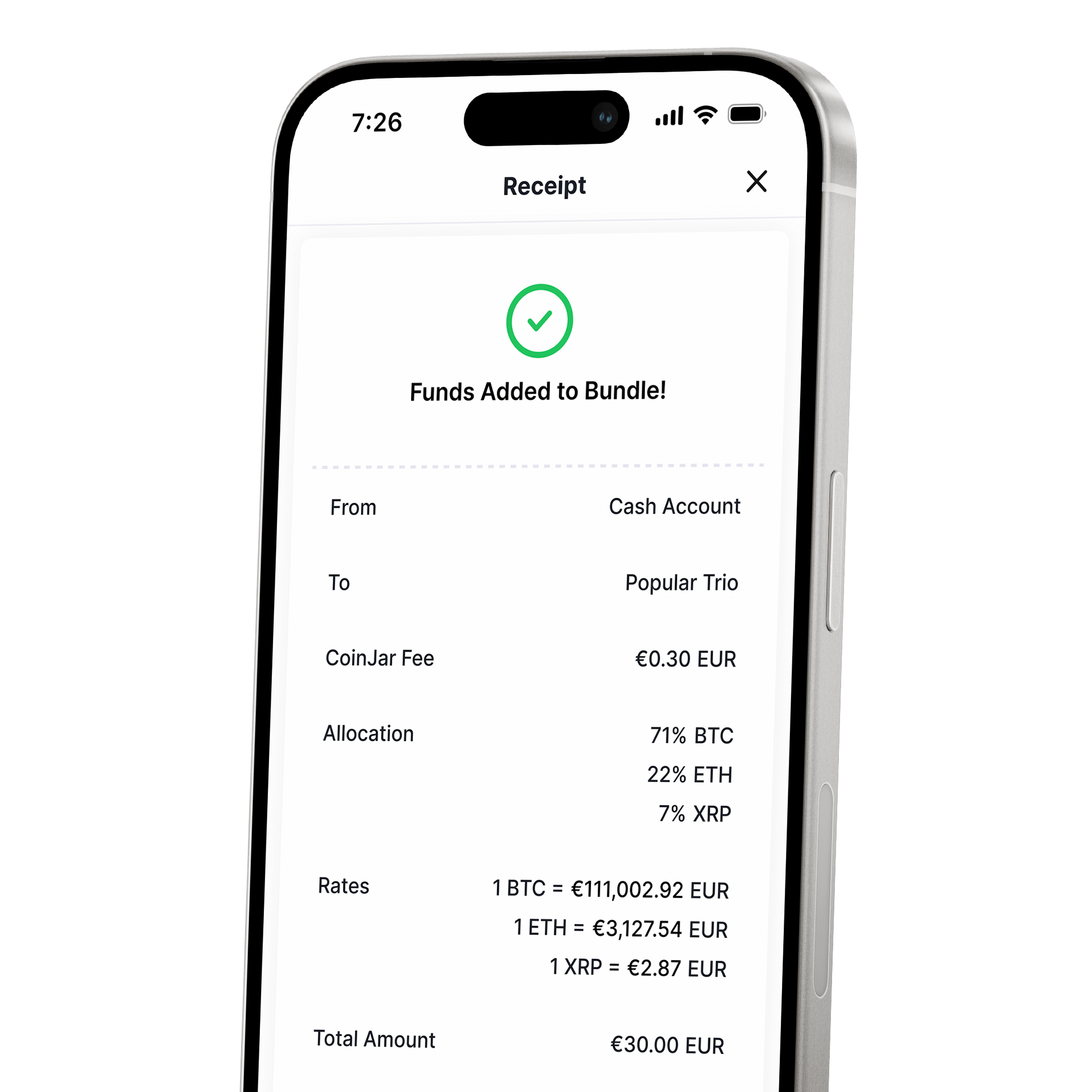
CoinJar DCA with Recurring Buy
Schedule automatic purchases weekly, fortnightly or monthly to dollar-cost average into individual cryptocurrencies or CoinJar Bundles. Manage your investment amount and schedule, with the flexibility to adjust or pause purchases as your circumstances change.
DCA with Recurring BuyCoinJar DCA with Recurring Buy
Schedule automatic purchases weekly, fortnightly or monthly to dollar-cost average into individual cryptocurrencies or CoinJar Bundles. Manage your investment amount and schedule, with the flexibility to adjust or pause purchases as your circumstances change.
DCA with Recurring Buy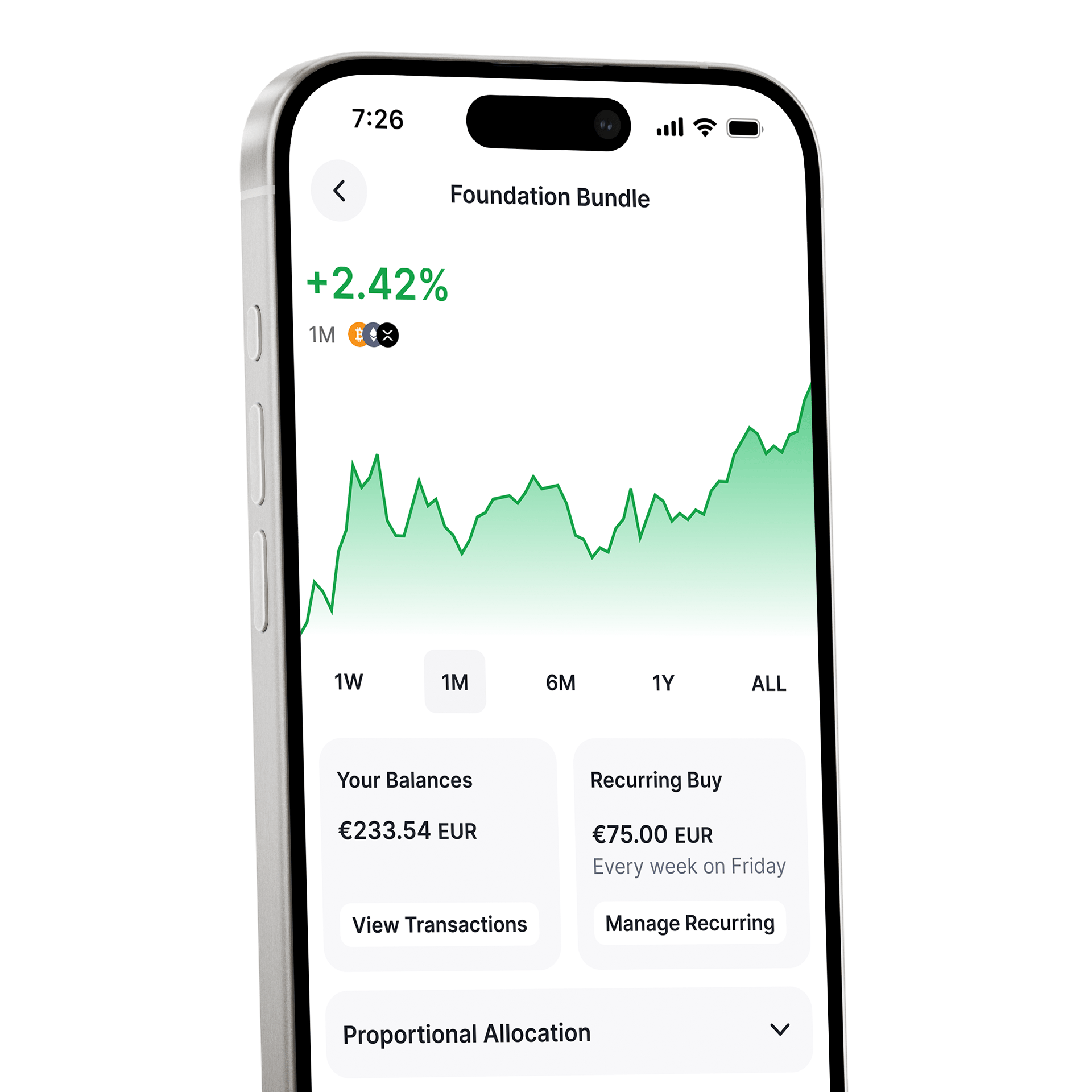
CoinJar Bundles
Pick your Bundle in the CoinJar app. Review each Bundle’s asset allocation, add to your holdings and rebalance when required. Sell your Bundle or unbundle it to manage the assets individually.
Learn moreCoinJar Bundles
Pick your Bundle in the CoinJar app. Review each Bundle’s asset allocation, add to your holdings and rebalance when required. Sell your Bundle or unbundle it to manage the assets individually.
Learn moreBuy The Graph in EUR with SEPA or with a Card
Buy The Graph with an eligible debit or credit card, or transfer EUR to CoinJar for free via SEPA and buy using your EUR balance. Authorised CASP. Buy, sell and hold crypto with CoinJar, trusted by over 800,000 investors worldwide.



CoinJar OTC
When you are buying or selling significant volume, CoinJar OTC gives you a dedicated VIP team and a single representative to advise and guide you on the trade from quote to settlement.
Discover OTC ServicesCoinJar OTC
When you are buying or selling significant volume, CoinJar OTC gives you a dedicated VIP team and a single representative to advise and guide you on the trade from quote to settlement.
Discover OTC ServicesFrequently asked questions
Warning: Past performance is not a reliable guide to future performance. If you invest in this product, you may lose some, or all, of the money you invest. The above information is not to be read as investment, legal or tax advice and takes no account of particular personal or market circumstances; all readers should seek independent investment, legal and tax advice before investing in cryptocurrencies. There are no government or central bank guarantees in the event something goes wrong with your investment. This information is provided for general information and/or educational purposes only. No responsibility or liability is accepted for any errors of fact or omission expressed therein. CoinJar Europe Limited makes no representation or warranty of any kind, express or implied, regarding the accuracy, validity, reliability, availability, or completeness of any such information. CoinJar Europe Limited is authorised by the Central Bank of Ireland as a crypto-asset service provider (registration number C496731).

CoinJar
Get the app.