Key Takeaways
- Render Network has migrated its core infrastructure from Ethereum to Solana to improve speed and reduce costs.
- The token ticker has officially changed from the Ethereum-based RNDR to the Solana-based RENDER.
- Most centralised exchanges manage this swap automatically, but self-custody users may need to migrate their assets manually.
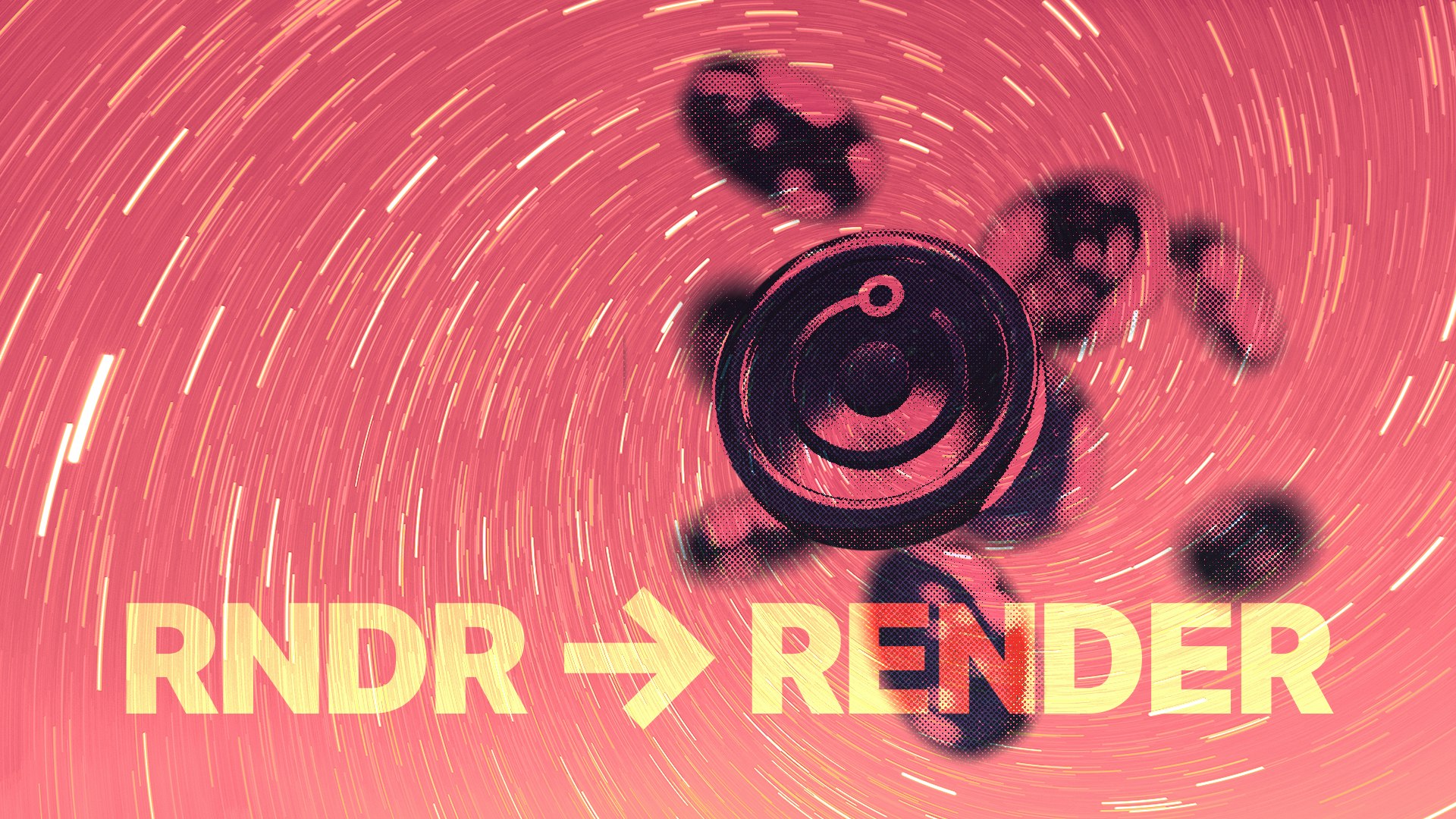
In its early years, the Render Network operated on the Ethereum blockchain. The idea was simple but powerful: people could rent out spare graphics card power to creators who needed to render 3D graphics.
Over time, the project expanded into Artificial Intelligence (AI) and machine learning workloads. At that point, Ethereum’s higher fees and slower confirmation times started to limit what the network could do. To address this, the Render community voted to move the network to Solana, a blockchain that aims for higher throughput and lower fees. This upgrade is the main reason behind the shift from RNDR to RENDER.
The Difference Between RNDR and RENDER
The project and its purpose are broadly the same, but the token’s underlying blockchain has changed.
RNDR (The Old Token)
RNDR is an ERC‑20 token on the Ethereum network. For several years, it was the main utility token used to pay for 3D rendering work on Render Network.
After the upgrade, the project treats RNDR as a legacy asset. Some platforms may still list or support RNDR for a period, but new activity is focused on RENDER. Liquidity and support for RNDR may decrease over time.
RENDER (The New Token)
RENDER is an SPL token on the Solana blockchain. It is intended to serve similar functions, such as payments for compute power and governance participation, now within the Solana ecosystem.
By using Solana, RENDER can benefit from lower average transaction fees and faster processing. This can be helpful for use cases like real-time data streaming and high-frequency micro-payments, which are common in modern AI and rendering tasks. However, as with any blockchain, performance and costs can still vary depending on network conditions.
If you hold tokens in a private wallet
You can’t buy RENDER on CoinJar Ireland. But, if you hold RNDR in a self-custody Ethereum wallet (for example MetaMask or a hardware wallet), the migration is not automatic.
The general project guidance is:
- Go to the official Render Network upgrade portal, as linked from the project’s official website or verified social channels.
- Connect your Ethereum wallet that holds RNDR and a Solana wallet that will receive RENDER.
- Use the official bridge interface, which will “burn” (destroy) your old Ethereum RNDR and “mint” (create) new Solana RENDER to your Solana address.
- You will need a small amount of ETH in your Ethereum wallet to pay gas fees for the migration transaction.
The exact steps, costs and deadlines are defined by the Render Network team, not by CoinJar. Always follow the latest instructions from the official project documentation and double-check the website URL before connecting your wallet.
The Render Network migration from Ethereum to Solana was completed on November 2, 2023. While the technical transition is complete, the upgrade portal remains open indefinitely for users who have not yet converted their RNDR tokens to RENDER. Converting might create a taxable event, so talk to an accountant.
Real-Life Examples: Why the Upgrade Matters
To understand why Render moved blockchains, it helps to see how the network is used in practice. These are simplified examples, not guarantees of performance or cost.
The “Airbnb” of computing
You can think of Render as a marketplace for GPU power. Instead of renting out a guest room, users can rent out spare capacity on their graphics cards.
-
Example 1: Visual effects studio.
A studio is working on a visually complex science fiction film. Rendering all scenes on its own computers would take months. By using Render Network, the work can be split across thousands of GPUs around the world. Faster and cheaper transactions on Solana can help these many small payments clear more quickly and at lower cost, which suits this type of high-volume workload. -
Example 2: AI start-up.
A small AI company wants to train a new model but does not want to spend €45,000 to €50,000 on its own hardware. Instead, it rents access to GPU clusters through Render Network and pays per hour using RENDER. Lower transaction fees can make frequent, smaller payments more practical for both the start-up and the GPU providers.
Actual timings, costs and availability will depend on market conditions, network load and GPU supply.
Risks and Red Flags
Token migrations can create confusion. That makes them attractive targets for scammers. If you decide to migrate RNDR yourself, it is important to be careful.
Fake migration portals
Scammers sometimes pay for search ads that appear above the official project website. These fake pages may copy the project’s design but link to malicious smart contracts.
If you connect your wallet and approve the wrong transaction, the scammer may be able to move your funds. Before you interact with any migration portal, always:
- Type the project’s official domain directly into your browser or use a known bookmark.
- Cross-check the link using Render Network’s official website or verified social media (for example their official X / Twitter account).
- Read the URL carefully, including spelling and domain endings.
“Help desk” impersonators
If you ask for help about the swap in public channels, you may receive direct messages from accounts pretending to be support staff.
Keep in mind:
- Legitimate support teams will never ask for your seed phrase, private keys or full recovery phrase.
- They will not ask you to send them funds to “unlock” a wallet or fix a “stuck” transaction.
- If you are unsure, contact support only through official channels listed on the project’s website or on CoinJar’s help centre.
If anyone asks for your seed phrase or recovery words, treat that as a clear sign of a scam.
The Future of Decentralised Compute
The move from RNDR on Ethereum to RENDER on Solana fits into a broader trend often called DePIN (Decentralised Physical Infrastructure Networks). These projects aim to coordinate real-world resources, such as computing power, using blockchain-based incentives.
By shifting to a high-throughput blockchain, Render Network is aiming to support more frequent, smaller payments and more complex workloads, including AI-related tasks. As demand for computing power grows faster than new hardware is produced, networks that connect unused GPUs with users who need them may play a larger role.
However, this is still an evolving area. Regulatory treatment, technology, competition and user demand can all change, and there is no guarantee that any particular project will succeed or maintain its current level of adoption. The swap to Solana is not only a change of ticker symbol, it is also a change in technical design that may affect performance, costs and risks for users.
Exchange policies mentioned in this article may have changed since publication. Please verify current procedures with your specific platform.
CoinJar
CoinJar is one of the longest-running cryptocurrency exchanges in the world. Since 2013, we’ve helped hundreds of thousands of people worldwide to buy, sell and spend billions of dollars in Bitcoin, Ethereum and dozens of other cryptocurrencies.
Read full bio