Key Takeaways
- Bitcoin has the longest track record and a security profile that many newer altcoins do not yet match.
- Learning how Bitcoin works gives you a solid base before you try more complex altcoin ecosystems.
- Altcoins can offer innovation and niche features, but usually come with higher volatility and additional risks.
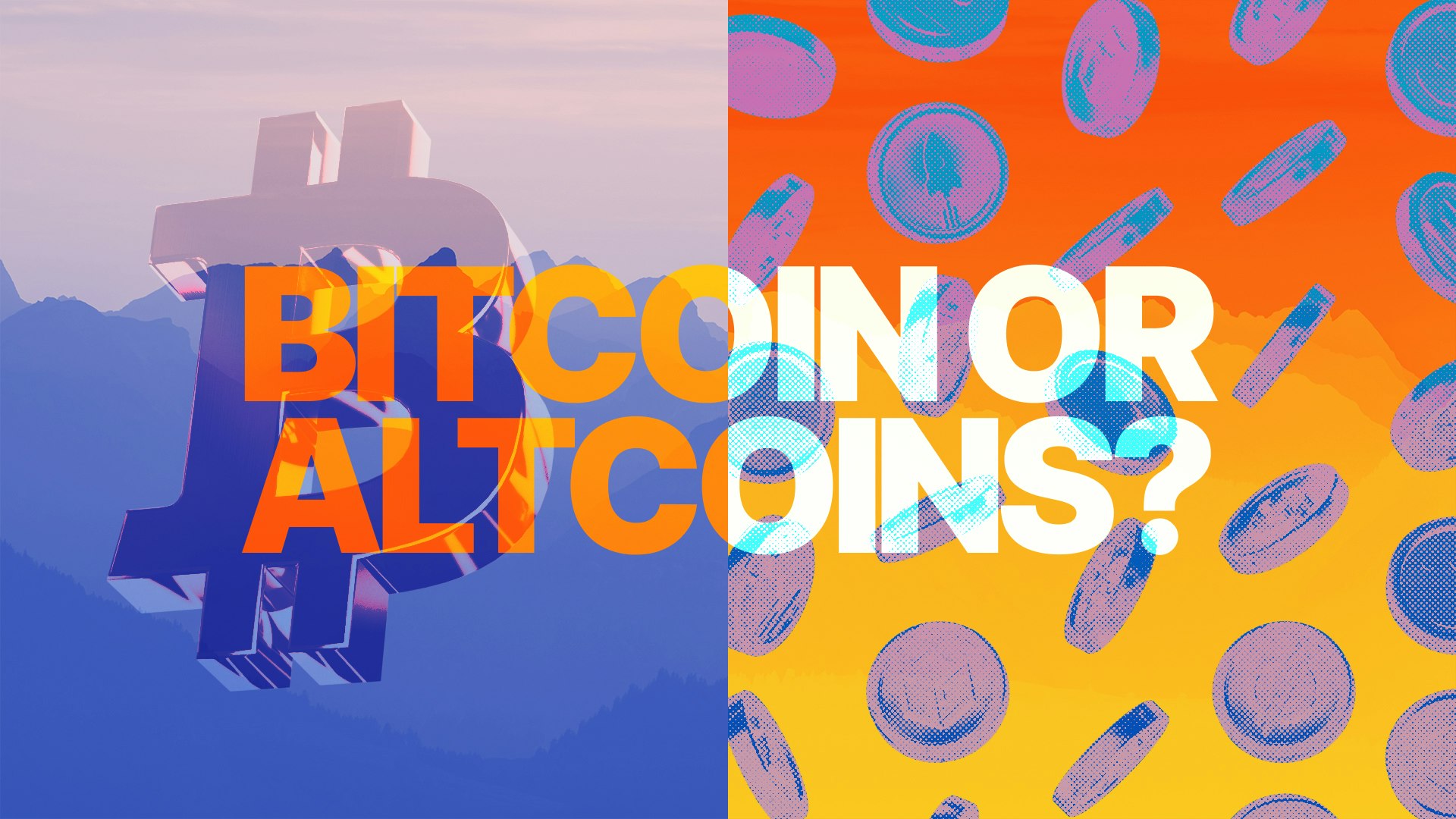
With thousands of digital assets available, Bitcoin is often the most practical starting point for people building their first crypto portfolio.
What is the difference?
To understand crypto as a whole, it helps to separate the original from the alternatives. An “altcoin” is short for “alternative coin”. In simple terms, it is any cryptocurrency that is not Bitcoin.
Bitcoin was created mainly as a decentralised form of money and a store of value. Many altcoins have different goals. Some, like Ethereum, Solana or Cardano, are general-purpose platforms for applications. Others focus on specific areas such as gaming, artificial intelligence or supply chain tracking.
The choice can be overwhelming, especially when you read about “the next big coin”. Still, there are clear reasons why Bitcoin is usually a more suitable first step.
The original advantage: Stability in a volatile market
Bitcoin was launched in 2009 by the pseudonymous creator Satoshi Nakamoto. It became the template for almost every cryptocurrency that followed.
Over more than 15 years, Bitcoin has gone through several major market cycles, regulatory debates and global economic events. It has remained operational the whole time. This long history gives it a reputation for resilience that many altcoins have not yet had time to build.
Crypto prices can move sharply in both directions. Smaller altcoins often move the most. They can rise quickly, but they can also fall just as fast, sometimes in a matter of hours. Bitcoin, while still volatile, usually trades more like a large, established asset. For people who are new to crypto, this can offer a calmer entry point than jumping straight into thinly traded or highly experimental tokens.
Digital gold: Bitcoin as a store of value
One of Bitcoin’s core features is its limited supply. The protocol sets a maximum of 21 million bitcoins that can ever be created.
This fixed limit is part of the code that runs the network. It cannot be changed without extremely broad consensus from the global community of users and miners. This gives Bitcoin a relatively simple and transparent monetary policy.
Many people compare this to gold, which is difficult to produce in large quantities. In this sense, Bitcoin is often described as “digital gold”. Some investors use it as a long-term savings asset and a way to diversify away from traditional currencies.
Most altcoins work differently. Some have no maximum supply. Others use complex inflation or reward systems. These designs are not necessarily bad, but they can make it harder to judge how the supply might affect price over time.
If your main goal is long-term wealth preservation, Bitcoin’s supply model is generally easier to understand and research.
The network effect and ease of adoption
A “network effect” happens when a product or service becomes more useful as more people use it. Bitcoin has the strongest network effect in crypto.
Because it is the best known cryptocurrency, the systems that support it are mature and widely tested. You will find Bitcoin on almost every centralised exchange and in most digital wallets. Many merchants that accept crypto payments start with Bitcoin first. It is also included in a growing number of regulated investment products.
For beginners, this matters a lot. Buying, selling and holding Bitcoin usually involves fewer steps and fewer specialist tools. In many cases, you can buy Bitcoin directly with euro on a regulated platform and withdraw it to a personal wallet if you choose.
By comparison, some altcoins are not listed on major exchanges. To obtain them, you may have to use decentralised exchanges, move funds between different blockchains and pay fees in several tokens. These extra steps add complexity and can increase the chance of mistakes.
Real-life examples: How it works in practice
To see the difference, consider two simple examples. In both cases, imagine you want to invest around €100 in crypto.
The Bitcoin experience
You sign up to a regulated exchange and complete any required identity checks. You deposit €100, choose Bitcoin, then confirm the purchase. That is it.
You can keep the Bitcoin on the exchange, or you can send it to a personal wallet by copying your wallet address and confirming a withdrawal. The main things you need to learn are how to keep your login details and recovery phrases safe, and how to verify addresses before you send.
Your Bitcoin balance will then go up or down with the market. There is no extra action required unless you want to buy, sell, or move it.
The altcoin experience
Now imagine you want to buy a smaller decentralised finance (DeFi) token that is not listed on major exchanges.
- You buy a major asset such as Ether (ETH) using your €100.
- You set up a browser wallet and carefully back up your recovery phrase.
- You withdraw the ETH from the exchange to that wallet, paying a network fee.
- You visit a decentralised exchange website and connect your wallet.
- You swap ETH for the DeFi token, paying another fee, often in ETH or another network token.
Each step requires attention and carries some risk of error, such as sending coins to the wrong address or interacting with a fake website. For many first-time users this is a lot to manage at once.
Starting with Bitcoin lets you learn the basics, such as private keys, public addresses and blockchain confirmations, without these extra layers.
Risks and red flags: Points to consider with altcoins
Altcoins have driven many innovations in crypto, from smart contracts to non-fungible tokens (NFTs). At the same time, they often involve additional risks that are less common with Bitcoin.
If you decide to go beyond Bitcoin, be aware of issues such as:
-
Market manipulation and “pump and dump” schemes
Smaller altcoins with low trading volumes can be easier to manipulate. In some cases, coordinated groups push up the price with aggressive promotion, then sell large holdings, leaving later buyers with heavy losses. -
Project dependence on a small team
Bitcoin does not have a central company or founder in control. Many altcoins, however, are led by a small group or a start-up. If that team loses funding, changes priorities or closes the project, the token can quickly lose its purpose and value. -
Extreme volatility
It is not unusual for small altcoins to drop 80 to 90 per cent in a market downturn. Bitcoin has experienced deep corrections as well, but it has also recovered from several major crashes over its history. Many altcoins from previous market cycles have never returned to their earlier highs. -
Technical and smart contract risk
Some altcoins rely on complex smart contracts. Bugs or security flaws in this code can lead to frozen funds or permanent losses. Bitcoin’s base layer is simpler and has been tested for a longer period.
These risks do not mean all altcoins will fail. They do mean you should approach them carefully, with thorough research and realistic expectations.
Why Bitcoin matters in the bigger picture
Bitcoin is often seen as the entry point into the broader digital asset market. It is widely used as a reference asset when pricing other cryptocurrencies, and many trading pairs on exchanges are quoted against Bitcoin.
Around the world, governments and institutions continue to debate how to treat Bitcoin and other crypto-assets within their financial systems. In several jurisdictions, Bitcoin is now included in regulated investment products and is held by some companies as part of their treasury strategies. This does not guarantee future performance, but it does highlight that Bitcoin has gained a distinct position among digital assets.
Choosing Bitcoin first does not mean you must ignore altcoins forever. It simply means you are starting from a more established and transparent base.
Once you are comfortable with topics like self-custody, transaction fees and security practices using Bitcoin, you will be better prepared to decide whether specific altcoins fit your goals and risk tolerance. At that point, you can treat altcoins as targeted additions to a portfolio, rather than your entire exposure to crypto.

CoinJar
CoinJar is one of the longest-running cryptocurrency exchanges in the world. Since 2013, we’ve helped hundreds of thousands of people worldwide to buy, sell and spend billions of dollars in Bitcoin, Ethereum and dozens of other cryptocurrencies.
Read full bio