Key Takeaways
- Uncover the enigma surrounding Bitcoin's anonymous creator.
- Delve into the mystery that continues to captivate the world.
- Even to this day, it remains a mystery
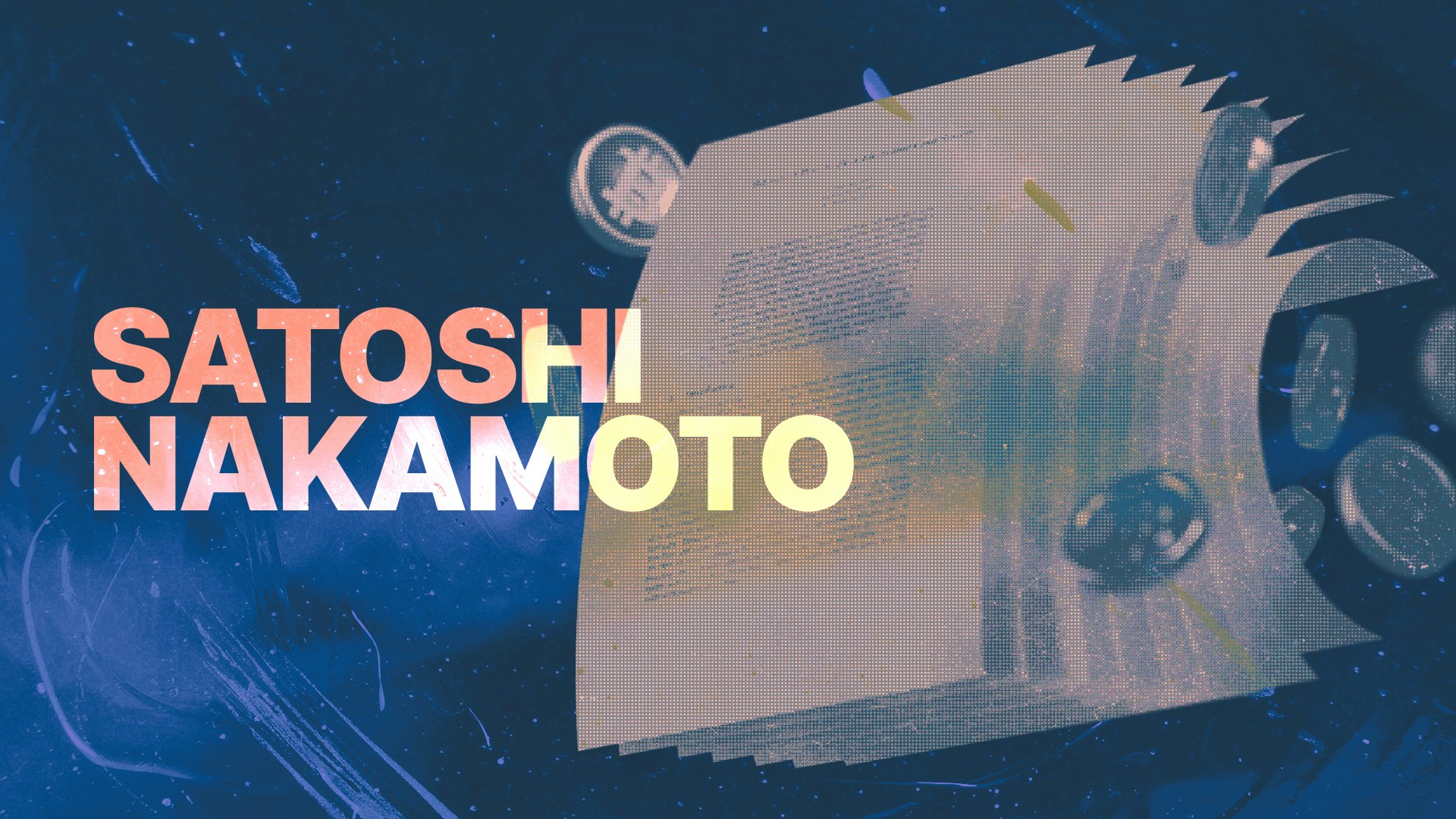
Who is Satoshi Nakamoto? It is a name that echoes through the digital corridors of cryptocurrency history. The enigmatic figure behind Bitcoin, the world’s first decentralized digital currency, has remained shrouded in mystery.
In this article, we delve into the depths of Nakamoto’s identity, exploring the suspects, theories, and the enduring legacy of the person (or group of people) who changed the financial landscape forever. Who is the Bitcoin founder?
The Birth of Bitcoin
In 2008, an elusive individual or group of people authored the Bitcoin whitepaper, a seminal document that introduced the concept of a peer-to-peer electronic cash system. This whitepaper laid the foundation for Bitcoin, outlining its principles, cryptographic mechanisms, and decentralised nature.
But who was the mastermind behind this revolutionary idea?
The Pseudonym: Satoshi Nakamoto
Satoshi Nakamoto is the pseudonym used by the presumed creator(s) of Bitcoin. Here’s what we know:
Bitcoin’s genesis
In January 2009, Nakamoto released the first version (0.1) of the Bitcoin software, defining the genesis block with a reward of 50 Bitcoin.
Embedded within this block was a cryptic message referencing a headline from The Times: “Chancellor on brink of second bailout for banks.” This message served as both a timestamp and a commentary on the instability caused by fractional-reserve banking.
Blockchain pioneer
Nakamoto not only conceptualized Bitcoin but also implemented the first blockchain database. The blockchain — a distributed ledger that records all Bitcoin transactions — remains the backbone of countless cryptocurrencies today.
Cryptographic expertise
Nakamoto’s deep understanding of cryptography is evident in Bitcoin’s design. The use of cryptographic hashes, proof-of-work consensus, and public-key infrastructure reflects their expertise.
The suspects
Numerous names have surfaced as potential Satoshis.
Len Sassaman: Was Satoshi Actually Two People?
The mystery took a compelling new turn in April 2026 with the release of Finding Satoshi, a documentary that makes a striking argument: Satoshi Nakamoto was never one person at all.
The film presents a four-year investigation led by business writer William D. Cohan and private investigator Tyler Maroney, arriving at the conclusion that the Satoshi pseudonym was shared by two late cryptographers: Hal Finney and Len Sassaman. Sassaman was a heavyweight in the cypherpunk world. Like Finney, he was deeply embedded in the privacy-first, anti-establishment digital underground that Bitcoin emerged from.
The documentary's theory is that Finney composed Bitcoin's code, while Sassaman handled the written side, including Bitcoin's whitepaper. It's a division of labour that would neatly explain some long-standing inconsistencies in the Satoshi record: the code and the prose have always felt like they came from different minds.
Sassaman took his own life in 2011, shortly after Satoshi's final public post. Finney passed away from ALS in 2014. The fact that both suspects are deceased gives the theory a certain finality, and means neither can deny it.
The investigation drew on some serious expertise. The filmmakers enlisted Kathleen Puckett, a former FBI agent who helped bring down Unabomber Theodore Kaczynski, to analyse the motivations behind Bitcoin's whitepaper. Her conclusion: its author didn't appear to be motivated by money. That profile squares with Sassaman, a man driven by ideology rather than profit.
Hal Finney
Hal Finney, a central figure in the cypherpunk movement, is often speculated to be Satoshi Nakamoto, a claim he denied.
But it is well known that Finney worked on Bitcoin at the start. However Finney died in 2014, taking the real identity of Nakamoto with him.
Hal Finney’s role in Bitcoin
In November 2008, Satoshi opened Bitcoin to public scrutiny. Until then, the project Satoshi had spent a year and a half coding was only shared privately with a select few.
Finney was among the recipients of a pre-release version of the Bitcoin code. He received it sometime around November 16, 2008, along with other members of the Cryptography Mailing List. Finney’s involvement suggests a close connection to Satoshi during those crucial early days.
Finney was a legend in his own right. He developed the first reusable proof-of-work system, which laid the groundwork for Bitcoin’s mining process. His deep understanding of cryptography made him a natural candidate for involvement in Bitcoin’s creation.
While the true identity of Satoshi Nakamoto remains unverified, Hal Finney’s legacy endures. Whether he was the real Satoshi or not, his contributions to the crypto world remain significant.
Adam Back
The most recent (and arguably most compelling) candidate to emerge is Adam Back, a British cryptographer and CEO of Blockstream. Back invented Hashcash in 1997, a proof-of-work system that became the direct technical foundation for Bitcoin's mining process, and was the only person cited by name in the Bitcoin whitepaper itself.
On April 8, 2026, Pulitzer Prize-winning journalist John Carreyrou, the reporter who famously exposed the Theranos fraud, published a 12,000-word investigation in the New York Times identifying Back as the strongest Satoshi candidate yet, claiming to be "somewhere between 99.5% and 100%" certain of his conclusion.
Carreyrou points to similar language used by Back and Satoshi in early online forums, overlapping timelines, and Back's foundational work on proof-of-work systems. During an in-person interview, Back's body language at times appeared to contradict his denials, with his face reddening as he shifted uncomfortably when confronted with specific points. In one notable exchange, when Carreyrou raised a Satoshi quote, Back appeared to respond as though speaking for himself, a slip the journalist interpreted as Back accidentally answering as Satoshi.
Back has firmly denied the claims. He argues that the overlaps between his decades of work in cryptography and Bitcoin's design simply reflect shared cypherpunk ideas and coincidence, not hidden authorship. Blockstream issued a statement calling the story "built on circumstantial interpretation of select details and speculation, not definitive cryptographic proof." Notably, the investigation's own linguist described his results as "inconclusive", leaving the mystery, as ever, unsolved.
Nick Szabo
Nick Szabo is realistically the most likely candidate to be Satoshi Nakamoto. A brilliant computer scientist and cryptographer, Szabo’s work predates Bitcoin. His original project, launched before Bitcoin, called “Bit Gold” shares similarities with Bitcoin’s principles, leading some to speculate that he could be Nakamoto.
Szabo has repeatedly denied being Satoshi Nakamoto, the elusive creator of Bitcoin.
However, several intriguing factors have led some to consider him a strong candidate for this mysterious role.
Bit Gold project
Szabo’s creation of “bit gold”, an early digital currency, bears striking similarities to Bitcoin. This precursor laid the groundwork for key features later seen in Bitcoin. Additionally, both Szabo and Satoshi sought feedback from the same group of people during their respective cryptocurrency projects. Szabo even backdated a blog post to align with Satoshi’s timeline.
Writing mannerisms
Aston University researchers found uncanny parallels between Szabo’s writing style and Satoshi’s. Their phrasings and mannerisms exhibit remarkable similarity.
Similar arguments for Bitcoin
Szabo and Satoshi independently presented nearly identical arguments for why Bitcoin should hold value. While coincidences happen, these shared viewpoints raise eyebrows among analysts and the crypto community.
Despite these intriguing connections, there is no concrete evidence confirming Szabo as Satoshi Nakamoto. Szabo himself consistently denies the claim.
Elon Musk: The enigmatic Satoshi Nakamoto?
In a twist that could rival the most intricate crypto plot, Elon Musk — the tech titan behind Tesla and SpaceX — has been linked to the mysterious birth of Bitcoin.
The Case for Musk as Satoshi
Coding prowess
Sahil Gupta, a former SpaceX intern, argues that Musk possesses the technical chops to be Satoshi.
Musk wrote the software for his early ventures, including Zip2 and X.com (which specialized in peer-to-peer payments). Interestingly, both X.com’s and Bitcoin’s source code were written in C++ and described as “monolithic.”
Was Musk the original Bitcoin developer? Was he busy inventing Bitcoin while also juggling all of his other businesses?
Linguistic parallels
Gupta dives into linguistic quirks. Satoshi’s forum posts featured phrases like “bloody hard” and “order of magnitude” — expressions Musk himself has used. Even the double spaces after periods align between the two.
Geographic proximity
In 2009, Satoshi accidentally leaked an IP address in Van Nuys, Los Angeles. Curiously, SpaceX’s headquarters are adjacent to Van Nuys, and Musk frequents Van Nuys Airport.
PayPal’s mission
Luke Nosek, another PayPal co-founder, revealed that PayPal’s original mission was to “create a global currency.” A mission eerily reminiscent of Bitcoin’s purpose.
The circumstantial evidence
While direct proof eludes us, the convergence of factors — geography, technical prowess, writing style, and shared philosophy — creates a compelling case. Musk has denied it in a Tweet years ago, however the rumor remains in circulation.
Musk even has said that he strongly believes that Nick Szabo is Satoshi Nakamoto.
John McAfee
John McAfee wrote the first commercial anti-virus software, establishing McAfee Associates to sell his creation. However, he resigned in 1994 and sold his remaining stake in the company. Over time, he became a vocal critic of the company’s anti-virus software, urging users to uninstall it.
McAfee did also have an understanding of blockchain technology, which was evident in interviews, where he emphasized its open-source nature.
While McAfee did talk about Bitcoin a lot, and often claimed to know who Satoshi Nakamoto was, McAfee did have a troubled existence. After crossing swords with the US government over tax issues, he resided in Belize for a time, where he faced questioning in connection with a murder investigation.
Further interviews with McAfee also revealed another side of him — one influenced by LSD microdoses. Perhaps those doses weren’t as “micro” as he intended.
McAfee was found dead in a Spanish prison cell in 2021. So if he was Nakamoto, the world will never know for sure.
Craig Wright
Perhaps the most controversial candidate, Wright publicly declared himself as Satoshi Nakamoto in 2016. However, his claims have faced intense scrutiny.
In March 2024, UK Judge James Mellor ruled definitively that Craig Wright is neither the author of the Bitcoin whitepaper nor Satoshi Nakamoto.
The judge later found that Wright had lied extensively and forged evidence on a grand scale during the trial.
In July 2024, Wright was ordered to publicly admit he is not Bitcoin's inventor.
In December 2024, Wright was found in contempt of court and received a suspended prison sentence for violating court orders.
In May 2025, a UK High Court issued a 3-year General Civil Restraint Order barring Wright from further baseless claims in English courts, citing his "brazen abuse" and use of litigation to "terrorize opponents."
These days, the only person who believes that Craig Wright is actually Satoshi Nakamoto is Craig Wright.
Peter Todd
In October 2024, HBO released a documentary titled "Money Electric: The Bitcoin Mystery," directed by Cullen Hoback. The film concluded by claiming that Peter Todd, a Canadian Bitcoin developer and early contributor to the cryptocurrency, was the true identity of Satoshi Nakamoto.
However, the documentary's conclusion was met with skepticism.
Peter Todd himself immediately denied the accusation, calling it "ludicrous." He pointed out that he was only 15 years old when the Bitcoin whitepaper was published in 2008, making it highly improbable that he possessed the advanced cryptographic knowledge and expertise required to create Bitcoin at such a young age.
Anonymity remains
Nakamoto’s true identity remains elusive. While the name suggests Japanese origins, most speculation centres around software and cryptography experts from the United States or Europe. Whether Nakamoto is an individual or a collective effort, the mystery endures. Hopefully we will find out who was the absolutely brilliant mind behind Bitcoin before we die, but it does seem rather unlikely.
Conclusion: Who created Bitcoin?
Bitcoin has disrupted traditional finance, sparked a global movement, and ignited debates about the future of money. As we continue to unravel the mystery, one thing remains clear: Satoshi Nakamoto’s legacy is etched in the very fabric of our digital age.

CoinJar
CoinJar is one of the longest-running cryptocurrency exchanges in the world. Since 2013, we’ve helped hundreds of thousands of people worldwide to buy, sell and spend billions of dollars in Bitcoin, Ethereum and dozens of other cryptocurrencies.
Read full bio