Key Takeaways
- This is a classic tactic to lower your guard and push you to make quick decisions
- Stay safe, stay informed, and protect yourself from the growing number of scams
- Here's what to look out for.

The Bitcoin Mining Scam is a new online threat. In the world of cryptocurrency, scams are unfortunately all too common. Recently, I received a suspicious email claiming I had earned a substantial amount of Bitcoin through cloud mining – but I don’t have any cloud mining accounts.
In this article, I’ll walk you through the steps I took to analyse this scam and expose the methods the fraudsters used to lure people in.
Step 1: The Email
The first red flag was the email I received, which claimed I had a balance of 1.3426 BTC (worth over $890,000!). The email was from a random address, and the message suggested that I had somehow made this money through automatic Bitcoin mining.
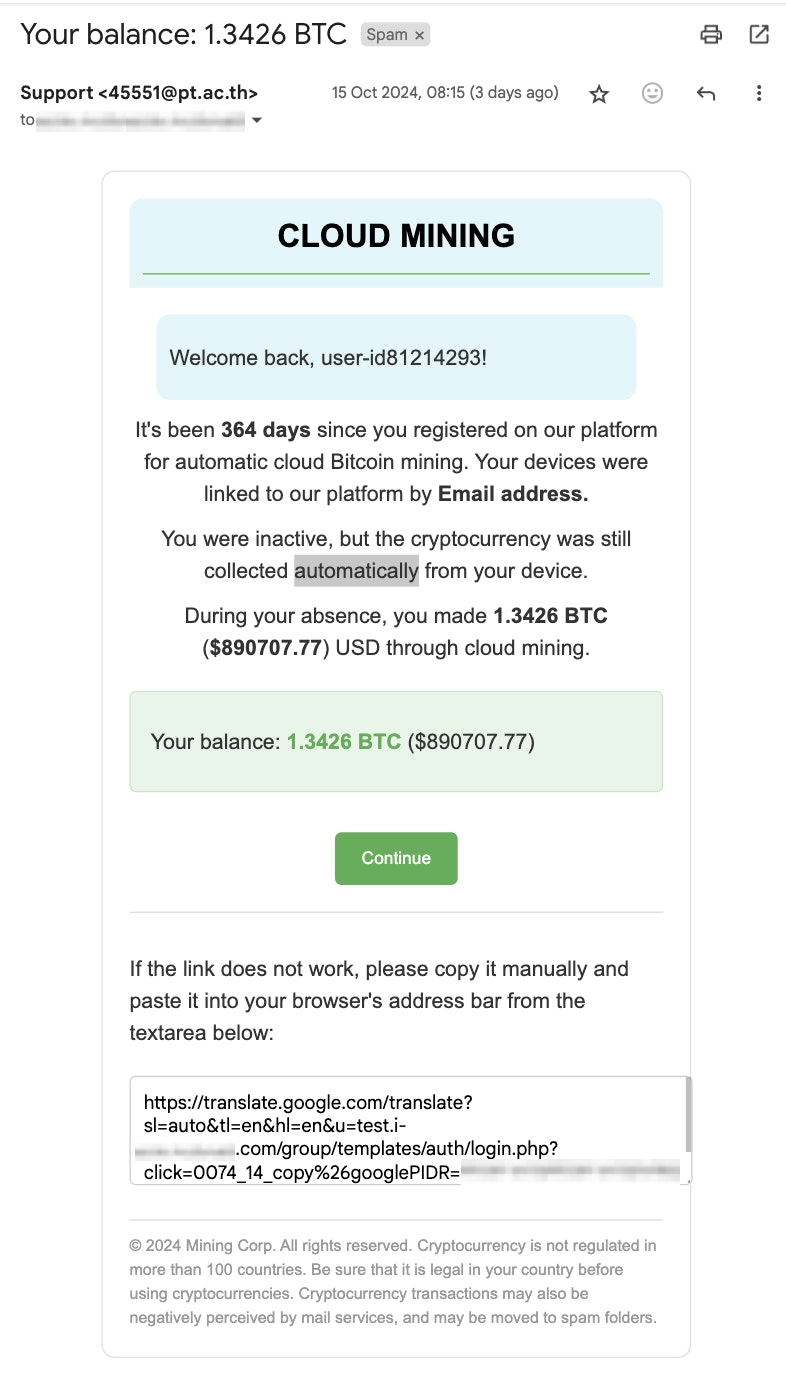
The email encouraged me to "continue" and access my balance, but it already sounds too good to be true for four reasons:
Firstly, 1.3426 BTC is worth AUD$135,599.43 at the time of writing.
Secondly, I don’t have a cloud mining account.
Thirdly, the email address it was sent to was involved in a data breach with a crypto tax software service, so we know the scam is targeted.
And lastly, the email was marked as spam.
Ignoring that the email was marked as spam, the email did provide a suspicious link, suggesting that I visit a website to claim my earnings. However, the link was routed through Google Translate to disguise its true nature, likely to bypass email filters.
Fortunately, Google Translate blocked the page and wouldn’t load it.
Step 2: The Fake Mining Site
I managed to access the suspicious link and upon entering the site, I was shown a dashboard that mimicked legitimate cloud mining platforms.
According to this dashboard, I had earned US$91,103.47 from 1.3426 BTC of mining profits, which is a huge sum for doing absolutely nothing – but it also was different to the US$890,000 the email originally claimed I had.
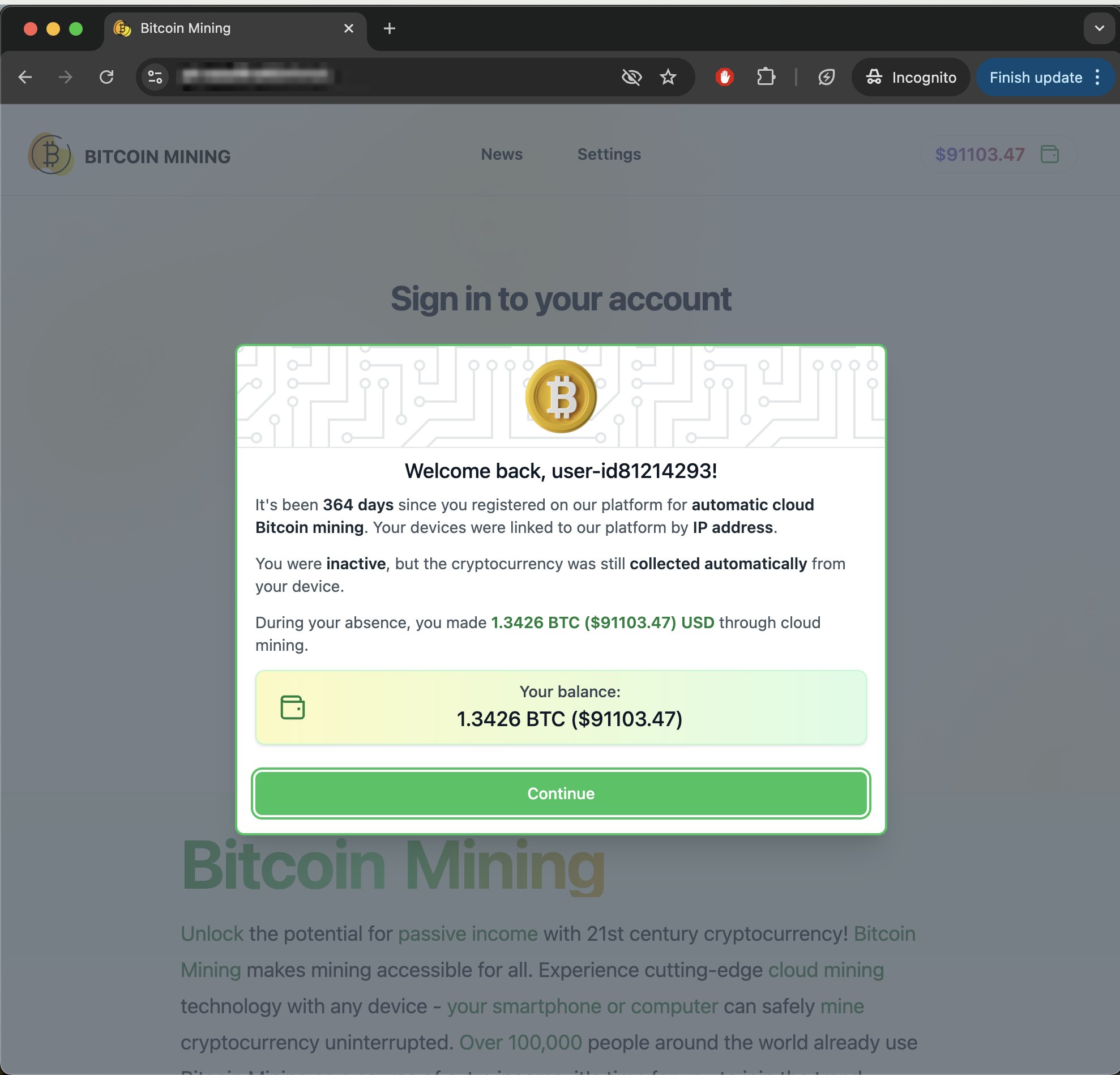
Of course, no legitimate company would allow someone to mine thousands of dollars' worth of Bitcoin passively without any verification or prior knowledge.
Step 3: The Pressure Tactics
As I continued exploring the site, another page appeared, telling me that my account would be deleted if I didn’t act immediately. Scammers frequently use urgency to pressure victims into making hasty decisions.
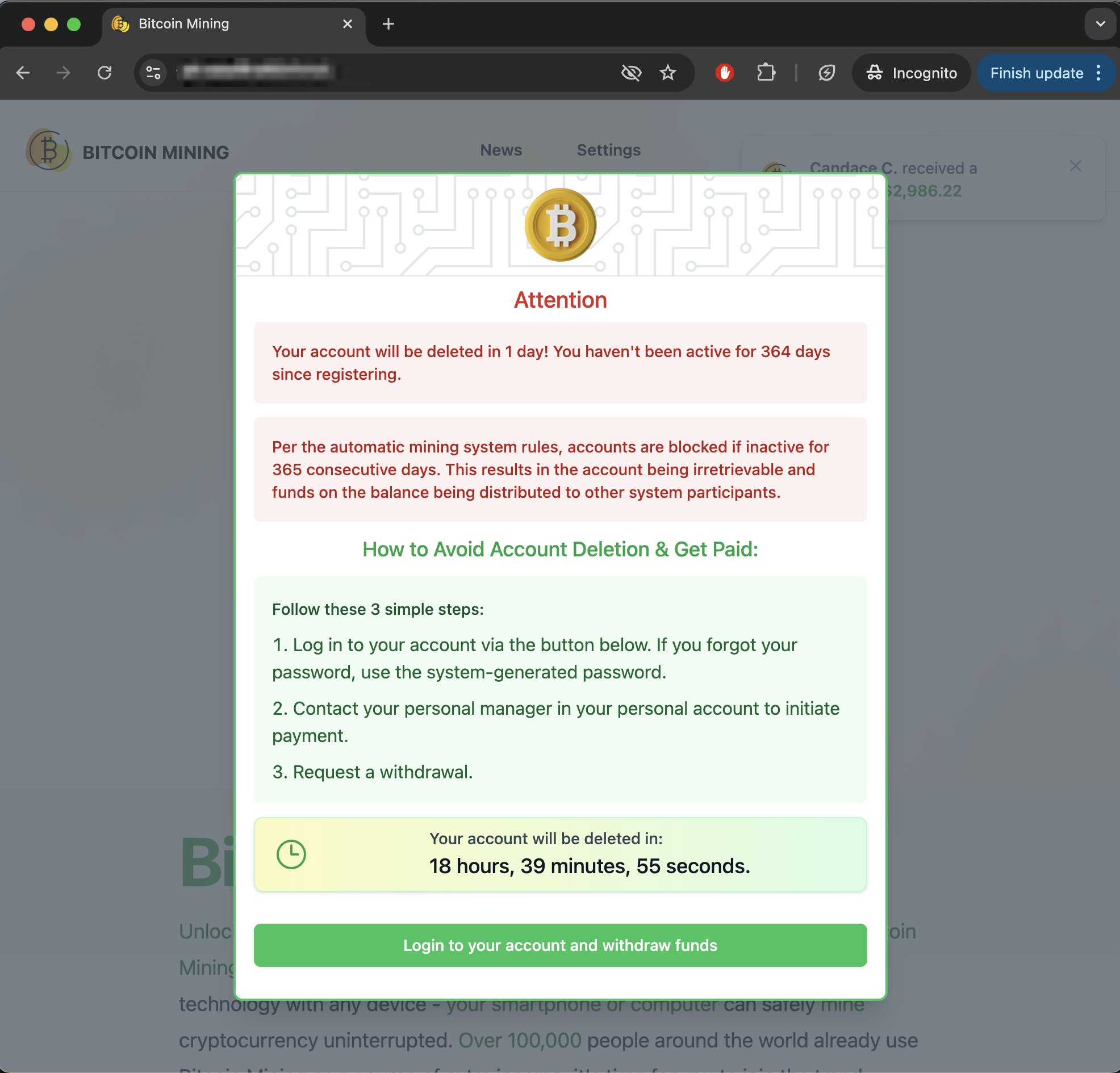
This is a classic tactic to lower your guard and push you to make quick decisions, hoping you’ll act without thinking critically.
Another key element on the site was a series of fake notifications that popped up, claiming users were receiving payments. One notification read, “Emily M. received a payment of $3,419.51,” while another mentioned someone else receiving $2,986.22.
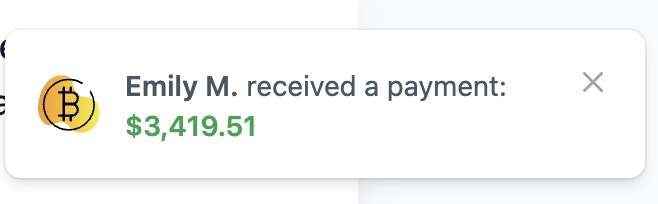
This is a tactic designed to create a sense of legitimacy and urgency, giving the impression that real users are cashing out large amounts of money.
The site also had user testimonials from "satisfied customers" claiming they were earning thousands of dollars. Reviews from "Sarah B." and "Adam R." spoke glowingly about how this service had boosted their Bitcoin holdings.
The glowing reviews are fabricated, designed to build trust in the victim and convince them that the service is credible.
Step 4: The Fake Account
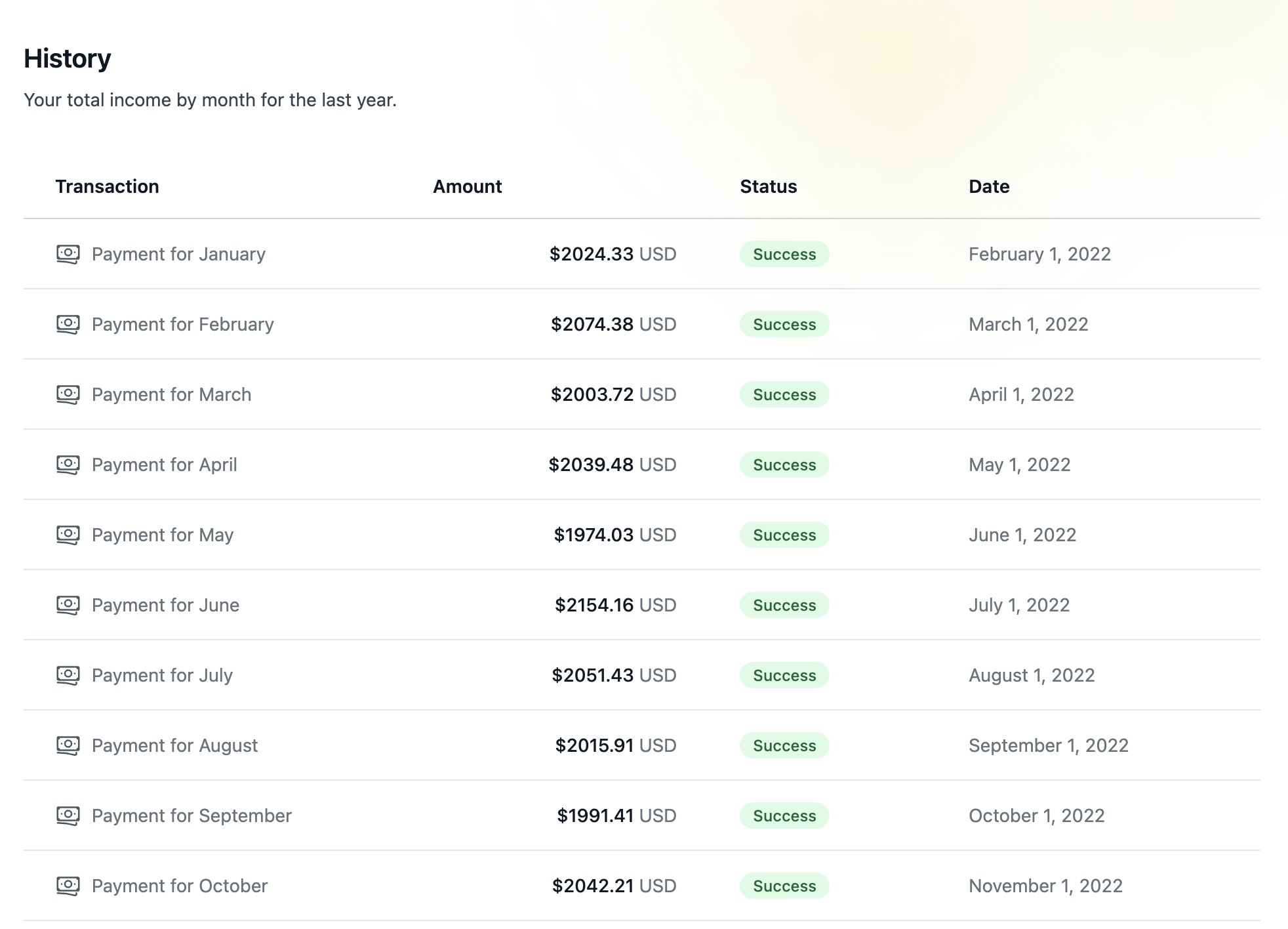
The scam site even had a section where it claimed I had earned significant amounts of money from Bitcoin mining over several months. Each month, there were transactions listed that supposedly added to my balance.
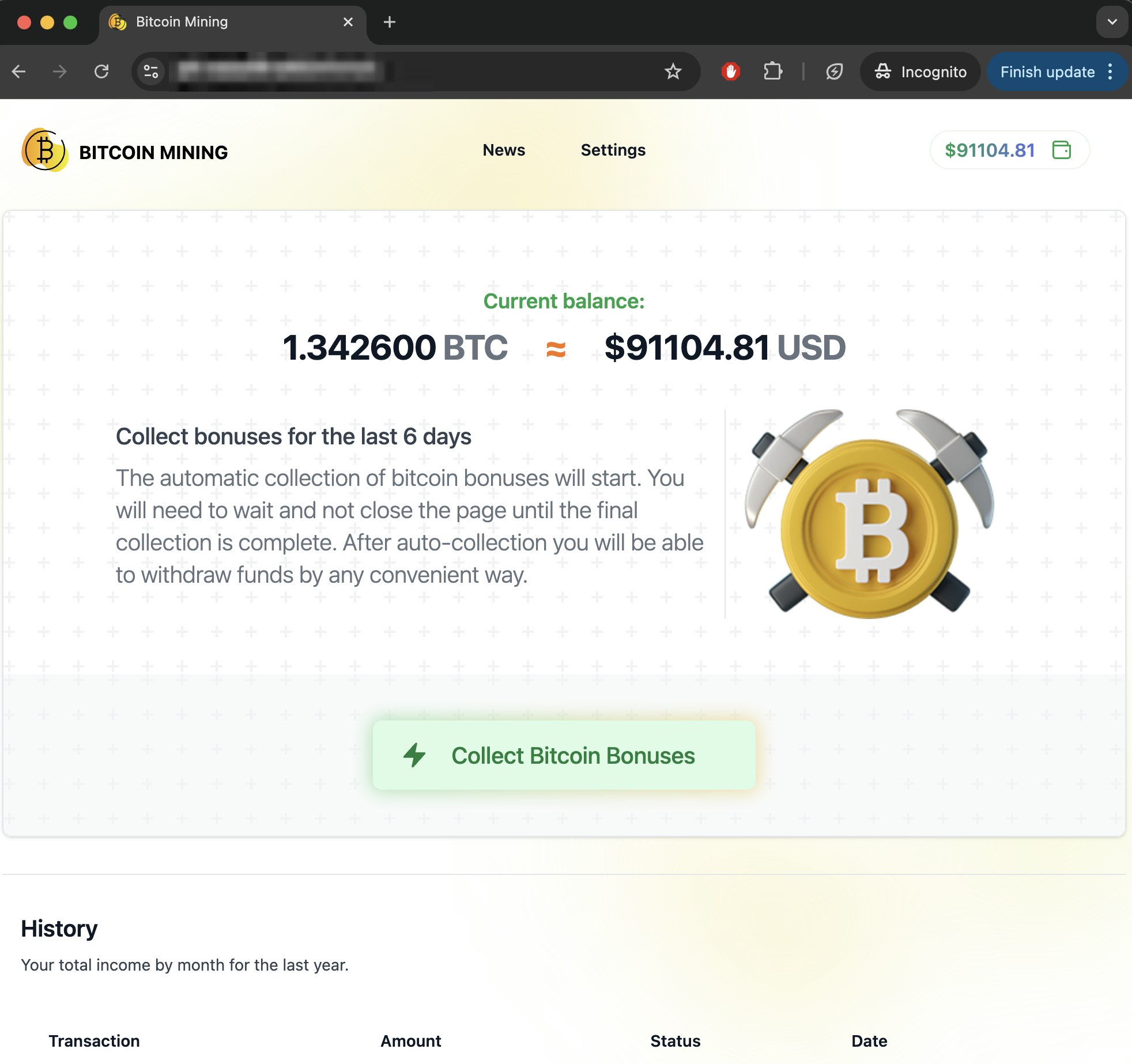
Of course, all of this is fake. There is no real account, and these numbers are designed purely to entice users to make a withdrawal attempt, at which point they would be asked for payment or personal information.
Step 5: The “Profits”
At the final stage, the site displayed my supposed profits, totaling thousands of dollars. It invited me to "collect my bonuses" and withdraw funds.
However, when trying to withdraw, victims are asked for personal details and to make a payment to “unlock” their “funds”.
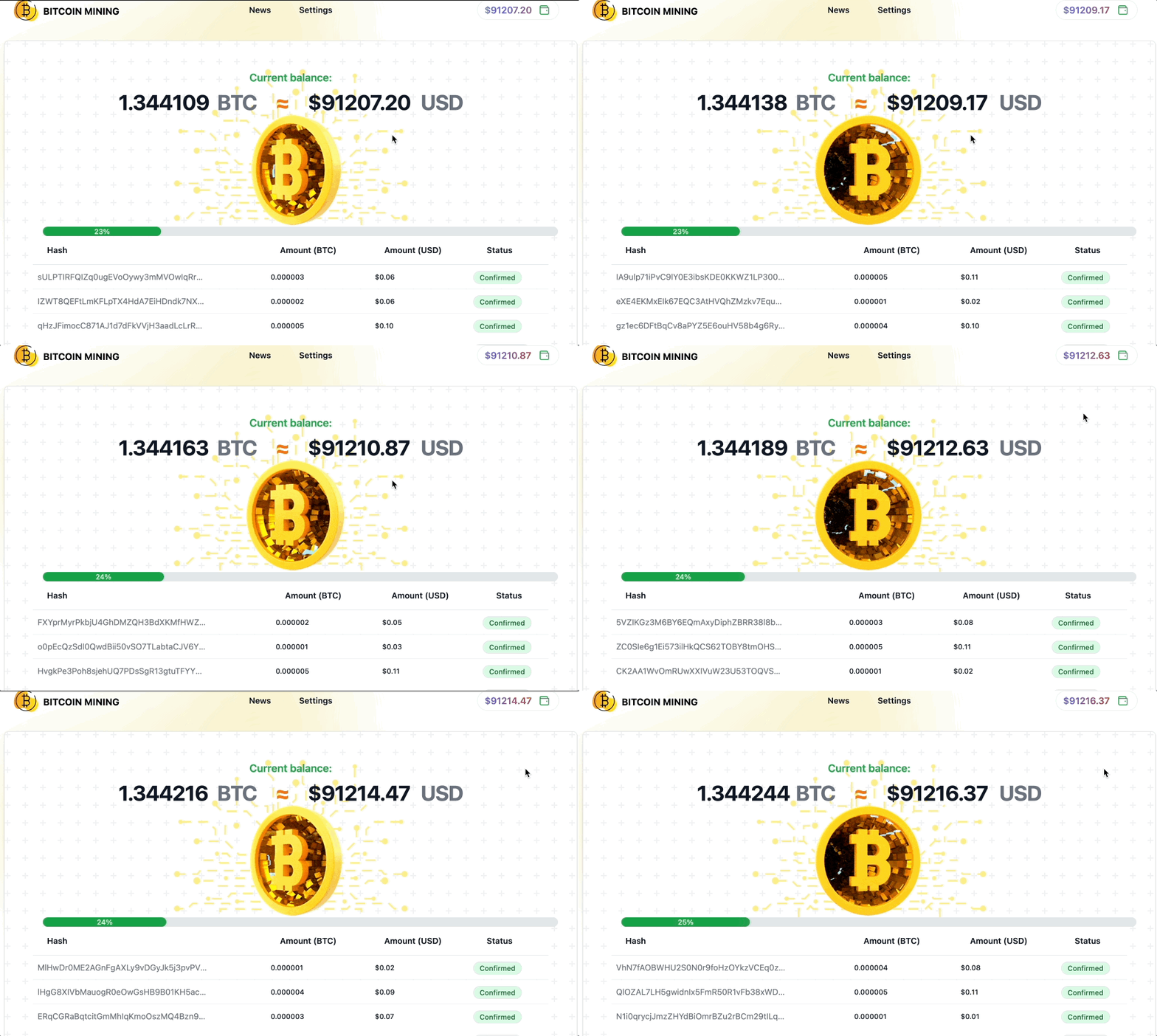
None of this is real, none of the money is real. The website is a total fake.
Conclusion: Stay vigilant!
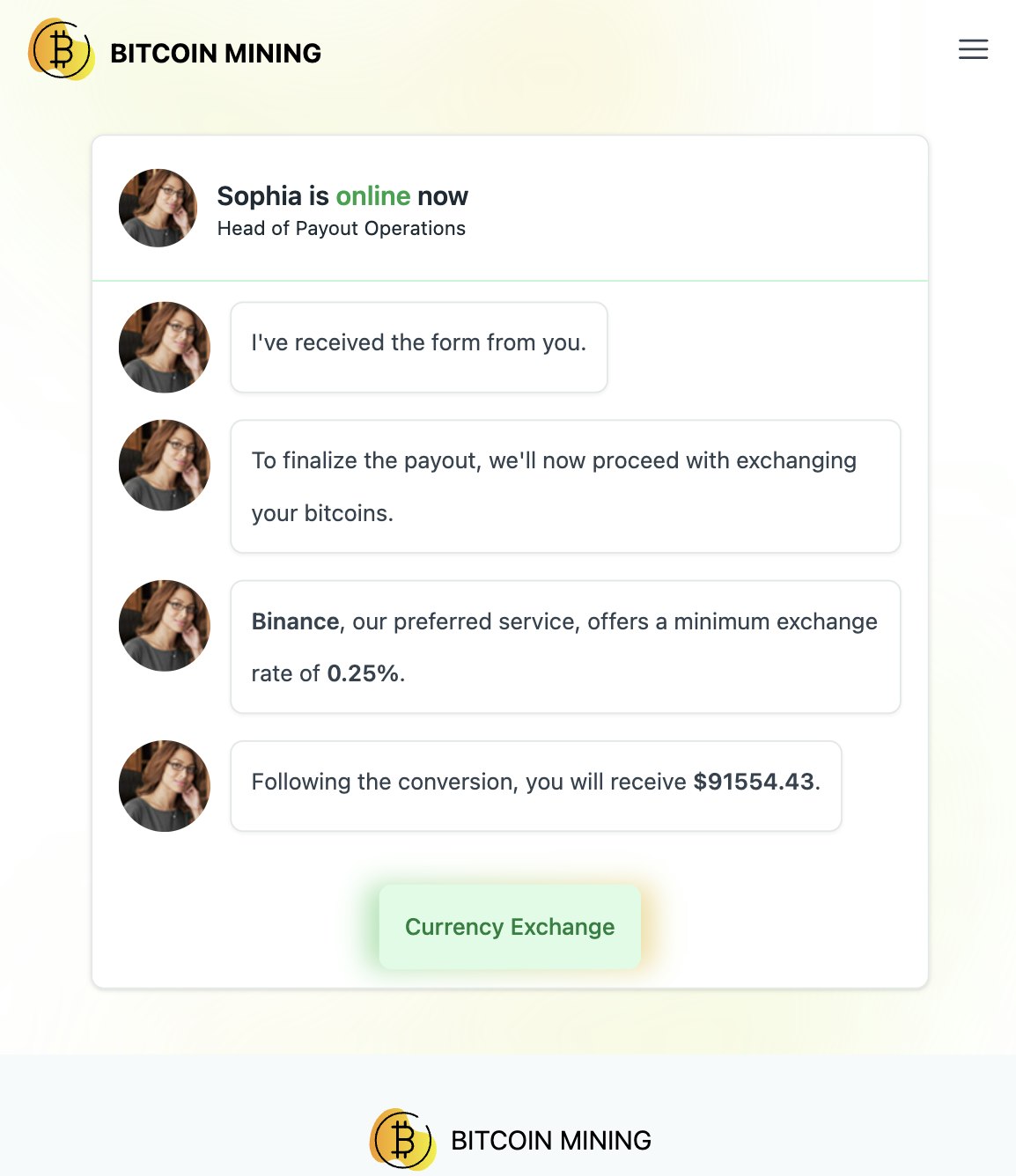
This step-by-step guide demonstrates the extreme and convincing lengths scammers will go to create elaborate traps. From fake balances to fake chat support, and even redirection to payment platforms, these scams are highly sophisticated and convincing.
Remember to always be sceptical of unsolicited emails, or people inviting you to investment opportunities – especially those offering huge sums of money for little to no effort. Never enter personal information on suspicious websites, and be particularly cautious with cryptocurrency-related schemes. If you’re not sure, ask a friend or family member, or ask us.
Stay safe, stay informed, and protect yourself from the growing number of scams in the online world.

Lukas Jackson
Lukas Jackson is a leading expert in compliance with over 5 years of experience in crypto, AML/CTF regulations and scams prevention. Actively involved in initiatives focused on scam prevention and public education, Lukas has a passion for protecting individuals from online threats. With a focus on raising awareness and developing strategies to combat scams, Lukas is committed to driving efforts that help people recognise and avoid scams.
Read full bio