Key Takeaways
- Dogecoin started as an online joke and has since become a widely recognised digital asset with significant trading activity, although its value remains highly speculative and risky.
- Mainstream brands and major cryptocurrency platforms have experimented with the token, which has helped raise its profile but does not remove its high-risk nature.
- Investing in memecoins carries substantial risk, as their value depends largely on online attention and social trends rather than traditional financial fundamentals.
Decades ago, human attention was measured through television ratings and newspaper circulation. Today, it is counted in clicks, likes, shares and watch time.
Cryptocurrency has added another layer. It has created a way for internet culture to be recorded and traded on a blockchain. What used to be a simple viral image can now sit at the centre of a multi‑billion pound digital market, sometimes within days.
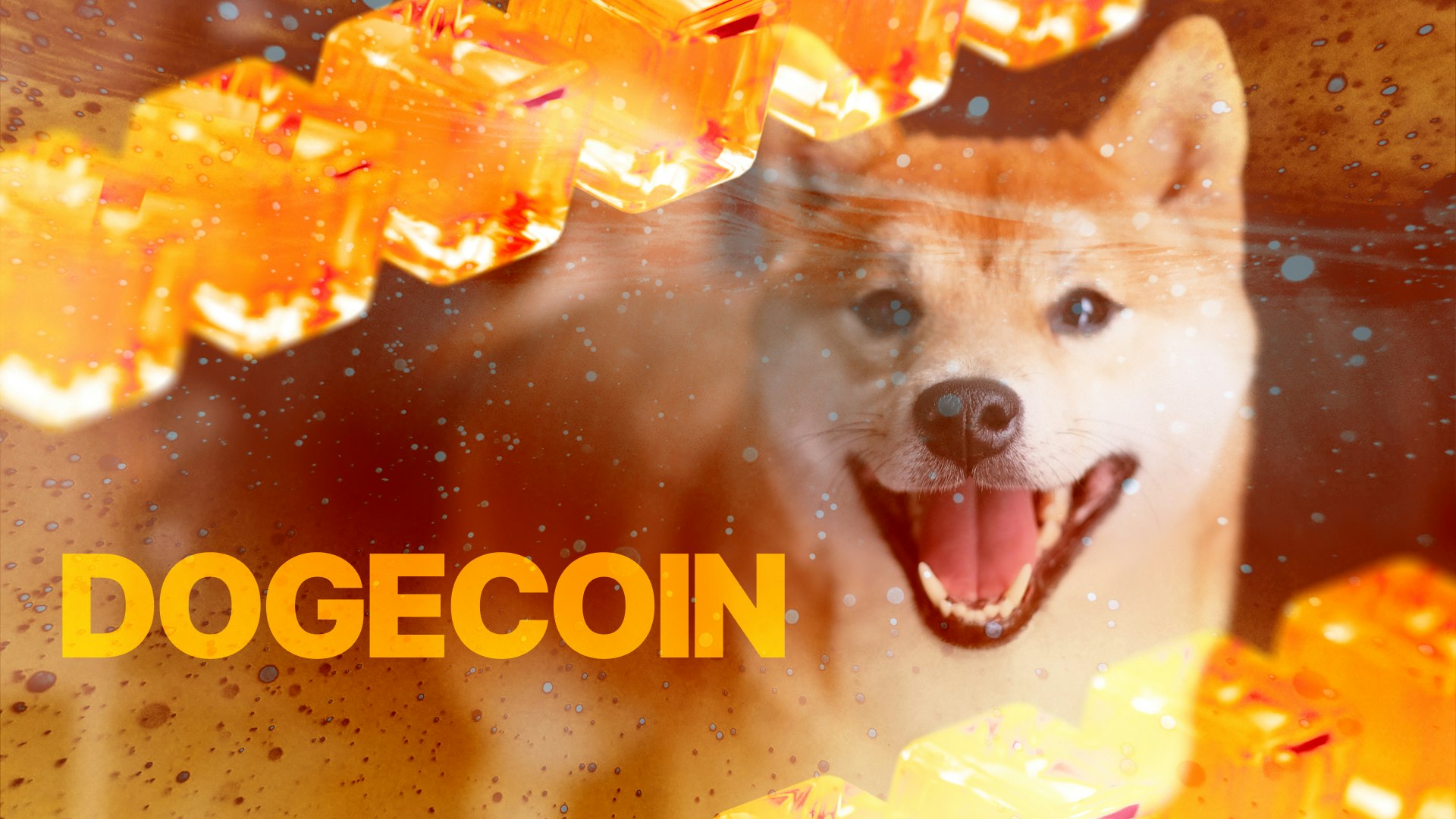
Dogecoin was launched in 2013 as a playful nod to a popular Shiba Inu meme. Ten years later, the same token trades on major exchanges, appears in corporate documents and features in experiments by global brands.
The journey from a novelty token to a widely traded digital asset says a great deal about how modern markets, and online attention, now interact.
The evolution from meme to mainstream
Dogecoin began as a light‑hearted comment on internet culture. Over time, it turned into a clear example of how online communities can intersect with global financial markets.
Along the way, the token has gained listings on large trading venues, picked up significant brand recognition and attracted regulatory scrutiny in several countries. None of this guarantees future demand or price growth, but it does show that even a joke can become a serious market instrument in the eyes of some participants.
Access to serious market infrastructure
When major global exchanges began listing Dogecoin in 2019, it marked a turning point. A token that started as a joke suddenly had access to higher quality trading rails, professional market makers, institutional‑grade custody services and deeper liquidity.
Think of liquidity like a busy motorway. The more lanes and cars you have, the easier it is to change lanes without causing a traffic jam. In trading terms, better liquidity can make it easier to buy and sell without moving the price too sharply. It does not remove risk, but it can help markets function more smoothly when volumes increase.
By listing on large platforms, Dogecoin reached the point where it could process billions of pounds’ worth of trading volume over short periods without the systems failing.
This did not mean the token had suddenly gained fundamental value. It simply showed that there was strong speculative demand and that market infrastructure was able to handle it.
Real‑life examples
Corporate experiments with Dogecoin do not mean everyone will soon be paying for their weekly shop in memecoins. In practice, these trials have been limited in scope and value.
However, when large companies interact with a memecoin, it can influence public perception. It may create a sense that the asset is more established than it really is, even though the underlying risks remain unchanged.
Some notable examples include:
- Tesla merchandise: In late 2021, the electric vehicle manufacturer began accepting Dogecoin for selected merchandise on its online store. This was restricted to certain items and did not extend to vehicle purchases.
- AMC Theatres: AMC is owned by AMC Entertainment Holdings, which also owns Odeon, the largest cinema operator in the UK and Ireland. AMC allowed customers to purchase digital gift cards using Dogecoin through a third-party payments provider.
- X (formerly Twitter) integrations: In 2023, the social media platform temporarily replaced its bird logo with the Dogecoin mascot. Within minutes, the token’s price moved sharply as billions of pounds in notional market value shifted on the back of a visual change and online speculation.
These moves were small in financial terms compared with the overall revenues of the companies involved.
What they did show is that some major brands are willing to experiment with a currency that started as a joke, largely for marketing, community engagement and publicity. None of this should be seen as an endorsement that Dogecoin is a safe or suitable investment.
Why memes move markets
To understand how a picture of a dog turned into a multi‑billion pound asset at its peak, it helps to look at human behaviour and digital culture. Several factors help explain why memecoins can attract so much speculative capital:
- Narrative speed: A funny image or simple story spreads across social media much quicker than a detailed financial report. This speed can create sudden bursts of attention that push traders to act quickly, often without full research.
- Community power: Highly active online communities generate constant discussion, memes and content. This activity can draw in new participants and fuel trading volume, which may increase perceived liquidity, although liquidity can vanish very quickly in a downturn.
- Unit bias: Because a single Dogecoin typically trades at a low unit price compared with Bitcoin, some retail buyers feel they can own “more” of it. This can create a psychological sense of greater opportunity, even though percentage gains and losses matter far more than the number of units.
- Reflexivity: In the digital age, attention often drives price, then price moves attract more attention. Rising prices can draw in media coverage, which can attract new buyers, which can push prices further, at least temporarily. The same effect works in reverse when interest fades.
Together, these forces can turn a meme into a volatile, highly speculative market. They do not provide a solid basis for long‑term value. When sentiment turns, the same mechanisms that pushed prices higher can speed up the fall.
Red flags and market risks
Although the institutionalisation of Dogecoin is an interesting case study, engaging with memecoins is extremely speculative. They are not traditional investments and are unlikely to suit most people. Anyone thinking about buying them should be fully aware of the risks and be prepared to lose all of the money they put in.
Key risks include:
- Lack of fundamentals: Unlike shares in a company, which may be linked to assets, revenues and cash flows, most memecoins have limited or no underlying utility. Their price generally reflects sentiment and attention, not a claim on income or assets.
- Extreme volatility: Prices can surge or collapse within minutes due to a tweet, a rumour or a viral post. This volatility can lead to very large gains for some, but equally large and rapid losses for others.
- Influencer and market manipulation: A small number of influencers or large holders can move the market. Coordinated buying or selling, often not visible to everyday investors, can leave late entrants holding significant losses once the hype has passed.
- Fading attention and liquidity risk: Memecoins often depend on staying relevant online. When attention shifts to a new trend, trading volumes can fall sharply. Lower liquidity can make it hard to sell at a reasonable price, or at all, especially during a wider market downturn.
Because of these risks, memecoins are generally more suited to very experienced traders who fully understand the potential for total loss, rather than to long‑term investors or those with low risk tolerance.
Why the institutionalisation of Dogecoin matters
The story of Dogecoin is not mainly about turning jokes into traditional businesses. Instead, it highlights how attention itself has become a powerful economic force. In crypto markets, online engagement, community narratives and viral moments can, for a time, be priced as if they were assets.
This does not mean attention is a stable foundation for value. It simply shows that markets are willing to trade it.
As the line between internet culture and global finance grows thinner, Dogecoin acts as a kind of mirror. It reflects how modern markets respond to community, storytelling and cultural relevance, even when there is little in the way of underlying fundamentals.
For investors, the lesson is clear. High visibility, strong memes and big price swings do not remove risk. They often increase it.

CoinJar
CoinJar is one of the longest-running cryptocurrency exchanges in the world. Since 2013, we’ve helped hundreds of thousands of people worldwide to buy, sell and spend billions of dollars in Bitcoin, Ethereum and dozens of other cryptocurrencies.
Read full bio