Key Takeaways
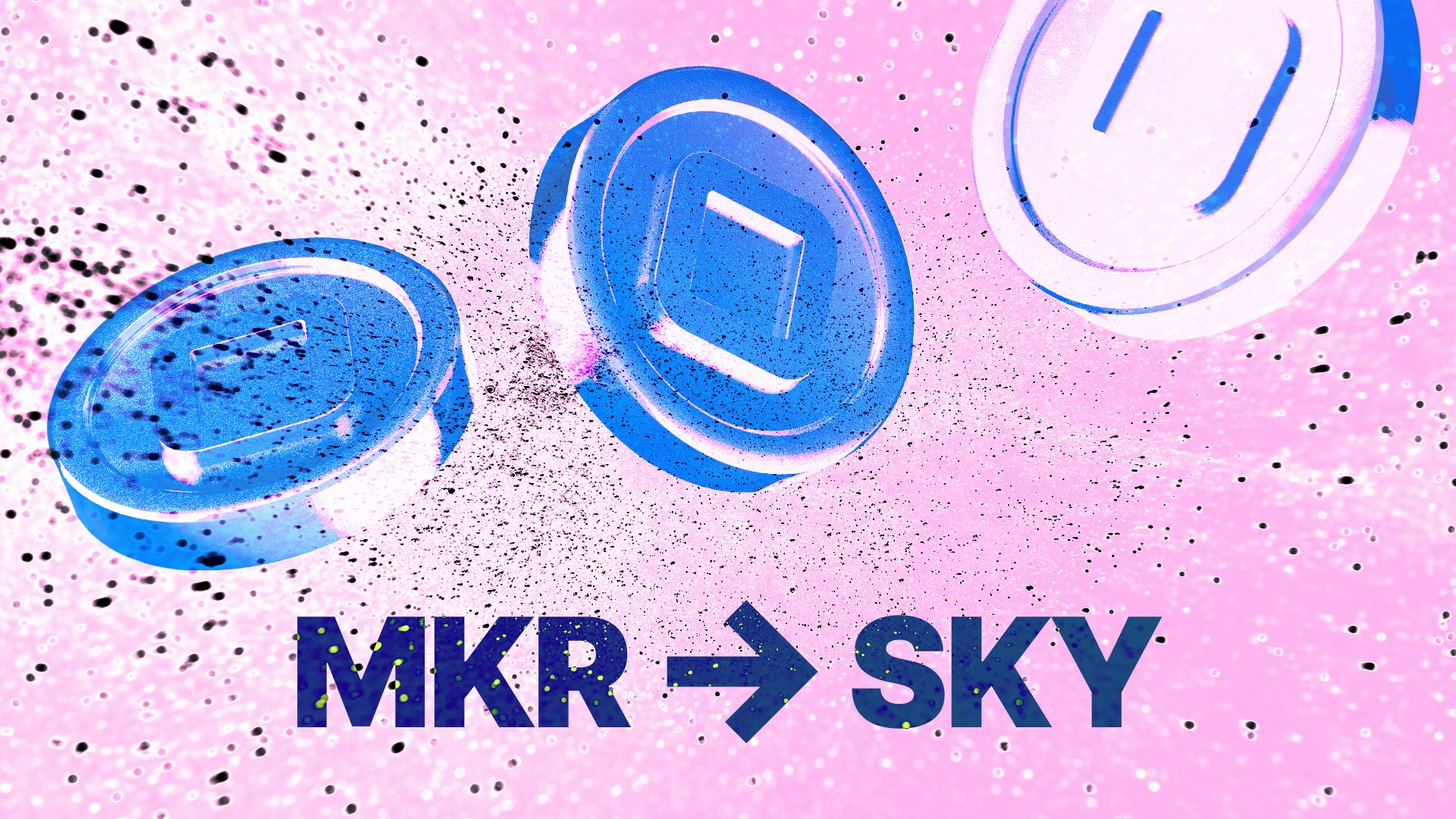
- MakerDAO has rebranded to Sky Protocol, with the MKR token upgraded to SKY and the DAI stablecoin upgraded to USDS.
- The transition is intended to make decentralised finance (DeFi) easier to use, but it also introduces new features and technical risks that users should understand.
- CoinJar has listed SKY and delisted MKR, so legacy MKR holders who wish to migrate must withdraw their tokens and complete the swap externally.
For years, MakerDAO and its stablecoin DAI have been a core part of decentralised finance. They showed that a cryptoasset could aim to be both relatively stable in price and governed by its community. At the same time, the system was complex, and many people found it hard to use safely without prior DeFi experience.
To address this, the organisation has launched a major overhaul and rebranded as Sky Protocol. This includes two upgraded tokens: SKY (replacing MKR) and USDS (replacing DAI). This guide explains what is changing, what is staying the same, and the key risks to consider.
From Maker to Sky: Why the Change?
The main goal of Sky Protocol is to simplify how people interact with DeFi. MakerDAO was powerful, but the interface and concepts could be technical, especially for new users. Sky Protocol aims to present similar underlying mechanics in a way that is easier to understand, while still remaining a complex, high‑risk system under the surface.
This is more than a simple name change. It is part of MakerDAO’s long term “Endgame” plan to scale the protocol. By upgrading the tokens, Sky can support features such as the Sky Savings Rate and Sky Stars (independent projects built around the core protocol). These features are intended to increase utility and potential rewards, but they also come with additional smart contract and regulatory risk that may not have existed, or been as visible, in the older system.
The New Tokens Explained
1. SKY (formerly MKR)
SKY is the new governance token of the Sky Protocol ecosystem. Like MKR, it is designed to give holders a say in how the protocol evolves. Governance tokens can be highly volatile, so SKY should be treated as a speculative cryptoasset and not as a savings product.
- The split: The migration uses a 1:24,000 split. For every 1 MKR token migrated, you receive 24,000 SKY tokens. The higher number of tokens does not mean an automatic increase in total value, and the market price of SKY can move up or down significantly.
- Utility: In addition to voting on protocol decisions, SKY is expected to be used in various reward and staking features that may allow holders to earn USDS or other benefits. Any potential yield or reward is not guaranteed, can change at short notice, and is subject to platform, market and smart contract risk.
You should not assume that past performance of MKR or MakerDAO will repeat with SKY or Sky Protocol.
2. USDS (formerly DAI)
USDS is the upgraded version of the DAI stablecoin. It is designed to track the value of 1 US Dollar, but this peg is not guaranteed and may break in stressed market conditions.
- Interchangeable: USDS and DAI are linked through the same issuance model. The protocol intends to support 1:1 swaps between DAI and USDS at any time, subject to the system working as designed and network conditions. Liquidity, gas fees and technical issues may still affect your ability to convert at a particular time or cost.
- Legacy status: DAI is not being shut down. It remains as a decentralised, censorship‑resistant stablecoin within the Maker / Sky ecosystem. However, new features, including most reward or “savings” options, are expected to be focused on USDS. This may encourage migration, but it also concentrates risk in the newer contracts that support USDS‑based products.
Stablecoins are not the same as holding money in a bank account. They are not covered by the Financial Services Compensation Scheme (FSCS), and you could lose some or all of your capital if the peg fails or the protocol experiences a severe issue.
How It Works in Practice
You can think of the shift from DAI to USDS as an upgrade in how you access potential savings features, not as a guarantee of better returns.
- The old way (Maker / DAI): Imagine having £100 worth of DAI in a wallet. It tracks the US Dollar and can be used for payments and DeFi activity. To earn any extra yield, you usually had to find and use more advanced DeFi products yourself, which could be complicated and risky.
- The new way (Sky / USDS): You exchange that DAI for USDS. It still works like a dollar‑linked asset, but you may also be able to access features like the Sky Savings Rate if you use the official Sky interface or partner platforms. These products may let you earn a variable return in USDS, typically by taking on additional smart contract and counterparty risk.
If you decide not to upgrade, your DAI can still function as a dollar‑linked asset within supported apps. You will not access USDS‑specific reward features, but you also avoid the new set of risks that come with using them. In either case, there is no guarantee of profit, and you should be prepared for the possibility of total loss.
CoinJar Specifics: What You Need To Know
CoinJar is supporting Sky Protocol’s transition by listing SKY and delisting MKR. If you are a CoinJar customer, here is the current status.
- SKY: Available for trading. You can buy, sell and store SKY on CoinJar and CoinJar Exchange, subject to our usual eligibility and risk controls. The price of SKY is highly volatile and not suitable for everyone.
- MKR: Trading, Bundles and Recurring Buys have stopped, and MKR deposits are disabled. Existing MKR balances are still visible and withdrawable, but you cannot trade MKR on CoinJar.
- DAI: DAI remains supported as a stablecoin on CoinJar. It is not a bank deposit or savings product, and it carries its own set of smart contract, market and counterparty risks.
CoinJar does not currently offer a direct MKR to SKY swap inside the app.
How To Migrate MKR
If you still hold MKR in your CoinJar account and you want to convert it to SKY, you will need to complete the process externally. This involves self‑custody and on‑chain interaction, which carry additional responsibility and risk.
- Withdraw your MKR to a self‑custody wallet, such as MetaMask. Ensure you control the private keys and that you keep your recovery phrase safe and offline.
- Connect your wallet to the official Sky Protocol interface at
https://sky.money. Always type the address into your browser manually or use a trusted bookmark. - Swap your MKR for SKY at the protocol rate of 1 MKR = 24,000 SKY, following the instructions on the official interface. You will need ETH to pay network gas fees, and the final amount of SKY you receive will depend on the protocol rules at the time you transact.
Note: According to Sky Protocol, a penalty fee for late MKR to SKY conversions may apply from 18 September 2025. This is controlled by Sky Protocol, not CoinJar, and may change. Always check the latest information on the official Sky documentation before acting.
If you are not comfortable using self‑custody wallets or DeFi interfaces, you should consider whether migrating MKR is appropriate for you at all.
Risks and Security
Sky Protocol builds on the long operating history of MakerDAO, but that does not remove risk. Cryptoassets and DeFi protocols are high risk and can fail suddenly.
Key risks to be aware of:
- Market risk: The price of SKY, and the effective value of USDS against fiat currencies such as GBP, can move quickly and without warning. You could lose all the money you put in.
- Stablecoin risk: USDS and DAI are designed to track the US Dollar, but this peg is not guaranteed. Extreme market conditions, collateral failures or governance decisions could cause a loss of peg, leading to partial or total loss of value.
- Phishing and scams: Major rebrands are often used by fraudsters. Fake “migration” websites, social media accounts and adverts may try to trick you into connecting your wallet or sharing your seed phrase. Never click on adverts to complete a token migration. Only use the official Sky site (sky.money) or other reputable links that you have verified yourself. CoinJar will never ask for your private keys or recovery phrase.
- Smart contract and technical risk: New features such as USDS savings or staking rely on smart contracts. Even if audited, they can contain bugs or be exploited. If this happens, funds may be lost and might not be recoverable.
- Governance and regulatory risk: As a governance token, SKY holders can vote on changes that affect collateral types, yields and system parameters. These decisions might benefit some users and harm others. In addition, certain features, especially reward or savings products, may be restricted in some countries due to local regulation, and access or terms can change over time.
- Operational risk: Using self‑custody wallets, DeFi interfaces and bridges introduces more ways to make mistakes. Sending assets to the wrong address or chain is usually irreversible.
Only invest or hold cryptoassets if you are prepared to lose all of the money you put in and you fully understand the risks involved. Crypto is not suitable for everyone.
The Future of Sky
The move from Maker to Sky is a sign that large DeFi projects are trying to become easier to use and more connected to traditional financial assets, such as tokenised Treasury bills and other real‑world assets. This may create new opportunities, but it also layers traditional financial risk on top of existing crypto and smart contract risk.
Whether you choose to stay with DAI, move to USDS and SKY, or step back entirely, it is important to base your decision on your own research, your risk tolerance and your financial situation. Do not rely solely on branding, community hype or past performance.
CoinJar will continue to assess which assets and features it supports and may change availability at any time, in line with our legal and regulatory obligations.

CoinJar
CoinJar is one of the longest-running cryptocurrency exchanges in the world. Since 2013, we’ve helped hundreds of thousands of people worldwide to buy, sell and spend billions of dollars in Bitcoin, Ethereum and dozens of other cryptocurrencies.
Read full bio