
Buy Amp
AMPPast performance is not indicative of future results. All prices are sourced from CoinJar Indices.
What is Amp?
Amp is a collateral token. That is an unusual thing for a cryptocurrency to be, and it is the whole point of it, so it is worth being precise.
Blockchains settle at their own pace. A payment can look finished to a shopper while the transaction behind it is still unconfirmed, and until it settles the merchant is exposed. Amp was built to close that gap. AMP tokens are pooled as collateral against payments in flight, so the merchant can be paid immediately and the collateral absorbs the risk if the underlying transaction never lands.
AMP is not a currency you spend, it is not a governance token in any meaningful sense, and it does not pay you a share of anyone's revenue. It is security posted against someone else's settlement risk. Our guide to stablecoins covers the assets that increasingly dominate crypto payments, and our guide to altcoins explains where tokens like AMP sit relative to Bitcoin.
Where did Amp come from?
Flexa was founded in 2018 by Tyler Spalding, Trevor Filter, Zachary Kilgore and Daniel McCabe, as a payments network letting shoppers pay merchants in crypto at the point of sale. It raised money in 2019 through a token called Flexacoin.
Amp replaced it. Designed with input from ConsenSys, AMP was a purpose built collateral token rather than a simple rebrand, and Flexa announced the migration in September 2020 at a one for one ratio, discontinuing support for the old token shortly afterwards.
The structure since has become more complicated than most descriptions admit. Flexa, the payments company, and the stewardship of Amp itself have separated. Amp's open source development now sits with the Acronym Foundation, led by Flexa co-founder Tyler Spalding, which has also built a broader collateral protocol called Anvil. Flexa remains the main user of AMP collateral. It is not the owner of it. Anyone buying AMP is taking a view on two organisations, not one.
How does the collateral actually work?
Pools, not a single vault. Each application or network connected to Flexa has its own collateral pool. Collateral is assigned to that pool, and the pool's capacity limits how much payment volume it can safely support.
Stake in place. AMP is an ERC-20 token with an unusual internal structure. Balances can be divided into partitions, and a partition can be assigned to a collateral manager without leaving your address. That is why Flexa describes it as staking in place rather than depositing into a contract.
Collateral managers set the rules. A collateral manager is the contract that recognises collateral, links it to a use, and governs when it is locked, released or drawn on. Anyone can write one. Flexa's uses the Anvil vault, with withdrawal requests unlocking at set intervals rather than instantly.
Rewards are paid in AMP. When Flexa uses pooled collateral to secure a transfer, providers earn rewards, distributed monthly and weighted by how long their collateral has been pooled. Selected pools receive periodic multipliers. The important detail is the denomination: you stake AMP and you are paid in AMP, out of allocations set aside at launch and released on a schedule running for decades. That is not a share of the payments business. It is a distribution of tokens.
Flexa moved Capacity to a third version in February 2025, retiring the previous one mid year and requiring holders to migrate. Anyone who staked years ago and stopped paying attention needed to act.
What Flexa is doing now
This is the part of the story that has changed most, and it cuts both ways.
Flexa is clearly still operating and still shipping. Through 2025 and 2026 it announced payments inside social wallet mini apps, a USDC checkout integration on Base, a nationwide retail partnership with a chain operating hundreds of stores, a leadership transition that made co-founder Trevor Filter chief executive, and a European launch with settlement across the single euro payments area. Its published material is heavily focused on merchants, compliance, stablecoin regulation and cross border settlement.
It also shut down SPEDN, the consumer app that was the public face of the network, on 31 March 2026, and the collateral pool attached to it stopped earning. Flexa said it was concentrating on merchants and payment service providers instead. Older descriptions of Amp that lead with a consumer app and a list of well known retailers are describing something that no longer exists in that form.
The strategic question follows directly from that pivot, and it is the one an AMP buyer should sit with. Flexa's newer products settle in stablecoins on fast networks. A USDC payment on a modern layer two confirms in seconds and holds a stable value while it does. The settlement risk that collateral exists to absorb is much smaller in that world than it was when the alternative was waiting on a Bitcoin confirmation. Flexa still says its pools backstop the volume it processes. But the more its business shifts towards stablecoins on fast rails, the less obvious it is how much collateral that business needs.
What AMP does and does not do
Supply is fixed at 100 billion tokens. There is no issuance mechanism beyond the original allocation and no burn function. The allocation was split between merchant development, developer grants, the founding team and employees, token sales and a network development fund, with releases scheduled over an extremely long horizon. Its use is collateral. That is the function the token was designed for and effectively the only one with economic substance. Governance is minimal. There has been off chain signalling with very high thresholds, but AMP does not govern a protocol in the way a token like a lending protocol's does. It is not the payment asset. Shoppers do not spend AMP. Merchants are not paid in AMP. It sits behind the transaction, not in it. There is no revenue claim. No fee switch, no dividend, no buyback and no entitlement to Flexa's income.
The collateral currently pooled across Flexa's networks is a small fraction of the total token supply, which tells you something about how much of the supply is doing the job the token was built for.
The securities question
This needs stating plainly because it is part of AMP's history and affects where it can be traded.
In July 2022 the Securities and Exchange Commission brought an insider trading case against a former Coinbase employee and identified nine tokens as securities in the complaint. AMP was one of them. Binance.US delisted AMP within weeks as a result. In June 2023 the Commission sued Coinbase itself, naming thirteen tokens it alleged were unregistered securities, and AMP was again on the list.
Neither allegation was ever tested to judgment. The Commission dismissed its case against Coinbase in February 2025. In March 2026 the Commission and the Commodity Futures Trading Commission issued a joint interpretation naming a set of crypto assets they treat as digital commodities rather than securities, and AMP was not on it, which leaves its status unaddressed rather than settled either way.
The practical position is that AMP has been named twice by a regulator, never adjudicated, and has lost at least one major listing over it. That is a different starting point from a token that has never been mentioned.
What are the risks of holding AMP?
Value depends entirely on demand for collateral. AMP has no other economic use. If Flexa's networks need less collateral, or if the model is displaced, there is nothing else supporting the token. The thesis is under pressure. Fast networks and stablecoins reduce the settlement gap that collateral exists to bridge. Flexa's own product direction leans that way. Staked collateral is at risk. Collateral is posted to absorb someone else's failure. Flexa's public material warns providers to supply only what they can afford to lose, and does not fully document the process by which collateral is drawn on. Rewards are paid in the same token. Staking returns come from pre allocated AMP released over a very long schedule, not from payment revenue. That is dilution of a fixed supply, not income. Two organisation dependency. Flexa runs the commercial network, the Acronym Foundation stewards the token and its collateral infrastructure, and neither is accountable to AMP holders. Product discontinuation risk, demonstrated. SPEDN was shut down and its pool stopped earning. Capacity has already required a forced migration. Smart contract complexity. The partition and hook design is more elaborate than a plain ERC-20, which means more surface area, and collateral manager rules vary by pool. Regulatory overhang. AMP has been named as an alleged security twice and never cleared. Listing and liquidity risk follows from that. Concentration and liquidity. A large share of the supply sits in project controlled allocations released over decades, and trading is thinner than for major assets. Volatility. AMP is not a stablecoin. Its value moves sharply and can fall substantially. No consumer protection. Crypto assets are not covered by the Australian Government's Financial Claims Scheme, and AUSTRAC registration is not an endorsement of any asset listed on an exchange. You should be prepared to lose the money you put in.
Buying AMP with Australian dollars on CoinJar
CoinJar has operated since 2013 and lists AMP against Australian dollars, so you can buy, sell and hold it without converting through another cryptocurrency first. Current charges are on our fees page, and live Australian dollar rates are on our cryptocurrency prices page.
CoinJar Australia Pty Ltd is registered with AUSTRAC as a digital currency exchange provider, Registration Number DCE100749118-001.
How is AMP taxed in Australia?
The ATO generally treats AMP as a capital gains tax asset. A disposal can occur when you sell it for Australian dollars, trade it for another crypto asset, spend it or give it away.
The ATO sets out its approach in its crypto asset investments guidance. Our guide to crypto tax in Australia provides a practical overview. This is general information, not tax advice. Consider speaking to a qualified tax adviser about your circumstances.
Fund Your Account Your Way
Buy Amp instantly using Visa or Mastercard, or deposit Australian dollars via bank transfer, PayID or PayPal. Buy, sell and convert between supported cryptocurrencies through your CoinJar account.


How to buy Amp with CoinJar
Start your portfolio with Australia's longest-running crypto exchange with these simple steps.
Sign up to CoinJar
Get the CoinJar app on iOS or Android, create an account and verify your ID.
Deposit funds
Deposit AUD fee-free via PayID, Osko or bank transfer. You can also use PayPal or pay instantly by card.
Buy your first crypto
Buy Amp and other popular cryptos using cash or credit card in minutes.




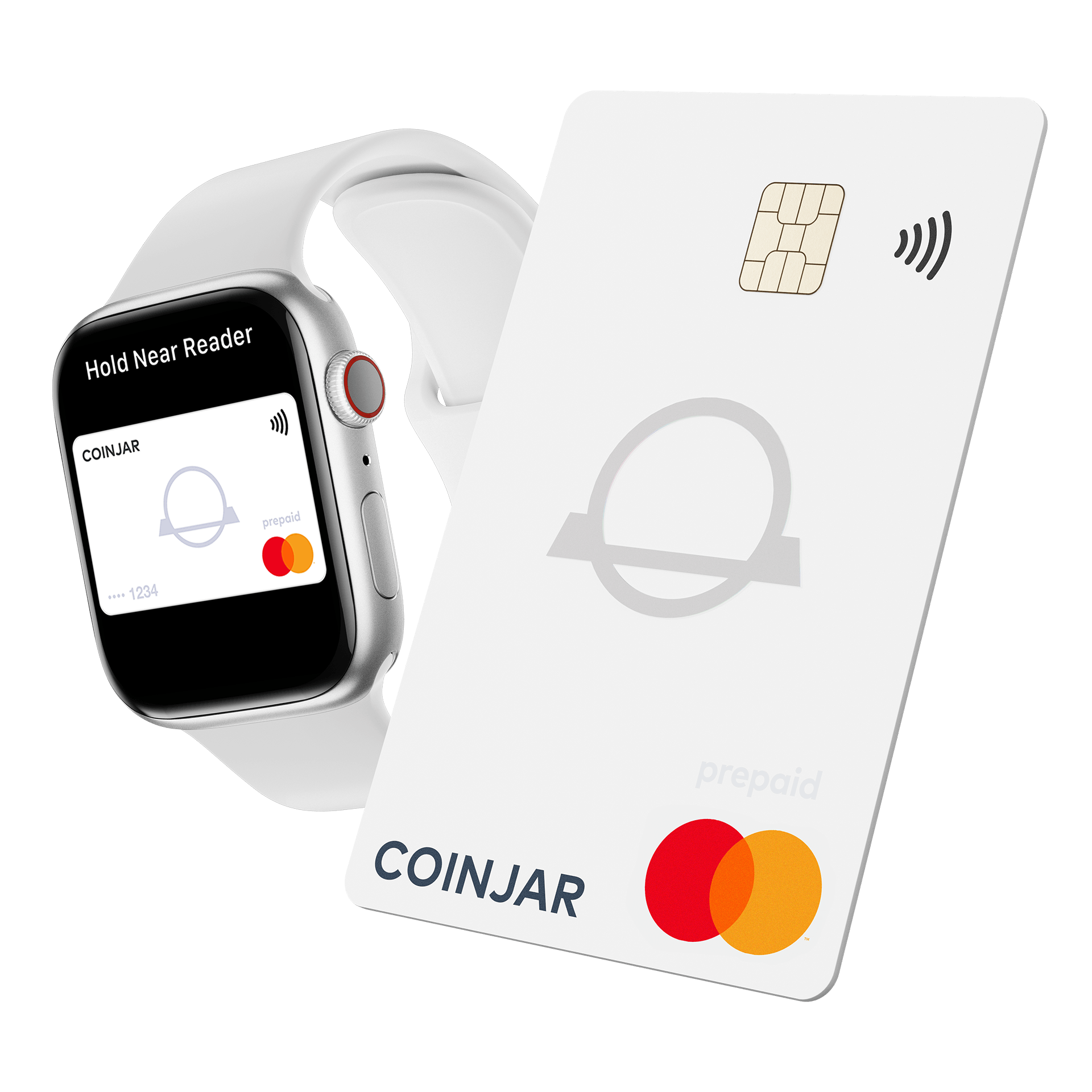
CoinJar Card
Use CoinJar Card, powered by Mastercard, for purchases online and in store, including through Apple Pay and Google Pay. No setup or monthly fee. A 1% purchase fee applies and is returned as CoinJar Rewards points, with one point earned per $1 spent. Available in Australia only.
Get your CoinJar Card for freeCoinJar Card
Use CoinJar Card, powered by Mastercard, for purchases online and in store, including through Apple Pay and Google Pay. No setup or monthly fee. A 1% purchase fee applies and is returned as CoinJar Rewards points, with one point earned per $1 spent. Available in Australia only.
Get your CoinJar Card for free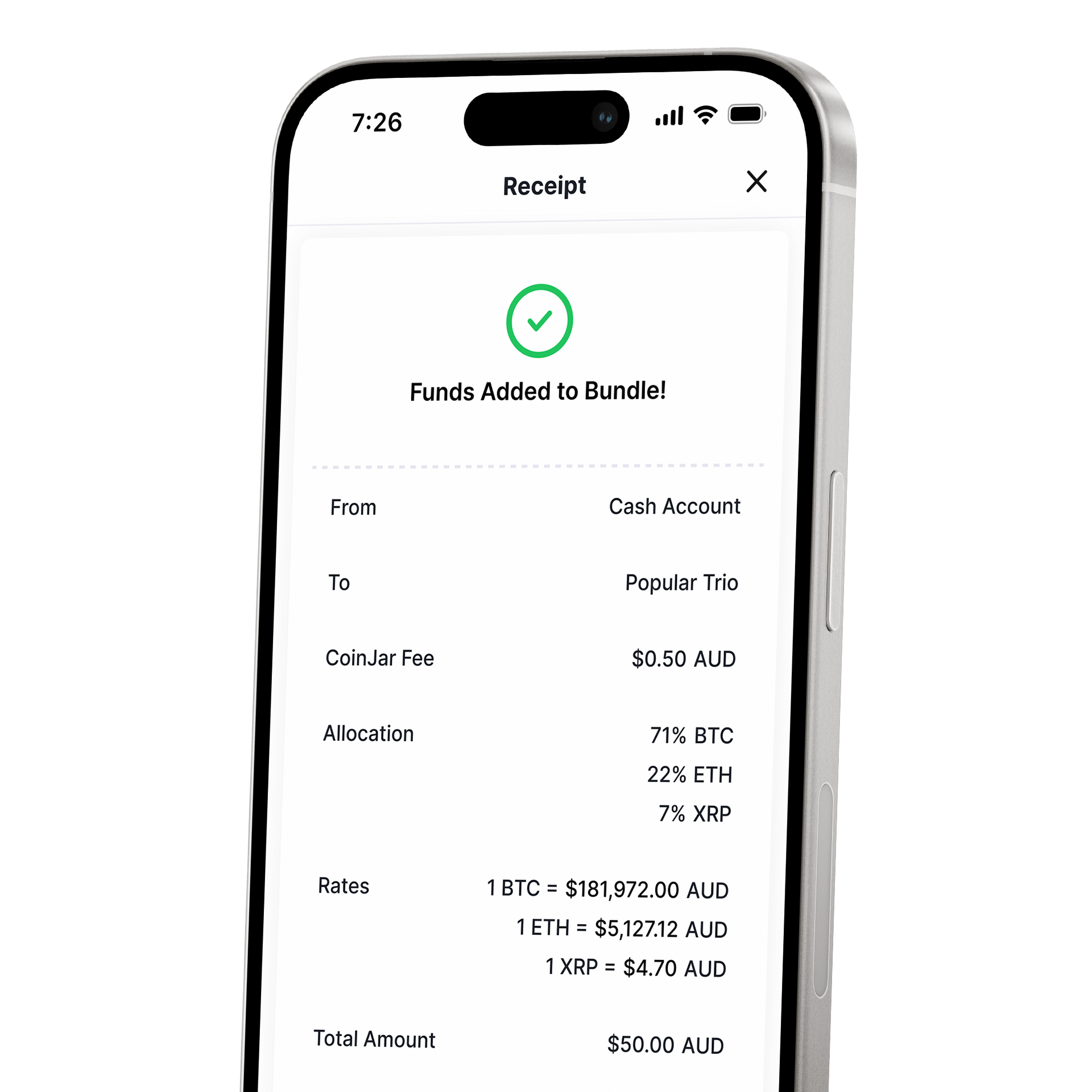
CoinJar Recurring Buy
Schedule automatic purchases weekly, fortnightly or monthly to dollar-cost average into individual cryptocurrencies or CoinJar Bundles. Manage your investment amount and schedule, with the flexibility to adjust or pause purchases as your circumstances change.
DCA with Recurring BuyCoinJar Recurring Buy
Schedule automatic purchases weekly, fortnightly or monthly to dollar-cost average into individual cryptocurrencies or CoinJar Bundles. Manage your investment amount and schedule, with the flexibility to adjust or pause purchases as your circumstances change.
DCA with Recurring Buy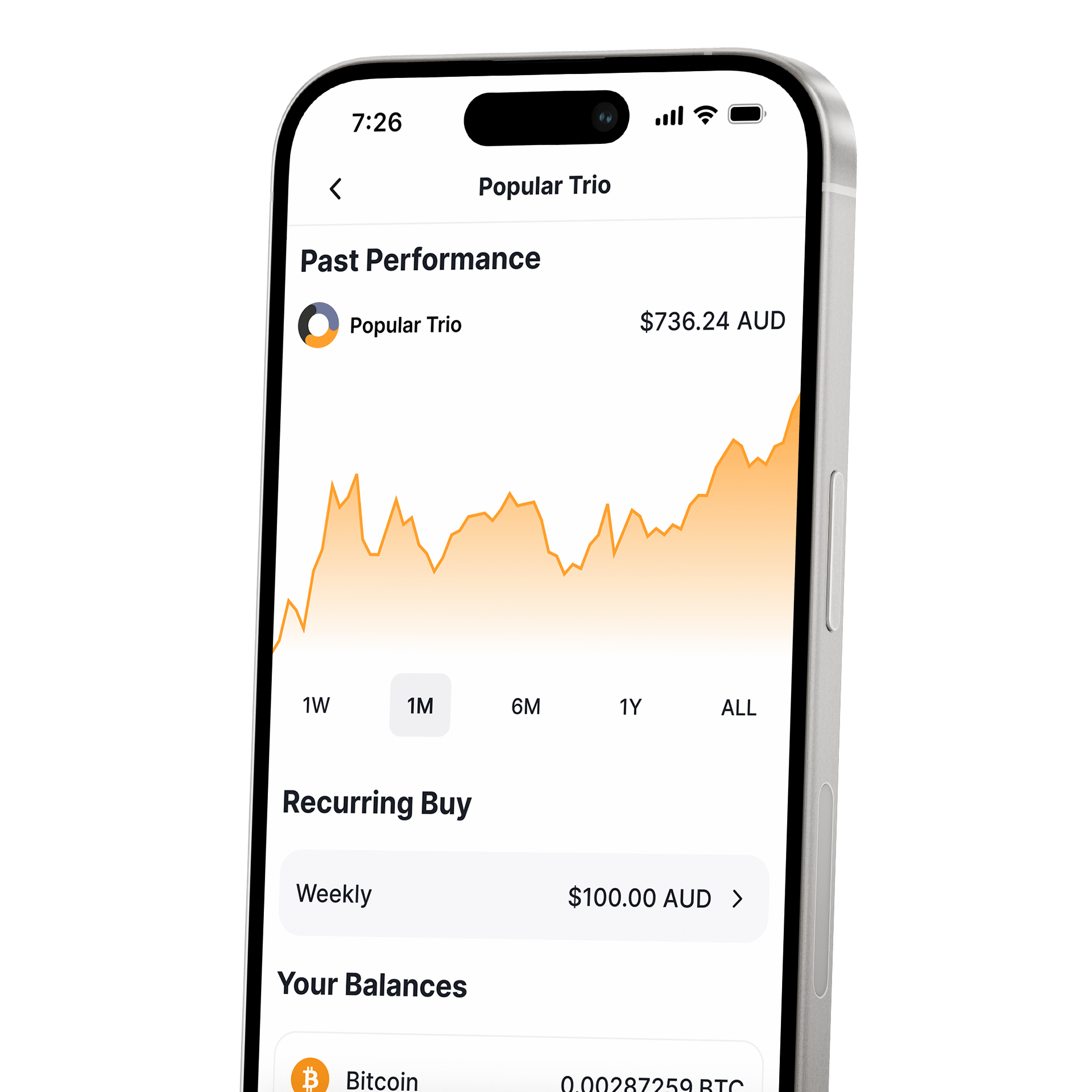
CoinJar Bundles
Pick your Bundle in the CoinJar app. Review each Bundle’s asset allocation, add to your holdings and rebalance when required. Sell your Bundle or unbundle it to manage the assets individually.
Learn moreCoinJar Bundles
Pick your Bundle in the CoinJar app. Review each Bundle’s asset allocation, add to your holdings and rebalance when required. Sell your Bundle or unbundle it to manage the assets individually.
Learn more
CoinJar Exchange
Trade with fees from 0-0.1%, using market, limit and stop-limit orders. Connect to TradingView to trade directly from your charts, or use CoinJar Exchange’s high-performance interface, built for active traders, market makers and institutions.
Explore CoinJar ExchangeCoinJar Exchange
Trade with fees from 0-0.1%, using market, limit and stop-limit orders. Connect to TradingView to trade directly from your charts, or use CoinJar Exchange’s high-performance interface, built for active traders, market makers and institutions.
Explore CoinJar Exchange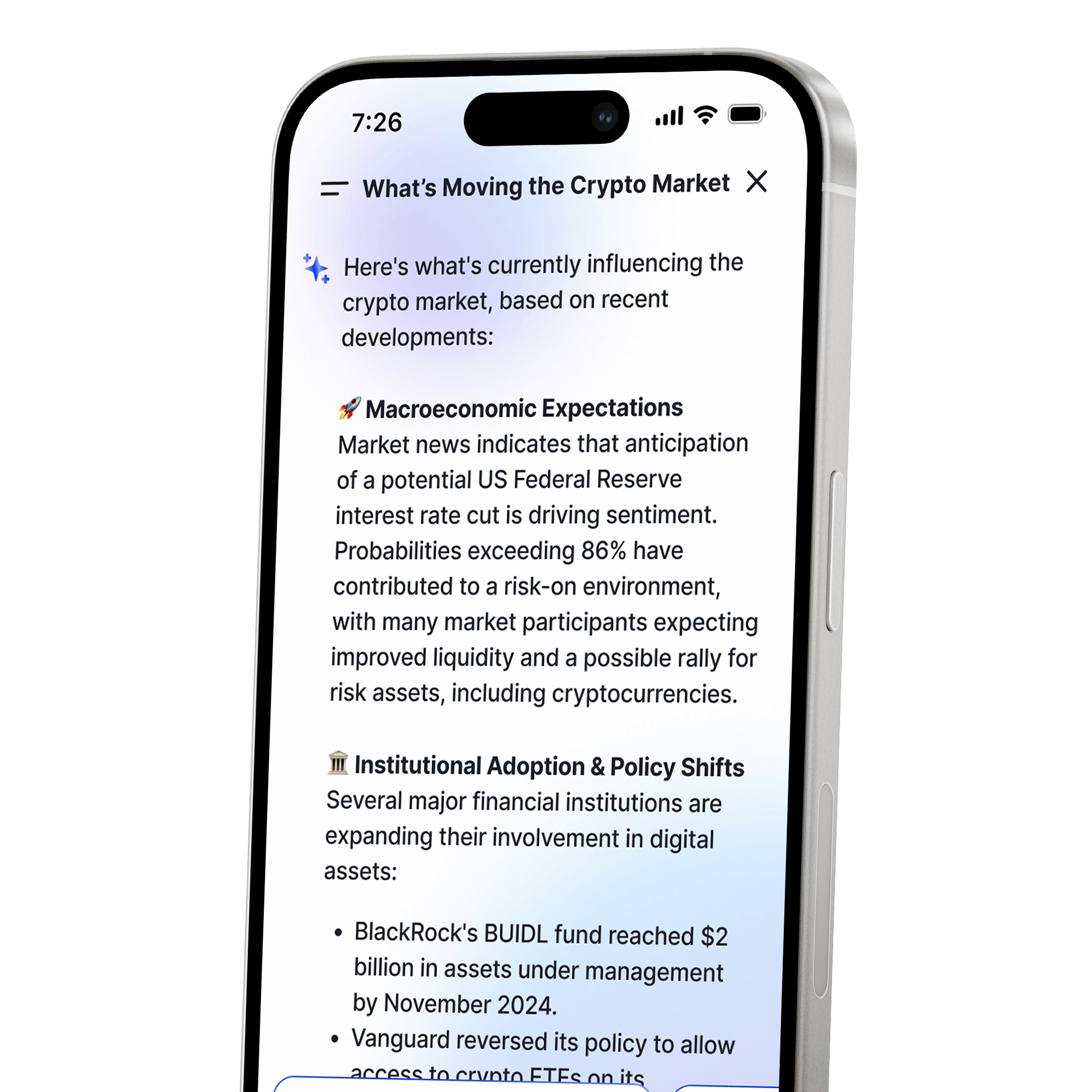
CoinJar AI
Access information about your holdings and the wider cryptocurrency market through CoinJar AI. Ask questions about portfolio changes, market developments or individual cryptocurrencies, with responses informed by your CoinJar holdings.
Learn moreCoinJar AI
Access information about your holdings and the wider cryptocurrency market through CoinJar AI. Ask questions about portfolio changes, market developments or individual cryptocurrencies, with responses informed by your CoinJar holdings.
Learn more
CoinJar OTC
For cryptocurrency trades above $50,000, CoinJar’s OTC desk provides personalised service and access to globally sourced liquidity. Work directly with a dedicated team to arrange and execute your purchase or sale. Discover OTC Services
Learn moreCoinJar OTC
For cryptocurrency trades above $50,000, CoinJar’s OTC desk provides personalised service and access to globally sourced liquidity. Work directly with a dedicated team to arrange and execute your purchase or sale. Discover OTC Services
Learn moreCoinJar does not endorse the content of, and cannot guarantee or verify the safety of any third-party websites. Visit these websites at your own risk.

CoinJar
Get the app.