
Buy Tether
USDTPast performance is not indicative of future results. All prices are sourced from CoinJar Indices.
What is Tether?
Tether AU
Tether (USDT) is a stablecoin designed to hold a value of one US dollar, backed by reserves held by its issuer, Tether Limited. It is the oldest and largest stablecoin in circulation, and it settles more daily trading volume than any other cryptocurrency, including Bitcoin. Australians typically buy USDT to move value between platforms quickly, to price trades against a dollar-denominated asset, or to step out of a volatile position without converting back to Australian dollars.
How does Tether (USDT) operate?
USDT is a token that represents a claim on US dollar reserves rather than a blockchain of its own. Tether launched the token in 2014 under the name Realcoin, built on Bitcoin's Omni Layer, and renamed it Tether later that year. At a time when very few exchanges could hold reliable banking relationships, USDT became the workaround: a dollar-equivalent unit that could move between exchanges on a blockchain instead of through the banking system.
That original purpose still explains most of its use today. USDT gives traders a stable unit of account inside the cryptocurrency system, which is why it appears as the base pair for thousands of markets worldwide. If you want the broader picture of how price-stable tokens work, our guide to what a stablecoin is covers the main designs and how they differ.
How does USDT stay at one US dollar?
USDT holds its peg through issuance and redemption rather than any algorithm. Verified corporate customers can create new USDT by sending US dollars to Tether, or redeem USDT back for dollars, subject to a minimum redemption amount of US$100,000. When USDT trades slightly below a dollar on the open market, those customers can buy it cheaply and redeem it at par, and that arbitrage pulls the price back toward one dollar.
Retail buyers do not redeem directly with Tether. You access the peg through exchanges and liquidity pools, which is why USDT can drift a fraction of a cent either side of a dollar during volatile periods before arbitrage closes the gap.
Why the Australian dollar price of USDT moves
USDT tracks the US dollar, not the Australian dollar. One USDT is worth roughly one US dollar converted into AUD at the prevailing exchange rate, so the AUD price you see moves with the currency pair even when the peg is holding perfectly. Holding USDT in Australia is effectively holding US dollar exposure, which carries foreign exchange risk against your home currency.
What backs USDT?
Tether reports its reserves each quarter in an attestation prepared by an external accounting firm, published on the Tether transparency page alongside the tokens on issue. The majority of those reserves sit in US Treasury bills and equivalent short-term instruments such as reverse repurchase agreements and money market funds. The remainder is spread across gold, Bitcoin, secured loans and other investments.
There is an important distinction to understand here. An attestation confirms balances at a single point in time under agreed procedures. A full financial audit examines the underlying controls and records across a reporting period. Tether operated for years on attestations alone and has since said it engaged a major accounting firm to complete a full audit. Check the transparency page for the current status before you rely on either.
What do people use USDT for?
- Trading. USDT is the most common base pair on global exchanges, so most altcoin prices are quoted against it.
- Moving value between platforms. Blockchain settlement runs continuously, including weekends and public holidays, when bank transfers do not.
- Stepping out of volatility. Traders park funds in USDT during a drawdown instead of converting back to fiat currency, though in Australia that swap is still a taxable disposal.
- Cross-border payments. USDT is widely used for remittances in economies with limited banking access or high local currency inflation.
- Collateral in decentralised finance. Lending markets and liquidity pools use USDT as a dollar-denominated deposit.
Which blockchain network is USDT on?
Tether issues USDT on many networks, including Ethereum, Tron, Solana, Polygon, Avalanche and several Ethereum layer 2s. These are not interchangeable. USDT held on one network can only be sent to an address on that same network, and sending it to a platform that does not support that network is one of the most common ways people permanently lose stablecoins.
CoinJar supports USDT as an ERC-20 token on the Ethereum network. Before you deposit or withdraw, confirm the network on both sides of the transfer against our list of supported cryptocurrencies and networks, and read what happens if you send crypto to the wrong network so you know what is and is not recoverable.
What are the risks of buying USDT?
Stable does not mean risk free. The main risks are structural rather than price driven.
- Issuer risk. Tether Limited is a private company, not a bank. USDT is not covered by the Australian Financial Claims Scheme or any government deposit guarantee.
- Transparency. Quarterly attestations are less frequent and less rigorous than a completed annual audit, and reserves include assets such as Bitcoin, gold and secured loans that can fall in value.
- Depeg risk. USDT has broken its peg before, most notably in May 2022 during the collapse of Terra, when it traded near US$0.95 for several days before recovering.
- Redemption terms. Tether's terms of service allow it to delay or suspend redemptions in certain circumstances, including illiquidity of its reserves.
- Freezing. Tether can freeze USDT at the smart contract level and regularly does so at the request of law enforcement agencies. Tokens in a frozen address cannot be moved.
- No yield. Holding USDT pays you nothing by default, while the reserves behind it earn interest for the issuer.
The Bank for International Settlements has published useful neutral analysis of these structural questions in its bulletin on stablecoin growth and policy challenges.
Is USDT regulated in Australia?
Tether is issued offshore and is not licensed as an Australian financial product issuer. Australian regulation applies to the businesses you deal with rather than to the token itself: cryptocurrency exchanges must register with AUSTRAC and meet anti-money laundering and counter-terrorism financing obligations, and ASIC has signalled that many stablecoins are likely to be financial products under Australian law as the digital asset regime is phased in. CoinJar is registered with AUSTRAC and has operated in Australia since 2013.
How is USDT taxed in Australia?
The ATO treats crypto assets, including stablecoins, as capital gains tax assets rather than as foreign currency. Swapping Bitcoin for USDT is a disposal, and you calculate the gain or loss in Australian dollars at the time of the trade, even though you never touched AUD. Selling USDT for AUD is also a disposal, though the gain is usually small because the price barely moves.
The ATO sets out the rules on its crypto asset investments page, and our guide to crypto tax in Australia explains how it applies in practice. This is general information, not tax advice, so speak to a registered tax agent about your own position.
Why Tether matters
USDT is the settlement layer most of the cryptocurrency market runs on. Its size and liquidity are what make it useful, and its offshore, privately issued structure is what makes it worth understanding before you hold a large balance. Treat it as a dollar-denominated instrument with a specific issuer behind it, keep an eye on the reserve reporting, and always confirm the network before you move it.
Fund Your Account Your Way
Buy Tether instantly using Visa or Mastercard, or deposit Australian dollars via bank transfer, PayID or PayPal. Buy, sell and convert between supported cryptocurrencies through your CoinJar account.


How to buy Tether with CoinJar
Start your portfolio with Australia's longest-running crypto exchange with these simple steps.
Sign up to CoinJar
Get the CoinJar app on iOS or Android, create an account and verify your ID.
Deposit funds
Deposit AUD fee-free via PayID, Osko or bank transfer. You can also use PayPal or pay instantly by card.
Buy your first crypto
Buy Tether and other popular cryptos using cash or credit card in minutes.




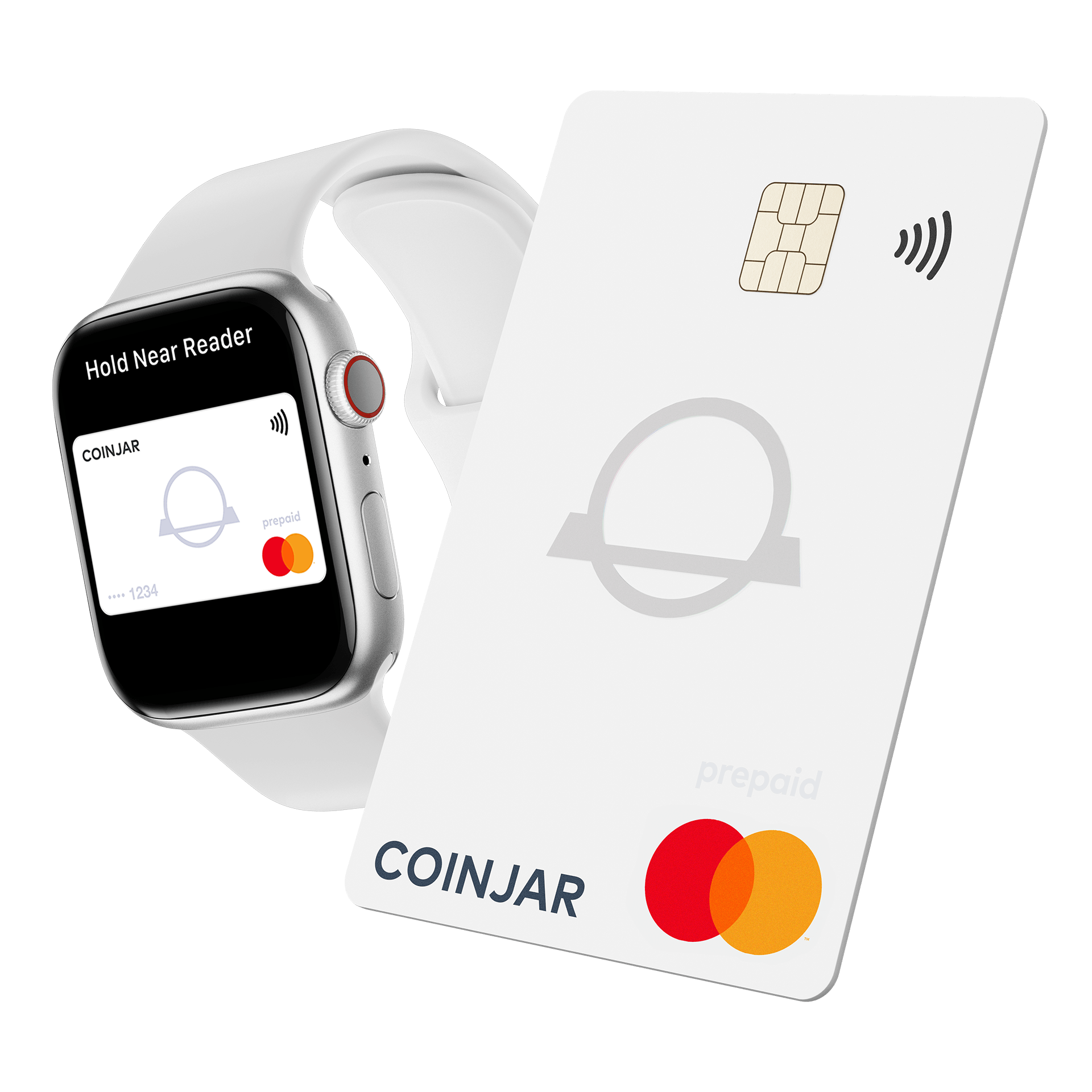
CoinJar Card
Use CoinJar Card, powered by Mastercard, for purchases online and in store, including through Apple Pay and Google Pay. No setup or monthly fee. A 1% purchase fee applies and is returned as CoinJar Rewards points, with one point earned per $1 spent. Available in Australia only.
Get your CoinJar Card for freeCoinJar Card
Use CoinJar Card, powered by Mastercard, for purchases online and in store, including through Apple Pay and Google Pay. No setup or monthly fee. A 1% purchase fee applies and is returned as CoinJar Rewards points, with one point earned per $1 spent. Available in Australia only.
Get your CoinJar Card for free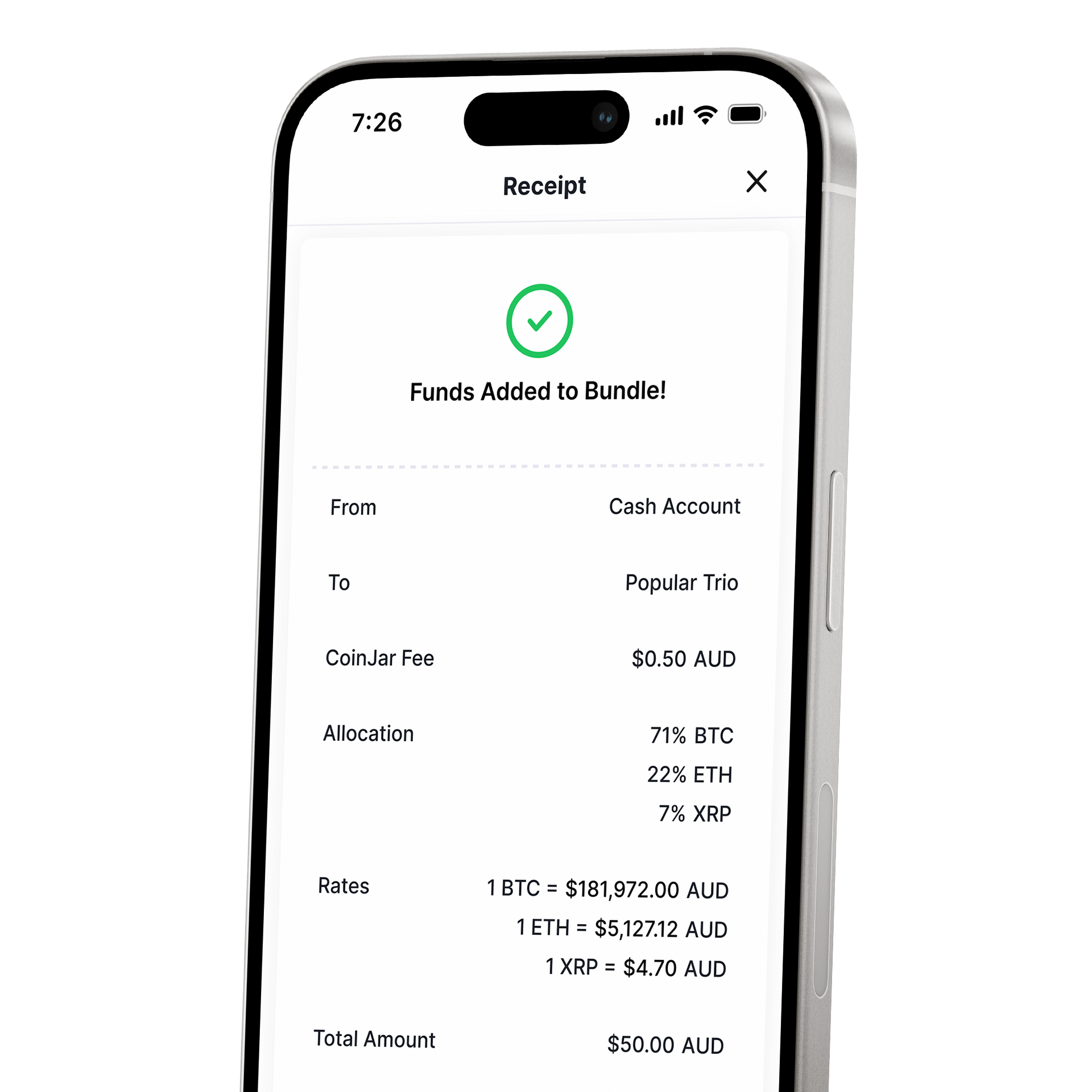
CoinJar Recurring Buy
Schedule automatic purchases weekly, fortnightly or monthly to dollar-cost average into individual cryptocurrencies or CoinJar Bundles. Manage your investment amount and schedule, with the flexibility to adjust or pause purchases as your circumstances change.
DCA with Recurring BuyCoinJar Recurring Buy
Schedule automatic purchases weekly, fortnightly or monthly to dollar-cost average into individual cryptocurrencies or CoinJar Bundles. Manage your investment amount and schedule, with the flexibility to adjust or pause purchases as your circumstances change.
DCA with Recurring Buy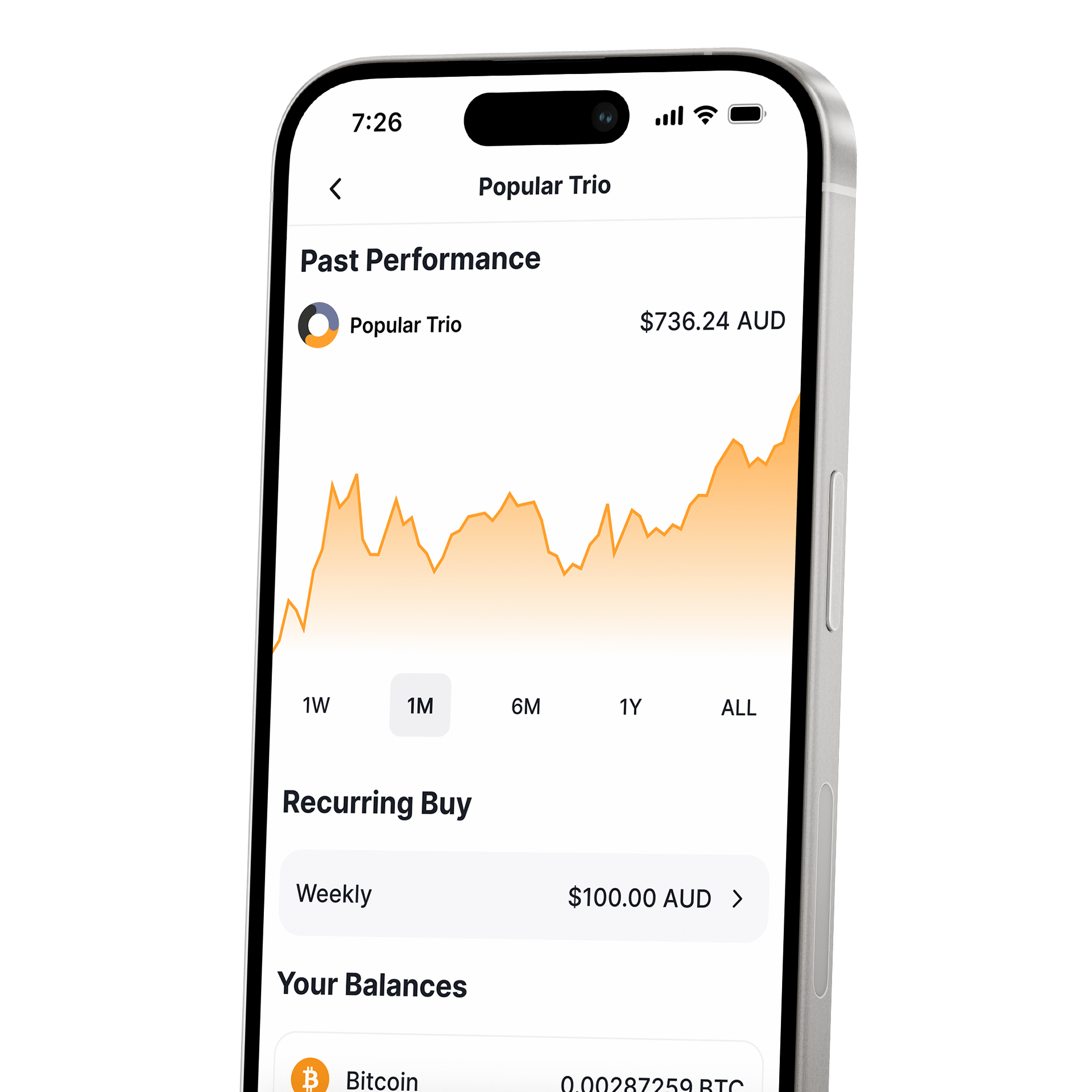
CoinJar Bundles
Pick your Bundle in the CoinJar app. Review each Bundle’s asset allocation, add to your holdings and rebalance when required. Sell your Bundle or unbundle it to manage the assets individually.
Learn moreCoinJar Bundles
Pick your Bundle in the CoinJar app. Review each Bundle’s asset allocation, add to your holdings and rebalance when required. Sell your Bundle or unbundle it to manage the assets individually.
Learn more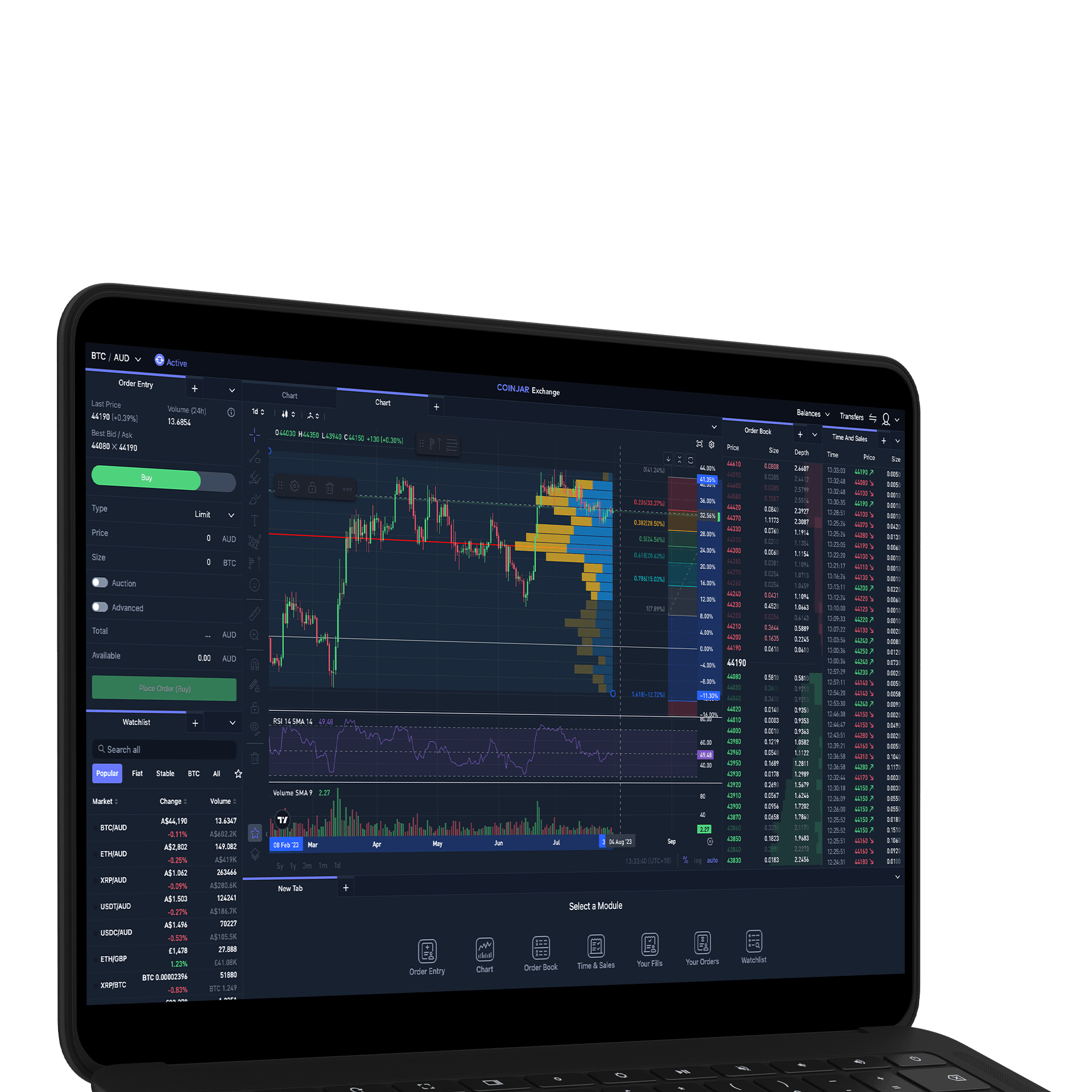
CoinJar Exchange
Trade with fees from 0-0.1%, using market, limit and stop-limit orders. Connect to TradingView to trade directly from your charts, or use CoinJar Exchange’s high-performance interface, built for active traders, market makers and institutions.
Explore CoinJar ExchangeCoinJar Exchange
Trade with fees from 0-0.1%, using market, limit and stop-limit orders. Connect to TradingView to trade directly from your charts, or use CoinJar Exchange’s high-performance interface, built for active traders, market makers and institutions.
Explore CoinJar Exchange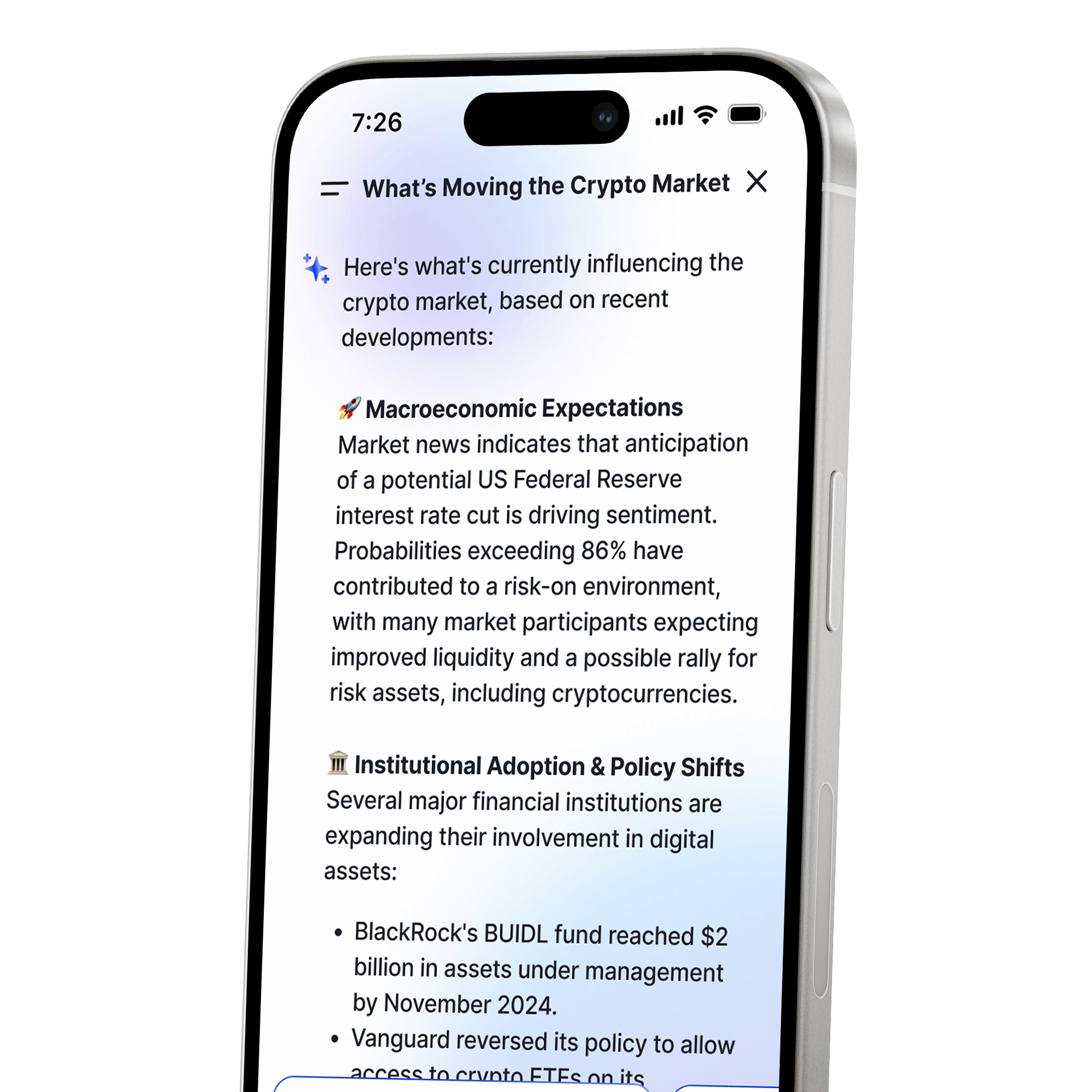
CoinJar AI
Access information about your holdings and the wider cryptocurrency market through CoinJar AI. Ask questions about portfolio changes, market developments or individual cryptocurrencies, with responses informed by your CoinJar holdings.
Learn moreCoinJar AI
Access information about your holdings and the wider cryptocurrency market through CoinJar AI. Ask questions about portfolio changes, market developments or individual cryptocurrencies, with responses informed by your CoinJar holdings.
Learn more
CoinJar OTC
For cryptocurrency trades above $50,000, CoinJar’s OTC desk provides personalised service and access to globally sourced liquidity. Work directly with a dedicated team to arrange and execute your purchase or sale. Discover OTC Services
Learn moreCoinJar OTC
For cryptocurrency trades above $50,000, CoinJar’s OTC desk provides personalised service and access to globally sourced liquidity. Work directly with a dedicated team to arrange and execute your purchase or sale. Discover OTC Services
Learn moreCoinJar does not endorse the content of, and cannot guarantee or verify the safety of any third-party websites. Visit these websites at your own risk.

CoinJar
Get the app.