
Buy Cardano
ADAPast performance is not indicative of future results. All prices are sourced from CoinJar Indices.
What is Cardano?
Cardano is a public proof of stake blockchain built for smart contracts, tokens and payments. It launched in September 2017 and is unusual in that its core design was published as peer reviewed academic research before it was written into software.
Cardano and ADA are not the same thing. Cardano is the network. ADA is the network's native digital asset, named after the nineteenth century mathematician Ada Lovelace. Development is shared between three organisations: Input Output, the research and engineering company co-founded by Charles Hoskinson and Jeremy Wood that builds the core protocol, the Switzerland based Cardano Foundation, which oversees standards and education, and Emurgo, which works on commercial adoption.
What is ADA used for?
ADA has four jobs on the network, and none of them involve mining.
- Paying transaction fees. Every transaction costs a fee in ADA, calculated by a fixed formula based on transaction size, so the cost is known before you submit it rather than bid for.
- Securing the network through staking. ADA holders delegate their stake to a stake pool, which gives that pool a proportional chance of producing blocks and earns the holder a share of rewards.
- Voting on governance. ADA holders can vote on network decisions, or hand their voting power to a delegated representative who votes for them. Voting power follows the size of the holding.
- Meeting the minimum balance rules. Cardano requires a small amount of ADA to sit alongside anything you hold on the ledger, which keeps the network from being flooded with worthless entries.
How does Cardano's proof of stake work?
Cardano runs on Ouroboros, a proof of stake protocol first published in 2017 and refined through several versions since.
Time on Cardano is split into epochs of five days, and each epoch is divided into one second slots. For each slot the protocol runs a cryptographic lottery to choose a slot leader, and the chance of being chosen is proportional to the amount of ADA staked with that pool. The winner produces the next block. Blocks appear roughly every twenty seconds on average. There is no mining and no race to solve puzzles, so the energy cost of running the network is a fraction of a proof of work chain.
Delegation is the part most people get wrong. Delegating ADA to a stake pool does not move your ADA, lock it up or hand it to the pool operator. You publish a certificate that counts your balance towards a pool's stake while the ADA stays in your own wallet, spendable at any time. Cardano also has no slashing, so a badly run pool costs you missed rewards rather than your capital. The protocol is documented in Cardano's Ouroboros overview, and our guide to crypto staking explains the general concept.
What is the eUTXO model?
Cardano tracks ownership using an extended unspent transaction output model, usually shortened to eUTXO. Bitcoin uses a similar approach. Ethereum does not.
The difference is easiest to see with cash. On Ethereum, an account is a balance that gets edited up and down, like a bank ledger. On Cardano, your wallet holds a collection of discrete outputs, like notes in a wallet, and a transaction spends whole outputs and creates new ones.
| Cardano eUTXO | Ethereum account model | |
|---|---|---|
| How balances are stored | Discrete outputs that are consumed and recreated | A single mutable balance per account |
| Fee certainty | Calculated in advance from transaction size | Estimated, and varies with network demand |
| Transaction outcome | Validated against named inputs, so the result is determined before it is submitted | Depends on network state at the moment it executes |
| Tokens | Handled by the ledger itself | Created and moved by smart contract code |
| Partial failure | Not possible, a transaction either fully succeeds or fully fails | A transaction can run out of gas part way through |
The practical upside is predictability, both in fees and in what a transaction will do. The practical downside is concurrency. Two transactions cannot spend the same output, so applications that many people interact with at once have to be designed to spread state across many outputs or to batch requests. Developers work around this, but it is real extra complexity compared with Ethereum's shared state, and it is one reason Cardano's application ecosystem grew more slowly. Our guide to decentralised finance covers the kinds of applications this affects.
What are native tokens on Cardano?
On Cardano, tokens and NFTs are objects the ledger understands directly rather than smart contracts written by a developer.
This is a genuine architectural difference. An ERC-20 token on Ethereum is a program, and every transfer runs that program, so a bug in the code can break the token. On Cardano, a token is created by registering a minting policy that sets who can issue or destroy it, and after that the ledger moves it with the same rules it uses for ADA. One transaction can carry ADA and several different tokens at once, and NFTs are simply tokens whose policy allows only one to exist. Our explainer on NFTs covers how digital ownership works more broadly.
Smart contracts arrived separately, with the Alonzo upgrade in September 2021. They are written in Plutus, a language derived from Haskell, or in newer options such as Aiken, and they work as validators that check whether a transaction is allowed rather than as programs that hold and move funds themselves.
How is Cardano governed?
Cardano has on chain governance, which means changes to the network are decided by recorded votes rather than by the founding companies. The framework comes from a community proposal known as CIP-1694, activated in stages through upgrades in 2024 and 2025, and it sits under a written constitution that ADA holders ratified on chain.
Three groups vote:
- ADA holders, who either vote directly or delegate their voting power to a delegated representative, known as a DRep.
- Stake pool operators, who have particular say over changes such as hard forks.
- The Constitutional Committee, a limited term body that checks whether a proposal is constitutional rather than whether it is popular.
Votes cover protocol parameter changes, hard forks, treasury spending, changes to the committee, constitutional amendments, motions of no confidence and non-binding signalling. Spending is funded by a network treasury that receives a share of transaction fees and new ADA issuance, and anyone can submit a proposal by posting a refundable deposit. Project Catalyst, which predates this system, funds community projects through a similar voting process. The specification is published as CIP-1694.
How many ADA are there?
The maximum supply of ADA is fixed at 45 billion and cannot be increased. ADA was never mined. It was distributed through a public sale between 2015 and 2017, with the balance held in a reserve.
New ADA enters circulation from that reserve. Each epoch a small share of the remaining reserve is released, most of it paid out as staking rewards and the rest directed to the treasury. Because the release is a percentage of what is left, the amount shrinks over time, and circulating supply approaches the 45 billion cap without ever exceeding it. This is why circulating supply and total supply are different numbers, which is worth understanding before drawing conclusions from either.
Cardano compared with Ethereum and Solana
| Cardano | Ethereum | Solana | |
|---|---|---|---|
| Native asset | ADA | ETH | SOL |
| Launched | 2017 | 2015 | 2020 |
| Consensus | Ouroboros proof of stake | Proof of stake since 2022 | Proof of stake with proof of history |
| Accounting model | Extended UTXO | Account based | Account based |
| Typical block time | About 20 seconds | About 12 seconds | Under a second |
| Contract languages | Plutus, Aiken, Marlowe | Solidity, Vyper | Rust |
| Supply | Capped at 45 billion | No fixed cap, some fees burned | No fixed cap, issuance declining to a floor |
| Tokens | Native to the ledger | Smart contract standards such as ERC-20 | Token program |
The three chains are solving overlapping problems with different priorities. Cardano leans on formal verification and predictability, Ethereum on the largest developer and application base, and Solana on raw speed. For more on the largest smart contract platform, see our guide to Ethereum.
Cardano on CoinJar in Australia
CoinJar has operated since 2013 and lists ADA against Australian dollars, so you can buy, sell and hold it without converting through another cryptocurrency first. ADA also has an Australian dollar market on CoinJar Exchange. Current charges are on our fees page, and live Australian dollar rates are on our cryptocurrency prices page.
ADA sits alongside the rest of our supported cryptocurrency list, and you can withdraw it to any wallet that supports the Cardano network. Our guide to crypto transfers explains what to check before you send.
ADA you hold with CoinJar is kept in our custody infrastructure, where private keys are split across offline and hardware protected systems so no single party can move assets on its own. You can read how that works on our security page.
CoinJar is registered with AUSTRAC as a digital currency exchange provider, Registration No. DCE100749118-001. Registration is a legal requirement for exchanges operating in Australia. It is not a government endorsement of CoinJar or of Cardano.
What should Australian customers consider before buying ADA?
ADA is a volatile asset and its price has fallen sharply in past market cycles. Consider the following before you buy:
- Delivery has been slow by design. The research first approach means upgrades arrive later than on chains that ship quickly and patch afterwards. Smart contracts landed four years after launch, by which time rivals had established ecosystems.
- Application activity is smaller than on rival chains. Cardano's decentralised finance and application usage has consistently trailed Ethereum and Solana, and a network's technical merits do not automatically translate into users or token demand.
- Software risk is real. In November 2025 a deliberately malformed transaction exposed a bug that made newer and older versions of the node software disagree, splitting the chain into two histories for around fourteen hours until operators upgraded and one chain won out. No funds were lost and the network never stopped producing blocks, but it showed that a chain with a strong research pedigree can still be disrupted by an implementation flaw.
- Governance is new. On chain governance is a significant improvement on paper, and it is also recent. Voter turnout, representative concentration and treasury decisions are still being tested in practice.
- Competition. Ethereum layer two networks and Solana target the same developers and users, often with lower fees or more familiar tooling.
- No government protection. ADA is not covered by the Australian Government's Financial Claims Scheme, which protects certain bank deposits and insurance policies but does not extend to cryptoassets.
How is Cardano taxed in Australia?
The ATO generally treats ADA as a capital gains tax asset. A CGT event can occur when you sell it for Australian dollars, exchange it for another cryptoasset, spend it or give it away.
The ATO explains these rules on its official guidance page. Our guide to crypto tax in Australia provides a practical overview. This is general information, not tax advice. Consider speaking to a registered tax agent about your circumstances.
Fund Your Account Your Way
Buy Cardano instantly using Visa or Mastercard, or deposit Australian dollars via bank transfer, PayID or PayPal. Buy, sell and convert between supported cryptocurrencies through your CoinJar account.


How to buy Cardano with CoinJar
Start your portfolio with Australia's longest-running crypto exchange with these simple steps.
Sign up to CoinJar
Get the CoinJar app on iOS or Android, create an account and verify your ID.
Deposit funds
Deposit AUD fee-free via PayID, Osko or bank transfer. You can also use PayPal or pay instantly by card.
Buy your first crypto
Buy Cardano and other popular cryptos using cash or credit card in minutes.




CoinJar Card
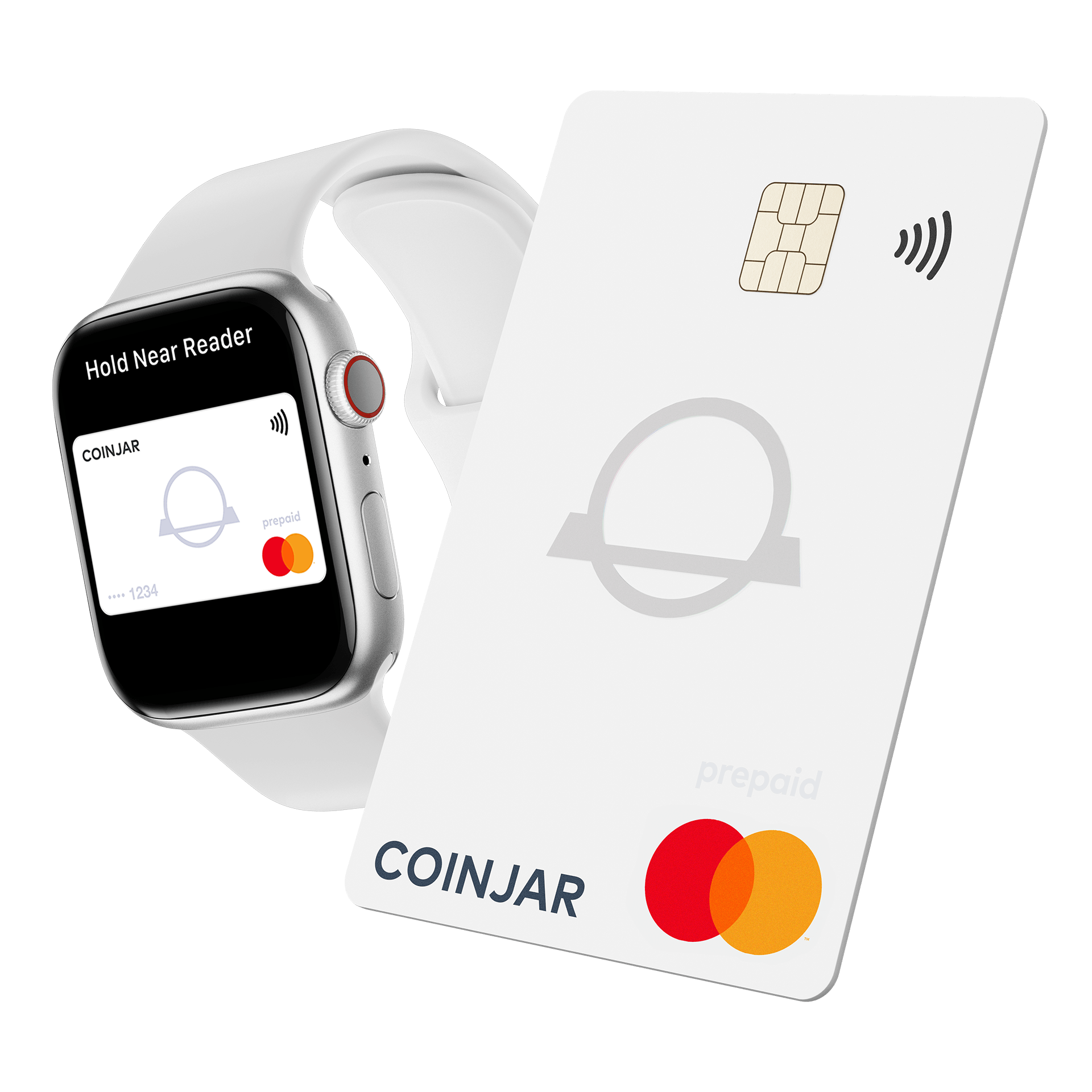
Use CoinJar Card, powered by Mastercard, for purchases online and in store, including through Apple Pay and Google Pay. No setup or monthly fee. A 1% purchase fee applies and is returned as CoinJar Rewards points, with one point earned per $1 spent. Available in Australia only.
Get your CoinJar Card for freeCoinJar Card
Use CoinJar Card, powered by Mastercard, for purchases online and in store, including through Apple Pay and Google Pay. No setup or monthly fee. A 1% purchase fee applies and is returned as CoinJar Rewards points, with one point earned per $1 spent. Available in Australia only.
Get your CoinJar Card for free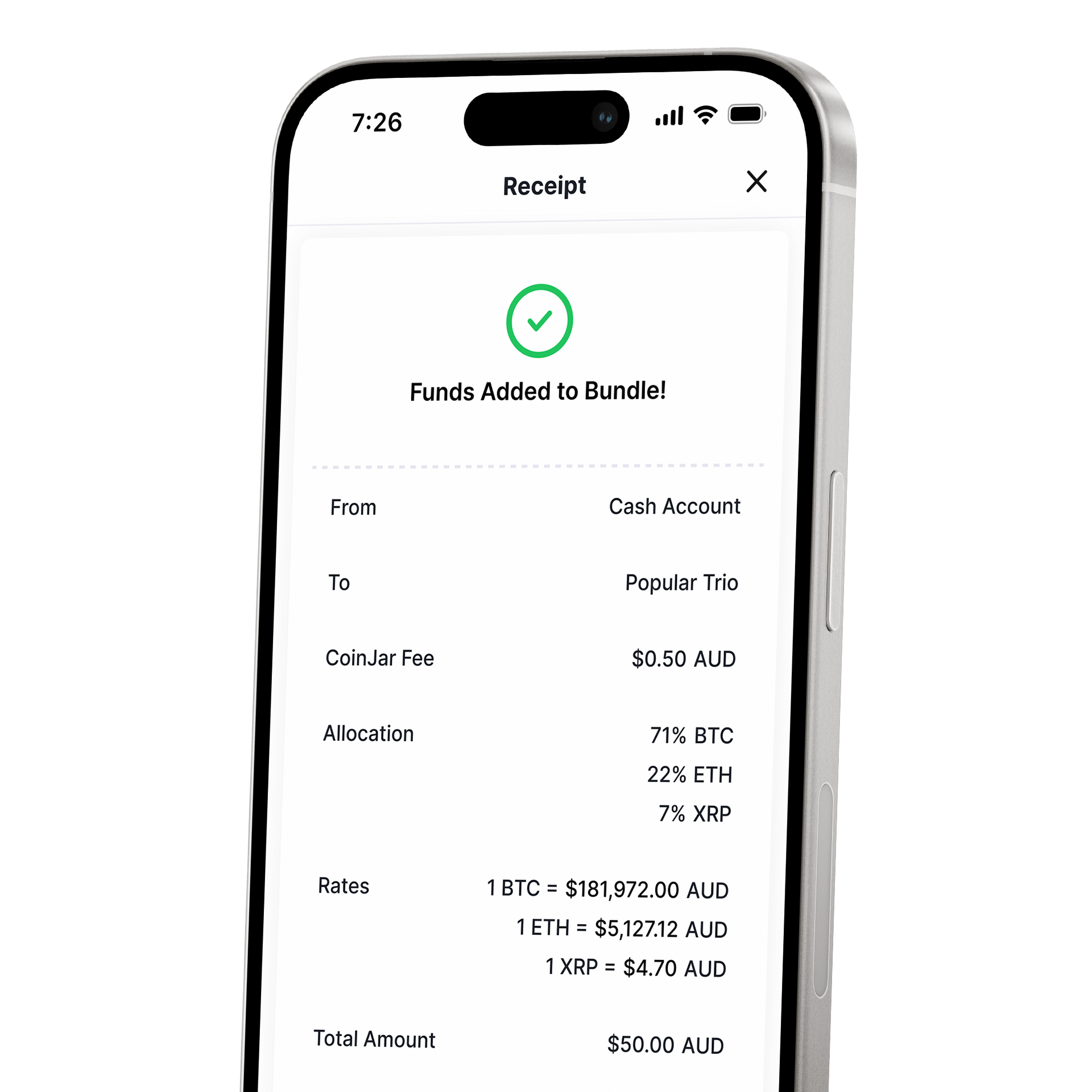
CoinJar Recurring Buy
Schedule automatic purchases weekly, fortnightly or monthly to dollar-cost average into individual cryptocurrencies or CoinJar Bundles. Manage your investment amount and schedule, with the flexibility to adjust or pause purchases as your circumstances change.
DCA with Recurring BuyCoinJar Recurring Buy
Schedule automatic purchases weekly, fortnightly or monthly to dollar-cost average into individual cryptocurrencies or CoinJar Bundles. Manage your investment amount and schedule, with the flexibility to adjust or pause purchases as your circumstances change.
DCA with Recurring Buy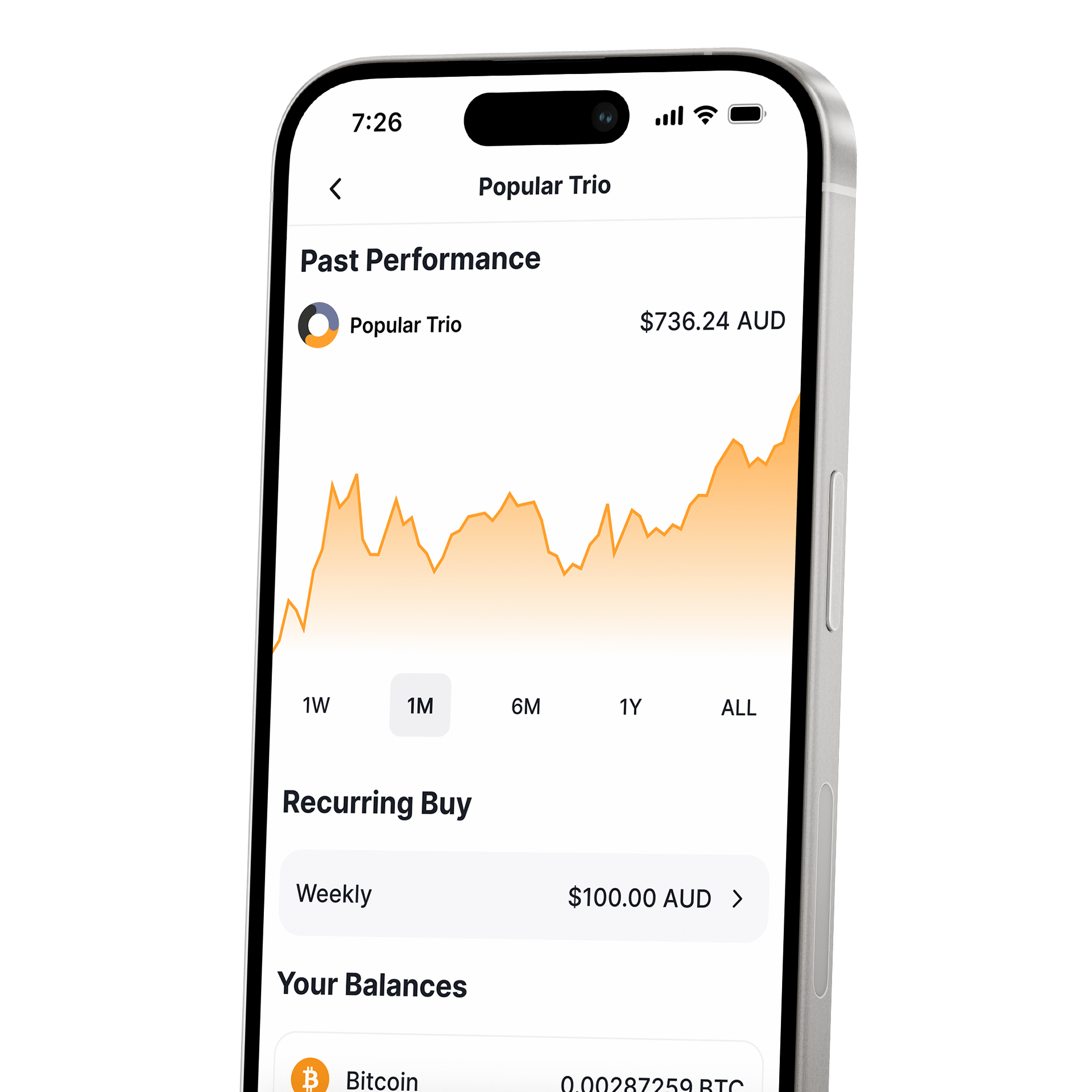
CoinJar Bundles
Pick your Bundle in the CoinJar app. Review each Bundle’s asset allocation, add to your holdings and rebalance when required. Sell your Bundle or unbundle it to manage the assets individually.
Learn moreCoinJar Bundles
Pick your Bundle in the CoinJar app. Review each Bundle’s asset allocation, add to your holdings and rebalance when required. Sell your Bundle or unbundle it to manage the assets individually.
Learn more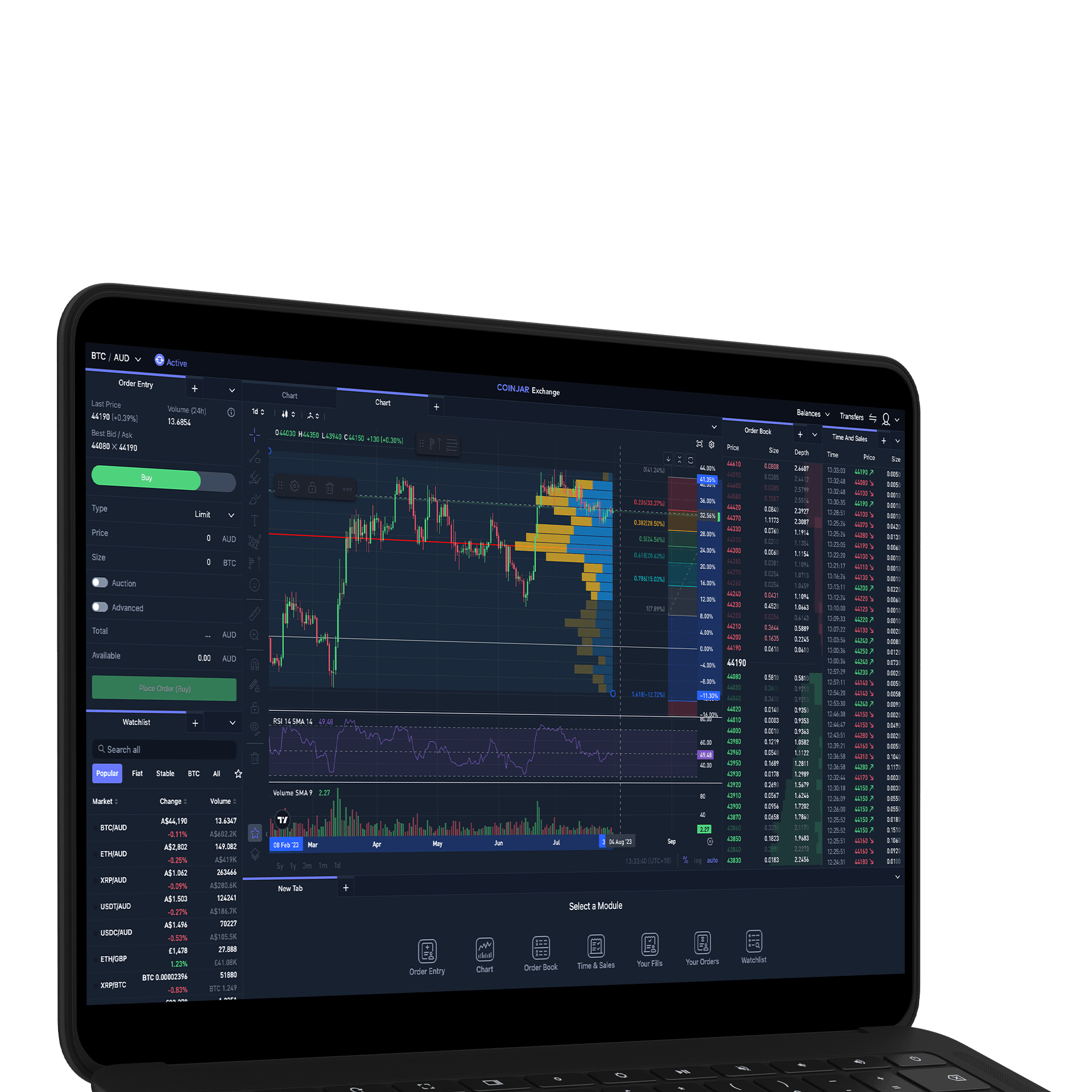
CoinJar Exchange
Trade with fees from 0-0.1%, using market, limit and stop-limit orders. Connect to TradingView to trade directly from your charts, or use CoinJar Exchange’s high-performance interface, built for active traders, market makers and institutions.
Explore CoinJar ExchangeCoinJar Exchange
Trade with fees from 0-0.1%, using market, limit and stop-limit orders. Connect to TradingView to trade directly from your charts, or use CoinJar Exchange’s high-performance interface, built for active traders, market makers and institutions.
Explore CoinJar Exchange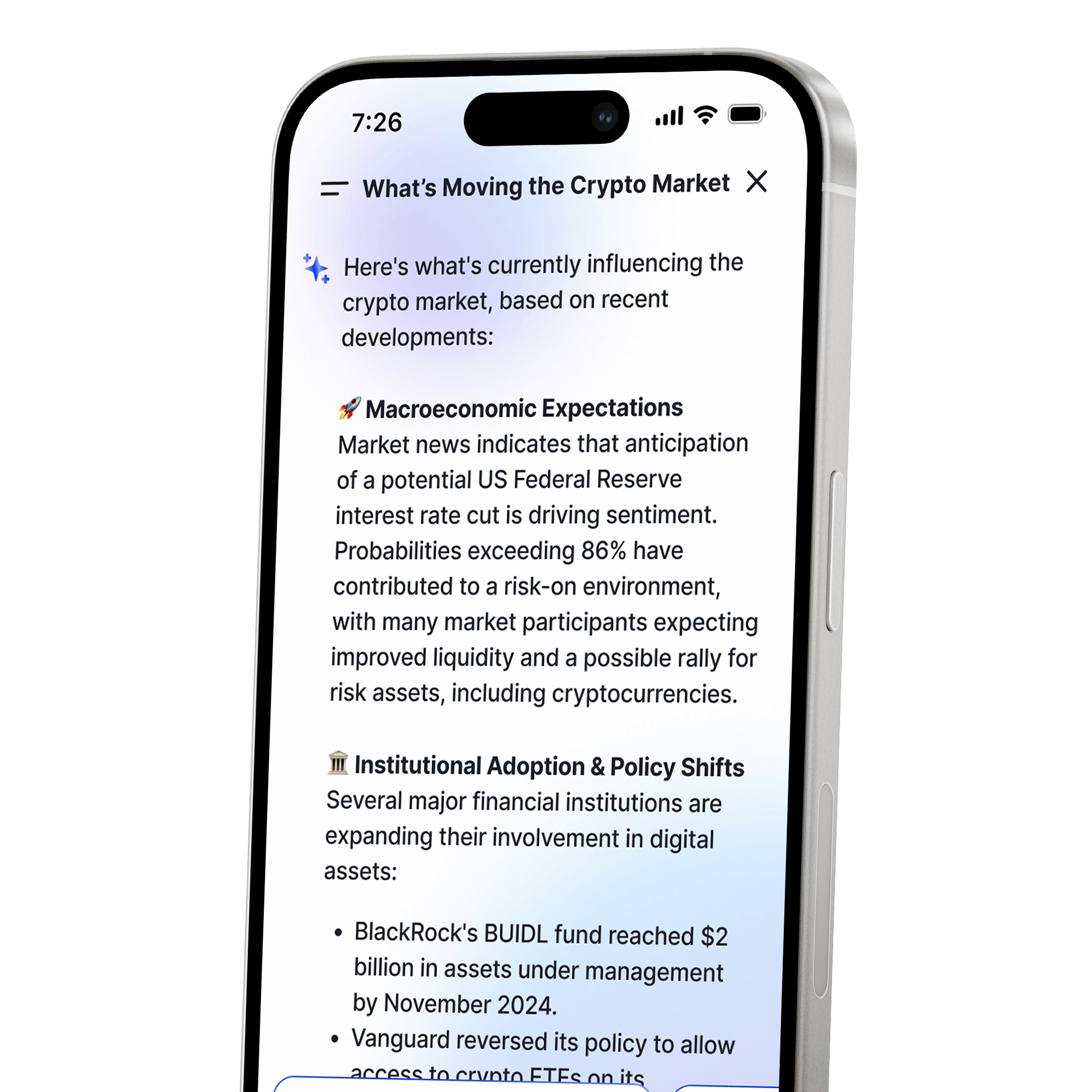
CoinJar AI
Access information about your holdings and the wider cryptocurrency market through CoinJar AI. Ask questions about portfolio changes, market developments or individual cryptocurrencies, with responses informed by your CoinJar holdings.
Learn moreCoinJar AI
Access information about your holdings and the wider cryptocurrency market through CoinJar AI. Ask questions about portfolio changes, market developments or individual cryptocurrencies, with responses informed by your CoinJar holdings.
Learn more
CoinJar OTC
For cryptocurrency trades above $50,000, CoinJar’s OTC desk provides personalised service and access to globally sourced liquidity. Work directly with a dedicated team to arrange and execute your purchase or sale. Discover OTC Services
Learn moreCoinJar OTC
For cryptocurrency trades above $50,000, CoinJar’s OTC desk provides personalised service and access to globally sourced liquidity. Work directly with a dedicated team to arrange and execute your purchase or sale. Discover OTC Services
Learn moreCoinJar does not endorse the content of, and cannot guarantee or verify the safety of any third-party websites. Visit these websites at your own risk.

CoinJar
Get the app.