
Buy GALA
GALAPast performance is not indicative of future results. All prices are sourced from CoinJar Indices.
What is GALA?
Gala is a blockchain gaming and entertainment business, and GALA is the token that runs through everything it builds. It is the currency inside Gala's games and marketplaces, it is what node operators are paid in, and it is the asset used to pay for activity on Gala's own network.
It is worth being direct about what that means. GALA is not a claim on Gala's revenue, it does not pay anything, and it does not carry a vote. Its value depends on whether one company keeps shipping products that people want to use, which makes it closer to a bet on a single business than to a bet on an open protocol. Our guide to NFTs covers the digital ownership model Gala's games are built on, and our guide to Ethereum covers the network the token itself lives on.
Where did Gala come from?
Gala Games launched in 2019, founded by Eric Schiermeyer, a co-founder of the social games company Zynga, alongside Wright Thurston and Michael McCarthy. The operating company is Blockchain Game Partners, Inc., trading as Gala Games, with related businesses trading as Gala Music and Gala Film.
The pitch from the start was player ownership: that in-game items should be assets a player holds rather than rows in a publisher's database, and that a games platform should distribute value to its community instead of capturing all of it. That framing brought in a large early audience and a large amount of money.
Control of the company has been contested in public. In 2023 Schiermeyer, as chief executive, sued co-founder and fellow director Wright Thurston and Thurston's entity True North United Investments, alleging misappropriation of GALA tokens. True North filed a competing claim alleging that Schiermeyer had mismanaged company assets and acted unilaterally as chief executive, and asked the court to appoint a custodian to replace him. In August 2024 the United States District Court for the District of Utah declined to do that. The detail matters less than the shape of it: Gala's two directors spent a period as opposing parties in litigation over control of the business the token depends on.
What is GALA, technically?
It is an ERC-20 token on Ethereum. GALA transfers on Ethereum are Ethereum transactions, confirmed by Ethereum validators, with fees paid in ETH rather than in GALA.
The current contract dates from May 2023. Gala retired its original 2020 contract and deployed a new one, distributing the new token to holders one for one from a snapshot. Gala said the upgrade was needed to support fee burns, votes on the emission schedule and a supply that can move rather than sit fixed. Holders who never moved from the old contract are holding a token that is no longer the live asset.
The contract is administered. It carries privileged roles, including an ability to create new tokens and an ability to stop a specific address from transacting. That is not a theoretical detail. In May 2024 an attacker took control of a dormant account that held minting authority and created five billion GALA, selling several hundred million of them on the open market before Gala used the contract's blocklist to freeze the attacker's wallet a little over two hours later. The proceeds were later returned. The independent write up at Rekt sets out the sequence.
That incident reads two ways at once, and both are true. The blocklist is what stopped the damage. The blocklist is also proof that a small group can freeze GALA on the Ethereum contract without asking anyone.
It carries no governance rights. Holding GALA does not give you a vote on Gala's roadmap, its emissions or its products, and it does not entitle you to revenue, dividends or a claim on any asset.
It exists on more than one network. As well as the Ethereum token there is GALA on GalaChain, Gala's own network, and bridged representations have existed on other chains. Gala runs a bridge between Ethereum and GalaChain, and its support documentation explains the process.
What is GalaChain?
GalaChain is the network Gala built for its own ecosystem, and it is where most of the company's infrastructure work has gone. It is not a public blockchain in the sense that Ethereum is.
GalaChain is built on Hyperledger Fabric, an enterprise framework designed for permissioned networks, using Fabric's pluggable consensus rather than an open validator set. Gala's own case study with LF Decentralized Trust describes the chain as permissioned and notes that private data and transactions can be restricted while public data stays verifiable. Developer material sits at the GalaChain documentation.
The practical consequences are worth stating plainly.
Participation is by permission. Anyone can download Ethereum's software and run a node. That is not how a permissioned chain works. Who validates, and on what terms, is a decision made by the operator.
Its security model is organisational, not economic. There is no large public stake at risk behind GalaChain's ordering, and no independent set of validators with a financial reason to reject a bad block. You are trusting the operator's controls.
Its fee model has changed and can change again. GalaChain was originally promoted as having no gas fees at all. More recent proposals from Gala describe network fees being charged, with a share paid to node operators and a share burned. Neither the fee structure nor the emission schedule is fixed by anything a holder can rely on.
None of this makes GalaChain useless. A permissioned chain is a reasonable engineering choice for a games company that wants fast, cheap transactions and control over its own environment. It just is not the thing most people picture when they hear the word blockchain, and the difference is the whole point.
What are Founder's Nodes?
The most distinctive part of Gala's design is its node programme. Gala sold node licences, originally called Founder's Nodes, which entitle the holder to run software supporting the ecosystem and receive daily distributions of GALA for doing so.
Distributions are calculated from uptime. Under the current structure a node accrues points for each period it is online, the day's total distribution is divided by the total points across all nodes, and each operator receives their share. There are additional node types tied to particular products, including nodes that support Gala Film's content delivery and nodes tied to Common Ground World, and these have their own hardware, software and networking requirements. Gala's node documentation sets out the mechanics.
Two points a buyer should sit with.
Node licences were originally locked to an account and could not be sold. Gala has since allowed operators to redeem a licence as an NFT on GalaChain and transfer it, with fees payable to redeem it, to make it transfer ready and to reactivate it, and with distributions pausing while a node is in the transferable state. That is a meaningful change to what a licence is, and it was made by the operator, not by anyone holding GALA.
Gala states in its own node documentation that Founder's Nodes are not investments. Take that at face value. A node is a licence to run software and receive an emission that Gala controls, denominated in a token whose value moves, with the emission schedule subject to change. It is not a yield product and nothing about it is guaranteed.
Node operators, not GALA holders, are also where Gala's voting sits. Major changes to node economics and emissions have been put to node operator votes. If you buy GALA on an exchange, you are not part of that process.
Where does GALA's supply come from?
GALA was not mined and it is not staked into existence. New tokens enter circulation through daily distributions to node operators, on a schedule that steps down over time, and tokens leave circulation through burns, including fees paid inside the ecosystem.
Gala has stated a maximum supply cap of fifty billion GALA and has said that cap will not increase. Alongside that, the company has run large discretionary burns of tokens held in its own wallets, most notably a substantial burn in May 2023 that followed the move to the new contract. Its statement on that burn is the primary reference.
The thing to understand is that almost all of this is discretionary. The cap is a company commitment. The emission rate is set by proposals put to node operators. The burns are decisions. A holder assessing GALA's supply is assessing a policy, not a protocol rule, and policies change.
What has Gala actually shipped?
This is the question that matters most, and the record is mixed.
Products have launched. Common Ground World, previously Town Star, and Spider Tanks have been the most consistently playable titles. GalaChain is live, Gala runs a swap product and a marketplace, and the node network operates.
Products have also been abandoned. The Walking Dead: Empires was sunset in 2025 after roughly a year of live operation, with NFT holders offered assets in other games. Legacy, the city builder from Peter Molyneux's studio 22cans, sold thousands of virtual land plots for cryptocurrency worth tens of millions of dollars before launch, shipped in October 2023 to poor reception, and is now effectively unplayable and absent from Gala's own site. Ars Technica's account of what happened to Legacy players is uncomfortable reading and worth doing before buying.
Town Star's in-game economy also collapsed after Gala reduced token distributions to it, which is the clearest illustration of the structural point: in this ecosystem the rewards are an emission the operator sets, and an operator that changes the emission changes the economics of the game underneath its players.
Announcements have consistently run ahead of releases. That pattern is part of what you are assessing when you buy the token.
What are the risks of holding GALA?
Single company risk. GALA's value is tied to the commercial performance of one privately held business. There is no protocol that continues without it and no diversification inside the asset.
Concentrated control. The Ethereum contract has minting and blocking capability. GalaChain is permissioned. Emissions and node economics are set through processes GALA holders do not participate in.
Governance and key person risk. Gala's founders have litigated against each other over control of the company and over tokens. There is no public disclosure regime, no audited reporting to holders and no board answerable to them.
Delivery risk. Games have been announced, launched and shut down. Buyers of in-game assets in discontinued titles have generally been left with items that no longer have a working game around them.
Emission and dilution risk. New GALA is distributed daily and the schedule is a decision, not a fixed rule. Burns are also discretionary and do not guarantee anything about supply.
Security history. The Ethereum contract suffered a large unauthorised mint in 2024, and a bridged version of GALA on another network was the subject of a serious incident in 2022 in which billions of uncollateralised tokens were issued through a misconfigured bridge and sold. Losses in that episode fell on holders of the bridged token.
Sector risk. Blockchain gaming has attracted very large amounts of capital and produced very few titles with durable player bases. Attention in the category has moved on more than once.
Volatility. GALA is not a stablecoin. Its value moves sharply and can fall substantially.
No consumer protection. Cryptocurrency is not covered by the Australian Government's Financial Claims Scheme. If the value of GALA falls, there is no compensation scheme to make you whole.
Buying GALA with Australian dollars on CoinJar
CoinJar has operated since 2013 and lists GALA against Australian dollars, so you can buy, sell and hold it without converting through another cryptocurrency first. Current charges are on our fees page, and live Australian dollar rates are on our cryptocurrency prices page.
CoinJar is registered with AUSTRAC as a digital currency exchange provider, Registration Number DCE100749118-001. That registration covers anti money laundering and counter terrorism financing obligations. It is not an endorsement of CoinJar's products and it is not approval of any cryptocurrency listed on the platform.
How is GALA taxed in Australia?
The ATO generally treats GALA as a capital gains tax asset. A disposal can occur when you sell it for Australian dollars, trade it for another cryptocurrency, spend it or give it away.
The ATO sets out its approach on its crypto asset investments page. Our guide to crypto tax in Australia provides a practical overview. This is general information, not tax advice. Consider speaking to a registered tax agent about your circumstances.
Fund Your Account Your Way
Buy GALA instantly using Visa or Mastercard, or deposit Australian dollars via bank transfer, PayID or PayPal. Buy, sell and convert between supported cryptocurrencies through your CoinJar account.


How to buy GALA with CoinJar
Start your portfolio with Australia's longest-running crypto exchange with these simple steps.
Sign up to CoinJar
Get the CoinJar app on iOS or Android, create an account and verify your ID.
Deposit funds
Deposit AUD fee-free via PayID, Osko or bank transfer. You can also use PayPal or pay instantly by card.
Buy your first crypto
Buy GALA and other popular cryptos using cash or credit card in minutes.



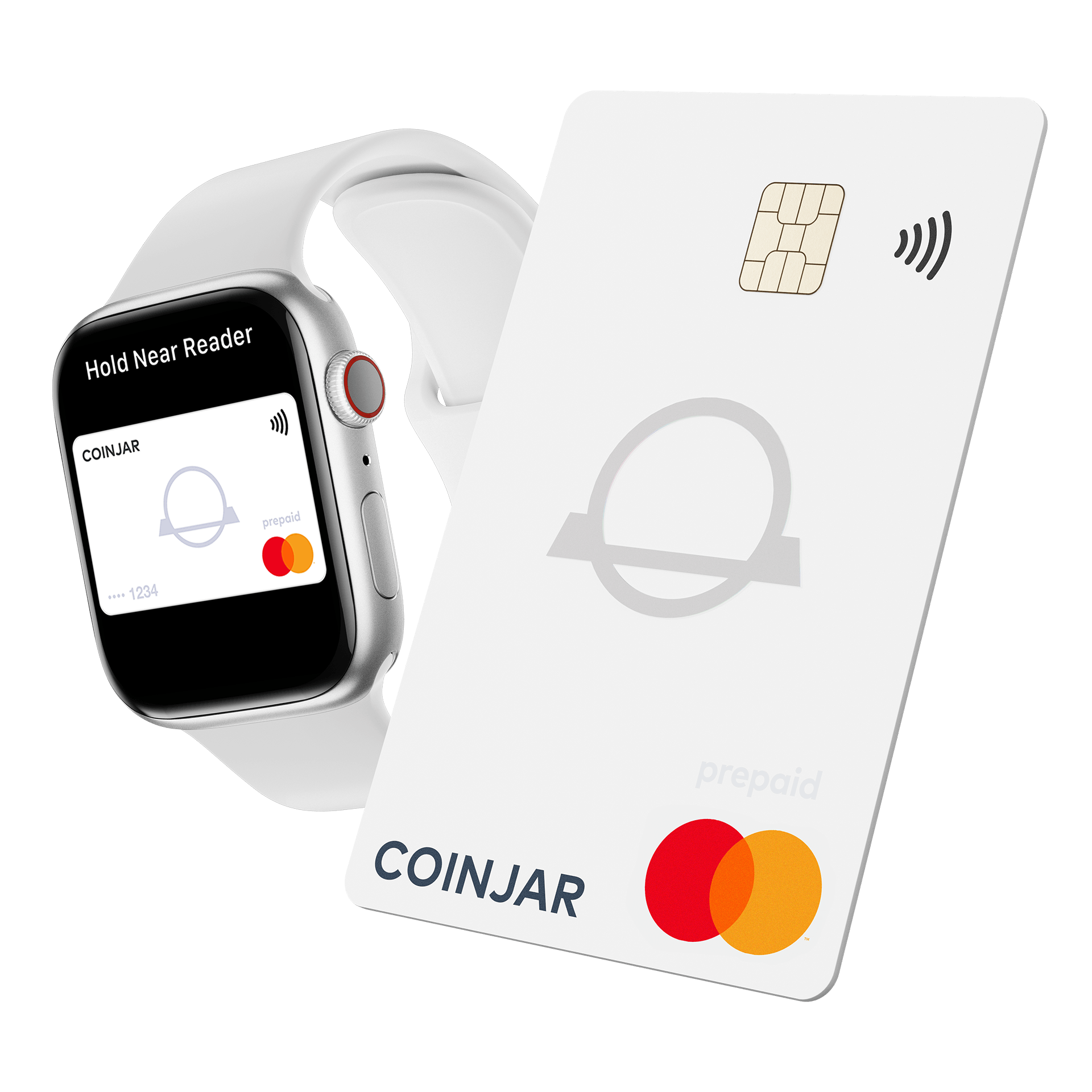
CoinJar Card
Use CoinJar Card, powered by Mastercard, for purchases online and in store, including through Apple Pay and Google Pay. No setup or monthly fee. A 1% purchase fee applies and is returned as CoinJar Rewards points, with one point earned per $1 spent. Available in Australia only.
Get your CoinJar Card for freeCoinJar Card
Use CoinJar Card, powered by Mastercard, for purchases online and in store, including through Apple Pay and Google Pay. No setup or monthly fee. A 1% purchase fee applies and is returned as CoinJar Rewards points, with one point earned per $1 spent. Available in Australia only.
Get your CoinJar Card for free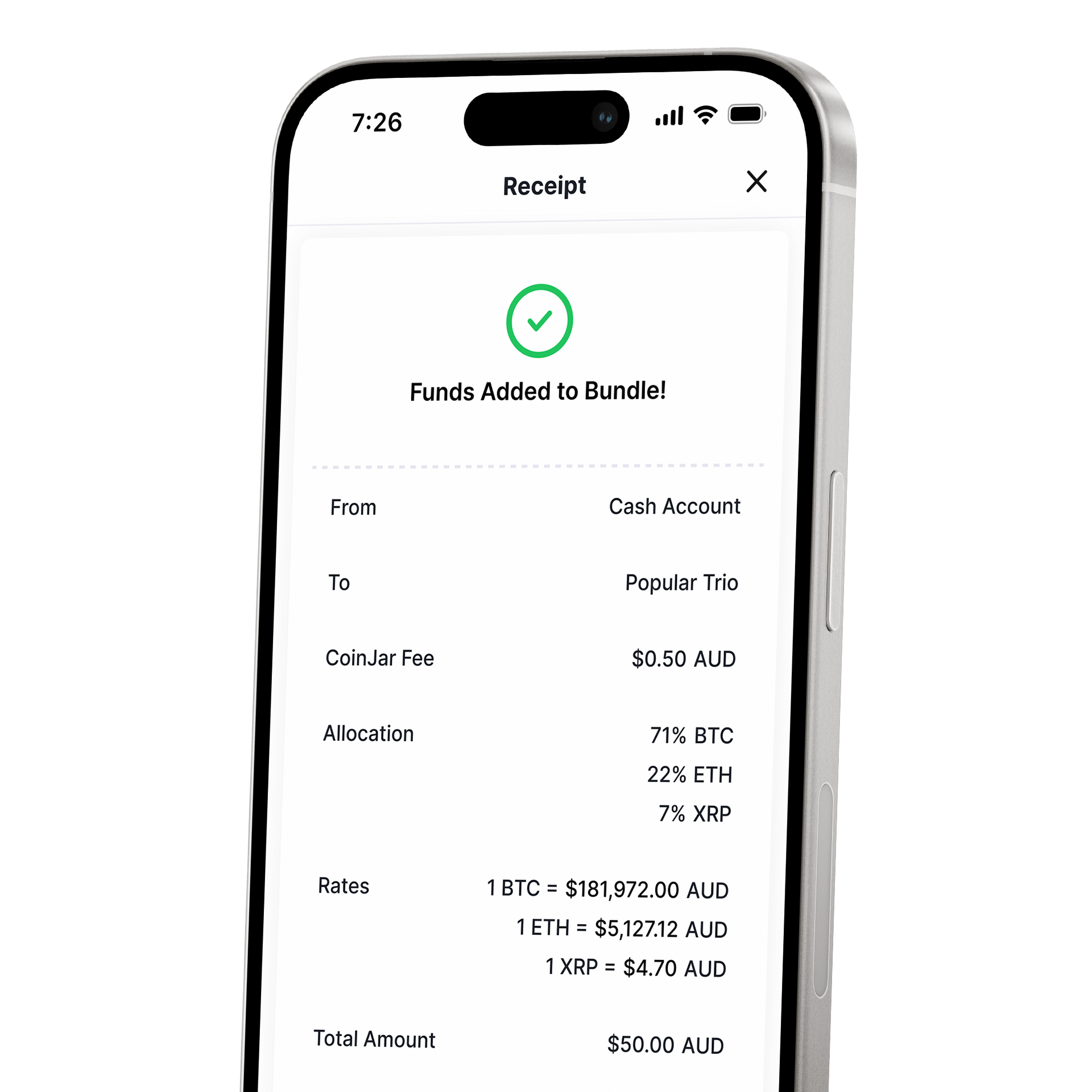
CoinJar Recurring Buy
Schedule automatic purchases weekly, fortnightly or monthly to dollar-cost average into individual cryptocurrencies or CoinJar Bundles. Manage your investment amount and schedule, with the flexibility to adjust or pause purchases as your circumstances change.
DCA with Recurring BuyCoinJar Recurring Buy
Schedule automatic purchases weekly, fortnightly or monthly to dollar-cost average into individual cryptocurrencies or CoinJar Bundles. Manage your investment amount and schedule, with the flexibility to adjust or pause purchases as your circumstances change.
DCA with Recurring Buy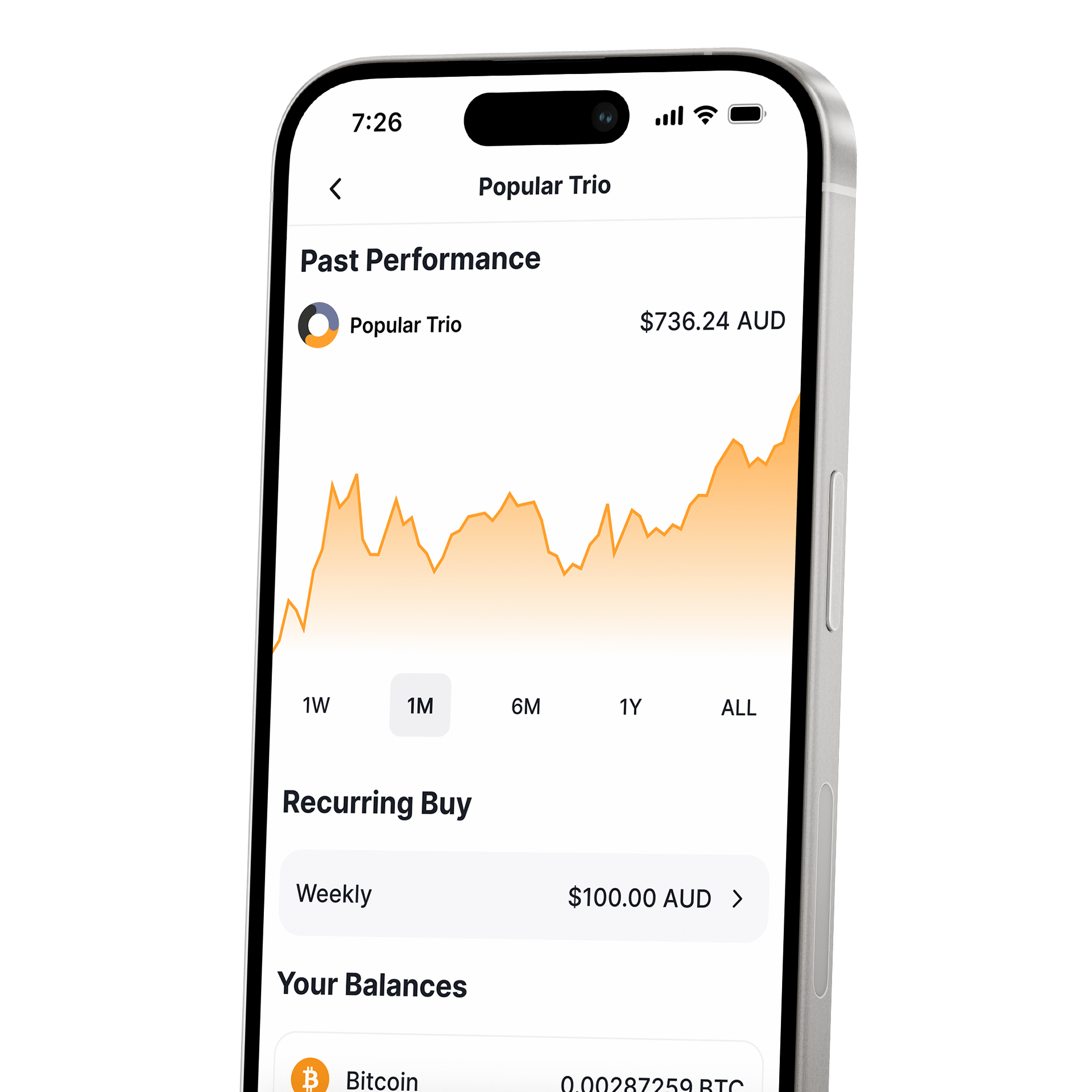
CoinJar Bundles
Pick your Bundle in the CoinJar app. Review each Bundle’s asset allocation, add to your holdings and rebalance when required. Sell your Bundle or unbundle it to manage the assets individually.
Learn moreCoinJar Bundles
Pick your Bundle in the CoinJar app. Review each Bundle’s asset allocation, add to your holdings and rebalance when required. Sell your Bundle or unbundle it to manage the assets individually.
Learn more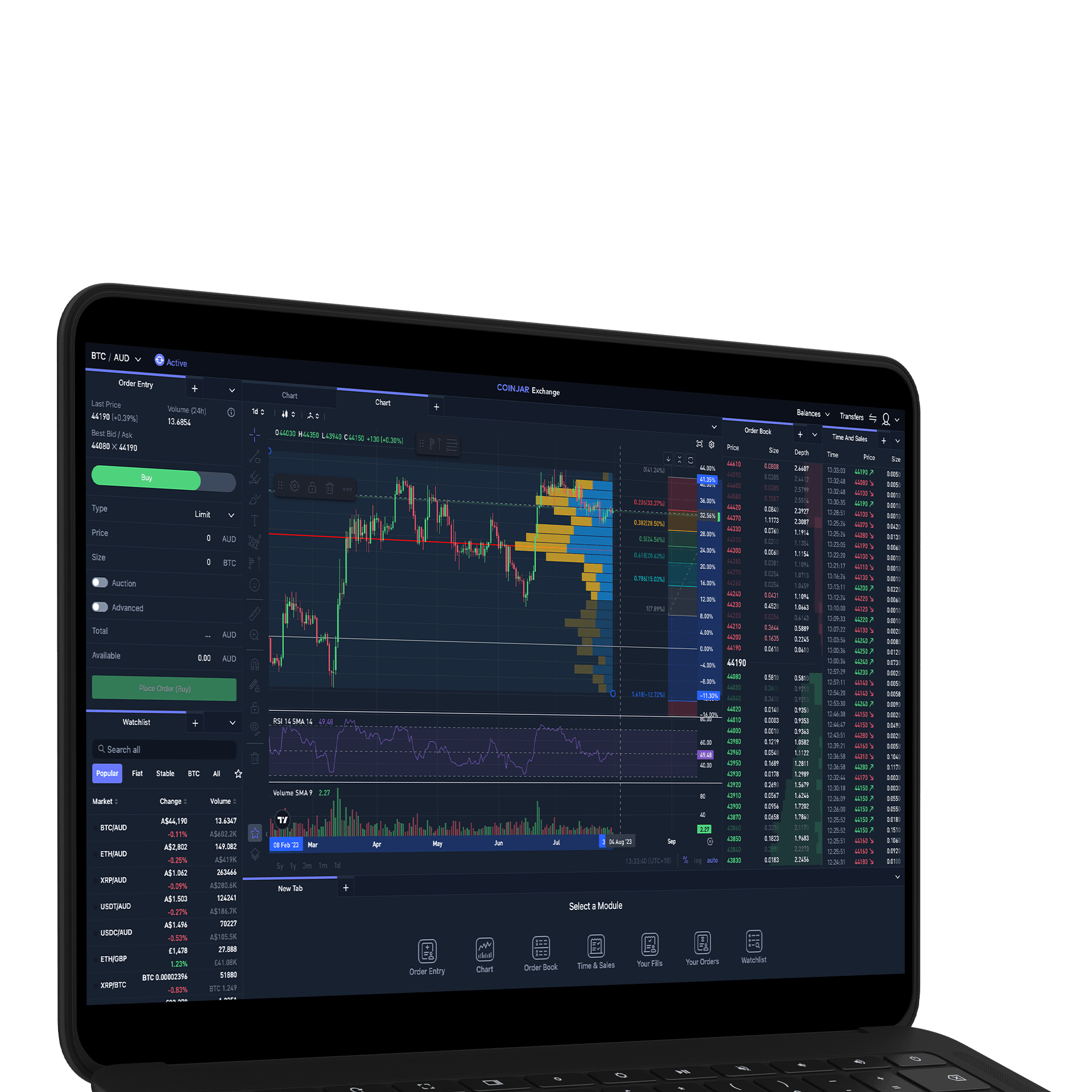
CoinJar Exchange
Trade with fees from 0-0.1%, using market, limit and stop-limit orders. Connect to TradingView to trade directly from your charts, or use CoinJar Exchange’s high-performance interface, built for active traders, market makers and institutions.
Explore CoinJar ExchangeCoinJar Exchange
Trade with fees from 0-0.1%, using market, limit and stop-limit orders. Connect to TradingView to trade directly from your charts, or use CoinJar Exchange’s high-performance interface, built for active traders, market makers and institutions.
Explore CoinJar Exchange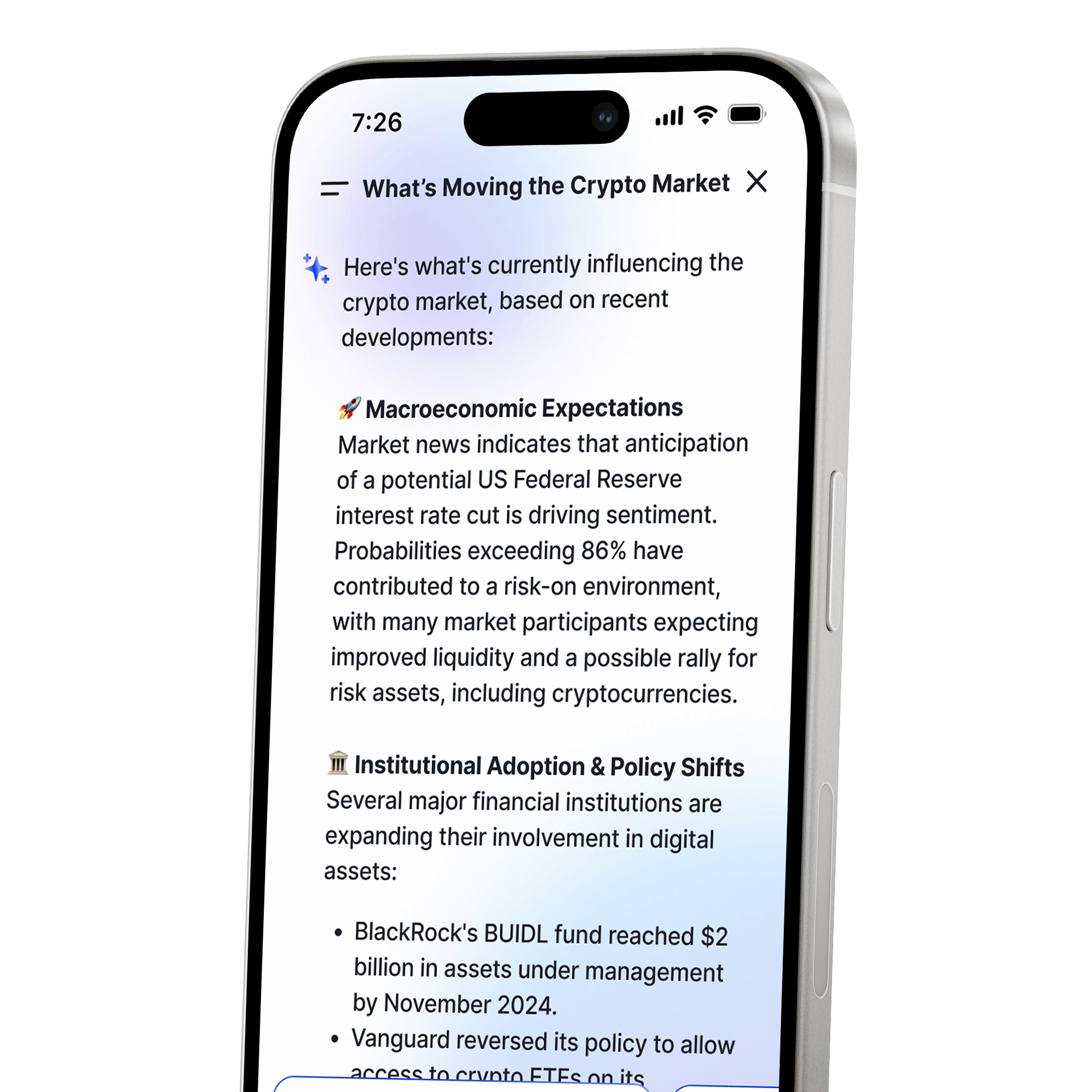
CoinJar AI
Access information about your holdings and the wider cryptocurrency market through CoinJar AI. Ask questions about portfolio changes, market developments or individual cryptocurrencies, with responses informed by your CoinJar holdings.
Learn moreCoinJar AI
Access information about your holdings and the wider cryptocurrency market through CoinJar AI. Ask questions about portfolio changes, market developments or individual cryptocurrencies, with responses informed by your CoinJar holdings.
Learn more
CoinJar OTC
For cryptocurrency trades above $50,000, CoinJar’s OTC desk provides personalised service and access to globally sourced liquidity. Work directly with a dedicated team to arrange and execute your purchase or sale. Discover OTC Services
Learn moreCoinJar OTC
For cryptocurrency trades above $50,000, CoinJar’s OTC desk provides personalised service and access to globally sourced liquidity. Work directly with a dedicated team to arrange and execute your purchase or sale. Discover OTC Services
Learn moreCoinJar does not endorse the content of, and cannot guarantee or verify the safety of any third-party websites. Visit these websites at your own risk.

CoinJar
Get the app.