
Buy Injective
INJPast performance is not indicative of future results. All prices are sourced from CoinJar Indices.
What is Injective?
Injective is a layer one blockchain built specifically for finance. It is not a layer two and it does not run on Ethereum. It is its own chain, built with the Cosmos SDK, secured by its own proof of stake validators, and connected to other Cosmos networks through IBC.
What makes it unusual is that the order book is part of the chain itself. On most networks, an exchange is an application deployed on top of a general purpose blockchain. On Injective, order placement, matching, execution and settlement are built into the protocol as a module that any application can use. The chain launched on mainnet in November 2021 and is developed by Injective Labs, founded by Eric Chen and Albert Chon, which was incubated by Binance Labs and raised from Pantera Capital and Mark Cuban among others.
One structural point separates INJ from the tokens of Ethereum layer twos: INJ is the gas token, it is staked to secure the chain, and it is the asset burned by the network's fee mechanism. Our guide to altcoins explains where tokens like this sit, and our guide to decentralised finance covers the category Injective is built to serve.
What makes Injective different?
Most decentralised exchanges use an automated market maker, where you trade against a pool of assets and a formula sets the price. Injective uses a central limit order book, the same structure a conventional exchange uses, with bids and asks matched against each other.
Because that order book sits in the chain rather than in an application, applications built on Injective can plug into the same markets rather than each having to bootstrap its own liquidity from nothing. That is the design argument for the network, and it is a real one. It is worth reading it carefully though: shared infrastructure does not mean every market on it is liquid.
The chain also orders transactions in batches rather than purely by arrival, which the project describes as a defence against the front running that plagues open blockchains. Blocks are produced in well under a second and finality is immediate once consensus is reached, which is what an order book needs to function.
The applications built on it are mostly financial: spot and perpetual futures markets, lending, prediction markets, and tokenised exposure to equities, commodities and pre-listing companies. Which of those are legally available to you depends entirely on where you live.
What is MultiVM, and what actually runs?
Injective originally ran WebAssembly smart contracts, which meant Ethereum developers could not deploy their existing code to it.
In November 2025 the network launched a native Ethereum Virtual Machine on mainnet, so EVM and WebAssembly contracts now run in the same environment and share the same assets, liquidity and chain modules rather than sitting on separate chains. An earlier separate effort, inEVM, launched in 2024 as a distinct rollup. Support for the Solana virtual machine has been described as on the roadmap and is not live. The Injective announcement sets out what shipped.
What is INJ used for?
Gas. Every transaction on Injective is paid for in INJ. Staking. INJ is staked to validators, or delegated to them, to secure the chain. Stakers share in rewards and are exposed to penalties if their validator misbehaves. Governance. Proposals to change the network are voted on by stakers, and submitting one requires an INJ deposit. Collateral. INJ can be used as margin and collateral in markets built on the chain. The burn. INJ is the only asset accepted in the network's fee auctions, and the INJ bid there is destroyed.
Our guide to staking explains how delegation works in general terms.
How does the INJ supply actually work?
This is the part most worth understanding, because it is routinely oversimplified into "INJ is deflationary".
The supply started at 100 million INJ in 2020, and two forces now pull in opposite directions.
Issuance. The chain mints new INJ to pay staking rewards, at a rate that moves automatically depending on how much of the supply is staked. The target is 60 per cent bonded. When less than that is staked the rate rises to attract more, and when more is staked it falls. An upgrade approved by governance in April 2024, known as INJ 3.0, made that adjustment more aggressive and set a schedule tightening the upper and lower bounds over time. The tokenomics paper documents the mechanism.
Burning. Once a week, sixty per cent of the fees collected by exchange applications are pooled into a basket of assets. Anyone can bid for that basket, but bids can only be made in INJ. The highest bidder takes the basket, and the INJ they paid is permanently destroyed. A later upgrade opened contributions to any application on the chain, and in October 2025 a monthly Community BuyBack was added, in which participants commit INJ, receive a proportional share of the month's revenue, and have their committed INJ burned. The burn auction post explains the original design.
Two things follow. What is burned is the INJ that bidders pay, not the fees themselves. And INJ only shrinks in a given period if the amount burned exceeds the amount minted. That happens when trading activity is high, and it does not happen automatically. There is no hard cap and no guarantee.
What are the risks of holding INJ?
The burn depends on activity. If trading volumes fall, the basket shrinks, bids fall and the burn stops offsetting issuance. The mechanism is a function of usage, not a promise. Supply is a governance decision. The issuance bounds are set by parameters that governance can change, in either direction. Concentration of usage. A large share of the fees driving the burn comes from a small number of applications. If one of them loses users, the effect on the token is direct. Regulatory exposure. The flagship use case is derivatives, perpetual futures and tokenised exposure to shares and pre-listing companies. That is among the most heavily regulated activity in finance, and action against front ends, issuers or market makers is a live risk to the network's core business. Stake concentration. A large proportion of staked INJ sits with a small number of large delegators, which concentrates both governance influence and validator selection. Slashing. If you stake directly, a validator that goes offline or signs conflicting blocks can cost you part of your stake, and unbonding takes time during which you cannot sell. Competition. Injective competes with Hyperliquid, dYdX, Solana based exchanges and conventional venues, all chasing the same traders and market makers. Execution dependence. Much of the roadmap, including the virtual machine work and institutional integrations, depends on a single company delivering. Bridge risk. INJ and other assets move between Injective and other networks over bridges, which have been among the most exploited components in cryptocurrency. Our guide to bridges covers why. Volatility. INJ is not a stablecoin. Its value moves sharply and can fall substantially. No consumer protection. Cryptoassets are not covered by the Financial Claims Scheme and are not protected in the way a bank deposit is. You should be prepared to lose the money you put in.
Buying INJ with Australian dollars on CoinJar
CoinJar has operated since 2013 and lists INJ against Australian dollars, so you can buy, sell and hold it without converting through another cryptocurrency first. Current charges are on our fees page, and live Australian dollar rates are on our cryptocurrency prices page.
CoinJar is registered with AUSTRAC as a digital currency exchange provider, Registration Number DCE100749118-001. That registration covers anti money laundering and counter terrorism financing obligations. It is not an endorsement of any cryptoasset listed on the platform.
How is INJ taxed in Australia?
The ATO generally treats INJ as a capital gains tax asset. A disposal can occur when you sell it for Australian dollars, exchange it for another cryptoasset, spend it or give it away.
The ATO sets out its approach on its crypto asset investments pages. Our guide to crypto tax in Australia provides a practical overview. This is general information, not tax advice. Consider speaking to a registered tax agent about your circumstances.
Fund Your Account Your Way
Buy Injective instantly using Visa or Mastercard, or deposit Australian dollars via bank transfer, PayID or PayPal. Buy, sell and convert between supported cryptocurrencies through your CoinJar account.


How to buy Injective with CoinJar
Start your portfolio with Australia's longest-running crypto exchange with these simple steps.
Sign up to CoinJar
Get the CoinJar app on iOS or Android, create an account and verify your ID.
Deposit funds
Deposit AUD fee-free via PayID, Osko or bank transfer. You can also use PayPal or pay instantly by card.
Buy your first crypto
Buy Injective and other popular cryptos using cash or credit card in minutes.



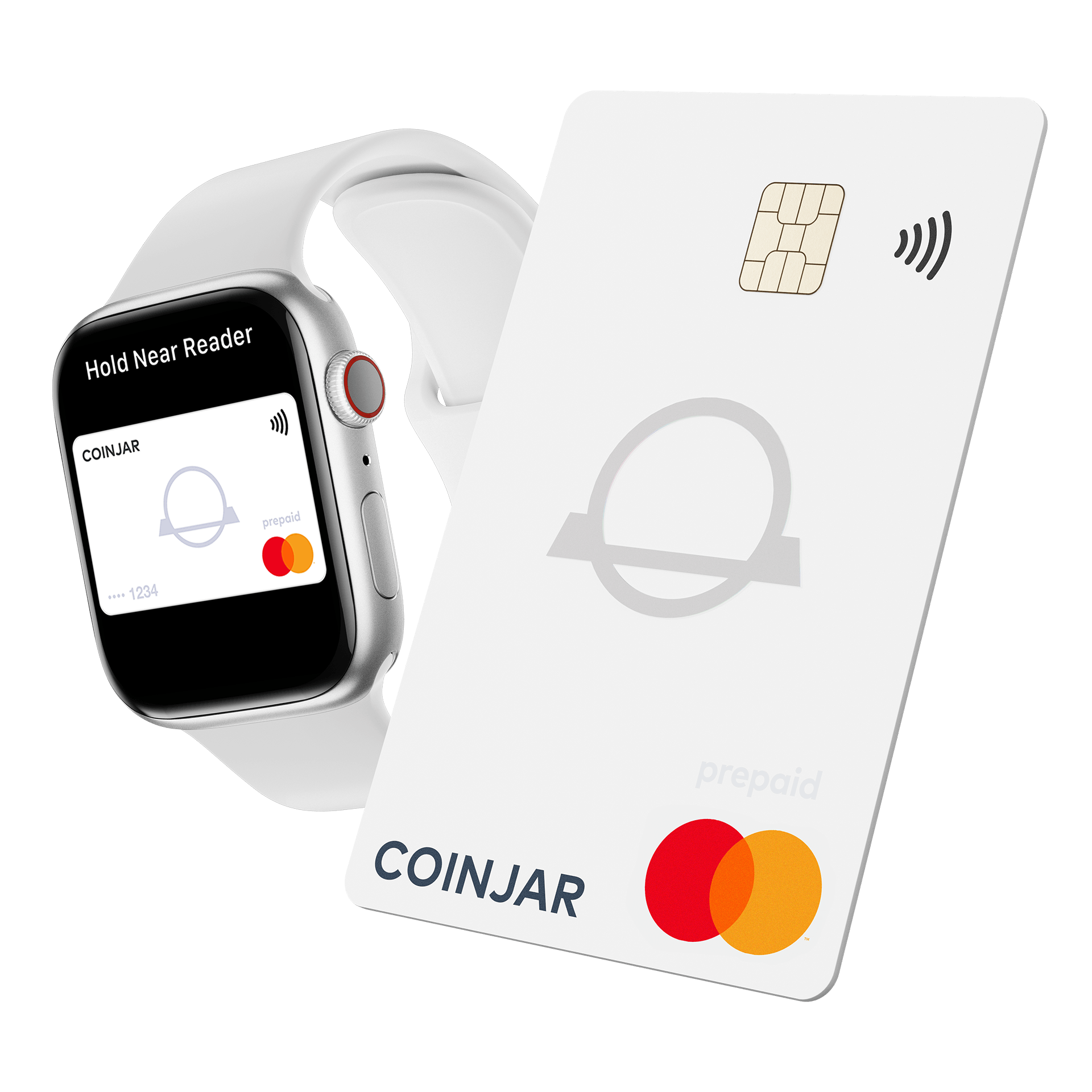
CoinJar Card
Use CoinJar Card, powered by Mastercard, for purchases online and in store, including through Apple Pay and Google Pay. No setup or monthly fee. A 1% purchase fee applies and is returned as CoinJar Rewards points, with one point earned per $1 spent. Available in Australia only.
Get your CoinJar Card for freeCoinJar Card
Use CoinJar Card, powered by Mastercard, for purchases online and in store, including through Apple Pay and Google Pay. No setup or monthly fee. A 1% purchase fee applies and is returned as CoinJar Rewards points, with one point earned per $1 spent. Available in Australia only.
Get your CoinJar Card for free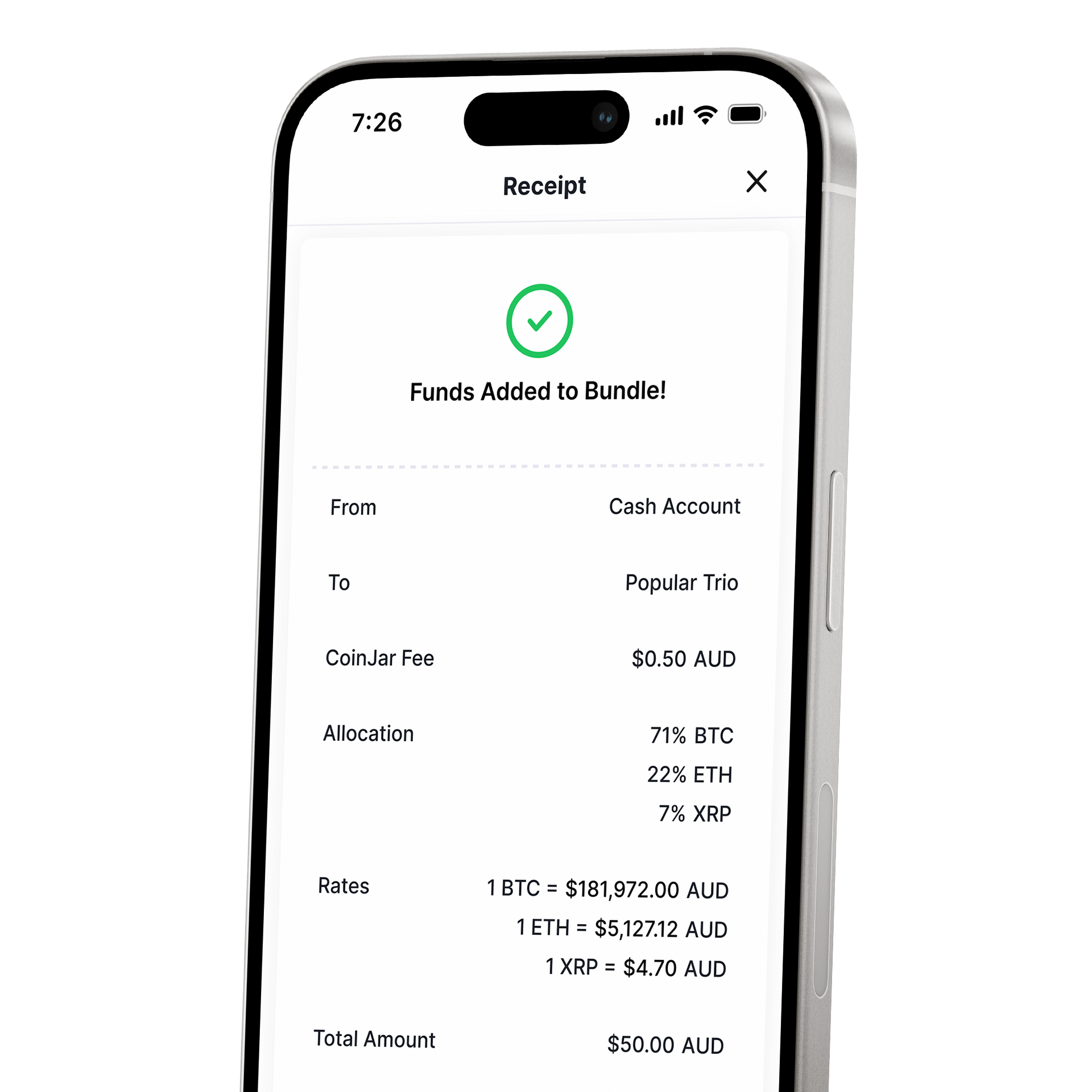
CoinJar Recurring Buy
Schedule automatic purchases weekly, fortnightly or monthly to dollar-cost average into individual cryptocurrencies or CoinJar Bundles. Manage your investment amount and schedule, with the flexibility to adjust or pause purchases as your circumstances change.
DCA with Recurring BuyCoinJar Recurring Buy
Schedule automatic purchases weekly, fortnightly or monthly to dollar-cost average into individual cryptocurrencies or CoinJar Bundles. Manage your investment amount and schedule, with the flexibility to adjust or pause purchases as your circumstances change.
DCA with Recurring Buy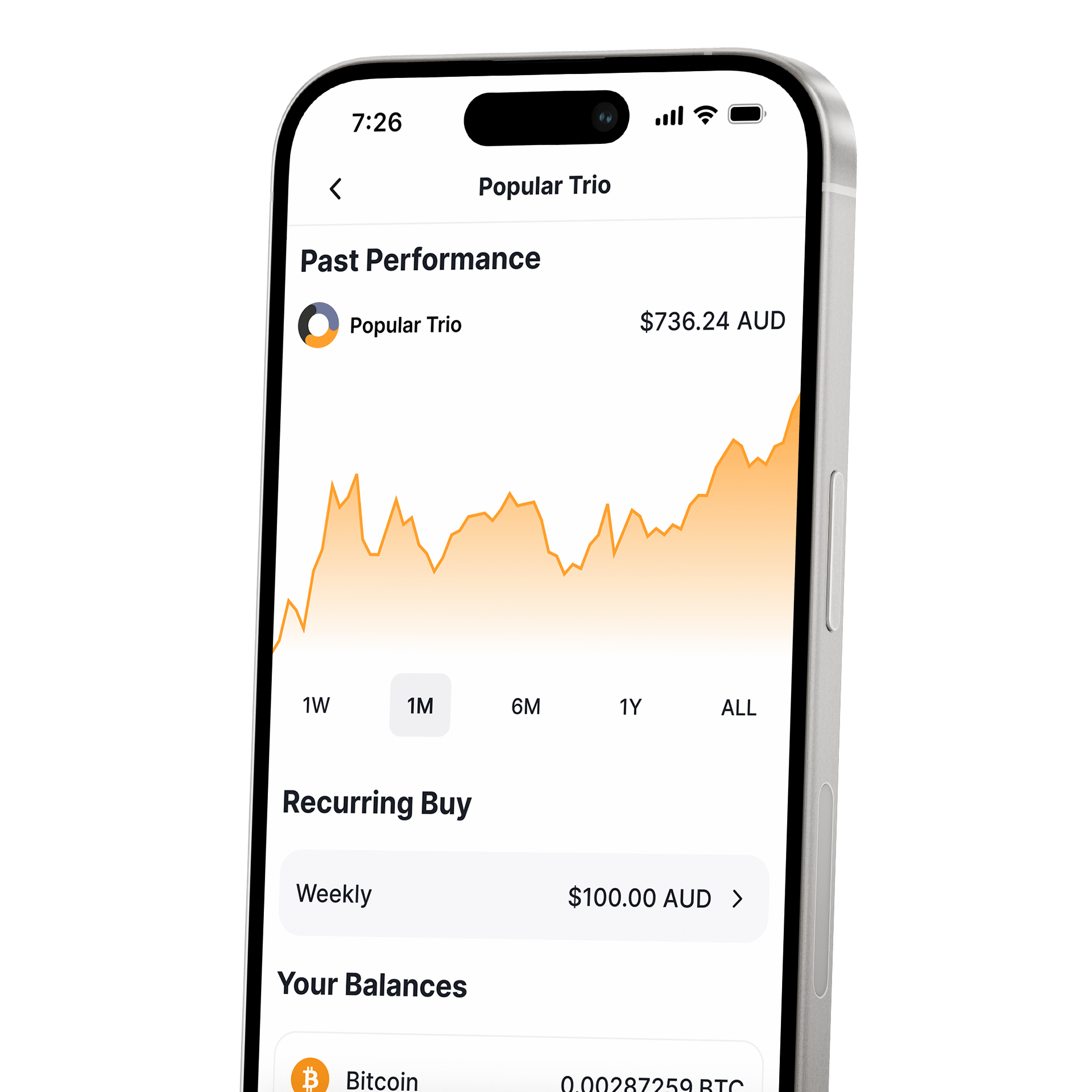
CoinJar Bundles
Pick your Bundle in the CoinJar app. Review each Bundle’s asset allocation, add to your holdings and rebalance when required. Sell your Bundle or unbundle it to manage the assets individually.
Learn moreCoinJar Bundles
Pick your Bundle in the CoinJar app. Review each Bundle’s asset allocation, add to your holdings and rebalance when required. Sell your Bundle or unbundle it to manage the assets individually.
Learn more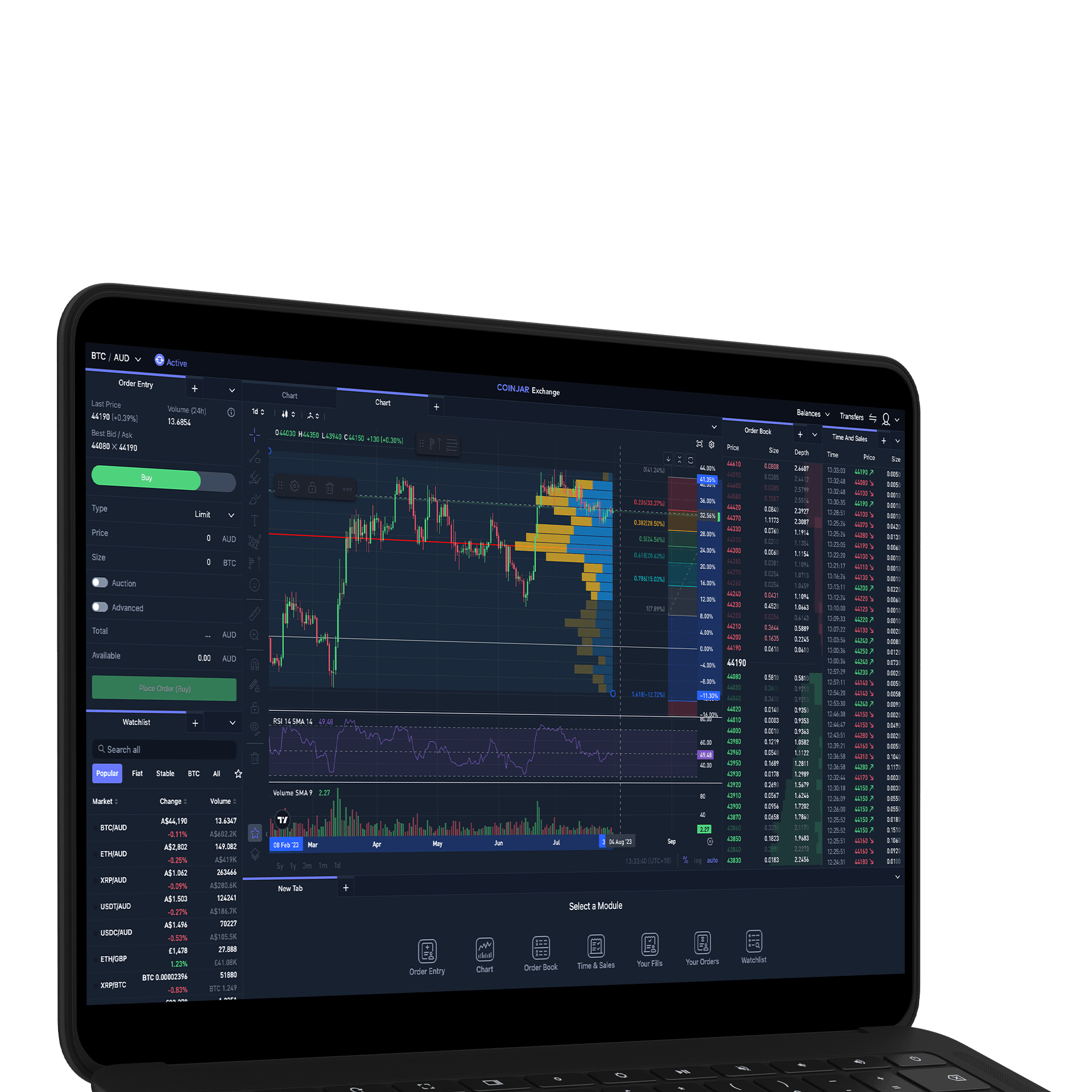
CoinJar Exchange
Trade with fees from 0-0.1%, using market, limit and stop-limit orders. Connect to TradingView to trade directly from your charts, or use CoinJar Exchange’s high-performance interface, built for active traders, market makers and institutions.
Explore CoinJar ExchangeCoinJar Exchange
Trade with fees from 0-0.1%, using market, limit and stop-limit orders. Connect to TradingView to trade directly from your charts, or use CoinJar Exchange’s high-performance interface, built for active traders, market makers and institutions.
Explore CoinJar Exchange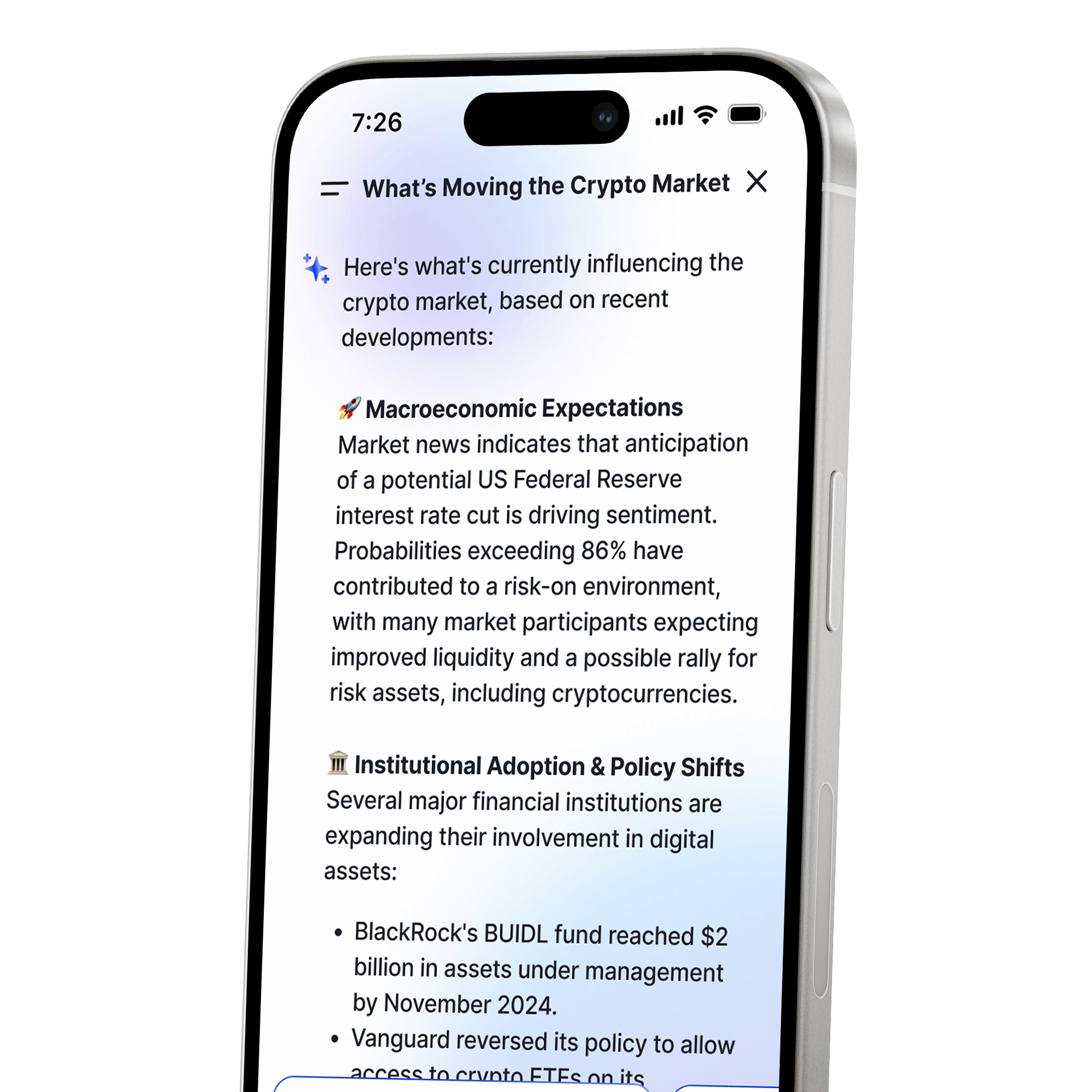
CoinJar AI
Access information about your holdings and the wider cryptocurrency market through CoinJar AI. Ask questions about portfolio changes, market developments or individual cryptocurrencies, with responses informed by your CoinJar holdings.
Learn moreCoinJar AI
Access information about your holdings and the wider cryptocurrency market through CoinJar AI. Ask questions about portfolio changes, market developments or individual cryptocurrencies, with responses informed by your CoinJar holdings.
Learn more
CoinJar OTC
For cryptocurrency trades above $50,000, CoinJar’s OTC desk provides personalised service and access to globally sourced liquidity. Work directly with a dedicated team to arrange and execute your purchase or sale. Discover OTC Services
Learn moreCoinJar OTC
For cryptocurrency trades above $50,000, CoinJar’s OTC desk provides personalised service and access to globally sourced liquidity. Work directly with a dedicated team to arrange and execute your purchase or sale. Discover OTC Services
Learn moreCoinJar does not endorse the content of, and cannot guarantee or verify the safety of any third-party websites. Visit these websites at your own risk.

CoinJar
Get the app.