Key Takeaways
- Polygon has replaced its original MATIC token with a new asset called POL as part of the "Polygon 2.0" roadmap.
- POL is designed as a "hyperproductive" token that secures multiple blockchains within Polygon's expanding network.
- While tokens on the Polygon network converted automatically, legacy MATIC held on Ethereum may still require a manual swap.
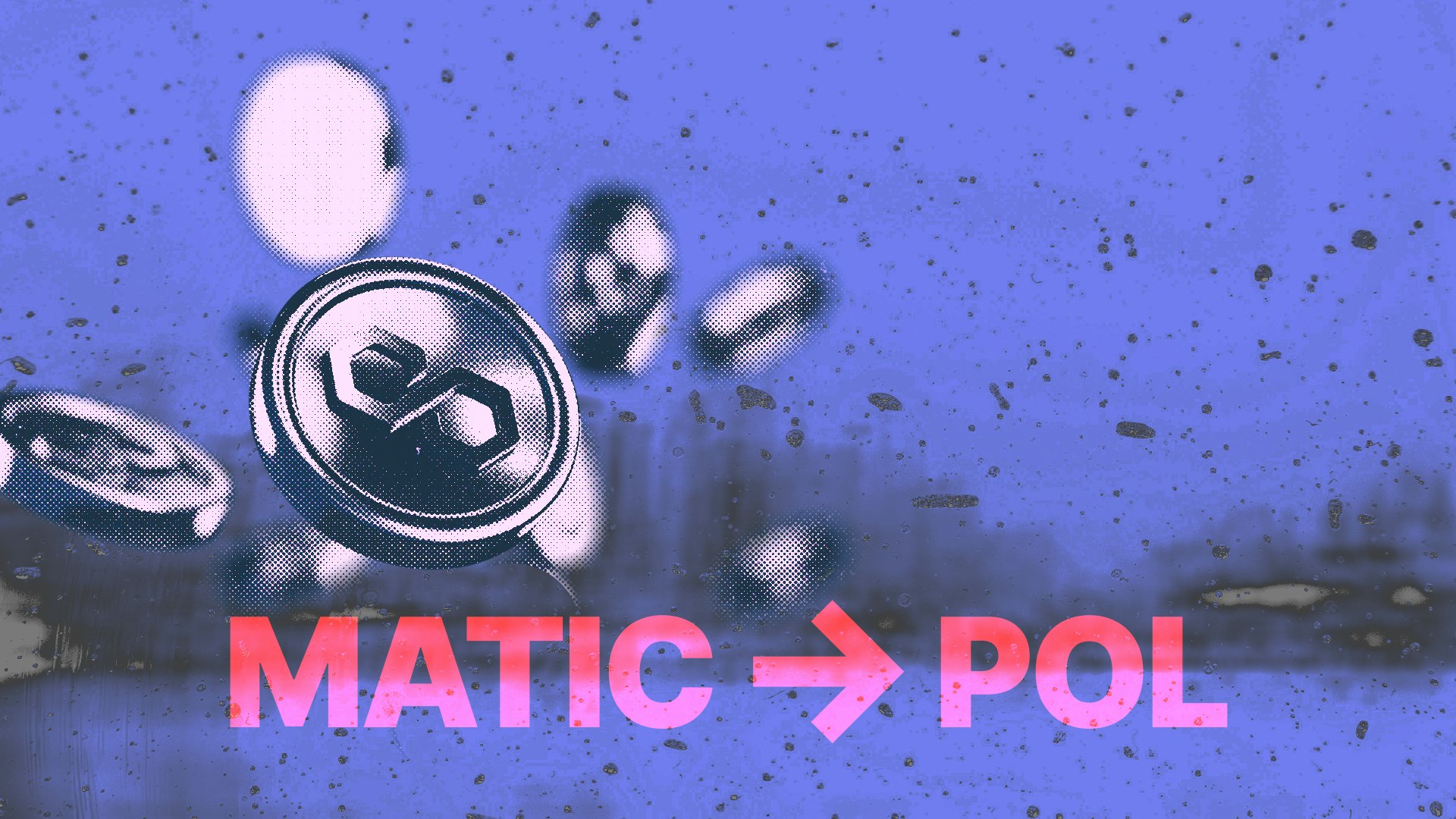
If you opened your portfolio or a price app last year, you might have spotted something strange. The familiar MATIC ticker has disappeared and a new token called POL has taken its place.
If you have been holding in cold storage or sitting out the market for a while, this can feel alarming. You might be wondering whether you missed some big sell-off or if your MATIC has somehow vanished.
It has not. Your assets are still there. What you are seeing is the result of a major upgrade that has turned Polygon from a single scaling solution into a broader network of interconnected blockchains.
The shift from MATIC to POL
In September 2024, Polygon carried out a technical migration that retired the MATIC token and introduced POL. This was more than a name change. It was a full redesign of how value and security work across the Polygon ecosystem, a shift that Polygon calls "Polygon 2.0".
MATIC did its job for years. It was originally built for a time when Polygon was mainly a single Proof-of-Stake sidechain that helped take pressure off Ethereum. Since then, Polygon has grown to support Zero-Knowledge (ZK) rollups, application-specific chains and new infrastructure. The original token model no longer matched what the network was trying to do.
Why the upgrade was necessary
The key idea behind the move to POL is what Polygon calls the "AggLayer" (Aggregation Layer).
You can think of most blockchains today as separate islands. Moving assets from one island to another often means using slow, clunky bridges that can be expensive and carry security risks. Polygon’s goal is to link these islands so they feel more like cities on the same continent, where value can move quickly and safely.
POL is the core fuel for this new system. MATIC mainly secured the Polygon Proof-of-Stake chain. POL, by contrast, is designed to be "hyperproductive". Validators can stake POL to help secure several different Polygon chains at the same time. In return, they can earn rewards from multiple networks without needing a unique staking token for each chain.
In theory, this boosts both security and flexibility. It also creates a single token that sits at the heart of Polygon’s growing ecosystem.
Real-life examples: POL in action
If you regularly use apps on Polygon, the move to POL has changed the ticker and some terminology. The way you actually use the network will feel very similar.
- Gas fees
Where you previously paid transaction fees in MATIC when you swapped tokens, supplied liquidity, or bought NFTs, you now pay those fees in POL.
Costs are still lower compared with Ethereum mainnet, since Polygon is built as a scaling solution. While Ethereum's Dencun upgrade has significantly reduced mainnet fees, Polygon transactions remain cheaper at the time of writing.
-
Staking rewards
Users who help secure the network by staking now stake POL instead of MATIC. Under the new hyperproductive model, validators can support multiple Polygon chains in the AggLayer. That means they may have more potential revenue sources, because they are validating for several networks rather than just one. -
Governance
POL holders can take part in protocol governance. This includes voting on proposals, upgrades, and how treasury funds are used. The goal is to keep the ecosystem decentralised and community-directed while it grows.
What happened to your MATIC?
Whether you need to do anything depends on where you were holding your tokens when the migration took place.
Tokens held on the Polygon network
If you held MATIC directly on the Polygon Proof-of-Stake network, the change was automatic. On 4 September 2024, the smart contracts that manage the network were upgraded and your balance was updated from MATIC to POL at a 1:1 ratio.
You do not need to take any extra steps. Your tokens should simply appear as POL in your wallet interface or block explorer.
Tokens held on centralised exchanges
Most large exchanges managed the migration for their customers. If your MATIC was sitting in an exchange wallet, it may have been converted to POL automatically on your behalf, also at a 1:1 ratio.
You should now see POL instead of MATIC in your exchange balance. If you are unsure, check your account history or your exchange’s official announcements. If your MATIC is held on CoinJar, you will need to manually convert it to POL using the "Convert" function in the CoinJar app. Converting MATIC to POL is free on CoinJar and will swap at a 1:1 ratio, but may have capital gains tax implications in Australia, so check with an accountant.
Tokens held on Ethereum (ERC-20)
This is where most of the manual work may be required.
If you hold "legacy" MATIC on the Ethereum mainnet, for example in a Ledger, Trezor, or MetaMask wallet configured to the Ethereum network, it did not upgrade automatically and requires manual migration. These ERC-20 MATIC tokens still exist, but they need to be swapped for the new ERC-20 POL tokens.
To do this, Polygon has provided an official migration path, usually through the Polygon Portal. The process is similar to any other on-chain token swap and will require:
- Connecting your Ethereum wallet to the official migration interface.
- Approving the swap of ERC-20 MATIC to ERC-20 POL.
- Paying a standard Ethereum gas fee in ETH to complete the transaction.
If you hold a significant amount of legacy MATIC on Ethereum, it is worth reviewing Polygon’s official documentation and taking the time to migrate safely.
Security and risks
Major token upgrades often create confusion. Scammers look for that confusion and try to use it to steal funds. These scams can continue well after the initial migration window.
Being cautious can save you a lot of pain later.
Red flags to watch for
-
Fake migration sites
Scammers will often buy search ads for phrases like "Swap MATIC to POL" or "Official Polygon migration". These sites can look almost identical to the real thing, but connecting your wallet can let them drain your assets. -
"Support" direct messages
No legitimate staff member from Polygon, CoinJar, or any reputable exchange will contact you out of the blue on Telegram, Discord, X, or similar platforms asking you to "verify" your wallet or seed phrase so they can help you receive POL. Anyone who does this is trying to scam you. -
High-pressure tactics
Fraudsters often claim that your tokens will be burned or permanently frozen if you do not migrate straight away. While some projects do set clear deadlines, real teams announce these on official websites, documentation, and verified social channels, not through urgent DMs or random emails.
To protect yourself, always:
- Type the official Polygon website or migration portal URL directly into your browser.
- Cross-check links against Polygon’s verified social accounts and documentation.
- Never share your seed phrase or private keys with anyone, for any reason.
If something feels off, step back and verify before you sign any transaction.
The future of Polygon
The move to POL is Polygon’s bet on a future with thousands of connected blockchains that need to talk to each other smoothly.
Polygon is aiming to be more than just a cheaper way to use Ethereum. It wants to act as a core "value layer" for the internet, where many different chains can share security, liquidity, and users through a common infrastructure.
By using a single token, POL, to secure and coordinate multiple networks, Polygon is trying to reduce the fragmentation that has long been a problem in crypto. Separate chains often split liquidity, users, and developer attention. A shared token and a common AggLayer are meant to pull these pieces together.
If this vision plays out, everyday users may not even realise they are interacting with Polygon at all. They will just see fast, low-cost applications that work across different chains, while POL operates quietly in the background to handle security, fees, and coordination.

CoinJar
CoinJar is one of the longest-running cryptocurrency exchanges in the world. Since 2013, we’ve helped hundreds of thousands of people worldwide to buy, sell and spend billions of dollars in Bitcoin, Ethereum and dozens of other cryptocurrencies.
Read full bio