Key Takeaways
- Render Network migrated its core infrastructure from Ethereum to Solana to improve speed and reduce cost
- The token ticker has officially changed from Ethereum-based RNDR to Solana-based RENDER.
- Most centralised exchanges handle this swap automatically, but self-custody users need to migrate their assets manually.
- The Render Network migration from Ethereum to Solana was completed on November 2, 2023. While the technical transition is complete, the upgrade portal remains open indefinitely for users who have not yet converted their RNDR tokens to RENDER.
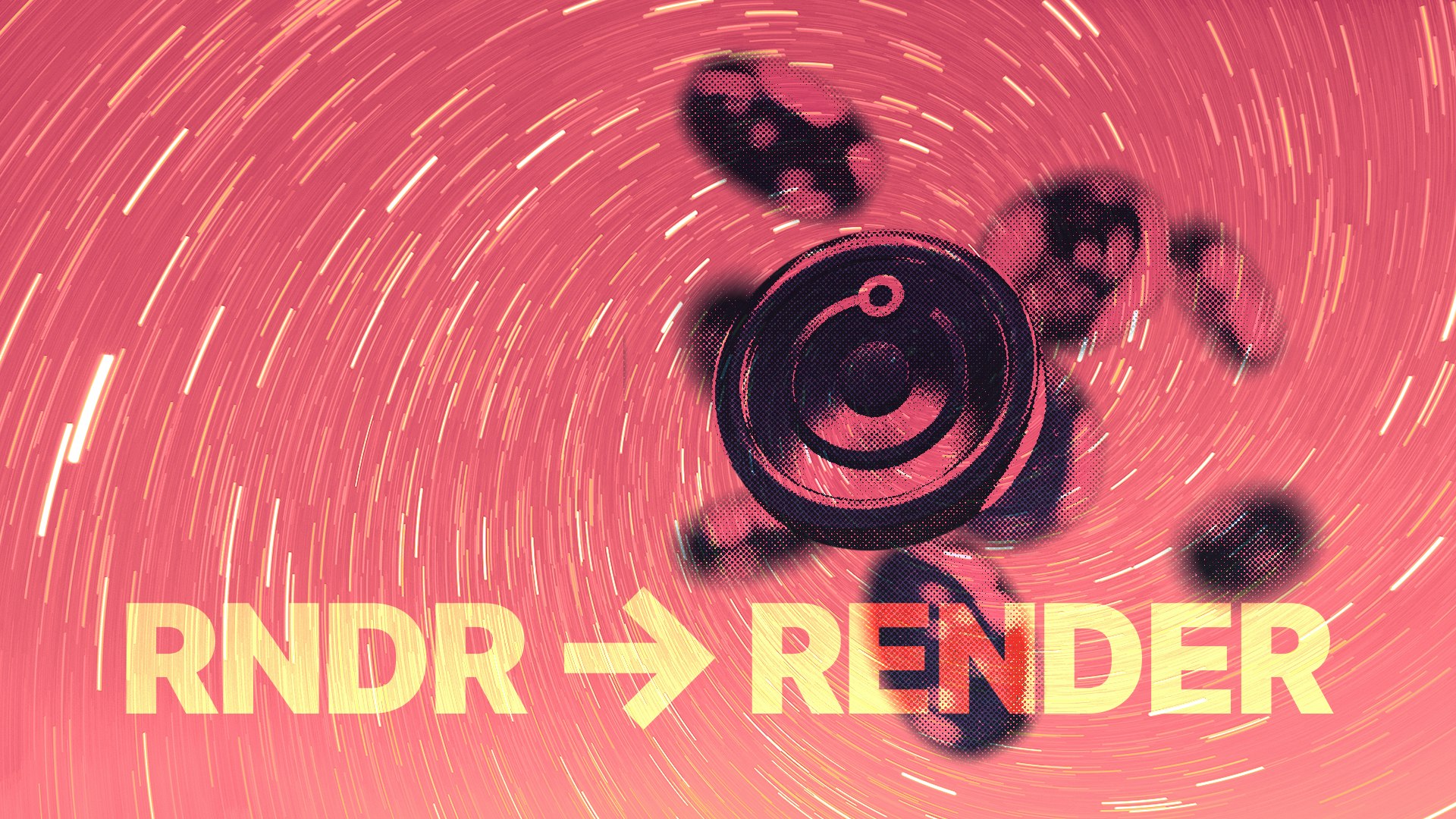
In its early days, the Render Network ran on the Ethereum blockchain. It introduced a new way for people to rent out spare graphics card power to artists who needed to render 3D graphics.
As the network expanded into Artificial Intelligence (AI) and machine learning, Ethereum’s higher fees and slower transaction times became a real bottleneck. To address this, the community voted to move the network to Solana, a high-throughput blockchain with very low fees. This major technical upgrade is the reason behind the change from RNDR to RENDER.
The Difference Between RNDR and RENDER
The project itself has not changed, but the technology behind the token has.
RNDR (the old token)
RNDR is an ERC‑20 token on the Ethereum network. For years, it was the standard utility token used to pay for 3D rendering work and other services on Render Network.
After the upgrade, the project treats RNDR as a legacy asset. Some platforms may still list or trade it, especially if they have not completed the migration yet.
RENDER (the new token)
RENDER is an SPL token on the Solana blockchain. It plays the same role as RNDR, such as paying for compute power and participating in governance.
The key difference is that it now benefits from Solana’s architecture. This means much faster confirmations, support for near real-time data streaming, and significantly lower transaction costs, which is crucial for AI and high-volume compute workloads.
What Do I Need To Do as a CoinJar Customer?
If you own RNDR, you can convert it to RENDER for free (1 RNDR = 1 RENDER). CoinJar won't do this automatically, you need to do it yourself. You can also keep your RNDR and withdraw it. You can't buy or sell RNDR anymore on CoinJar. You can buy, sell, and trade RENDER (the new version). To convert RNDR to RENDER, follow these instructions.
Converting might create a taxable event, so talk to an accountant.
If you hold tokens on an another exchange
If you keep your tokens on a centralised exchange like CoinJar, most of the heavy lifting usually happens behind the scenes.
-
Automatic swaps
Some exchanges swap old RNDR tokens for new RENDER tokens at a 1:1 ratio. -
Ticker updates
You may simply see the asset name and ticker in your portfolio change from RNDR to RENDER. -
Action required
You should always check the latest announcements or help centre articles from your exchange to confirm that the migration has been completed for your specific account and region.
If you hold tokens in a private wallet
If you hold old RNDR tokens in a self-custody wallet (for example MetaMask or a hardware wallet), the process is manual.
- Go to the official Render Network upgrade portal.
- Connect your Ethereum wallet that holds RNDR and a Solana wallet that will receive RENDER.
- The bridge will burn (destroy) your Ethereum RNDR and mint (create) new Solana RENDER into your Solana wallet.
- You will need a small amount of ETH in your Ethereum wallet to cover gas fees for the migration transaction.
Always verify that you are using the correct, official portal before connecting any wallet.
The Render Network Upgrade Portal can be used at any time to migrate your tokens. An incentive program ran from October 2023 until October 2024, but this has now concluded. You can still upgrade your RNDR to RENDER at the 1:1 ratio, but upgrade rewards are no longer available.
Real-Life Examples: Why the Upgrade Matters
To see why Render moved blockchains, it helps to look at how people actually use the network.
The “Airbnb” of computing
Render works a bit like Airbnb, but for computing power instead of spare rooms. People with powerful Graphics Processing Units (GPUs) rent out their unused capacity, and users who need heavy computing pay to use it.
-
Example 1: The film studio
A visual effects studio is working on a high-budget sci-fi film. Rendering all the CGI on their in-house machines would take months.
They upload the files to Render Network. Thousands of distributed GPUs share the work and complete it in days instead of months.
By moving to Solana, all those small payments between users and GPU providers can happen quickly and cheaply, even when there are thousands of jobs running at once. -
Example 2: The AI startup
A small AI startup wants to train a new model, but cannot justify buying $75,000 worth of hardware.
Instead, they rent high-performance GPU clusters through Render Network and pay only for the hours they use.
With RENDER on Solana, fees are low enough that short, frequent jobs remain cost-effective, which is vital for AI experiments and model training.
Risks and Red Flags
Token migrations are a prime target for scammers because they usually involve connecting wallets and signing transactions. If you are not careful, it can be hard to tell a real upgrade portal from a fake one.
Fake migration portals
Scammers often buy sponsored search ads that appear above the real project website. These fake sites copy the look of the official page but hide malicious smart contracts.
If you connect your wallet and approve the wrong transaction, the contract may drain your funds.
To reduce this risk, always:
- Type the project URL directly, or
- Follow a link from the project’s official X (Twitter) account or documentation, and
- Double-check the domain name before connecting your wallet.
“Help desk” impersonators
If you post on social media asking for help with the swap, you may be contacted by accounts pretending to be support staff.
Keep in mind:
- Legitimate support will never ask for your seed phrase, recovery phrase, or full private key.
- No one needs your seed phrase to “check” your wallet or fix a stuck transaction.
- If someone insists on remote access to your device or asks you to install unfamiliar software, treat that as a major red flag.
When in doubt, only use support channels listed on the official project website or within the official app.
The Future of Decentralised Compute
The move to RENDER on Solana is part of a broader category known as DePIN (Decentralised Physical Infrastructure Networks). These are networks that coordinate real-world resources, such as GPUs, storage, or bandwidth, using blockchain technology.
By shifting to a high-speed chain, Render is positioning itself as a core piece of infrastructure for future AI development. As demand for compute power continues to grow faster than new hardware can be manufactured, decentralised networks can tap into existing GPUs that might otherwise sit idle.
The migration from RNDR to RENDER is more than a change of ticker. It is a structural upgrade that aims to make Render Network better suited for a world where AI, high-performance computing, and blockchain are closely linked.
Exchange policies mentioned in this article may have changed since publication. Please verify current procedures with your specific platform.
CoinJar
CoinJar is one of the longest-running cryptocurrency exchanges in the world. Since 2013, we’ve helped hundreds of thousands of people worldwide to buy, sell and spend billions of dollars in Bitcoin, Ethereum and dozens of other cryptocurrencies.
Read full bio