
Real-World-Assets are the latest and greatest in crypto, as they promise to usher in the age of financial institutions adopting crypto for real.
It's ironic to think back to the beginning of this entire industry when Satoshi wanted to create an alternative to the traditional financial system without ties to it. A few years later, we all yearn for those same institutions who brought the crisis over us to start using our web3 native tech. It's as if Crypto was a kid who never wanted to be like their parents to turn out like them eventually. Cognitive dissonance aside, this isn't the first time we're all getting excited about tokens backed by something valuable irl.
Already in 2018, projects discovered that tokenizing valuable assets such as real estate could be an attractive way to bridge the gap between traditional financial markets and blockchain.
But what are RWAs in crypto anyway?
The category does not describe everything you might consider an asset, but tokens that represent financial assets, including houses, gold, and any financial security like loans, bonds, and even carbon credits.
Since all these assets live primarily off-chain, they are brought on-chain through tokenization. It's misleading to say they are now on-chain because, obviously, if you tokenize a diamond, the certificate of ownership might be on-chain, but the actual diamond is not. It's held somewhere in a safe place, or you'd hope so.
The benefits of tokenizing RWAs include enhanced liquidity, price discovery, accessibility, increased transparency, and lower overhead, as smart contracts run automatically with no humans needed.
What if the asset in the real world is destroyed?
Houses can burn down, and even diamonds, as the acclaimed NFT expert Tasha proved. After creating an NFT representing her diamond on OpenSea, she destroyed the diamond and still continued receiving offers for the now unbacked NFT. 💎
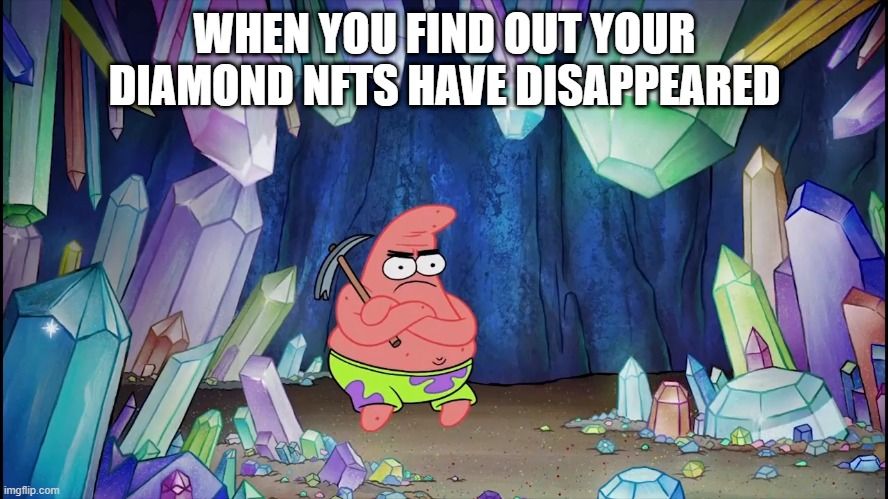
Funny enough, the Tasha tale ended in the NFT disappearing from OpenSea.
With RWA tokens not issued by influencers, though, the more realistic outcome is that they are insured, and holders get reimbursed.
Real-World-Assets in practice
While the narrative didn't take off in 2018, now is the right time as big economies continue increasing bond rates to stifle inflation. The bad news is inflation reduces the amount of ramen you can buy.
The good news is you can now earn over 4% on US treasuries, more than on your USD stablecoins in major DeFi protocols. Plus, you don't have to worry as much about de-pegging events, either. Or let's put it this way, if the US Dollar de-pegged, we'd have bigger problems.
The organizations already making a killing in RWAs on-chain aren't your standard degen. MakerDAO, an OG stablecoin DAO holds $1.14 billion in US treasuries and earns 80% of its fee revenues from RWAs.
Tokenized loans earn even better yields with an average of 10.62% APY for lenders, plus the warm fuzzy feeling of giving a real person money they can use for their business. Such loans are facilitated by DeFi protocols like Centrifuge that connect the traditional finance bros with crypto degens. The protocol has partnered with Blocktower last year to help them bring $220 million of their collateralized lending on-chain, making it one of the biggest players in the still young RWAs on-chain industry.
While crypto purists probably hate this increased reliance on centralized custodians and working together with the same system we tried to replace, others are more upbeat, focusing on the benefits tokenizing real-world assets brings, such as enabling more people to participate in the appreciation of assets.
It may be time to grow up and ditch the degen hat at least a little. Or, to be more pragmatic, if you can't beat them might as well take some of their yield. 🌾
Naomi from CoinJar
CoinJar Australia Pty Ltd ACN 648 570 807 is a registered Virtual Asset Service Provider (VASP) with the Australian Transaction Reports and Analysis Centre (AUSTRAC) in accordance with the Anti-Money Laundering and Counter-Terrorism Financing Act 2006 (Cth).
This material is general information only and does not consider your objectives, financial situation or needs. You should consider the Product Disclosure Statement and Target Market Determination (TMD) relating to the CoinJar Card product before making any decision. The CoinJar Card is a prepaid, reloadable Mastercard issued by EML Payment Solutions Limited ABN 30 131 436 532 AFSL 404131 (EML). CoinJar Australia Pty Ltd ABN 75 648 570 807 (Authorised Representative Number 1290193) is involved in the promotion and distribution of the Card and is a Corporate Authorised Representative of EML. Please consider the Financial Services Guide.
Apple Pay is a trademark of Apple Inc., registered in the U.S. and other countries. Google Pay is a trademark of Google LLC. Mastercard and the circles design are registered trademarks of Mastercard International Incorporated.
This site is protected by reCAPTCHA and the Google Privacy Policy and Terms of Service apply.