
Buy Audius
AUDIOPast performance is not indicative of future results. All prices are sourced from CoinJar Indices.
What is Audius?
Audius is a music platform built around open-source software, community-operated infrastructure and direct relationships between artists and listeners. People can stream music for free, artists can upload tracks and sell music directly, and fan clubs can be organised around artist-specific coins.
AUDIO is the platform's protocol token. Node operators stake it, holders can delegate it and participate in governance, and it provides liquidity behind Audius Artist Coins. It is not required to listen to ordinary music or upload a track, and paid music is generally priced through conventional payment methods or stablecoins rather than AUDIO alone. Our guide to altcoins explains where tokens like AUDIO sit relative to Bitcoin, and our comparison of Solana and Ethereum covers the two networks used across Audius.
Where did Audius come from?
Audius was founded in 2018 by Roneil Rumburg and Forrest Browning. The public platform launched in 2019 with the ambition of giving artists more control over distribution, audience relationships and payment than conventional streaming services.
AUDIO launched in 2020 with an initial supply of one billion tokens allocated among community programmes, the team, advisers, early backers and the foundation or treasury. The token is not hard capped. New AUDIO can be issued as staking and ecosystem rewards under parameters controlled through governance.
Leadership changed in July 2025 when Browning announced that he was leaving his role to spend more time with his family. Rumburg remains chief executive. Audius continued releasing products after that departure and described a new phase for the platform in February 2026, so there is no indication that it is being wound down.
What can people do on Audius in 2026?
Stream and upload music. Audius offers free listening and unlimited artist uploads. The platform promotes high-quality audio and does not put ordinary streaming behind an AUDIO balance.
Sell music directly. Artists can sell tracks, albums, stems and instrumentals. Buyers can use cards or supported cryptocurrency payment methods, and the artist can withdraw their share of the proceeds.
Run fan clubs. A verified artist can launch an Artist Coin that acts as the membership asset for a fan community. Holding it inside Audius can unlock exclusive music, messages and other benefits chosen by the artist.
Host remix contests. Artists, labels and collectives can publish stems, invite submissions and award prizes or exposure.
Use social tools. Profiles, playlists, messaging, feeds and community discovery sit alongside the catalogue.
Audius takes a 10 per cent network fee on direct music sales and makes the remaining 90 per cent available to the artist. Those are platform rules and can change. The current Audius fees guide is the appropriate place to check before selling or buying.
How decentralised is Audius?
Audius separates the consumer application from the infrastructure beneath it.
Older versions of the protocol described dedicated content nodes for storing music and discovery nodes for indexing it. The newer Open Audio node software describes validator nodes and RPC nodes, reflecting another architecture change. Operators register onchain and stake AUDIO, while the software stores, serves and indexes the information applications need.
The public website and mobile applications are still products maintained by the Audius team. The team chooses interface features, releases software, supports accounts and responds to abuse and copyright complaints. App stores and hosted services are conventional dependencies.
The result is decentralised in parts rather than immune from control. Community operators can run infrastructure and governance can set protocol parameters, but a listener normally reaches it through an interface developed by a company and subject to legal obligations.
Why does Audius use Ethereum and Solana?
AUDIO originated as an ERC-20 token on Ethereum. Audius's staking and governance contracts were built there, and older protocol documentation refers extensively to Ethereum.
Audius later moved high-frequency activity, rewards and consumer payments towards Solana because transactions are faster and cheaper. Current wallet documentation uses Solana addresses for assets such as USDC and AUDIO, while the protocol continues to have Ethereum-origin staking and governance infrastructure.
This is a multi-chain design, not a clean replacement of one network with the other. Ethereum AUDIO and Solana AUDIO connected through bridge infrastructure are not interchangeable at the address level. The network supported by a wallet or exchange has to match the network used to send.
What does AUDIO actually do?
Node staking. Operators stake AUDIO when registering protocol nodes. Their stake can support rewards and may be penalised if they break network rules or perform badly.
Delegation. A holder can delegate AUDIO to a node operator and share in rewards after the operator's cut. This exposes the holder to the operator's performance and the protocol's staking contracts.
Governance. Staked or delegated AUDIO supplies voting weight for proposals affecting protocol parameters, software requirements and treasury decisions.
VIP status. Holding AUDIO in a supported Audius wallet can unlock platform tiers, badges, themes or early feature access. These benefits are discretionary product features rather than financial rights.
Artist Coin liquidity. AUDIO sits behind the bonding curve and liquidity system for Artist Coins. Users may be able to buy a coin with another supported asset, but the underlying pair uses AUDIO.
The last point gives AUDIO a newer product connection. Artist Coin trades charge a 1 per cent fee, split between the artist and the Audius community treasury. Audius says the treasury share funds AUDIO buybacks. That is a treasury mechanism, not a burn or a direct distribution to every AUDIO holder.
How do Artist Coins work?
A verified artist can create a fixed-supply coin through Audius. Part of the supply is reserved for the artist over a long unlock, while the rest supports a bonding curve, market liquidity and artist rewards.
During the bonding-curve stage, buying pushes the quoted price up and selling pushes it down. A coin that reaches the platform's graduation conditions can move to open-market liquidity. Many may never reach that point.
Fans use the coin as a membership or access token, but it remains a speculative asset. The artist can stop posting, change the benefits or leave the platform while the token continues to trade. A bonding curve creates liquidity rules, not a guaranteed floor.
The Audius Fan Club guide describes AUDIO as the liquidity pair behind these coins. This can create transaction demand for AUDIO, but demand depends on artists launching coins and fans continuing to trade them.
Does platform revenue flow to AUDIO holders?
Not automatically.
The network fee from direct music sales goes to an onchain community treasury rather than being paid pro rata to every AUDIO holder. Governance decides how treasury assets are used.
Artist Coin trading fees have a clearer token connection because the treasury portion is described as funding AUDIO buybacks. Bought tokens are held for community purposes rather than necessarily burned, and the amount depends on trading activity.
Node operators and delegators can receive protocol rewards, but those include newly issued tokens. An advertised reward is not the same as revenue if it is funded by inflation.
A successful Audius can therefore benefit AUDIO through nodes, governance, Artist Coin liquidity and treasury activity without giving the token a claim on the company's business or all artist sales.
Security history
Audius suffered a serious governance exploit on 23 July 2022. A flaw in the initialisation of its governance contracts allowed an attacker to change voting parameters, pass a malicious proposal and transfer 18.5 million AUDIO from the community treasury.
The tokens were worth roughly 6 million US dollars at the time but were sold into limited liquidity for about 1.1 million US dollars. Audius paused affected contracts, investigated the incident and upgraded the governance system.
The exploit did not steal music from listener accounts, but it demonstrated that governance control can be more valuable than attacking an individual wallet. If an attacker can change the rules, they can use legitimate contract functions to move treasury assets.
I found no comparably material Audius protocol exploit reported for 2024 to August 2026 in the sources reviewed for this page. That does not remove risks involving node software, wallets, bridges, Artist Coin contracts or user accounts.
Copyright, moderation and account risk
Audius does not make copyright law disappear. Artists can upload files directly, which also means people can upload music they do not own.
The platform maintains copyright and takedown processes, and its interfaces can hide or remove access to material following a valid complaint. A distributed copy may continue to exist on node infrastructure even when the official application no longer displays it.
The company also has to deal with spam, fake accounts, bots, impersonation and manipulated engagement. Token rewards can increase those incentives because fraudulent activity may have a direct financial payoff.
Artists relying on Audius remain exposed to account access, wallet security and changes in product rules. Decentralised storage is not a substitute for keeping original files and independent customer records.
Regulatory position
I found no current enforcement action naming Audius or AUDIO as the issuer of an unlawful asset in the sources reviewed for this page.
AUDIO was not among the crypto assets named as digital commodities in the joint interpretation published by the United States Securities and Exchange Commission and Commodity Futures Trading Commission on 17 March 2026. That is not a finding against AUDIO. It means the asset was not addressed either way.
Music sales, fan tokens and artist payments can create consumer, copyright, tax and financial-regulation obligations that differ by country. A regulatory problem with one product can affect platform adoption without shutting down the token contract.
What are the risks of holding AUDIO?
No claim on Audius. AUDIO is not equity and does not entitle its holder to company revenue, artist royalties or ownership of the catalogue. Inflation. AUDIO is not hard capped. New tokens can fund node and ecosystem rewards, diluting holders who do not participate. Product-token separation. Listening and uploading do not require AUDIO, and paid music can use cards or stablecoins. Audience growth does not create compulsory token demand. Artist Coin risk. The newer liquidity and buyback connection depends on speculative artist coins attracting lasting participation. Staking and operator risk. Delegators depend on node performance, commission settings, contract security and the integrity of the operator. Governance concentration. Large stakers can have substantial influence over proposals and treasury decisions. The 2022 exploit showed the consequences of compromised governance. Multi-chain and bridge risk. AUDIO exists across Ethereum and Solana infrastructure. Bridge failures or wrong-network transfers can make tokens inaccessible. Company dependence. The core team controls the main applications, product roadmap and many user-facing services even though node operation is distributed. Copyright and moderation risk. Infringing uploads, takedown disputes and impersonation can damage trust and create legal costs. Competition. Audius competes for listeners and artists with Spotify, Apple Music, YouTube, SoundCloud and Bandcamp, which have much larger established audiences. Adoption quality. Uploads, accounts or streams can be inflated by bots and do not necessarily represent paying fans. Liquidity. AUDIO trades thinly compared with major assets, which can widen spreads and increase the cost of getting out. Volatility. AUDIO is not a stablecoin. Its value moves sharply and can fall substantially. No consumer protection. Crypto assets are not covered by the Australian Government's Financial Claims Scheme, and AUSTRAC registration is not an endorsement of any asset listed on an exchange. You should be prepared to lose the money you put in.
Buying AUDIO with Australian dollars on CoinJar
CoinJar has operated since 2013 and lists AUDIO against Australian dollars, so you can buy, sell and hold it without converting through another cryptocurrency first. Current charges are on our fees page, and live Australian dollar rates are on our cryptocurrency prices page.
CoinJar Australia Pty Ltd is registered with AUSTRAC as a digital currency exchange provider, Registration Number DCE100749118-001.
How is AUDIO taxed in Australia?
The ATO generally treats AUDIO as a capital gains tax asset. A disposal can occur when you sell it for Australian dollars, trade it for another crypto asset, spend it or give it away.
The ATO sets out its approach in its crypto asset investments guidance. Our guide to crypto tax in Australia provides a practical overview. This is general information, not tax advice. Consider speaking to a qualified tax adviser about your circumstances.
Fund Your Account Your Way
Buy Audius instantly using Visa or Mastercard, or deposit Australian dollars via bank transfer, PayID or PayPal. Buy, sell and convert between supported cryptocurrencies through your CoinJar account.


How to buy Audius with CoinJar
Start your portfolio with Australia's longest-running crypto exchange with these simple steps.
Sign up to CoinJar
Get the CoinJar app on iOS or Android, create an account and verify your ID.
Deposit funds
Deposit AUD fee-free via PayID, Osko or bank transfer. You can also use PayPal or pay instantly by card.
Buy your first crypto
Buy Audius and other popular cryptos using cash or credit card in minutes.




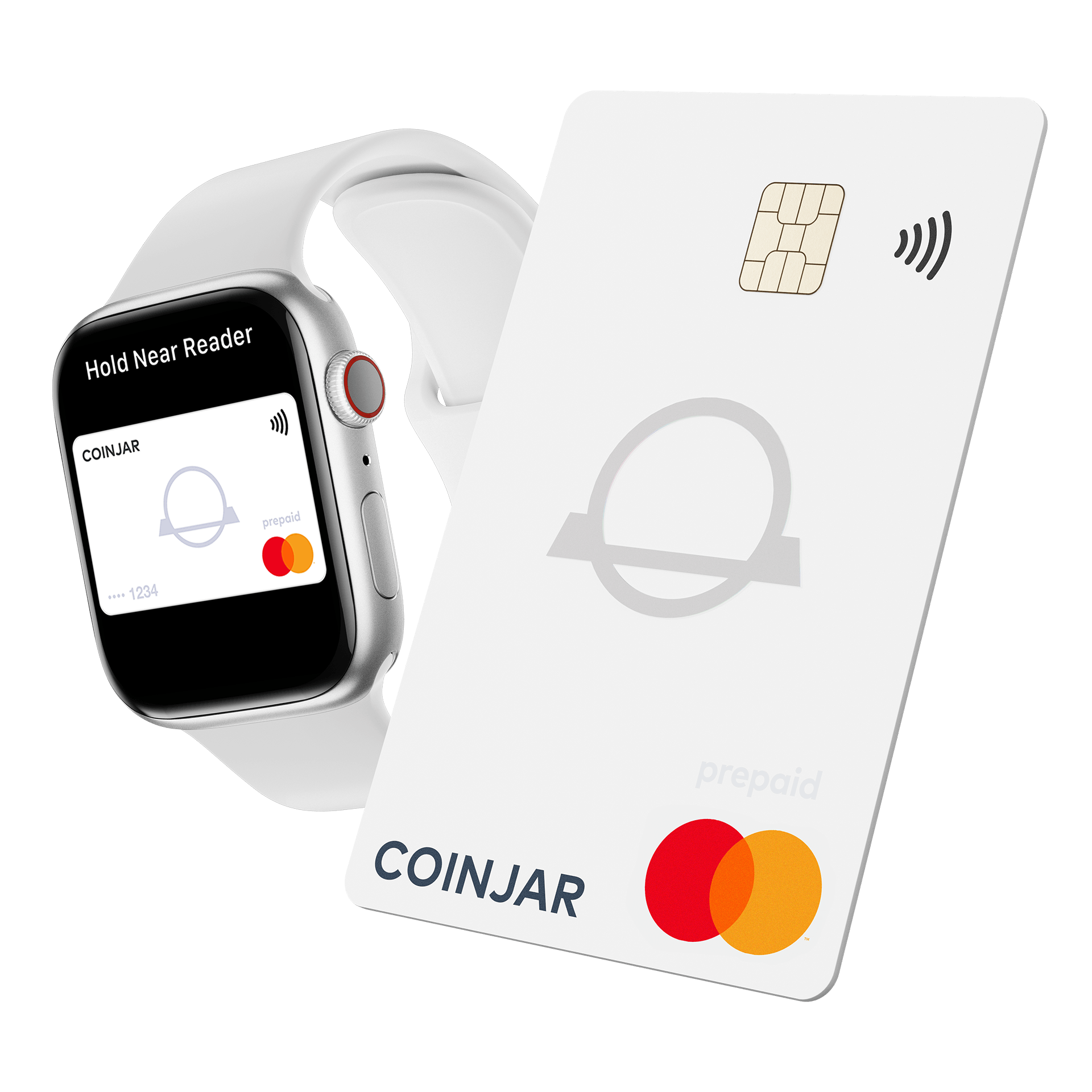
CoinJar Card
Use CoinJar Card, powered by Mastercard, for purchases online and in store, including through Apple Pay and Google Pay. No setup or monthly fee. A 1% purchase fee applies and is returned as CoinJar Rewards points, with one point earned per $1 spent. Available in Australia only.
Get your CoinJar Card for freeCoinJar Card
Use CoinJar Card, powered by Mastercard, for purchases online and in store, including through Apple Pay and Google Pay. No setup or monthly fee. A 1% purchase fee applies and is returned as CoinJar Rewards points, with one point earned per $1 spent. Available in Australia only.
Get your CoinJar Card for free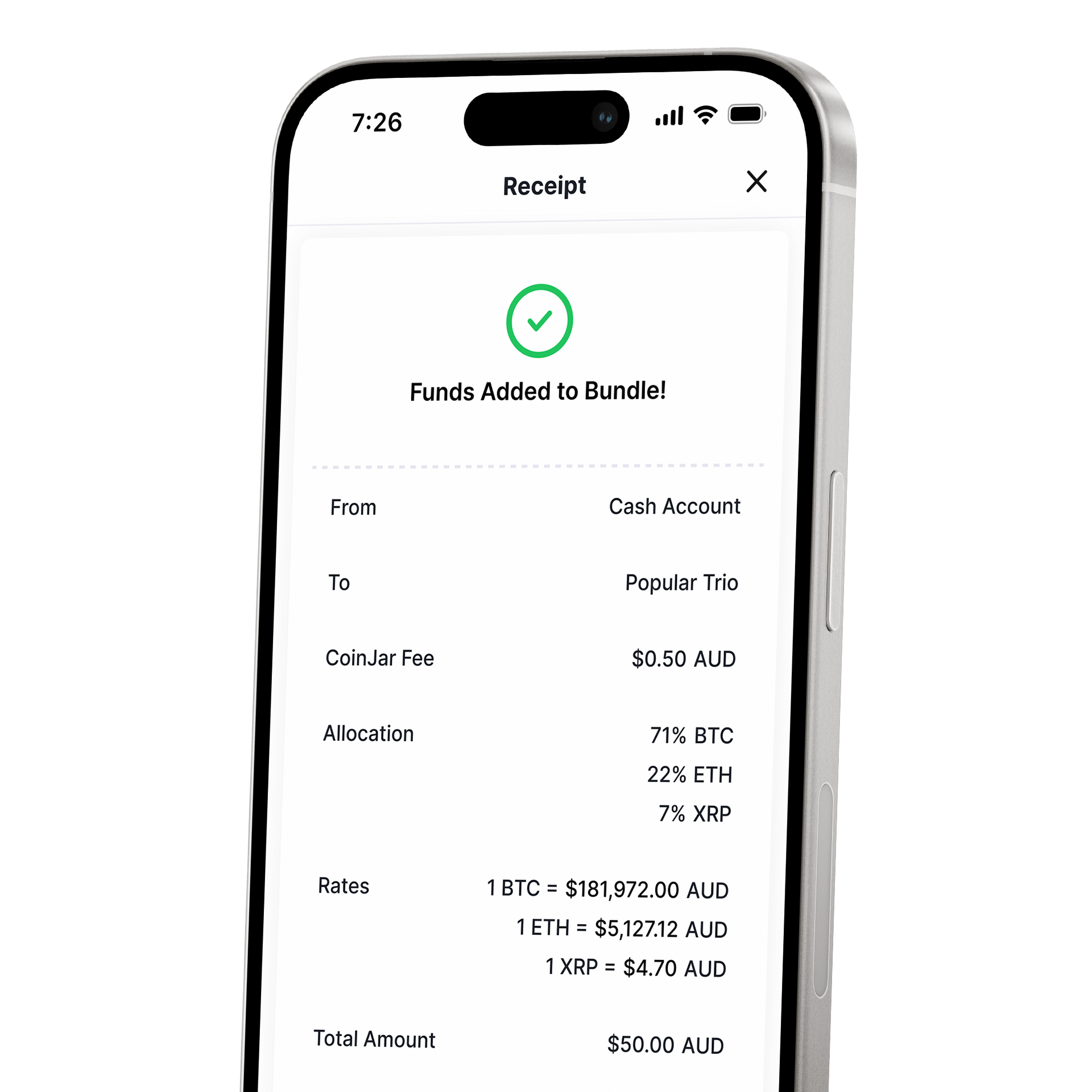
CoinJar Recurring Buy
Schedule automatic purchases weekly, fortnightly or monthly to dollar-cost average into individual cryptocurrencies or CoinJar Bundles. Manage your investment amount and schedule, with the flexibility to adjust or pause purchases as your circumstances change.
DCA with Recurring BuyCoinJar Recurring Buy
Schedule automatic purchases weekly, fortnightly or monthly to dollar-cost average into individual cryptocurrencies or CoinJar Bundles. Manage your investment amount and schedule, with the flexibility to adjust or pause purchases as your circumstances change.
DCA with Recurring Buy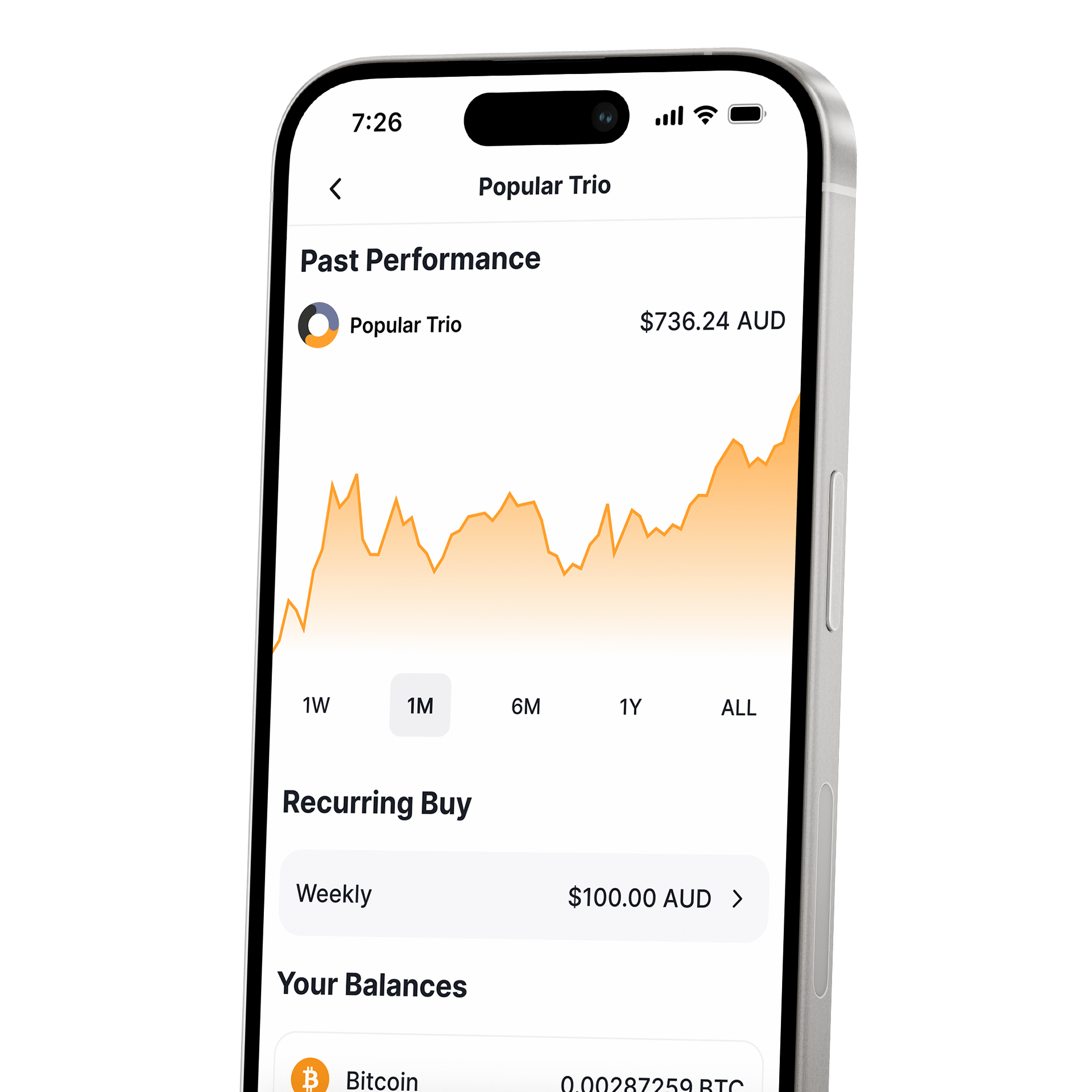
CoinJar Bundles
Pick your Bundle in the CoinJar app. Review each Bundle’s asset allocation, add to your holdings and rebalance when required. Sell your Bundle or unbundle it to manage the assets individually.
Learn moreCoinJar Bundles
Pick your Bundle in the CoinJar app. Review each Bundle’s asset allocation, add to your holdings and rebalance when required. Sell your Bundle or unbundle it to manage the assets individually.
Learn more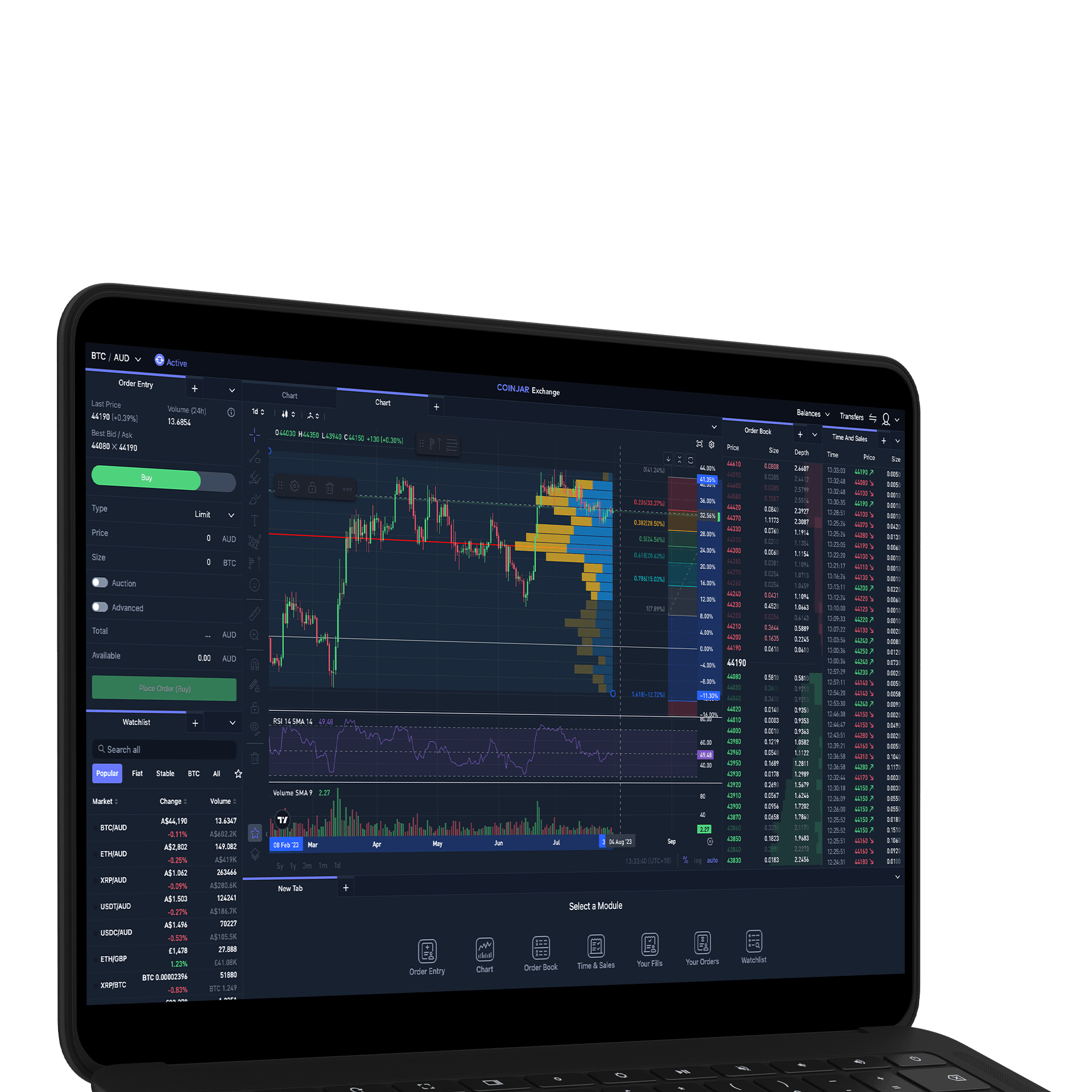
CoinJar Exchange
Trade with fees from 0-0.1%, using market, limit and stop-limit orders. Connect to TradingView to trade directly from your charts, or use CoinJar Exchange’s high-performance interface, built for active traders, market makers and institutions.
Explore CoinJar ExchangeCoinJar Exchange
Trade with fees from 0-0.1%, using market, limit and stop-limit orders. Connect to TradingView to trade directly from your charts, or use CoinJar Exchange’s high-performance interface, built for active traders, market makers and institutions.
Explore CoinJar Exchange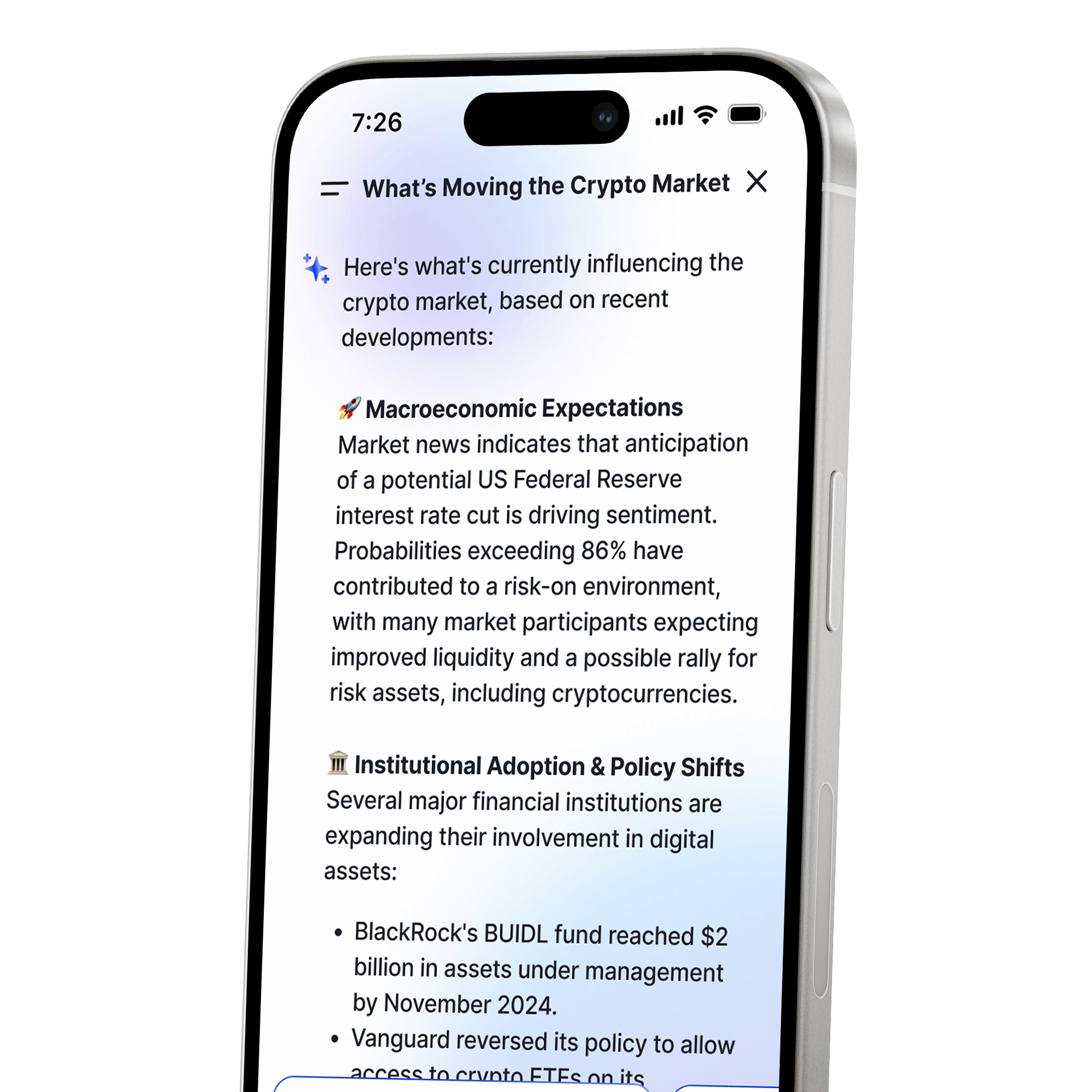
CoinJar AI
Access information about your holdings and the wider cryptocurrency market through CoinJar AI. Ask questions about portfolio changes, market developments or individual cryptocurrencies, with responses informed by your CoinJar holdings.
Learn moreCoinJar AI
Access information about your holdings and the wider cryptocurrency market through CoinJar AI. Ask questions about portfolio changes, market developments or individual cryptocurrencies, with responses informed by your CoinJar holdings.
Learn more
CoinJar OTC
For cryptocurrency trades above $50,000, CoinJar’s OTC desk provides personalised service and access to globally sourced liquidity. Work directly with a dedicated team to arrange and execute your purchase or sale. Discover OTC Services
Learn moreCoinJar OTC
For cryptocurrency trades above $50,000, CoinJar’s OTC desk provides personalised service and access to globally sourced liquidity. Work directly with a dedicated team to arrange and execute your purchase or sale. Discover OTC Services
Learn moreCoinJar does not endorse the content of, and cannot guarantee or verify the safety of any third-party websites. Visit these websites at your own risk.

CoinJar
Get the app.