
Buy Badger DAO
BADGERPast performance is not indicative of future results. All prices are sourced from CoinJar Indices.
What is Badger DAO?
BadgerDAO is a decentralised organisation that set out to make bitcoin useful inside decentralised finance. Bitcoin does not natively run smart contracts, so using it as collateral or to earn yield generally means holding a wrapped version of it on another network, usually Ethereum. Badger built products around that idea, and BADGER is its governance token.
Anyone researching this asset should understand its current state before anything else. Badger's user facing applications have been retired. The project's website states that front end access to eBTC, remBadger and the legacy vaults is no longer provided through badger.com or ebtc.finance, and directs users to interact with the vaults and contracts directly through a block explorer. The contracts remain deployed and the organisation continues as a governance community, but this is a project in a much reduced state rather than one in active expansion. Our guide to decentralised finance covers the wider category, and our guide to Ethereum covers the network Badger was built on.
What BadgerDAO built
Badger launched in late 2020 with a straightforward pitch: bitcoin holders were largely locked out of the yield opportunities appearing across decentralised finance, and Badger would close that gap.
Setts. Automated vaults that took a deposit, ran a yield strategy across other protocols on the depositor's behalf, and compounded the returns. The user got a single deposit and withdrawal instead of managing a set of positions manually. Wrapped bitcoin products. Including an interest bearing representation of bitcoin, which packaged several yield sources into one token. DIGG. A supply elastic token designed to track the price of bitcoin by expanding and contracting the number of tokens held by everyone, rather than by holding reserves. eBTC. A later protocol, launched in 2024, that let users borrow a synthetic bitcoin against staked ether collateral, with no interest charged, relying on the yield from the collateral rather than on borrower fees.
The technical ambition was real. What Badger never solved was durable demand for the products at scale, and the sector it competed in moved quickly.
The December 2021 front end attack
In December 2021 attackers drained roughly one hundred and twenty million dollars in assets from Badger users. It remains one of the largest incidents in decentralised finance, and how it happened is worth understanding because the lesson generalises.
The smart contracts were not broken. The attackers compromised a key belonging to Badger's web infrastructure provider and injected malicious code into the website itself. When users visited what looked like the ordinary Badger application, they were prompted to approve a transaction. Those approvals granted an attacker controlled address permission to move their tokens, and the tokens were taken later.
Badger engaged incident response and blockchain analysis firms, and the DAO subsequently created a dedicated restitution vault funded from its treasury to repay affected users over time.
The general lesson is that in decentralised finance the interface is part of the attack surface. Audited contracts do not protect you from a compromised website, and a token approval you sign can be used long after you sign it. Reviewing and revoking approvals is basic hygiene for anyone interacting with these protocols.
What is BADGER used for?
Governance. BADGER is the voting token for the DAO, with proposals and voting conducted off chain through a signalling platform. Historic staking and boosts. BADGER was used in vault staking and in a boost system that increased rewards for participants, in the period when those vaults were actively promoted. Liquidity in other protocols. BADGER trades in pools on other decentralised exchanges, which is where most of its on chain activity now sits.
There is no proof of stake network here, no gas paid in BADGER, and no automatic distribution of protocol revenue to holders.
Where the project stands now
The honest summary is that Badger has wound down its user facing products while leaving the underlying contracts in place.
The website no longer hosts the interfaces for eBTC, the restitution vault or the legacy vaults, and points users to the contracts directly. A public repository documents the sunset. Governance continues in the sense that the token exists, holders can vote, and treasury assets remain, but the development story that supported the token is not what it was.
For a holder that has two practical consequences. Anyone with funds still in Badger contracts needs to interact with them directly rather than through a familiar website, which requires care and technical confidence. And BADGER's market value now rests on governance rights and speculation rather than on growth in an active product.
Which network is your BADGER on?
BADGER is natively an ERC-20 token on Ethereum, and bridged representations have existed on other networks compatible with the Ethereum Virtual Machine.
Addresses are not interchangeable between networks. Sending BADGER to an address on a network the receiving wallet or exchange does not support is one of the most common ways people permanently lose tokens, and it usually cannot be reversed. Before any transfer, confirm which network the destination expects and make sure the network you are sending from matches. Our guide to sending crypto on the wrong network covers what can and cannot be recovered.
What are the risks of holding BADGER?
A project in retreat. The user-facing products have been retired. A token whose ecosystem is contracting has a weaker case than one whose ecosystem is growing, and that is the single most important fact here. No revenue to holders. BADGER pays nothing. Its function is a governance vote over an organisation with reduced activity. Liquidity risk. Trading venues review low volume assets, and some have wound down BADGER markets. Thin liquidity means larger price impact when buying or selling, and fewer places to do it. Front end and approval risk. Badger's history is the clearest example in the sector of an attack that bypassed the contracts entirely. Anyone interacting with the remaining contracts should be extremely careful about what they sign. Smart contract risk. Contracts left running without an active team and interface still carry risk, and receive less ongoing attention. Governance risk. Voting is token weighted, participation in a quiet organisation tends to be very low, and treasury decisions can be carried by a small group. Extreme volatility. BADGER has fallen very heavily from its earlier highs and can move sharply in both directions on little volume. No consumer protection. Crypto assets are high risk, your capital is at risk, and BADGER is not a financial product covered by the Australian Government's Financial Claims Scheme. You should be prepared to lose the money you put in.
Buying BADGER with Australian dollars on CoinJar
CoinJar has operated since 2013 and lists BADGER against Australian dollars, so you can buy, sell and hold it without converting through another cryptocurrency first. Current charges are on our fees page, and live Australian dollar rates are on our cryptocurrency prices page.
CoinJar Australia Pty Ltd is registered with AUSTRAC as a digital currency exchange provider, Registration Number DCE100749118-001.
How is BADGER taxed in Australia?
The ATO generally treats BADGER as a capital gains tax asset. A CGT event can occur when you sell it for Australian dollars, exchange it for another cryptocurrency, spend it or give it away.
The ATO explains these rules on its crypto asset investments guidance page. Our guide to crypto tax in Australia provides a practical overview. This is general information, not tax advice. Consider speaking to a registered tax agent about your circumstances.
Fund Your Account Your Way
Buy Badger DAO instantly using Visa or Mastercard, or deposit Australian dollars via bank transfer, PayID or PayPal. Buy, sell and convert between supported cryptocurrencies through your CoinJar account.


How to buy Badger DAO with CoinJar
Start your portfolio with Australia's longest-running crypto exchange with these simple steps.
Sign up to CoinJar
Get the CoinJar app on iOS or Android, create an account and verify your ID.
Deposit funds
Deposit AUD fee-free via PayID, Osko or bank transfer. You can also use PayPal or pay instantly by card.
Buy your first crypto
Buy Badger DAO and other popular cryptos using cash or credit card in minutes.




CoinJar Card
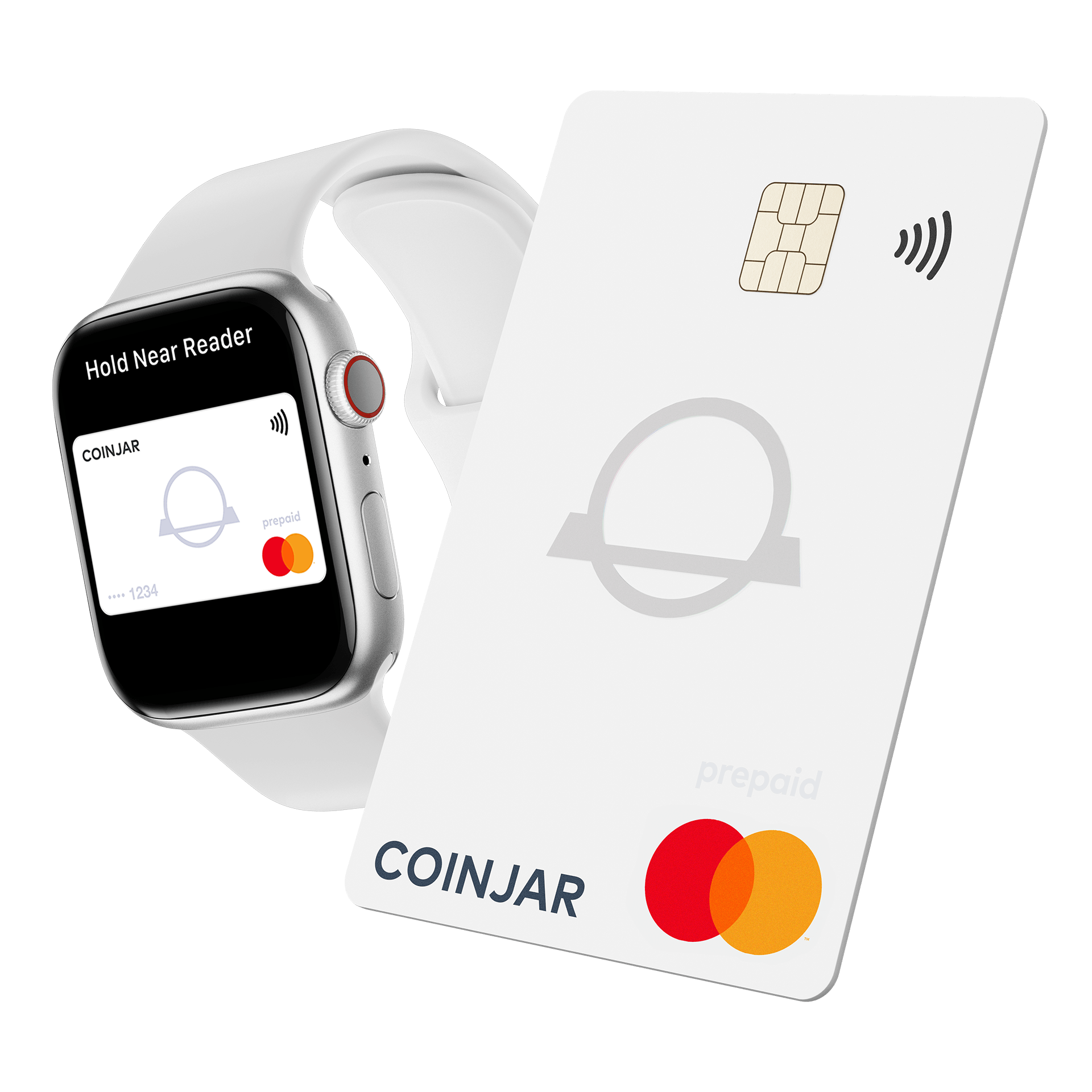
Use CoinJar Card, powered by Mastercard, for purchases online and in store, including through Apple Pay and Google Pay. No setup or monthly fee. A 1% purchase fee applies and is returned as CoinJar Rewards points, with one point earned per $1 spent. Available in Australia only.
Get your CoinJar Card for freeCoinJar Card
Use CoinJar Card, powered by Mastercard, for purchases online and in store, including through Apple Pay and Google Pay. No setup or monthly fee. A 1% purchase fee applies and is returned as CoinJar Rewards points, with one point earned per $1 spent. Available in Australia only.
Get your CoinJar Card for free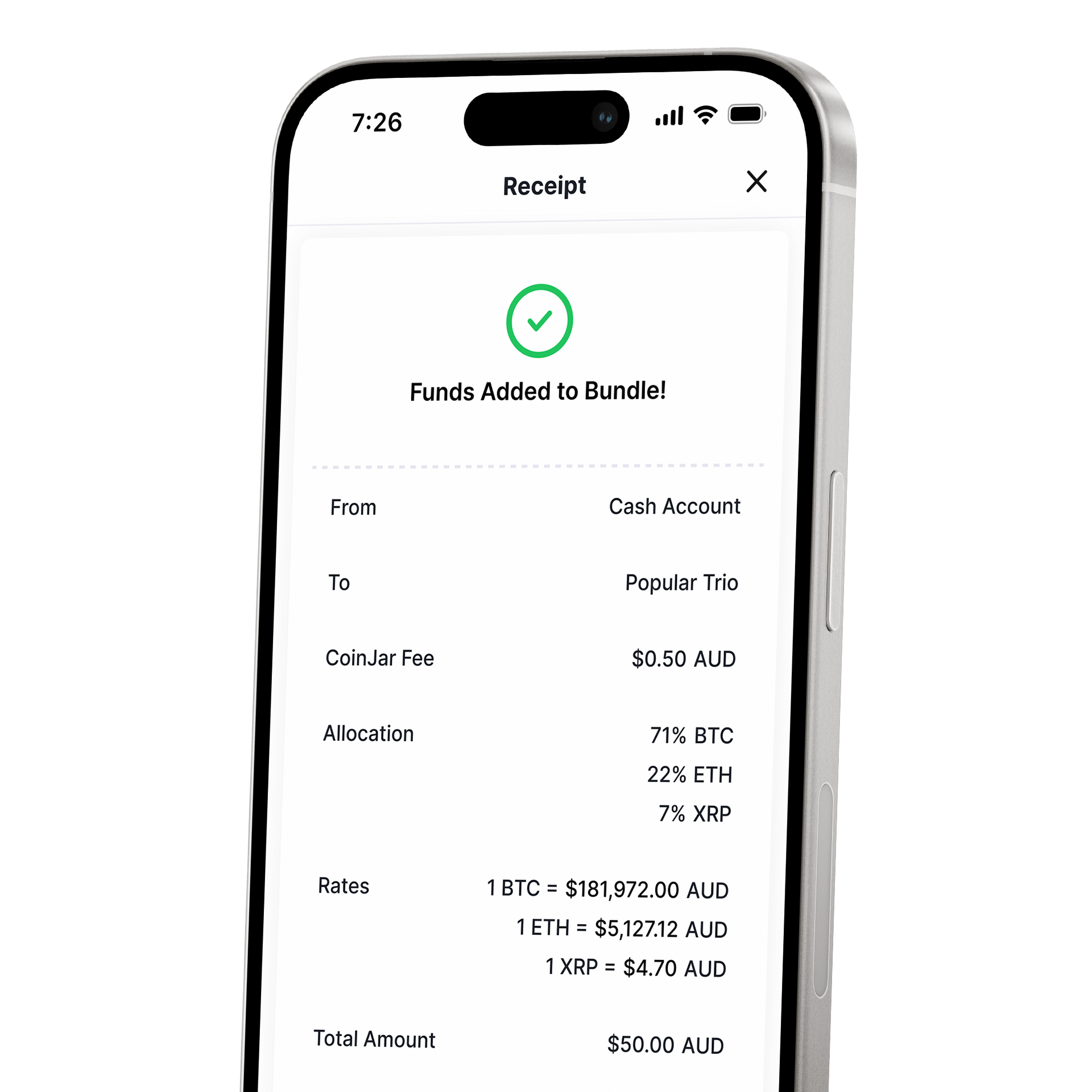
CoinJar Recurring Buy
Schedule automatic purchases weekly, fortnightly or monthly to dollar-cost average into individual cryptocurrencies or CoinJar Bundles. Manage your investment amount and schedule, with the flexibility to adjust or pause purchases as your circumstances change.
DCA with Recurring BuyCoinJar Recurring Buy
Schedule automatic purchases weekly, fortnightly or monthly to dollar-cost average into individual cryptocurrencies or CoinJar Bundles. Manage your investment amount and schedule, with the flexibility to adjust or pause purchases as your circumstances change.
DCA with Recurring Buy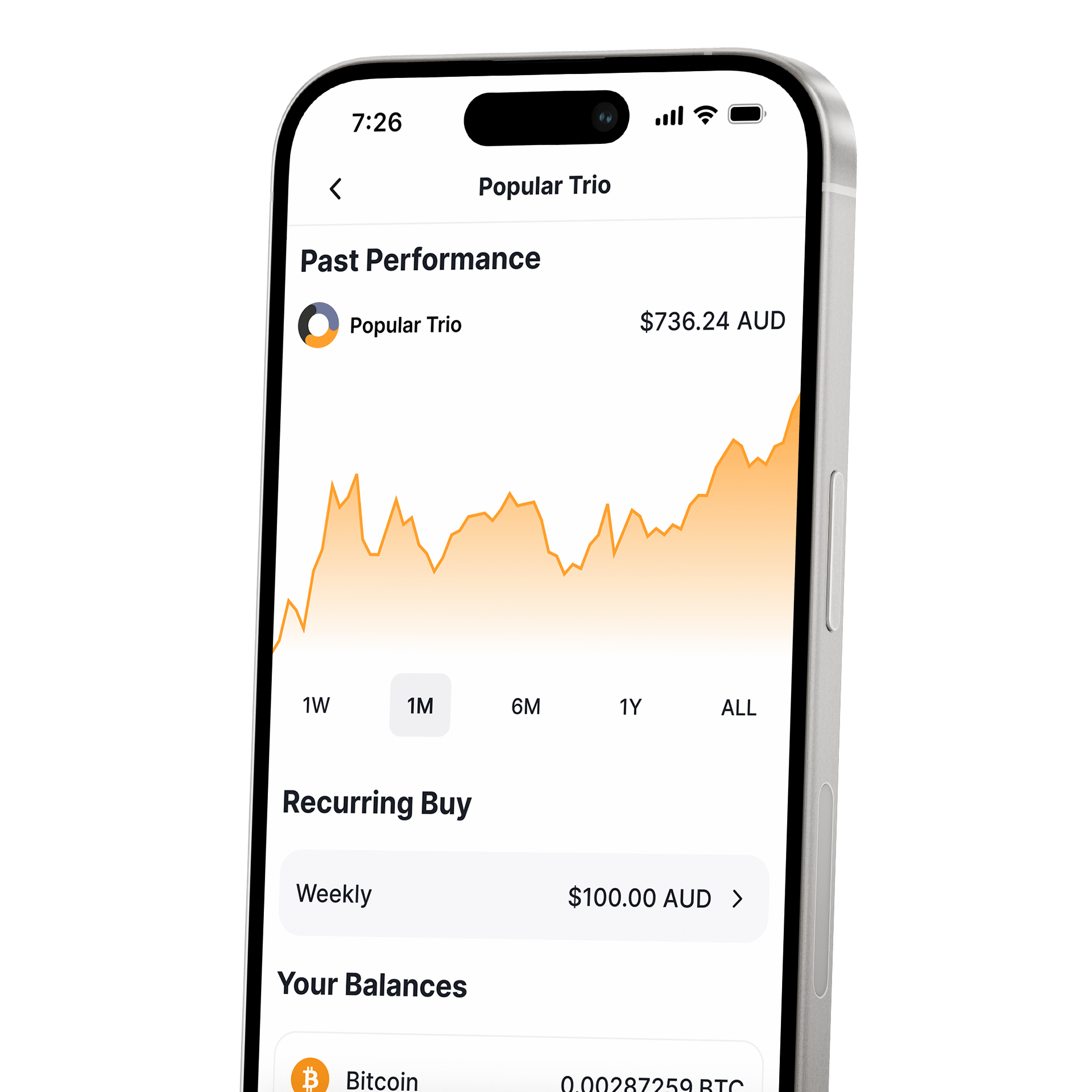
CoinJar Bundles
Pick your Bundle in the CoinJar app. Review each Bundle’s asset allocation, add to your holdings and rebalance when required. Sell your Bundle or unbundle it to manage the assets individually.
Learn moreCoinJar Bundles
Pick your Bundle in the CoinJar app. Review each Bundle’s asset allocation, add to your holdings and rebalance when required. Sell your Bundle or unbundle it to manage the assets individually.
Learn more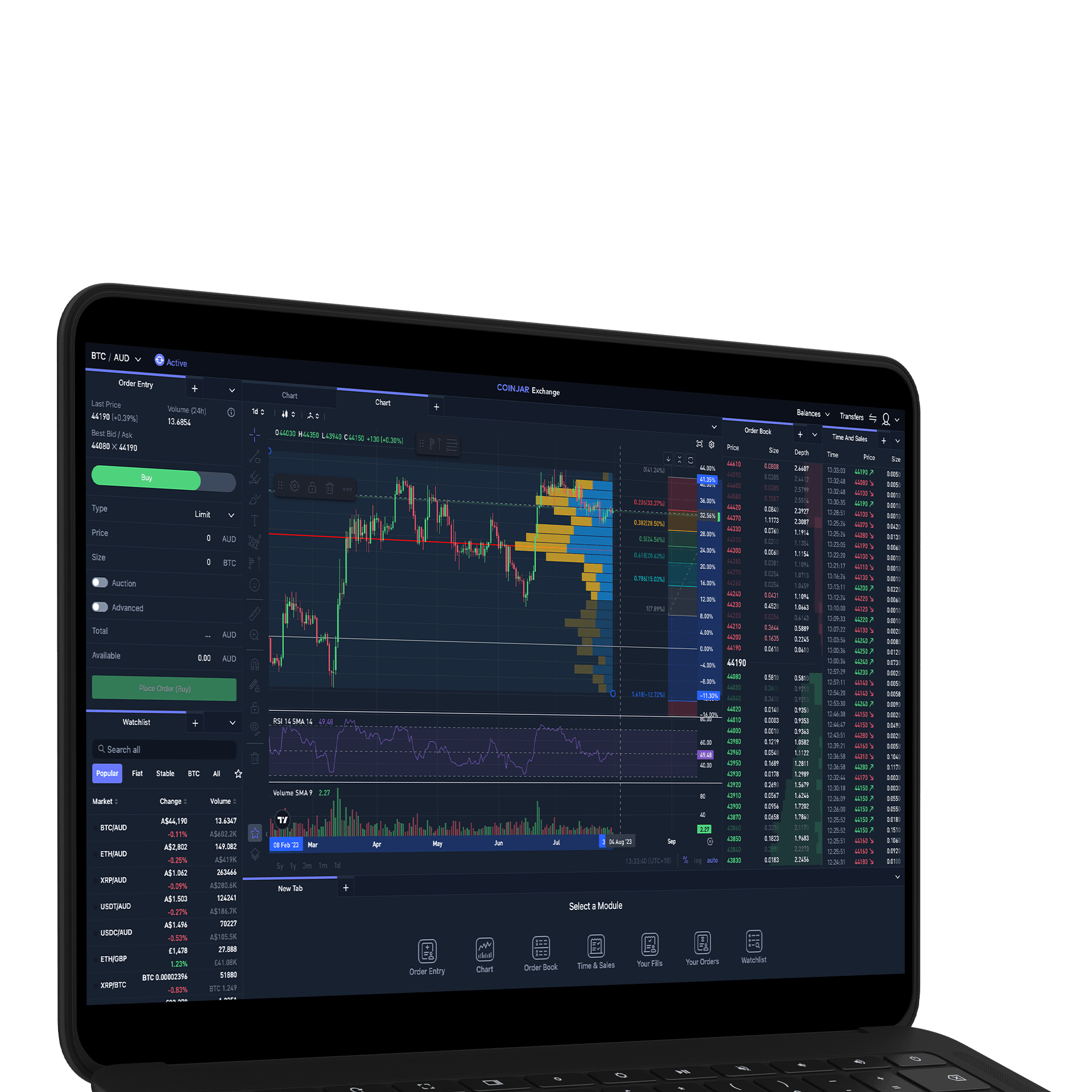
CoinJar Exchange
Trade with fees from 0-0.1%, using market, limit and stop-limit orders. Connect to TradingView to trade directly from your charts, or use CoinJar Exchange’s high-performance interface, built for active traders, market makers and institutions.
Explore CoinJar ExchangeCoinJar Exchange
Trade with fees from 0-0.1%, using market, limit and stop-limit orders. Connect to TradingView to trade directly from your charts, or use CoinJar Exchange’s high-performance interface, built for active traders, market makers and institutions.
Explore CoinJar Exchange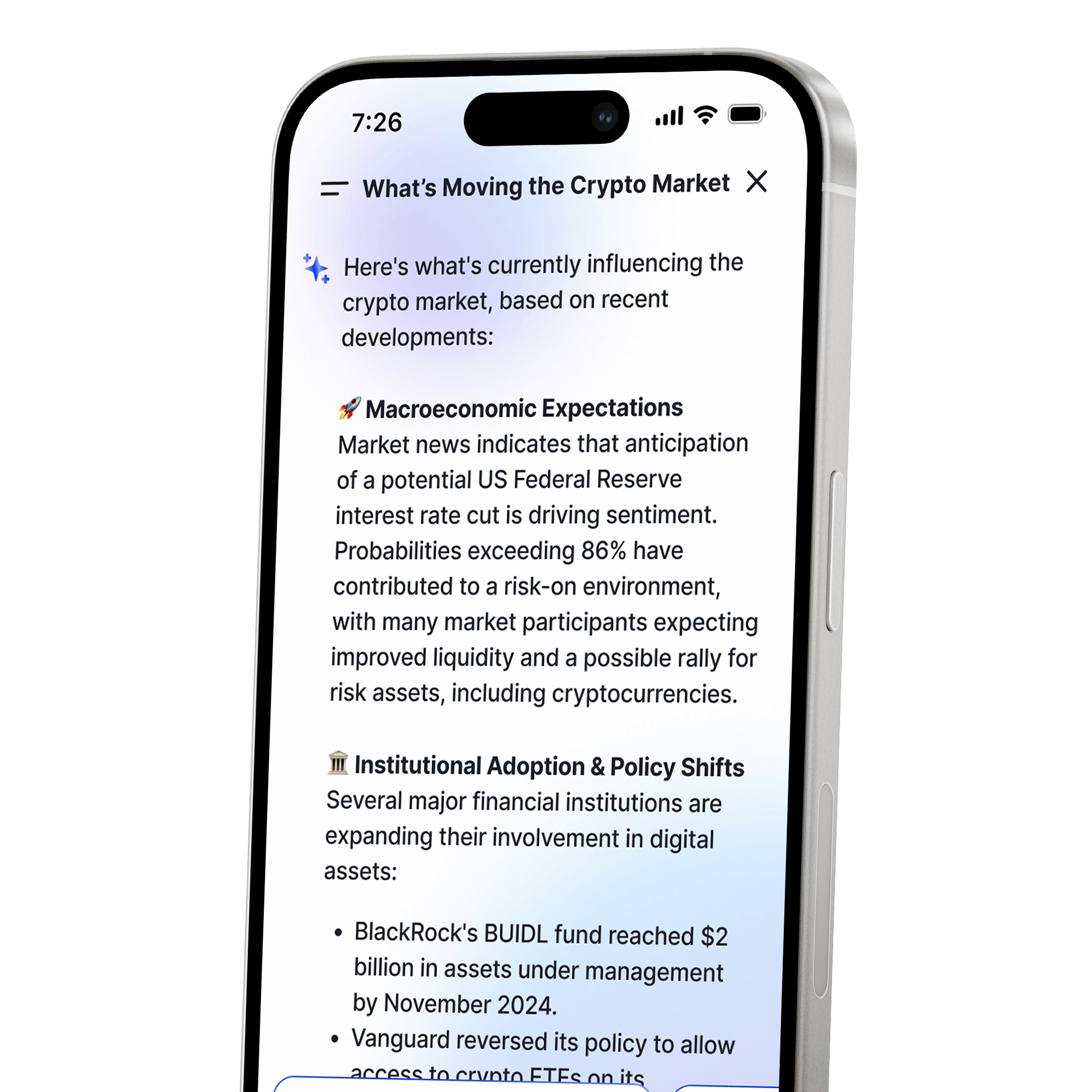
CoinJar AI
Access information about your holdings and the wider cryptocurrency market through CoinJar AI. Ask questions about portfolio changes, market developments or individual cryptocurrencies, with responses informed by your CoinJar holdings.
Learn moreCoinJar AI
Access information about your holdings and the wider cryptocurrency market through CoinJar AI. Ask questions about portfolio changes, market developments or individual cryptocurrencies, with responses informed by your CoinJar holdings.
Learn more
CoinJar OTC
For cryptocurrency trades above $50,000, CoinJar’s OTC desk provides personalised service and access to globally sourced liquidity. Work directly with a dedicated team to arrange and execute your purchase or sale. Discover OTC Services
Learn moreCoinJar OTC
For cryptocurrency trades above $50,000, CoinJar’s OTC desk provides personalised service and access to globally sourced liquidity. Work directly with a dedicated team to arrange and execute your purchase or sale. Discover OTC Services
Learn moreCoinJar does not endorse the content of, and cannot guarantee or verify the safety of any third-party websites. Visit these websites at your own risk.

CoinJar
Get the app.