
Buy Biconomy
BICOPast performance is not indicative of future results. All prices are sourced from CoinJar Indices.
What is Biconomy?
Biconomy builds software that hides the awkward parts of using blockchains. Its tools let an app sponsor transaction fees, accept fees in a token other than the network's native asset, create programmable smart accounts and combine several onchain actions into one signed instruction.
BICO is the token created for Biconomy's proposed decentralised network and governance. The important distinction in 2026 is that Biconomy's products are active, but the current developer documentation does not require BICO to use them. The company has moved from gasless relayers and a bridge towards smart accounts and an execution layer, while the token's promised network role remains much less developed. Our guide to Ethereum covers the network BICO was issued on, and our guide to altcoins explains where tokens like BICO sit relative to Bitcoin.
What problem is Biconomy trying to solve?
An ordinary blockchain transaction asks the user to manage a wallet, hold the correct gas token, approve several prompts and understand which network they are on. A single action can fail halfway through a longer sequence, leaving the user to work out what happened.
Biconomy sells infrastructure that lets developers move those problems into the application layer.
Gas sponsorship. An app can pay a user's transaction fee through a paymaster, making the interaction feel more like a conventional online service. Paying gas in tokens. A user can pay an execution fee in a supported token rather than separately buying ETH or another network's native asset. Smart accounts. Programmable accounts can batch calls, set spending limits, use passkeys and give narrowly defined permissions to another signer. Orchestration. A developer can package several instructions, potentially across networks, into one flow rather than asking the user to sign every step separately.
These features do not make the underlying blockchains disappear. Transactions still settle on their respective networks, and the contracts, relayers and applications coordinating them add another layer of risk.
Where did Biconomy come from?
Biconomy was founded in 2019 by Ahmed Al-Balaghi, Sachin Tomar and Aniket Jindal. Its first products focused on meta-transactions, where a relayer submits a transaction for a user and somebody else pays the gas.
The project later raised venture funding and launched BICO in 2021. One billion tokens were created for allocations including the community, treasury, team, advisers, early backers and public sale. The supply is described as fixed at that level rather than governed by an ongoing protocol inflation schedule.
Biconomy should not be confused with the unrelated cryptocurrency exchange using the Biconomy name and a different website. The infrastructure project covered here operates at biconomy.io.
What does Biconomy offer in 2026?
Biconomy now describes itself as a universal execution layer. Its current stack has several connected parts.
Nexus. A modular smart account built around the ERC-7579 standard. Developers can add validation methods, spending controls, session keys and other modules without replacing the whole account.
Modular Execution Environment. Usually shortened to MEE, this is Biconomy's orchestration layer. It turns a user's signed intent into one or more coordinated transactions and can handle steps that depend on one another.
Supertransactions. Biconomy's name for bundled execution flows. A supertransaction might approve a token, swap it, bridge the result and deposit it elsewhere under one user instruction.
Smart Sessions. Delegated permissions with limits on contracts, functions, amounts, networks or time. They are designed for automation and software agents without handing them unrestricted control of a wallet.
Paymasters and bundlers. Infrastructure based on Ethereum's account abstraction standards. Paymasters can sponsor fees or accept supported tokens, while bundlers package user operations for inclusion onchain.
Biconomy provides current Nexus documentation and a migration path for older accounts. The products are real, but descriptions of seamless cross-chain execution and autonomous agents still depend on integrations, supported networks and offchain services working as intended.
What happened to Mexa, Hyphen and the old SDKs?
Biconomy's product has changed enough that older summaries are often misleading.
Mexa and the Gasless SDK. These were the original relayer and meta-transaction products. Current integrations are directed towards account abstraction, paymasters, Nexus and MEE rather than Mexa.
Forward. An earlier method for letting people pay gas in ERC-20 tokens. Current paymaster and execution infrastructure serves the same broad goal through a different architecture.
Hyphen. Biconomy's bridge used liquidity pools and relayers to move assets quickly between networks. It is now described by major protocol trackers as deprecated and is no longer a central product in Biconomy's current documentation.
Smart Account V2. Nexus is the successor architecture. Biconomy provides a migration guide intended to preserve the smart account's address, balances and history. The guide does not state a mandatory migration deadline, so describing every V2 account as shut down would go too far.
This history matters because Biconomy has repeatedly replaced its architecture. A developer or token holder cannot assume that today's flagship product will remain the preferred integration indefinitely.
What does BICO actually do?
The original token design gave BICO three roles.
Network security. Executors and validators in a proposed Biconomy Network would stake BICO, earn fees and risk penalties for incorrect behaviour. Fees and incentives. BICO would be used to pay network participants and align relayers, applications and users. Governance. Holders would vote on network and treasury decisions.
That description is still repeated on token information pages, but it does not match the clearest current product reality.
Biconomy's current documentation does not say that a developer needs BICO to create a Nexus account, call an API, use a paymaster, submit through a bundler or execute through MEE. Fee examples use ordinary supported assets such as stablecoins. There is also no documented mechanism automatically distributing Biconomy's commercial API revenue to BICO holders.
I found no live token migration, ticker change, burn, buyback or approved 2025 to 2026 tokenomics overhaul. BICO has not been discontinued, but its relationship to the products is optional or prospective rather than compulsory.
Is there a Biconomy Network secured by BICO?
Biconomy has described a permissionless execution network in which operators coordinate and verify user intents across chains. In that model, BICO staking would provide economic security and operators could be penalised for failing to perform correctly.
The current product documentation is much clearer about managed APIs, Nexus accounts and MEE execution than it is about a mature, permissionless network secured by BICO. It does not establish that every MEE instruction is validated by an open BICO staking set or that every fee flows through the token.
The honest way to treat the network is as an architectural direction whose decentralised token layer is not yet demonstrated as the default production path. Biconomy can deliver useful software before that network exists at scale, but success for the software does not automatically create demand for BICO.
Who controls Biconomy?
Biconomy is developed and operated by a private company and core team. They control the hosted infrastructure, commercial relationships, product roadmap and releases.
BICO was also created as a governance token, and holders have used offchain voting for community and treasury proposals. Token voting does not control every API, server or smart contract upgrade, and activity has been far less visible than product development.
Smart accounts and paymasters can contain upgrade or administrative mechanisms chosen by the application deploying them. The exact control structure therefore depends on which Biconomy contracts and services an app uses, not merely on holding BICO.
For a buyer, the practical dependency is the team. Biconomy's current direction, including which legacy products are maintained and how MEE is commercialised, comes from the company rather than from routine token-holder votes.
Security and regulatory position
Biconomy's contracts have been reviewed by external auditors, and its open-source repositories allow inspection. That does not remove the risks created by smart-account modules, session permissions, paymasters and cross-chain instructions. A small error in a permission policy can be as damaging as a flaw in the account itself.
No material exploit of Biconomy's current core contracts resulting in a publicly documented protocol loss was identified in the sources reviewed for this page. That should not be read as proof that the system is safe. Legacy contracts, applications integrating the SDK and third party bridges have their own risk surfaces.
BICO was not among the crypto assets named as digital commodities in the joint interpretation published by the United States Securities and Exchange Commission and Commodity Futures Trading Commission on 17 March 2026. That is not a finding against BICO. It means the asset was not addressed either way.
What are the risks of holding BICO?
Weak product-token connection. Biconomy's current products do not require customers or developers to buy BICO, and commercial revenue does not automatically flow to holders. Unfinished network utility. The staking and operator model described in the original token design is not clearly the default security layer for current MEE activity. Product transition risk. Mexa, Forward, Hyphen and older smart accounts have been replaced or deprioritised. Current products can also be superseded. Company dependence. A private company controls the hosted services, integrations and product roadmap. BICO holders do not manage the business. Governance limitations. Token voting can influence selected community matters but does not necessarily control contracts, APIs or emergency decisions. Smart-account risk. Programmable accounts, modules and session keys create powerful capabilities. Incorrect permissions or compromised signers can expose funds. Cross-chain risk. A supertransaction may depend on several networks, bridges, solvers and offchain services. Failure at any stage can delay execution or produce an unexpected result. Competition. Safe, Pimlico, ZeroDev, Gelato, Alchemy, thirdweb and wallet providers offer overlapping account-abstraction infrastructure. Ethereum's own account improvements can also reduce the value of proprietary layers. Adoption risk. Developers can test Biconomy without making it a permanent part of their product. Integrations are easier to announce than to retain. Supply concentration. Team, treasury and early-backer allocations can create selling pressure as restrictions end or holders change strategy. Liquidity. BICO trades thinly compared with major assets, which can widen spreads and increase the cost of getting out. Volatility. BICO is not a stablecoin. Its value moves sharply and can fall substantially. No consumer protection. Crypto assets are not covered by the Australian Government's Financial Claims Scheme, and AUSTRAC registration is not an endorsement of any asset listed on an exchange. You should be prepared to lose the money you put in.
Buying BICO with Australian dollars on CoinJar
CoinJar has operated since 2013 and lists BICO against Australian dollars, so you can buy, sell and hold it without converting through another cryptocurrency first. Current charges are on our fees page, and live Australian dollar rates are on our cryptocurrency prices page.
CoinJar Australia Pty Ltd is registered with AUSTRAC as a digital currency exchange provider, Registration Number DCE100749118-001.
How is BICO taxed in Australia?
The ATO generally treats BICO as a capital gains tax asset. A disposal can occur when you sell it for Australian dollars, trade it for another crypto asset, spend it or give it away.
The ATO sets out its approach in its crypto asset investments guidance. Our guide to crypto tax in Australia provides a practical overview. This is general information, not tax advice. Consider speaking to a qualified tax adviser about your circumstances.
Fund Your Account Your Way
Buy Biconomy instantly using Visa or Mastercard, or deposit Australian dollars via bank transfer, PayID or PayPal. Buy, sell and convert between supported cryptocurrencies through your CoinJar account.


How to buy Biconomy with CoinJar
Start your portfolio with Australia's longest-running crypto exchange with these simple steps.
Sign up to CoinJar
Get the CoinJar app on iOS or Android, create an account and verify your ID.
Deposit funds
Deposit AUD fee-free via PayID, Osko or bank transfer. You can also use PayPal or pay instantly by card.
Buy your first crypto
Buy Biconomy and other popular cryptos using cash or credit card in minutes.




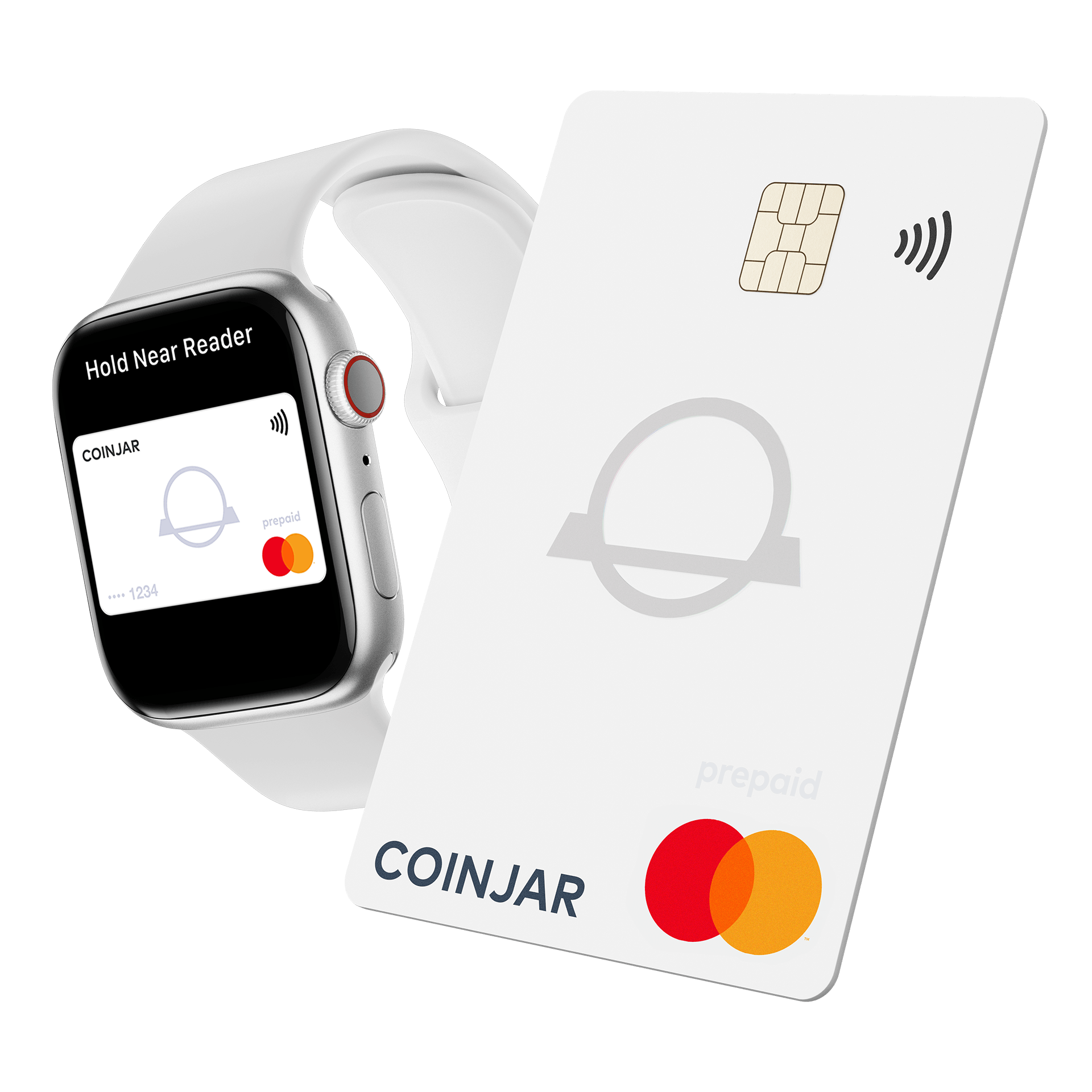
CoinJar Card
Use CoinJar Card, powered by Mastercard, for purchases online and in store, including through Apple Pay and Google Pay. No setup or monthly fee. A 1% purchase fee applies and is returned as CoinJar Rewards points, with one point earned per $1 spent. Available in Australia only.
Get your CoinJar Card for freeCoinJar Card
Use CoinJar Card, powered by Mastercard, for purchases online and in store, including through Apple Pay and Google Pay. No setup or monthly fee. A 1% purchase fee applies and is returned as CoinJar Rewards points, with one point earned per $1 spent. Available in Australia only.
Get your CoinJar Card for free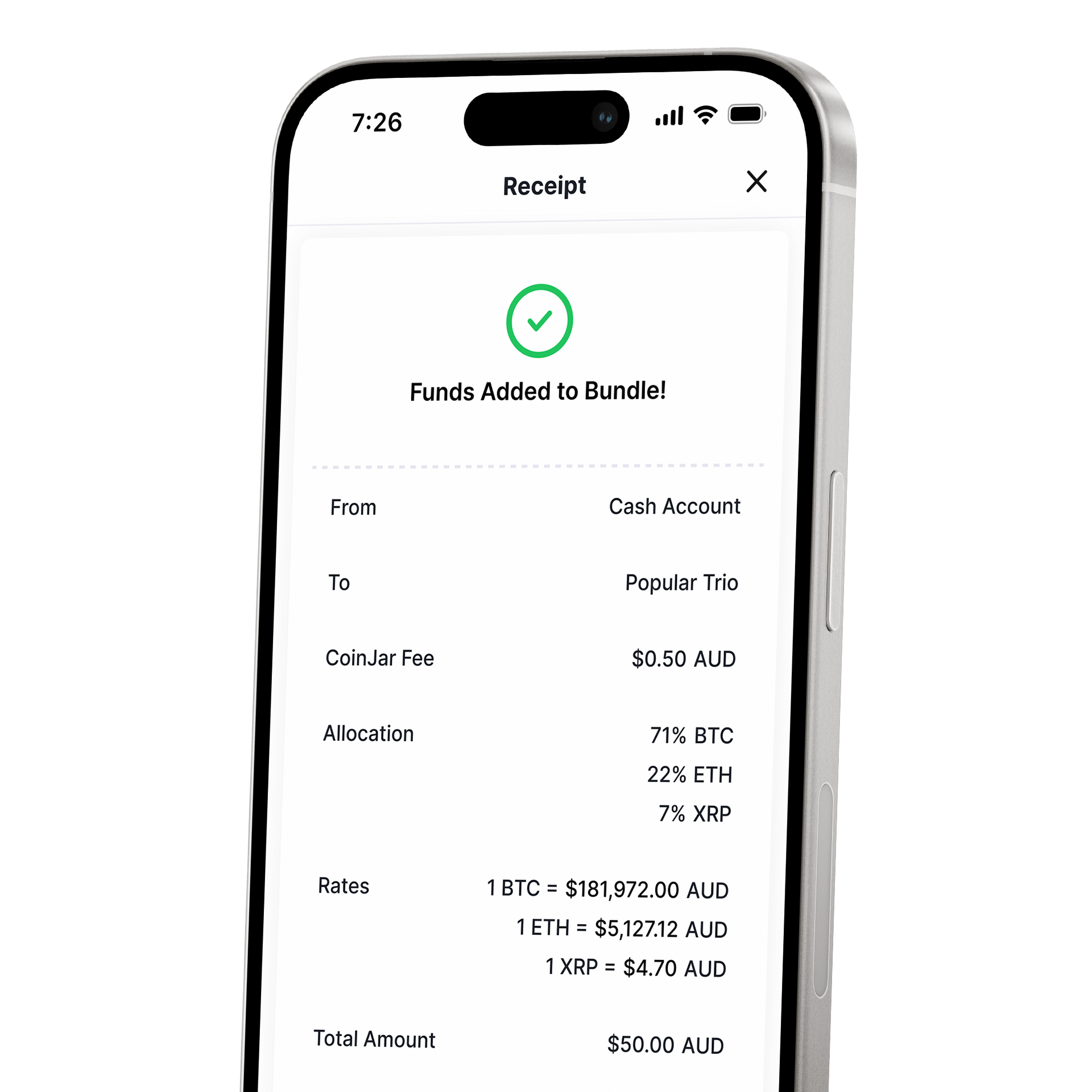
CoinJar Recurring Buy
Schedule automatic purchases weekly, fortnightly or monthly to dollar-cost average into individual cryptocurrencies or CoinJar Bundles. Manage your investment amount and schedule, with the flexibility to adjust or pause purchases as your circumstances change.
DCA with Recurring BuyCoinJar Recurring Buy
Schedule automatic purchases weekly, fortnightly or monthly to dollar-cost average into individual cryptocurrencies or CoinJar Bundles. Manage your investment amount and schedule, with the flexibility to adjust or pause purchases as your circumstances change.
DCA with Recurring Buy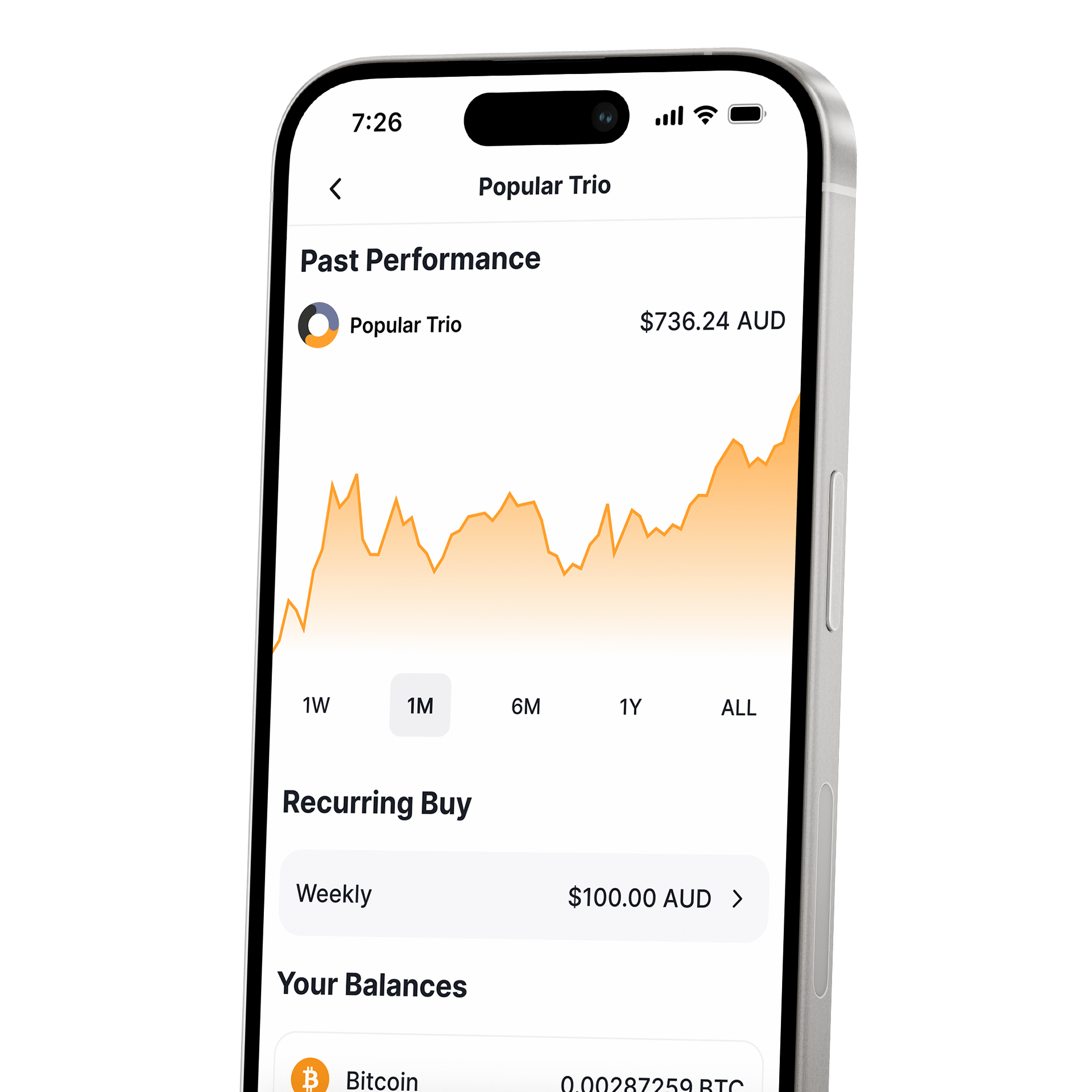
CoinJar Bundles
Pick your Bundle in the CoinJar app. Review each Bundle’s asset allocation, add to your holdings and rebalance when required. Sell your Bundle or unbundle it to manage the assets individually.
Learn moreCoinJar Bundles
Pick your Bundle in the CoinJar app. Review each Bundle’s asset allocation, add to your holdings and rebalance when required. Sell your Bundle or unbundle it to manage the assets individually.
Learn more
CoinJar Exchange
Trade with fees from 0-0.1%, using market, limit and stop-limit orders. Connect to TradingView to trade directly from your charts, or use CoinJar Exchange’s high-performance interface, built for active traders, market makers and institutions.
Explore CoinJar ExchangeCoinJar Exchange
Trade with fees from 0-0.1%, using market, limit and stop-limit orders. Connect to TradingView to trade directly from your charts, or use CoinJar Exchange’s high-performance interface, built for active traders, market makers and institutions.
Explore CoinJar Exchange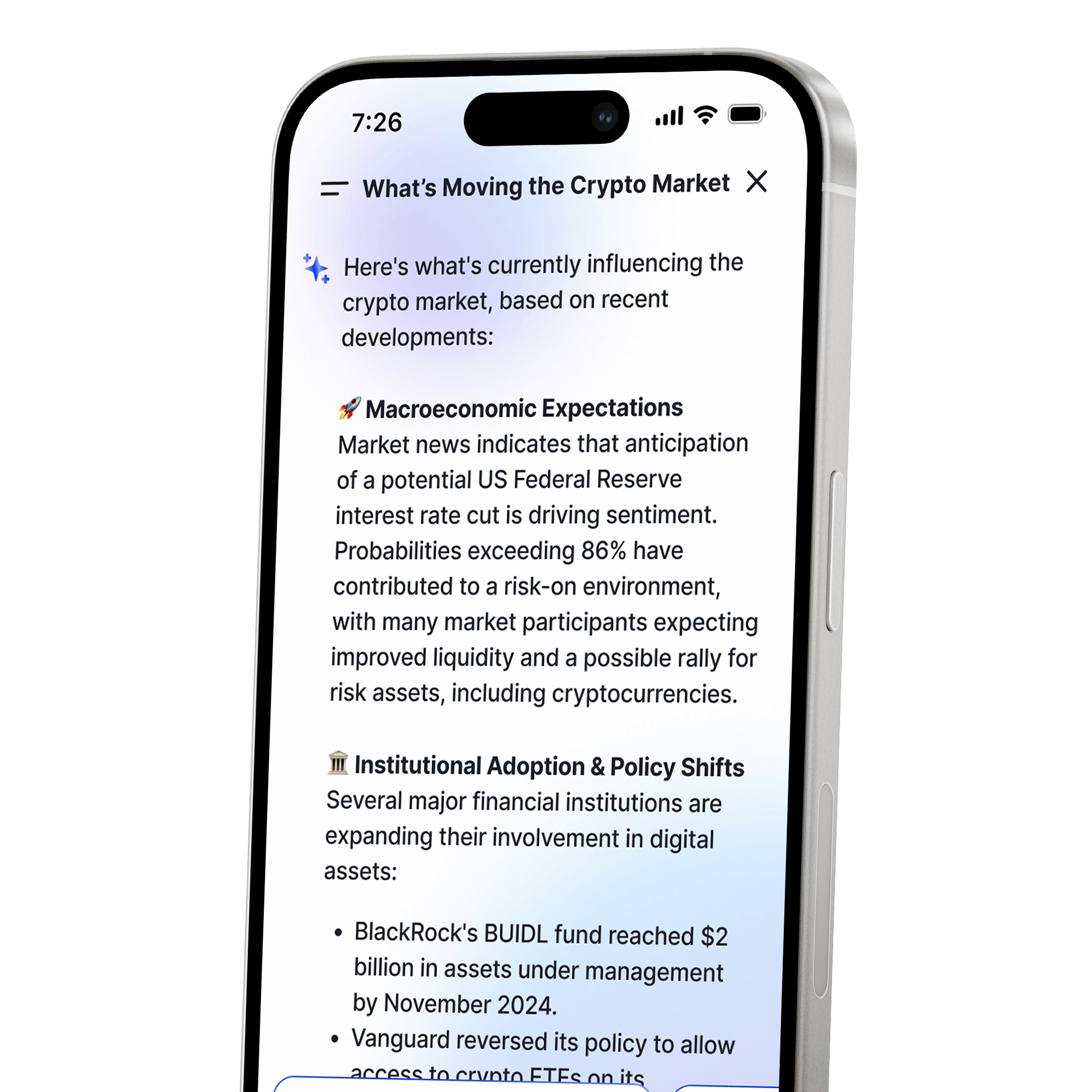
CoinJar AI
Access information about your holdings and the wider cryptocurrency market through CoinJar AI. Ask questions about portfolio changes, market developments or individual cryptocurrencies, with responses informed by your CoinJar holdings.
Learn moreCoinJar AI
Access information about your holdings and the wider cryptocurrency market through CoinJar AI. Ask questions about portfolio changes, market developments or individual cryptocurrencies, with responses informed by your CoinJar holdings.
Learn more
CoinJar OTC
For cryptocurrency trades above $50,000, CoinJar’s OTC desk provides personalised service and access to globally sourced liquidity. Work directly with a dedicated team to arrange and execute your purchase or sale. Discover OTC Services
Learn moreCoinJar OTC
For cryptocurrency trades above $50,000, CoinJar’s OTC desk provides personalised service and access to globally sourced liquidity. Work directly with a dedicated team to arrange and execute your purchase or sale. Discover OTC Services
Learn moreCoinJar does not endorse the content of, and cannot guarantee or verify the safety of any third-party websites. Visit these websites at your own risk.

CoinJar
Get the app.