
Buy Optimism
OPPast performance is not indicative of future results. All prices are sourced from CoinJar Indices.
What is Optimism?
Optimism is a layer two network that runs on top of Ethereum. It processes transactions on its own chain and posts the data back to Ethereum, so Ethereum remains the place where the record ultimately settles. For the user, that means faster and cheaper transactions than Ethereum alone, using the same wallets, addresses and contract code.
Two things about the asset are routinely misunderstood. Transaction fees on Optimism are paid in ETH, not in OP. And "Optimism" now describes two related things: OP Mainnet, the chain itself, and the OP Stack, the open source software other companies use to launch chains of their own. Our guide to blockchain layers explains where networks like this sit, and our guide to Ethereum covers the network Optimism settles to.
How does Optimism work?
Optimism is an optimistic rollup. The name describes the security model rather than the mood.
A component called the sequencer receives transactions, orders them and produces a new block every two seconds, which is why the network feels immediate. Those transactions are then compressed and published to Ethereum as blob data, so the information needed to reconstruct the chain lives on Ethereum rather than with the operator.
Alongside the data, commitments to the resulting state are posted to Ethereum without an accompanying proof that they are correct. That is the optimistic part. Each commitment can be disputed by anyone during a challenge window of about a week, and an incorrect commitment can be removed through an onchain dispute game. Permissionless fault proofs went live on OP Mainnet in June 2024, which means challenging no longer depends on a whitelist. The Optimism documentation sets out how the pieces fit together.
The practical consequence is that Optimism does not have its own validator set and does not need one. It borrows Ethereum's data availability and its settlement, and adds a dispute process on top.
What is the OP token for?
OP is a governance token. That is the whole of its protocol role, and it is worth being blunt about it.
It is not the gas token. Fees on OP Mainnet are paid in ETH. The fee covers execution on the layer two plus the cost of publishing data to Ethereum. It cannot be staked to secure the network. Optimism is not a proof of stake chain. There is no validator set to stake to and no protocol reward for holding OP. It carries no claim on revenue. Holding OP does not entitle you to fees, profit, dividends or the assets of any entity. It votes. OP holders and their delegates vote on funding decisions, governance rules and certain protocol matters within the Optimism Collective.
The token supply was set at genesis at 4,294,967,296 OP, a deliberate nod to the largest number a 32 bit computer can count to. It was divided between an ecosystem fund, a retroactive public goods funding allocation, user airdrops, core contributors and investors. The design allows governance to approve annual issuance, so the total is a governance decision rather than a mathematical cap of the kind Bitcoin has.
What is the Superchain?
The OP Stack is Optimism's software, released as open source, and a number of well known chains are built with it. Base, developed by Coinbase, is the most prominent. Others include World Chain, Unichain, Ink, Soneium and Zora. Collectively this is what Optimism calls the Superchain, and it is the centre of the project's strategy: rather than competing for activity on one chain, Optimism aims to be the standard that many chains are built to.
Chains that join agree to a shared set of technical standards, to a governance framework known as the Law of Chains, and to contribute a share of their revenue to the Optimism Collective. The terms of those contributions are set chain by chain and are not uniform, so the arrangement should not be read as a fixed formula applying everywhere.
Two qualifications matter more than the branding. Shared standards are not shared security: the chains in the registry differ in whether fault proofs are active, who holds their upgrade keys and how their data is published, so each one has to be assessed on its own terms. And cross chain interoperability between Superchain members is being rolled out progressively rather than being a finished feature. Our guide to bridges explains why moving between networks is the part of this that carries the most risk.
How decentralised is Optimism?
More than most layer twos, and less than the marketing around the category suggests.
Independent research site L2BEAT classifies OP Mainnet as a Stage 1 rollup, which is a meaningful rating and better than many competitors. Data is published onchain, anyone can propose state commitments, and anyone can challenge them.
The qualifications are specific. The sequencer is a single operator run by the Optimism Foundation, which means transaction ordering and inclusion depend on one party, and the value that can be extracted from ordering accrues to it. Users are not fully at its mercy: a transaction can be forced in by submitting it to Optimism's contracts on Ethereum directly, though that path can take up to around twelve hours to take effect.
The larger point concerns upgrades. Optimism's contracts can be changed by a two of two arrangement between the Optimism Foundation and a Security Council, and L2BEAT records no delay on that power and no exit window for users who object. There is a review and veto process for ordinary upgrades, but an emergency path exists that does not wait for it. Security Council functions also include the ability to pause withdrawals. If you hold assets on Optimism, you are trusting that group not to act against you, and you would not have time to leave first.
How is Optimism governed?
The Optimism Collective runs on two chambers, which is unusual and is the most interesting thing about its governance.
The Token House is token weighted. OP holders vote directly or delegate their voting power to someone who votes on their behalf, and it handles treasury decisions, protocol upgrade approvals and governance rules.
The Citizens' House is not token weighted. Citizenship is granted rather than bought, and the chamber exists specifically so that funding decisions are not decided purely by whoever holds the most tokens. Its central job is retroactive public goods funding, the programme Optimism calls Retro Funding, which pays contributors after their work has demonstrably had an impact rather than granting money up front for promises. The eligibility rules and the format of the funding rounds have changed repeatedly since launch. The Optimism governance forum is where proposals are debated and is the primary record of what has actually been decided.
The Optimism Foundation remains central to operations, holds half of the upgrade authority and runs the sequencer, so this is a system with real onchain voting sitting alongside real off chain control.
What are the risks of holding OP?
Weak value accrual. OP is a governance token with no fee claim, no staking yield and no revenue share. Network activity can grow substantially without any of it reaching the token, which is the central bear case and needs to be taken seriously. The Superchain can succeed without OP succeeding. The OP Stack is open source. Chains built with it, including the largest of them, are developed and operated by other companies with their own priorities, and the contributions they make flow to the Collective's treasury rather than to holders. Supply and unlocks. Investor, contributor and ecosystem allocations release over time, and governance can approve further issuance. Both add supply that existing holders do not control. Centralised sequencer. One operator orders transactions. Censorship, extraction from ordering and outages are all live possibilities, and the fallback path is slow. Upgrade keys and no exit window. A small group can change the contracts holding bridged assets without a delay, and users cannot withdraw ahead of a change they dislike. Bridge and withdrawal risk. Moving assets between Ethereum and Optimism depends on contracts, and bridges have been among the most exploited components in cryptocurrency. Competition. Optimism competes with Arbitrum, with zero knowledge rollup designs, with alternative layer ones and with Ethereum's own improvements, which reduce the gap layer twos exist to close. Governance concentration. Voting power is delegated, and a relatively small number of delegates can carry a decision. Regulatory uncertainty. How governance tokens are treated varies by jurisdiction and is still developing. Volatility. OP is not a stablecoin. Its value moves sharply and can fall substantially. No consumer protection. Cryptoassets are not covered by the Financial Claims Scheme and are not protected in the way a bank deposit is. You should be prepared to lose the money you put in.
Buying OP with Australian dollars on CoinJar
CoinJar has operated since 2013 and lists OP against Australian dollars, so you can buy, sell and hold it without converting through another cryptocurrency first. Current charges are on our fees page, and live Australian dollar rates are on our cryptocurrency prices page.
CoinJar is registered with AUSTRAC as a digital currency exchange provider, Registration Number DCE100749118-001. That registration covers anti money laundering and counter terrorism financing obligations. It is not an endorsement of any cryptoasset listed on the platform.
How is OP taxed in Australia?
The ATO generally treats OP as a capital gains tax asset. A disposal can occur when you sell it for Australian dollars, exchange it for another cryptoasset, spend it or give it away.
The ATO sets out its approach on its crypto asset investments pages. Our guide to crypto tax in Australia provides a practical overview. This is general information, not tax advice. Consider speaking to a registered tax agent about your circumstances.
Fund Your Account Your Way
Buy Optimism instantly using Visa or Mastercard, or deposit Australian dollars via bank transfer, PayID or PayPal. Buy, sell and convert between supported cryptocurrencies through your CoinJar account.


How to buy Optimism with CoinJar
Start your portfolio with Australia's longest-running crypto exchange with these simple steps.
Sign up to CoinJar
Get the CoinJar app on iOS or Android, create an account and verify your ID.
Deposit funds
Deposit AUD fee-free via PayID, Osko or bank transfer. You can also use PayPal or pay instantly by card.
Buy your first crypto
Buy Optimism and other popular cryptos using cash or credit card in minutes.


CoinJar Card
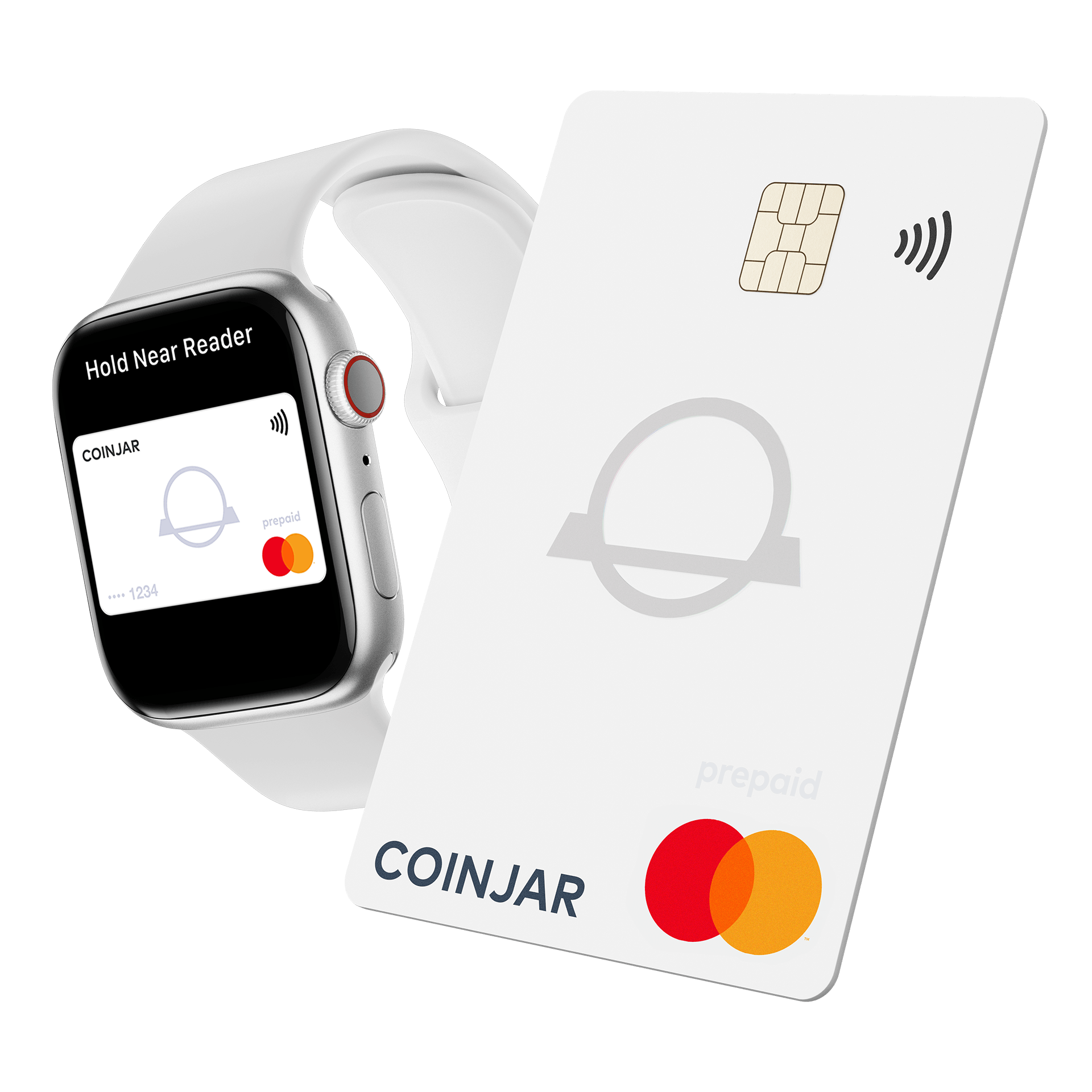
Use CoinJar Card, powered by Mastercard, for purchases online and in store, including through Apple Pay and Google Pay. No setup or monthly fee. A 1% purchase fee applies and is returned as CoinJar Rewards points, with one point earned per $1 spent. Available in Australia only.
Get your CoinJar Card for freeCoinJar Card
Use CoinJar Card, powered by Mastercard, for purchases online and in store, including through Apple Pay and Google Pay. No setup or monthly fee. A 1% purchase fee applies and is returned as CoinJar Rewards points, with one point earned per $1 spent. Available in Australia only.
Get your CoinJar Card for free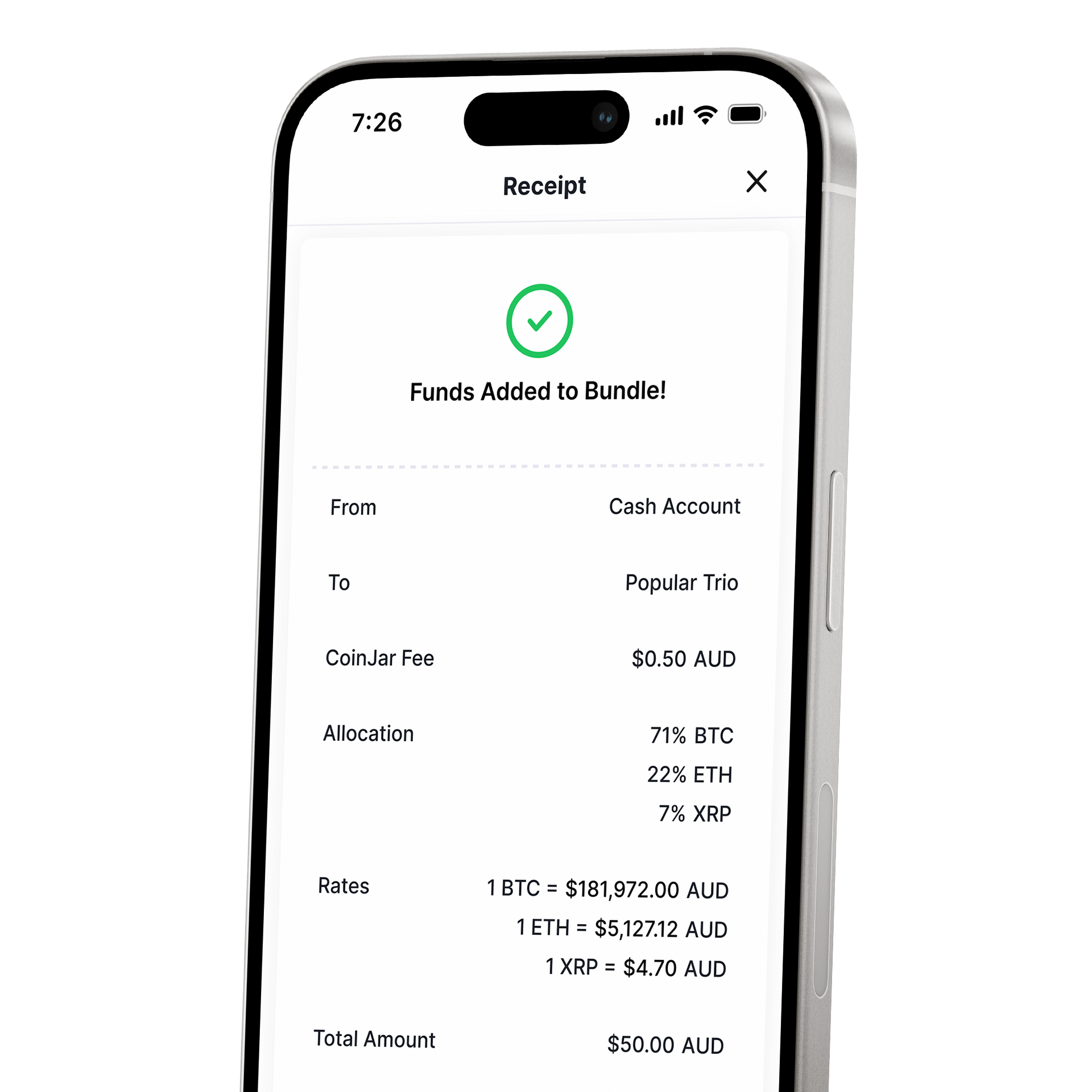
CoinJar Recurring Buy
Schedule automatic purchases weekly, fortnightly or monthly to dollar-cost average into individual cryptocurrencies or CoinJar Bundles. Manage your investment amount and schedule, with the flexibility to adjust or pause purchases as your circumstances change.
DCA with Recurring BuyCoinJar Recurring Buy
Schedule automatic purchases weekly, fortnightly or monthly to dollar-cost average into individual cryptocurrencies or CoinJar Bundles. Manage your investment amount and schedule, with the flexibility to adjust or pause purchases as your circumstances change.
DCA with Recurring Buy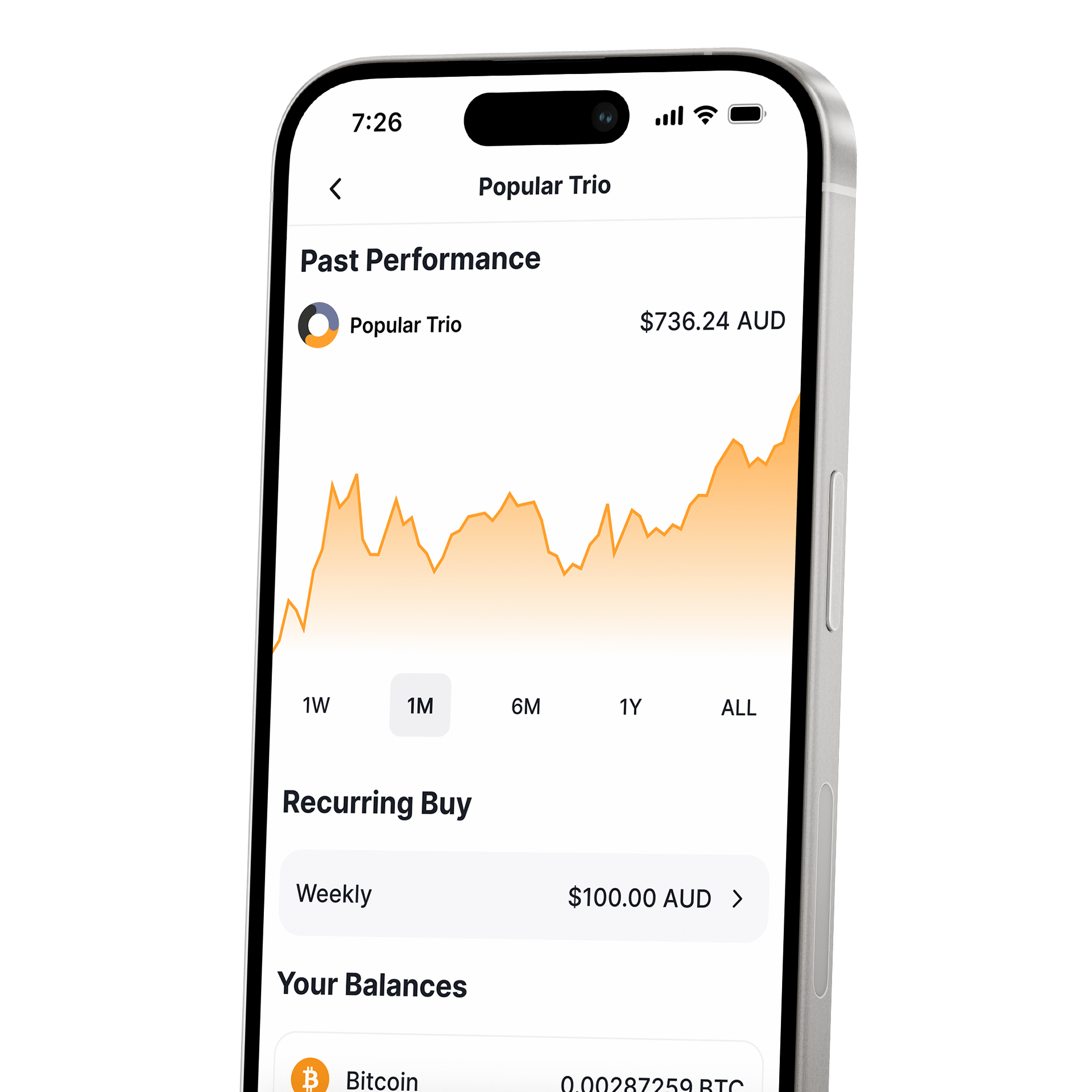
CoinJar Bundles
Pick your Bundle in the CoinJar app. Review each Bundle’s asset allocation, add to your holdings and rebalance when required. Sell your Bundle or unbundle it to manage the assets individually.
Learn moreCoinJar Bundles
Pick your Bundle in the CoinJar app. Review each Bundle’s asset allocation, add to your holdings and rebalance when required. Sell your Bundle or unbundle it to manage the assets individually.
Learn more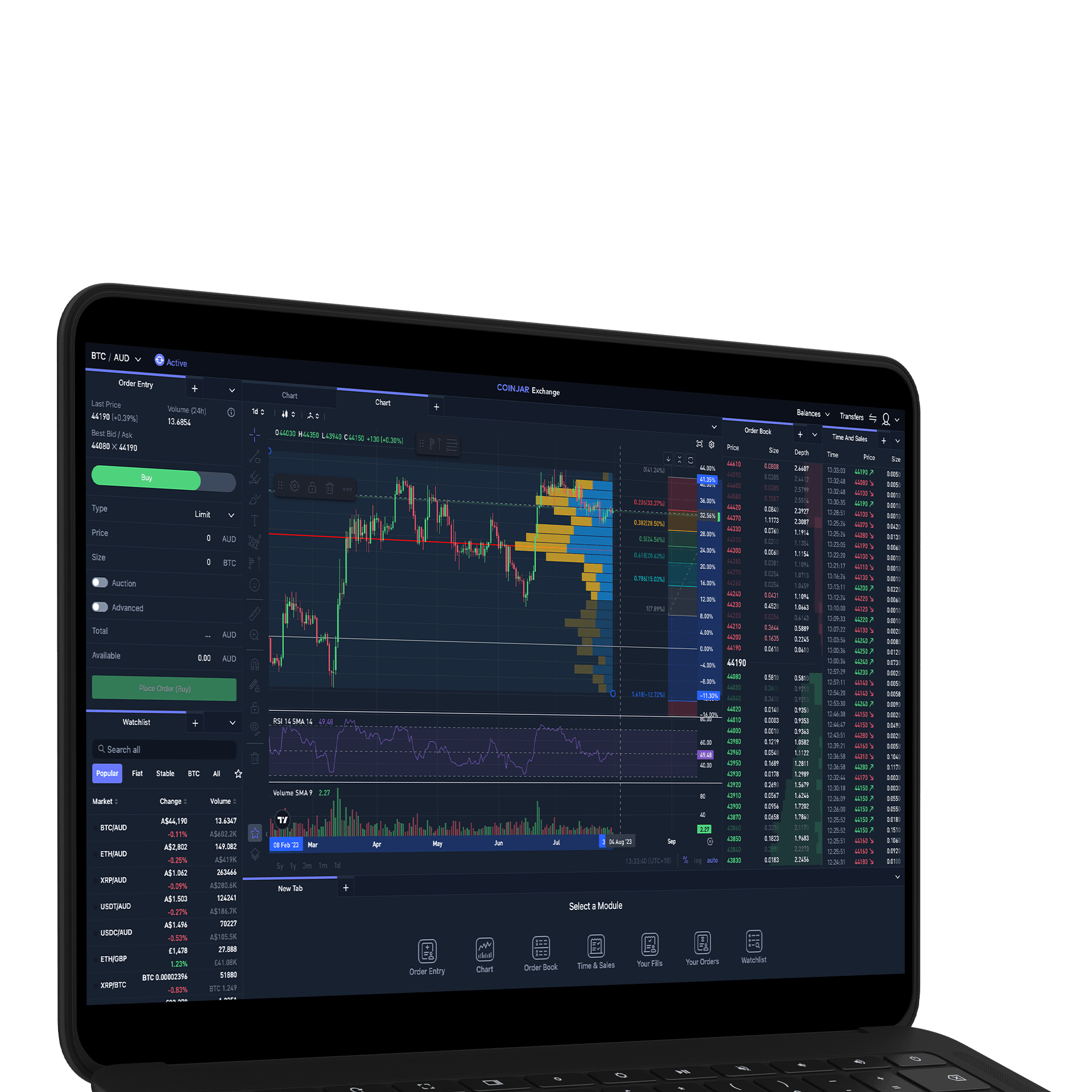
CoinJar Exchange
Trade with fees from 0-0.1%, using market, limit and stop-limit orders. Connect to TradingView to trade directly from your charts, or use CoinJar Exchange’s high-performance interface, built for active traders, market makers and institutions.
Explore CoinJar ExchangeCoinJar Exchange
Trade with fees from 0-0.1%, using market, limit and stop-limit orders. Connect to TradingView to trade directly from your charts, or use CoinJar Exchange’s high-performance interface, built for active traders, market makers and institutions.
Explore CoinJar Exchange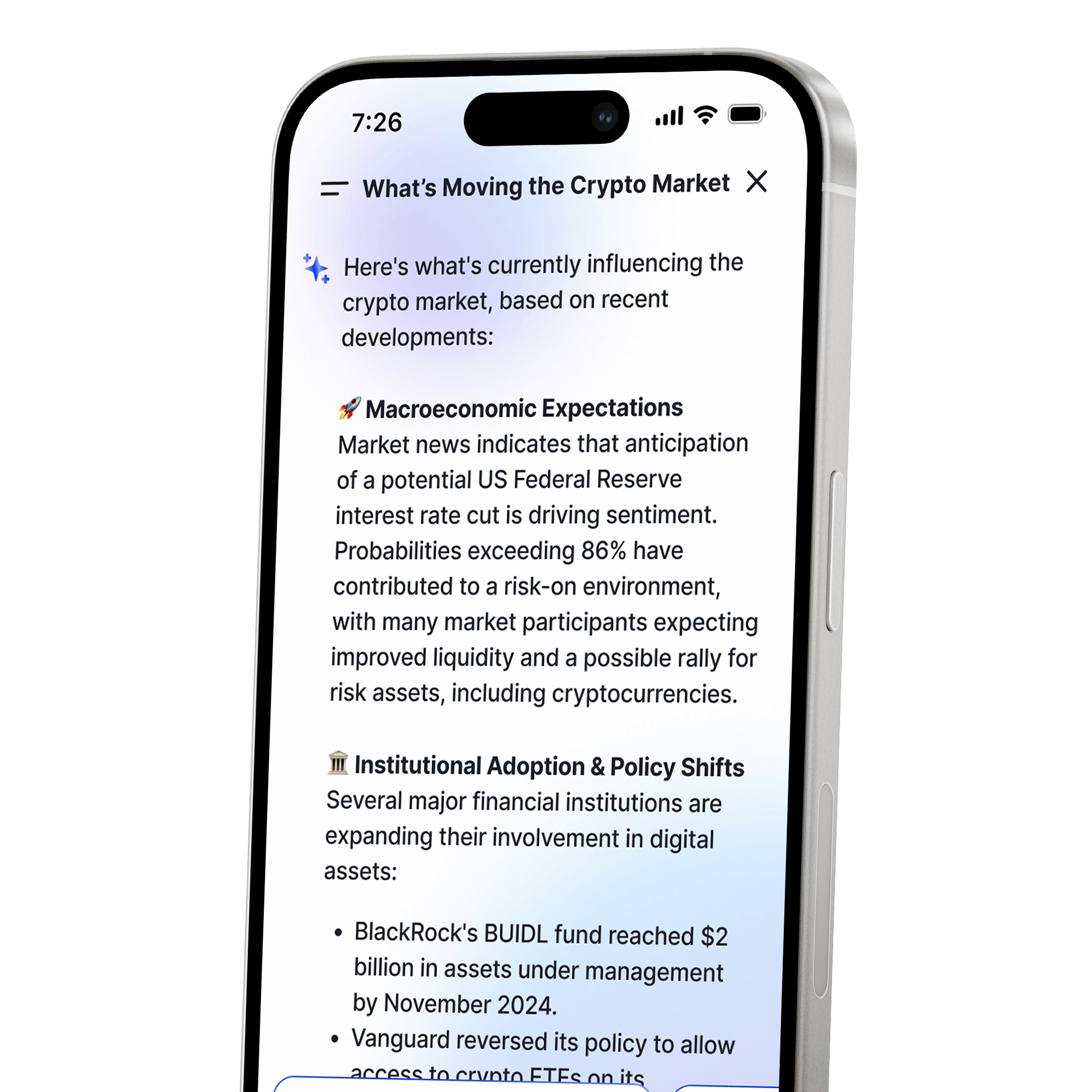
CoinJar AI
Access information about your holdings and the wider cryptocurrency market through CoinJar AI. Ask questions about portfolio changes, market developments or individual cryptocurrencies, with responses informed by your CoinJar holdings.
Learn moreCoinJar AI
Access information about your holdings and the wider cryptocurrency market through CoinJar AI. Ask questions about portfolio changes, market developments or individual cryptocurrencies, with responses informed by your CoinJar holdings.
Learn more
CoinJar OTC
For cryptocurrency trades above $50,000, CoinJar’s OTC desk provides personalised service and access to globally sourced liquidity. Work directly with a dedicated team to arrange and execute your purchase or sale. Discover OTC Services
Learn moreCoinJar OTC
For cryptocurrency trades above $50,000, CoinJar’s OTC desk provides personalised service and access to globally sourced liquidity. Work directly with a dedicated team to arrange and execute your purchase or sale. Discover OTC Services
Learn moreCoinJar does not endorse the content of, and cannot guarantee or verify the safety of any third-party websites. Visit these websites at your own risk.

CoinJar
Get the app.