
Buy Tron
TRXPast performance is not indicative of future results. All prices are sourced from CoinJar Indices.
What is Tron?
TRON is a public blockchain built for smart contracts, tokens and digital payments. Its most important use today is moving stablecoins, particularly Tether's USDT, between exchanges, wallets and payment platforms.
Justin Sun founded the project in 2017. TRX began as an ERC-20 token on Ethereum before TRON launched its own main network on 31 May 2018 and completed the move away from Ethereum the following month. The project acquired the file-sharing company BitTorrent in July 2018, although BitTorrent continues to operate as a separate product within the wider ecosystem.
TRON is now presented as being governed by TRON DAO rather than by the original TRON Foundation. Justin Sun remains its founder and most influential public figure, but he is not the chief executive of the blockchain. TRX is the network's native digital asset.
What is TRX used for?
TRX has four main roles on the network.
- Paying for transactions. TRON uses resources called Bandwidth and Energy. If an account lacks enough of either, TRX is burned to cover the cost.
- Obtaining network resources. Holders can stake TRX to receive Bandwidth or Energy instead of paying for every transaction directly.
- Electing block producers. Staked TRX creates voting power that holders use to elect the network's 27 Super Representatives.
- Governing the protocol. Super Representatives vote on proposals to change network parameters, including resource prices and rewards.
TRX can also be used inside decentralised applications, as collateral and as a trading pair for tokens issued on TRON.
How does TRON's Delegated Proof of Stake work?
TRON uses Delegated Proof of Stake, usually shortened to DPoS. Instead of allowing every validator to produce blocks, TRX holders elect 27 Super Representatives to do it on their behalf.
Staking one TRX produces one unit of voting power, and holders can divide their votes between several candidates. Votes are counted and the list of Super Representatives is updated every six hours. The elected group takes turns producing a block approximately every three seconds, while block and voting rewards are shared between representatives and their supporters according to each representative's commission policy.
Super Representatives also govern the protocol. A proposal to change a network parameter needs approval from at least 18 of the 27 representatives.
The trade-off is speed against concentration. Elections make the group accountable to TRX holders, and anyone can stand as a candidate. However, only 27 entities produce blocks, large holders have more voting power, and custodial platforms may control votes attached to customer funds. TRON is stake governed, but its active validator set is much smaller than Ethereum's. Our guide to crypto staking explains how proof of stake systems work more broadly.
What are Bandwidth and Energy on TRON?
Bandwidth and Energy are the resources used to process TRON transactions. They replace the single gas fee found on Ethereum.
- Bandwidth pays for the space a transaction occupies on the blockchain. Every account receives a small daily allowance, and more Bandwidth can be obtained by staking TRX.
- Energy pays for smart contract computation. It is needed when you use a decentralised application or transfer a TRC-20 token such as USDT.
If you have enough resources, the transaction consumes them and no TRX is burned. If you do not, the network burns TRX from your account to cover the shortfall. Bandwidth and Energy regenerate over time, and users can also receive delegated resources from another account.
This distinction matters in practice. Sending TRX is a simple transfer and may fit within the free Bandwidth allowance. Sending TRC-20 USDT calls a smart contract, so it requires both Bandwidth and Energy and can cost more. Exchanges usually display their own withdrawal fee rather than asking customers to manage these resources directly, and that fee may not match the underlying protocol cost.
Why is TRON widely used for USDT transfers?
TRON has become one of the main settlement networks for Tether's USDT because transfers are fast, relatively inexpensive and supported by a wide range of exchanges, wallets and payment services.
TRC-20 USDT means USDT issued on TRON. It represents the same type of dollar-linked token as ERC-20 USDT on Ethereum, but the balances sit on different blockchains and use incompatible addresses and fee systems. Selecting TRON at the sending platform and Ethereum at the receiving platform does not convert between them. It sends the token to a network the recipient may not support.
A substantial share of all USDT circulates on TRON, although the exact percentage moves as Tether issues and redeems tokens on different networks. Its use is particularly visible in exchange transfers, cross-border payments and markets where access to dollar banking is limited. Tether publishes the current breakdown on its transparency page, and our guide to stablecoins explains how issuer-backed tokens work.
Stablecoin use does not make TRX a stablecoin. TRX has a market price that can move sharply, while USDT is issued by Tether with the aim of tracking the US dollar.
What are the TRON Virtual Machine and TRC-20 tokens?
The TRON Virtual Machine, or TVM, runs smart contracts. It is broadly compatible with Ethereum's Virtual Machine and uses Solidity, which allows developers to adapt many Ethereum applications for TRON without starting again from scratch.
TRC-20 is TRON's main token standard. It performs a similar role to ERC-20 on Ethereum, but a TRC-20 token exists on the TRON network and needs a TRON-compatible wallet. Alongside USDT, TRON hosts decentralised exchanges, lending services, games and token-launch platforms. Examples include JustLend for lending and borrowing and SUN.io for swaps and liquidity pools.
There is genuine decentralised finance activity on TRON, but stablecoin settlement is the network's clearer and more established use case. Many of its largest transaction flows are deposits, withdrawals and transfers between exchanges rather than interactions with complex applications. Our introduction to decentralised finance covers the risks of these applications.
Does TRX have a maximum supply?
TRX does not have a fixed maximum supply. Its supply changes through two opposing mechanisms.
New TRX is issued as rewards to Super Representatives and voters. At the same time, TRX is permanently burned when users pay for Bandwidth or Energy shortfalls and certain system fees. Supply falls when burning exceeds issuance and rises when issuance exceeds burning.
This means describing TRX as permanently deflationary is misleading. It has experienced periods of net deflation, but the outcome depends on network use and on reward and resource parameters that governance can change. The smallest unit is called a sun, with one TRX equal to one million sun.
TRON compared with Ethereum and Solana
| TRON | Ethereum | Solana | |
|---|---|---|---|
| Native asset | TRX | ETH | SOL |
| Consensus | Delegated Proof of Stake with 27 Super Representatives | Proof of stake with a broad validator set | Proof of stake with proof of history |
| Typical block time | About 3 seconds | About 12 seconds | Under a second |
| Fee model | Bandwidth and Energy, with TRX burned when resources are insufficient | Gas with a base fee and priority fee | Base fee and optional priority fee |
| Smart contracts | TVM, broadly EVM compatible | EVM | Solana Virtual Machine |
| Main stablecoin role | Widely used for USDT transfers | Major stablecoin and DeFi settlement layer | High-throughput stablecoin, payments and trading activity |
| Supply | No fixed cap, issuance offset by burning | No fixed cap, some fees burned | No fixed cap, issuance declines towards a long-term floor |
TRON prioritises low-cost stablecoin transfers and fast finality. Ethereum has a larger and more varied application ecosystem, while Solana targets high-throughput trading and payments. The comparison is not simply about which chain is fastest or cheapest, because costs depend on congestion, resource availability and the application being used. See our guide to Ethereum for more on the largest smart contract platform.
Who controls TRON, and what controversies has it faced?
TRON's history includes regulatory, governance and reputational controversies that are relevant when assessing TRX.
In March 2023 the US Securities and Exchange Commission filed a civil complaint against Justin Sun, the TRON Foundation, the BitTorrent Foundation and Rainberry. It alleged that TRX and BTT had been offered and sold as unregistered securities, that TRX markets had been manipulated through wash trading and that celebrities had promoted the tokens without disclosing payment.
The case ended in March 2026 without a trial or admission of wrongdoing. Rainberry agreed to an injunction relating to the settled wash-trading claim and a US$10 million civil penalty. The remaining claims against Rainberry and all claims against Justin Sun, the TRON Foundation and the BitTorrent Foundation were dismissed with prejudice. The outcome resolved the lawsuit but did not produce a court finding on whether TRX itself is a security.
TRON has also faced criticism over the small number of Super Representatives, Justin Sun's continuing influence and unattributed material in the project's early whitepaper. In 2018, researchers accused the document of copying sections from IPFS and Filecoin material. Sun attributed missing references to problems translating the original Chinese version, although critics disputed that explanation.
Low-cost USDT transfers also attract illicit users alongside legitimate ones. TRON, Tether and blockchain intelligence company TRM Labs formed the T3 Financial Crime Unit in 2024 to identify and freeze assets connected with sanctions evasion, fraud and other crimes. Reports about illicit volume depend heavily on which addresses researchers have identified, so they should not be read as saying most TRON activity is criminal.
TRON on CoinJar in Australia
CoinJar has operated since 2013 and lists TRX against Australian dollars, so you can buy, sell and hold it without converting through another cryptocurrency first. TRX also has an Australian dollar market on CoinJar Exchange. Current charges are on our fees page, and live Australian dollar rates are on our cryptocurrency prices page.
TRX sits alongside the rest of our supported cryptocurrency list, and you can withdraw it to a compatible wallet. Our guide to crypto transfers explains what to check before you send. CoinJar charges a dynamic fee for external crypto transfers, which changes with the asset and network conditions and is displayed before confirmation.
TRX you hold with CoinJar is kept in our custody infrastructure, where private keys are split across offline and hardware protected systems so no single party can move assets on its own. You can read how that works on our security page.
CoinJar is registered with AUSTRAC as a digital currency exchange provider, Registration No. DCE100749118-001. Registration is a legal requirement for exchanges operating in Australia. It is not a government endorsement of CoinJar or of TRON.
What should Australian customers consider before buying TRX?
TRX is volatile and its price has fallen sharply in past market cycles. Consider the following before you buy:
- Block production is concentrated. Only 27 Super Representatives produce blocks, and 18 can approve parameter changes. Elections provide accountability, but large holders and custodial platforms can have disproportionate influence.
- Usage does not automatically mean token demand. TRON carries a large amount of USDT, but stablecoin transfers can use staked or delegated resources, and transaction activity does not translate mechanically into a higher TRX price.
- USDT creates concentration risk. TRON's strongest use case depends heavily on one privately issued stablecoin. Changes to Tether's policies, regulation or network support could reduce activity.
- Smart contract and stablecoin risks remain. Low fees do not prevent contract bugs, issuer failures, lost keys or tokens from losing their intended peg.
- Founder and regulatory risk. Justin Sun remains closely associated with TRON, so controversies involving him or his other ventures can affect confidence in TRX even when they do not involve the protocol directly.
- No government protection. TRX is not covered by the Australian Government's Financial Claims Scheme, which protects certain bank deposits and insurance policies but does not extend to cryptoassets.
How is TRON taxed in Australia?
The ATO generally treats TRX as a capital gains tax asset. A CGT event can occur when you sell it for Australian dollars, exchange it for another cryptoasset, spend it or give it away.
The ATO explains these rules on its official guidance page. Our guide to crypto tax in Australia provides a practical overview. This is general information, not tax advice. Consider speaking to a registered tax agent about your circumstances.
Fund Your Account Your Way
Buy Tron instantly using Visa or Mastercard, or deposit Australian dollars via bank transfer, PayID or PayPal. Buy, sell and convert between supported cryptocurrencies through your CoinJar account.


How to buy Tron with CoinJar
Start your portfolio with Australia's longest-running crypto exchange with these simple steps.
Sign up to CoinJar
Get the CoinJar app on iOS or Android, create an account and verify your ID.
Deposit funds
Deposit AUD fee-free via PayID, Osko or bank transfer. You can also use PayPal or pay instantly by card.
Buy your first crypto
Buy Tron and other popular cryptos using cash or credit card in minutes.




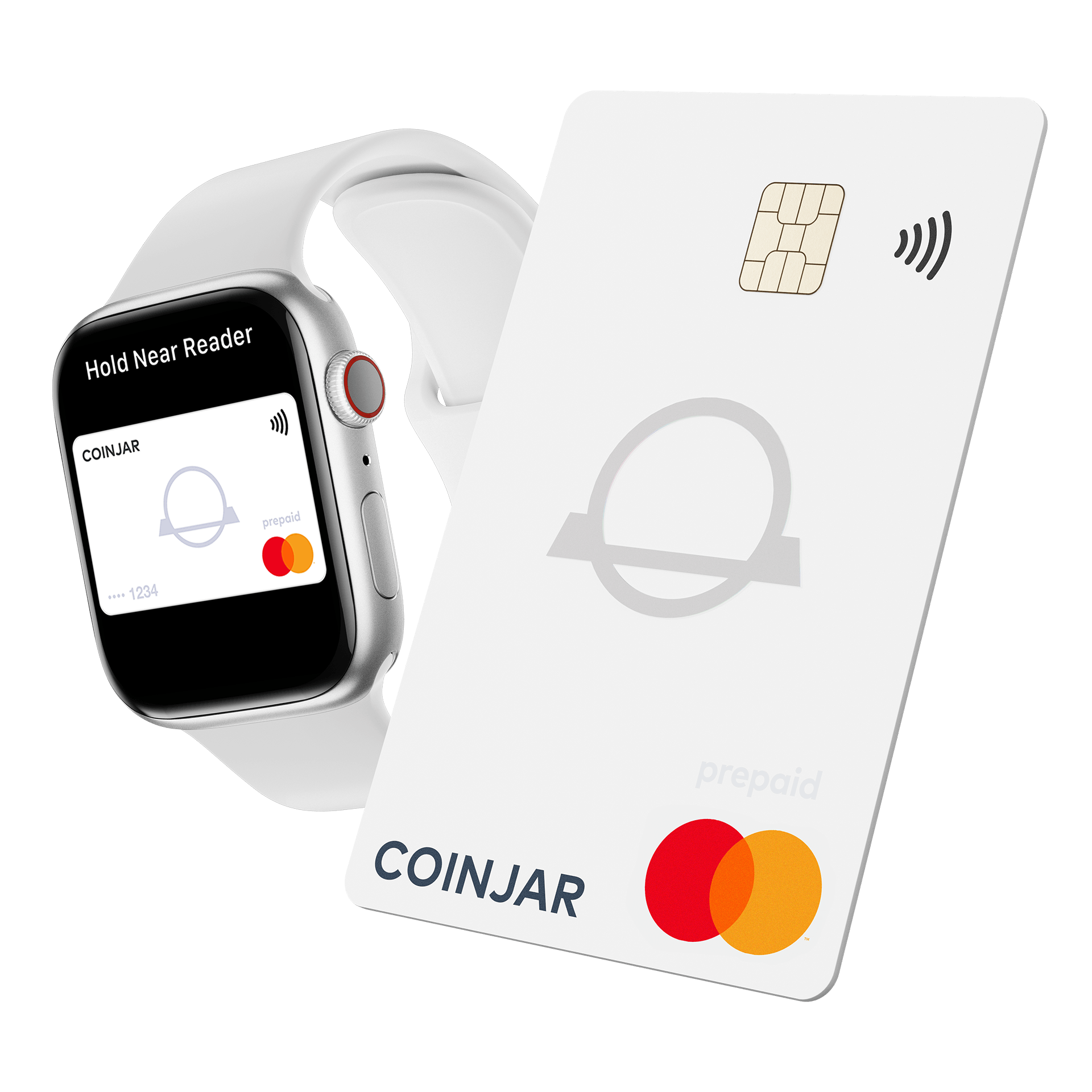
CoinJar Card
Use CoinJar Card, powered by Mastercard, for purchases online and in store, including through Apple Pay and Google Pay. No setup or monthly fee. A 1% purchase fee applies and is returned as CoinJar Rewards points, with one point earned per $1 spent. Available in Australia only.
Get your CoinJar Card for freeCoinJar Card
Use CoinJar Card, powered by Mastercard, for purchases online and in store, including through Apple Pay and Google Pay. No setup or monthly fee. A 1% purchase fee applies and is returned as CoinJar Rewards points, with one point earned per $1 spent. Available in Australia only.
Get your CoinJar Card for free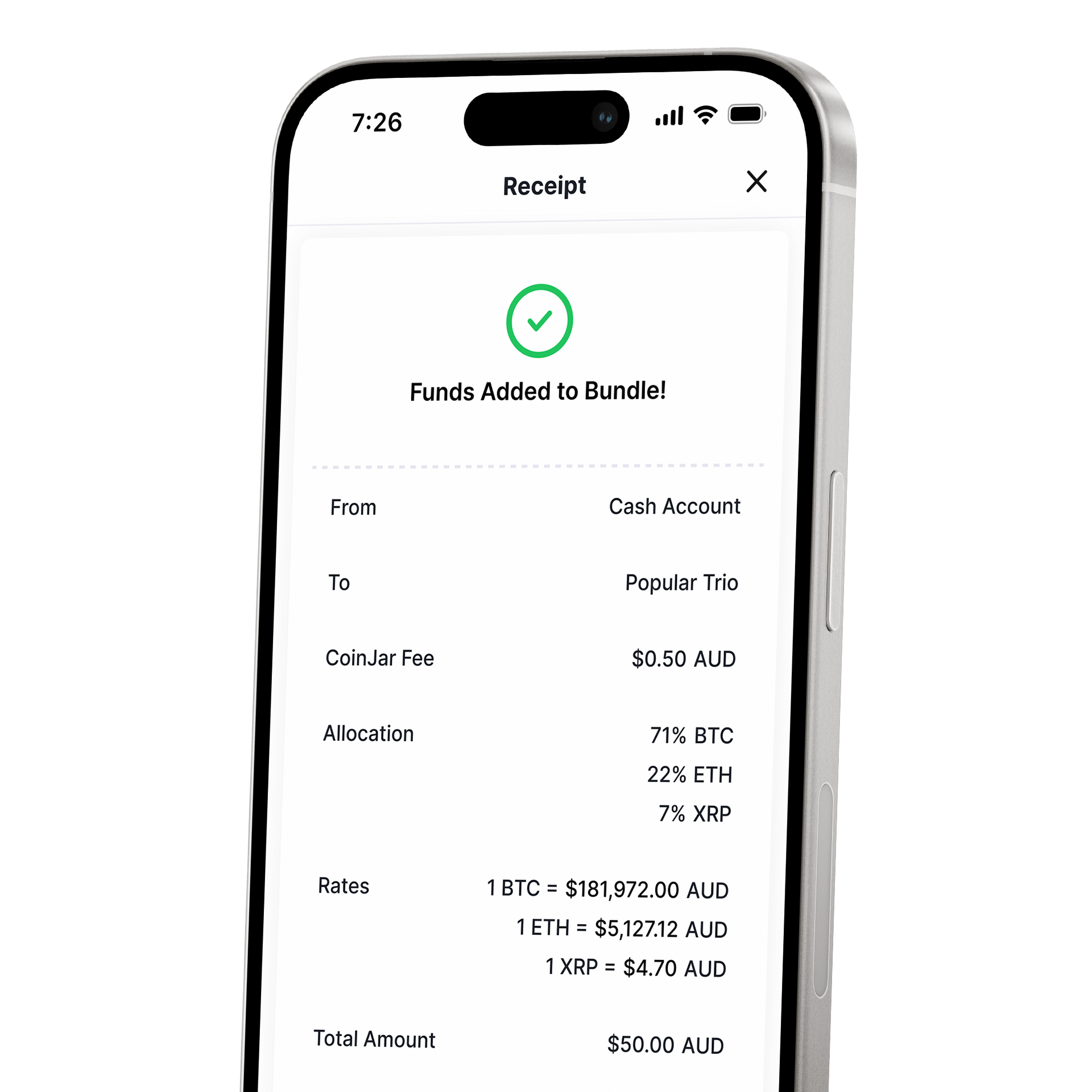
CoinJar Recurring Buy
Schedule automatic purchases weekly, fortnightly or monthly to dollar-cost average into individual cryptocurrencies or CoinJar Bundles. Manage your investment amount and schedule, with the flexibility to adjust or pause purchases as your circumstances change.
DCA with Recurring BuyCoinJar Recurring Buy
Schedule automatic purchases weekly, fortnightly or monthly to dollar-cost average into individual cryptocurrencies or CoinJar Bundles. Manage your investment amount and schedule, with the flexibility to adjust or pause purchases as your circumstances change.
DCA with Recurring Buy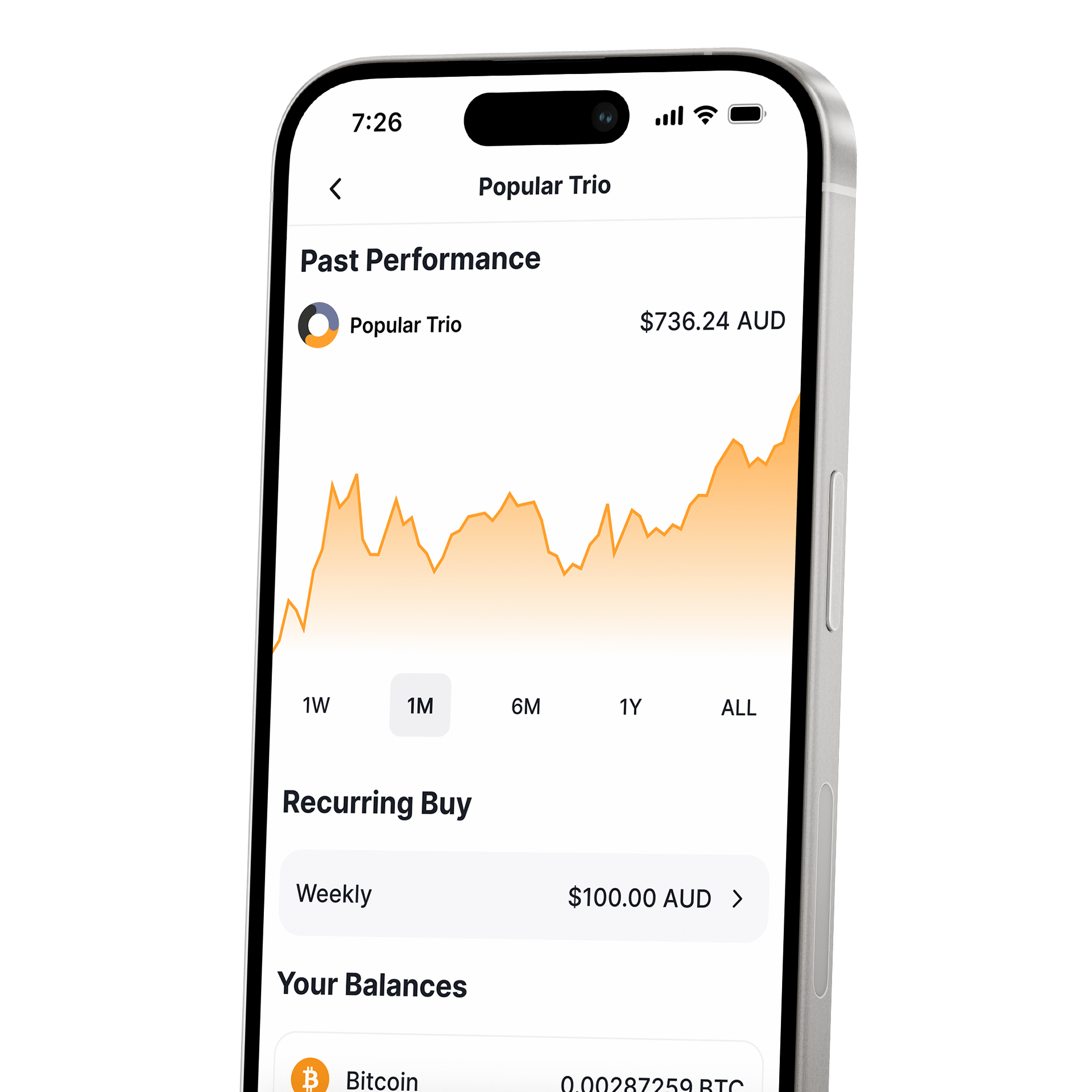
CoinJar Bundles
Pick your Bundle in the CoinJar app. Review each Bundle’s asset allocation, add to your holdings and rebalance when required. Sell your Bundle or unbundle it to manage the assets individually.
Learn moreCoinJar Bundles
Pick your Bundle in the CoinJar app. Review each Bundle’s asset allocation, add to your holdings and rebalance when required. Sell your Bundle or unbundle it to manage the assets individually.
Learn more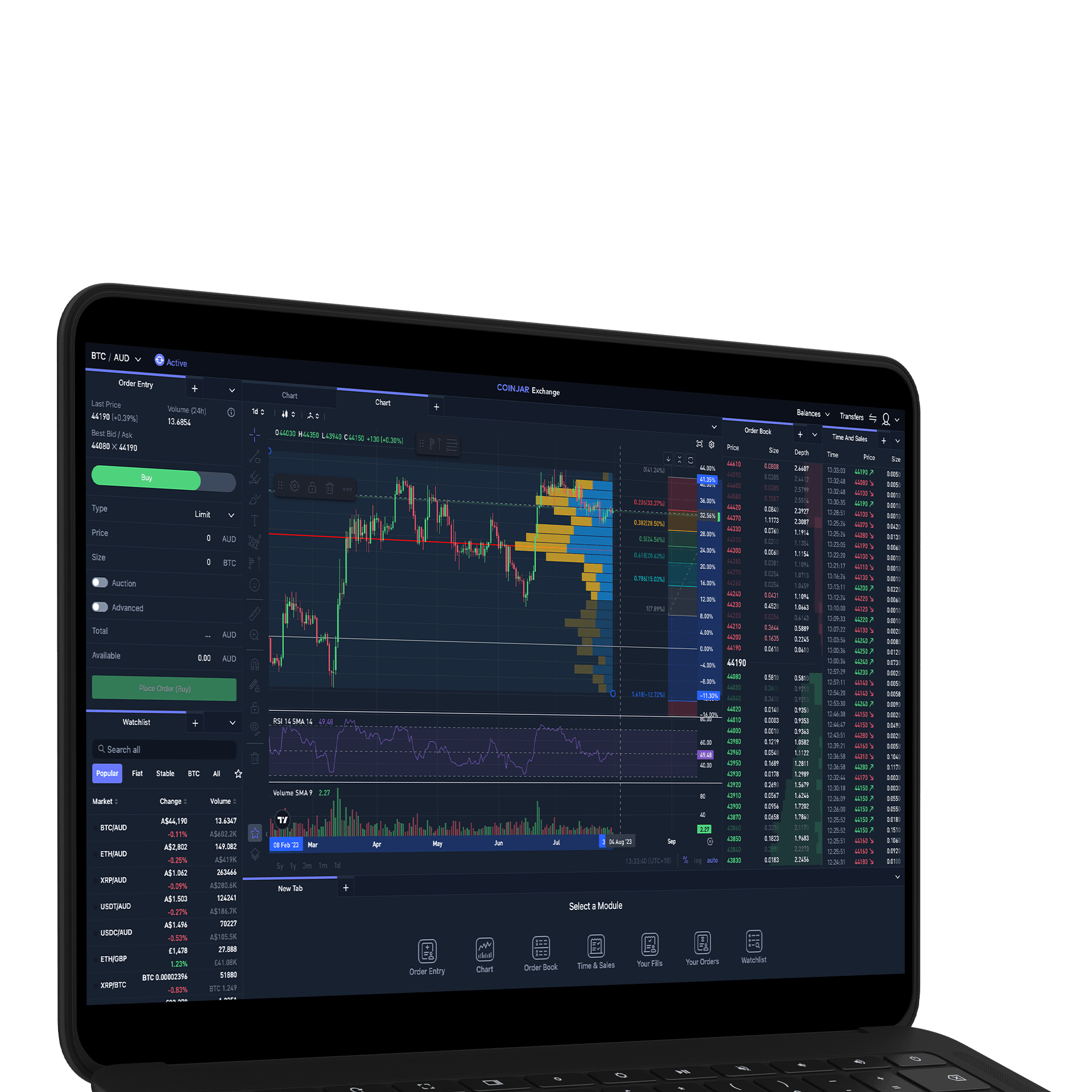
CoinJar Exchange
Trade with fees from 0-0.1%, using market, limit and stop-limit orders. Connect to TradingView to trade directly from your charts, or use CoinJar Exchange’s high-performance interface, built for active traders, market makers and institutions.
Explore CoinJar ExchangeCoinJar Exchange
Trade with fees from 0-0.1%, using market, limit and stop-limit orders. Connect to TradingView to trade directly from your charts, or use CoinJar Exchange’s high-performance interface, built for active traders, market makers and institutions.
Explore CoinJar Exchange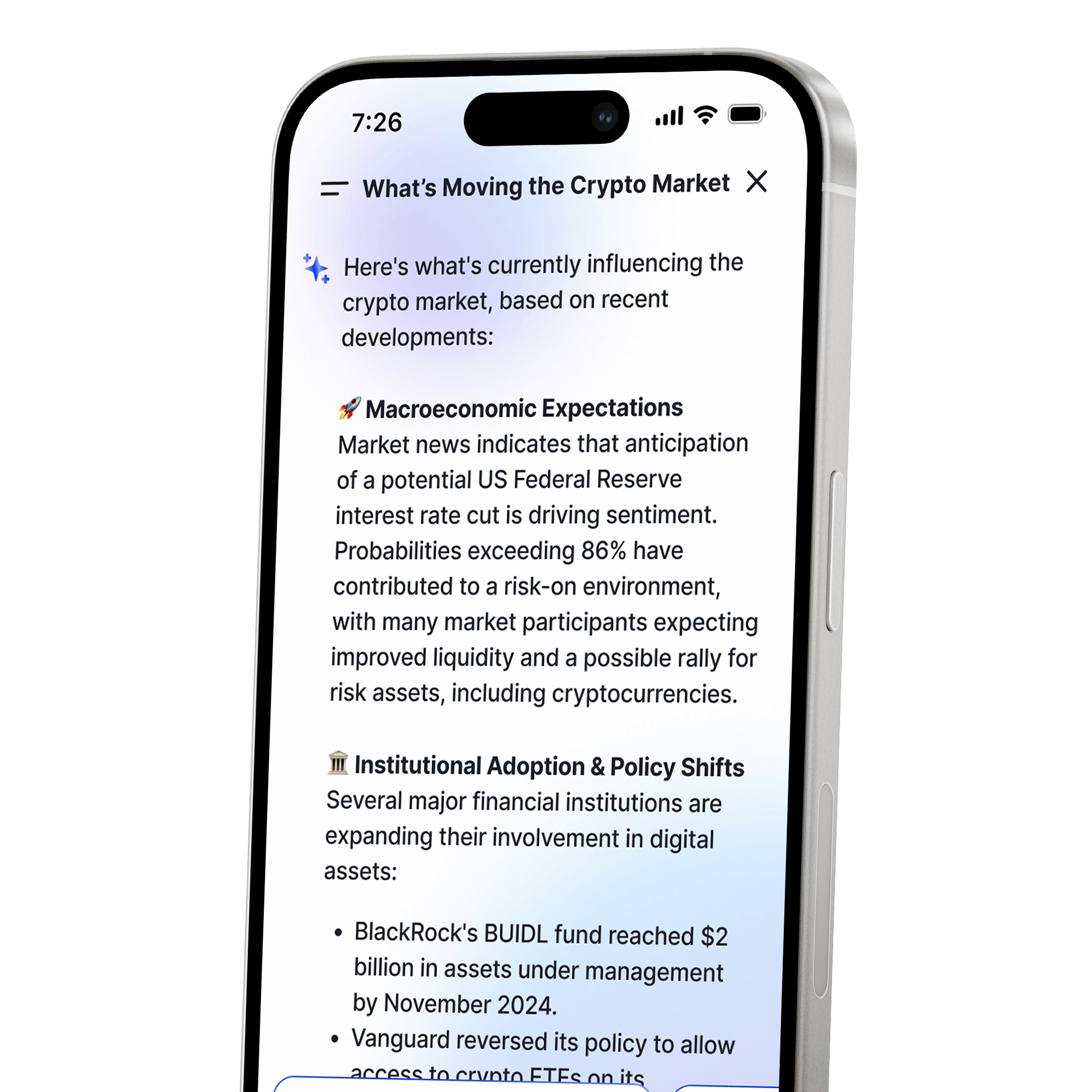
CoinJar AI
Access information about your holdings and the wider cryptocurrency market through CoinJar AI. Ask questions about portfolio changes, market developments or individual cryptocurrencies, with responses informed by your CoinJar holdings.
Learn moreCoinJar AI
Access information about your holdings and the wider cryptocurrency market through CoinJar AI. Ask questions about portfolio changes, market developments or individual cryptocurrencies, with responses informed by your CoinJar holdings.
Learn more
CoinJar OTC
For cryptocurrency trades above $50,000, CoinJar’s OTC desk provides personalised service and access to globally sourced liquidity. Work directly with a dedicated team to arrange and execute your purchase or sale. Discover OTC Services
Learn moreCoinJar OTC
For cryptocurrency trades above $50,000, CoinJar’s OTC desk provides personalised service and access to globally sourced liquidity. Work directly with a dedicated team to arrange and execute your purchase or sale. Discover OTC Services
Learn moreCoinJar does not endorse the content of, and cannot guarantee or verify the safety of any third-party websites. Visit these websites at your own risk.

CoinJar
Get the app.