
Buy Uniswap
UNIPast performance is not indicative of future results. All prices are sourced from CoinJar Indices.
What is Uniswap?
Uniswap is a decentralised exchange: a set of programs on Ethereum that let anyone swap one token for another without an intermediary holding the funds or matching the trade. UNI is its governance token.
Those are two different things, and keeping them apart is most of what it takes to understand this asset. The protocol is used heavily. The token's relationship to that usage changed fundamentally at the end of 2025, and almost everything written about UNI before then is now out of date. Our guide to decentralised finance covers the wider category, and our guide to Ethereum covers the network Uniswap was built on.
How does Uniswap actually work?
There is no order book and no market maker taking the other side of your trade. Instead there are pools: pairs of tokens deposited by anyone who wants to supply them, with a formula setting the exchange rate according to the ratio of what is in the pool. A trade shifts that ratio, and the price moves accordingly. This design is called an automated market maker.
Two consequences follow, and both matter more than the mechanics.
Anyone can create a pool for any token, without asking permission. That is why Uniswap can offer an asset the moment it exists, and it is also why the protocol is full of worthless and fraudulent tokens. There is no listing committee, because there is no listing.
The people supplying tokens to pools, called liquidity providers, earn a share of the trading fees. They are the ones taking the risk and being paid for it. Holding UNI is a different activity and does not earn those fees.
What is Uniswap v4?
Uniswap has been rebuilt several times. Version four launched on Ethereum in January 2025 and now carries most of the protocol's activity, though versions two and three still run and still handle trades.
The change that matters is hooks: code a developer can attach to a pool so that it runs at set points in the pool's lifecycle, such as before or after a swap. In version three every pool behaved the same way. In version four a pool can carry custom logic, which turns Uniswap from a fixed product into something closer to a platform other people build on. The other significant change is that all pools now live inside a single contract, which makes multi step trades considerably cheaper.
Hooks cut both ways. They are also a new place for things to go wrong, and there have been exploits of third party hooks built on version four rather than of Uniswap's own core contracts. The Uniswap documentation is the primary technical reference.
What is Unichain?
Unichain is Uniswap's own layer two network, launched in early 2025 and built on the OP Stack as part of the Optimism Superchain. Our guide to blockchain layers explains how layer twos relate to the network underneath them.
Gas on Unichain is paid in ETH, not UNI. Independent research site L2BEAT classifies it as a stage one rollup, with fraud proofs and transaction data posted to Ethereum, while also recording the trust assumptions that come with it: sequencing is operated by Uniswap Labs, and core contracts can be upgraded by a multisignature wallet without a delay or notice period. That is a normal position for a network of its age, and it is not the same thing as being trustless.
What does UNI actually do?
For its first five years, UNI was a governance token and nothing else. It let holders vote. It carried no claim on the protocol's revenue, paid nothing, and had no mechanism connecting the fees Uniswap generated to the token. The gap between a heavily used protocol and a token that captured none of it was the central criticism of the asset, and it was a fair one.
That changed at the end of 2025.
The fee switch, and what it did and did not do
In November 2025 Uniswap Labs and the Uniswap Foundation jointly proposed a package called UNIfication. Governance approved it in December 2025 with almost no opposition, and it has been rolling out across the protocol's versions and networks since.
What it did:
Turned on protocol fees. A share of the fee paid on each trade now goes to the protocol rather than entirely to liquidity providers. Directed those fees into burning UNI. The fees collected are exchanged for UNI, and that UNI is sent to an address from which it can never be recovered. Burned 100 million UNI from the treasury. A one off destruction of a tenth of the original supply, presented as compensation for the years in which no fees were collected. Ended Uniswap Labs' interface fee. The fee the company charged on trades made through its own app and wallet was set to zero. Routed Unichain's sequencer revenue into the same burn.
What it did not do, and this distinction is the entire point:
UNI holders do not receive any of those fees. There is no distribution, no dividend, no yield and no payment of any kind. The connection between protocol activity and the token is a reduction in the number of tokens in existence, which is a different thing from income, economically and legally. Anyone telling you that UNI now pays revenue to holders is describing something that does not exist.
Is UNI's supply shrinking?
At the moment, yes, but by decision rather than by design.
UNI launched in September 2020 with one billion tokens. The original design also gave governance the authority to create up to two per cent more each year after the first four years. That authority has not been removed. It is simply not being used.
So the position today is that burns are reducing supply while the minting authority sits unused and a governance approved growth budget releases tokens from the treasury each year. The net effect is a shrinking supply. It is the outcome of choices made by voters, and different voters could make different choices. Treat it as a policy rather than a property of the protocol.
Who controls Uniswap?
Three things share the name and are frequently confused.
The protocol is a set of contracts on Ethereum and other networks. Once deployed, the core contracts cannot be altered. Uniswap Labs is the company that builds the protocol, the app and the wallet, and that operates Unichain. It is not the protocol, and its app is one of several ways to reach the same contracts. The DAO is UNI holders voting. In September 2025 it adopted a legal wrapper, a Wyoming nonprofit association known as DUNI, so that it could enter agreements in its own name. The Uniswap Foundation, historically the grant making body, was substantially folded into Uniswap Labs as part of UNIfication.
Voting requires delegating UNI, either to yourself or to someone else. In practice a small number of large delegates, including venture capital firms holding early allocations, carry a disproportionate share of the votes, and participation among ordinary holders is low. That concentration has drawn sustained criticism from inside the DAO itself, including over the Foundation's funding requests. It is a real governance risk rather than a theoretical one.
Uniswap and regulators
In April 2024 the United States Securities and Exchange Commission sent Uniswap Labs a Wells notice, signalling an intention to bring enforcement action over operating an unregistered exchange and broker. In February 2025 the SEC closed that investigation without taking any action.
Separately, a class action alleging that Uniswap was responsible for scam tokens traded through it was dismissed, and the dismissal was upheld on appeal. Those outcomes matter for decentralised exchanges generally, but they resolve particular disputes rather than settling the law. Legislation defining how decentralised exchanges and governance tokens are treated in the United States remains in progress rather than in force.
What are the risks of holding UNI?
No claim on anything. UNI carries no right to revenue, assets, dividends or interest. The burn reduces supply. It does not pay you. The burn depends on usage. Fees only accumulate if people keep trading on Uniswap. If activity falls, the burn falls with it, and the mechanism supporting the token weakens exactly when it would be most needed. Governance can change its mind. Fees were switched on by a vote and can be adjusted or switched off by a vote. The authority to create new UNI still exists. Concentrated voting power. A small number of large delegates dominate governance and turnout is low, so decisions affecting the token are made by relatively few parties. Fierce competition. Uniswap competes with other decentralised exchanges, with aggregators that route around it, and with centralised exchanges. Liquidity moves quickly and very little stops it. Smart contract and hook risk. The core contracts have a long record, but version four hooks are new, are written by third parties and have already been exploited. Bridged versions of UNI on other networks carry the risk of the bridge behind them. Scam tokens. Anyone can create a pool, so the protocol is used to distribute fraudulent tokens at scale. That is a consequence of the design rather than a defect in it. Regulatory uncertainty. The SEC investigation closed, but the rules governing decentralised exchanges and governance tokens in major markets are still being written. Volatility. UNI is not a stablecoin. Its value moves sharply and can fall a very long way and stay there. No government compensation. Digital assets are not covered by the Australian Government's Financial Claims Scheme. If you lose value, there is no compensation scheme to fall back on.
Buying UNI with Australian dollars on CoinJar
CoinJar has operated since 2013 and lists UNI against Australian dollars, so you can buy, sell and hold it without converting through another cryptocurrency first. Current charges are on our fees page, and live Australian dollar rates are on our cryptocurrency prices page.
CoinJar Australia Pty Ltd is registered with AUSTRAC as a digital currency exchange provider, Registration No. DCE100749118-001.
How is UNI taxed in Australia?
The ATO generally treats UNI as a capital gains tax asset. A CGT event can occur when you sell it for Australian dollars, exchange it for another cryptoasset, spend it or give it away.
The ATO explains these rules on its official guidance page. Our guide to crypto tax in Australia provides a practical overview. This is general information, not tax advice. Consider speaking to a registered tax agent about your circumstances.
Fund Your Account Your Way
Buy Uniswap instantly using Visa or Mastercard, or deposit Australian dollars via bank transfer, PayID or PayPal. Buy, sell and convert between supported cryptocurrencies through your CoinJar account.


How to buy Uniswap with CoinJar
Start your portfolio with Australia's longest-running crypto exchange with these simple steps.
Sign up to CoinJar
Get the CoinJar app on iOS or Android, create an account and verify your ID.
Deposit funds
Deposit AUD fee-free via PayID, Osko or bank transfer. You can also use PayPal or pay instantly by card.
Buy your first crypto
Buy Uniswap and other popular cryptos using cash or credit card in minutes.


CoinJar Card
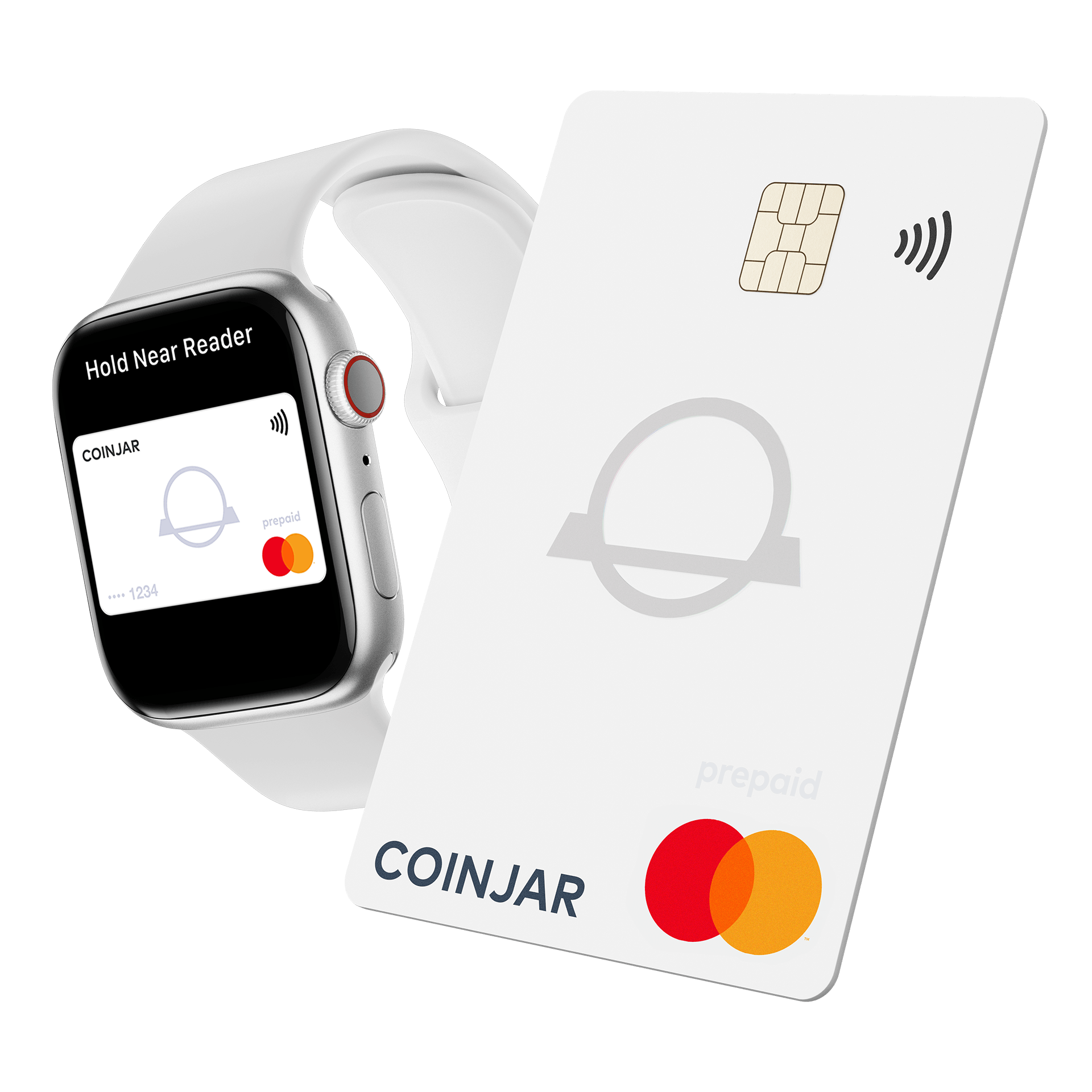
Use CoinJar Card, powered by Mastercard, for purchases online and in store, including through Apple Pay and Google Pay. No setup or monthly fee. A 1% purchase fee applies and is returned as CoinJar Rewards points, with one point earned per $1 spent. Available in Australia only.
Get your CoinJar Card for freeCoinJar Card
Use CoinJar Card, powered by Mastercard, for purchases online and in store, including through Apple Pay and Google Pay. No setup or monthly fee. A 1% purchase fee applies and is returned as CoinJar Rewards points, with one point earned per $1 spent. Available in Australia only.
Get your CoinJar Card for free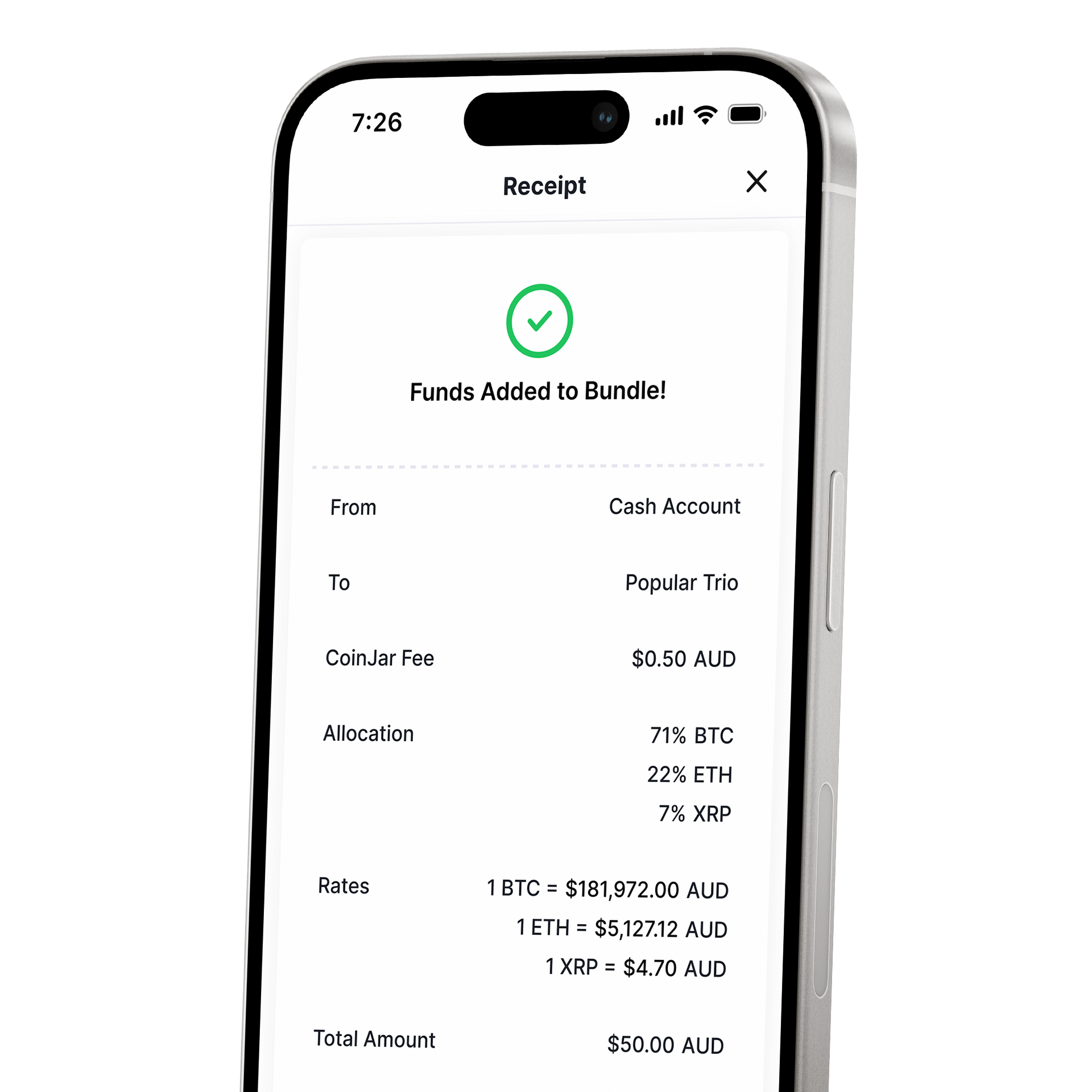
CoinJar Recurring Buy
Schedule automatic purchases weekly, fortnightly or monthly to dollar-cost average into individual cryptocurrencies or CoinJar Bundles. Manage your investment amount and schedule, with the flexibility to adjust or pause purchases as your circumstances change.
DCA with Recurring BuyCoinJar Recurring Buy
Schedule automatic purchases weekly, fortnightly or monthly to dollar-cost average into individual cryptocurrencies or CoinJar Bundles. Manage your investment amount and schedule, with the flexibility to adjust or pause purchases as your circumstances change.
DCA with Recurring Buy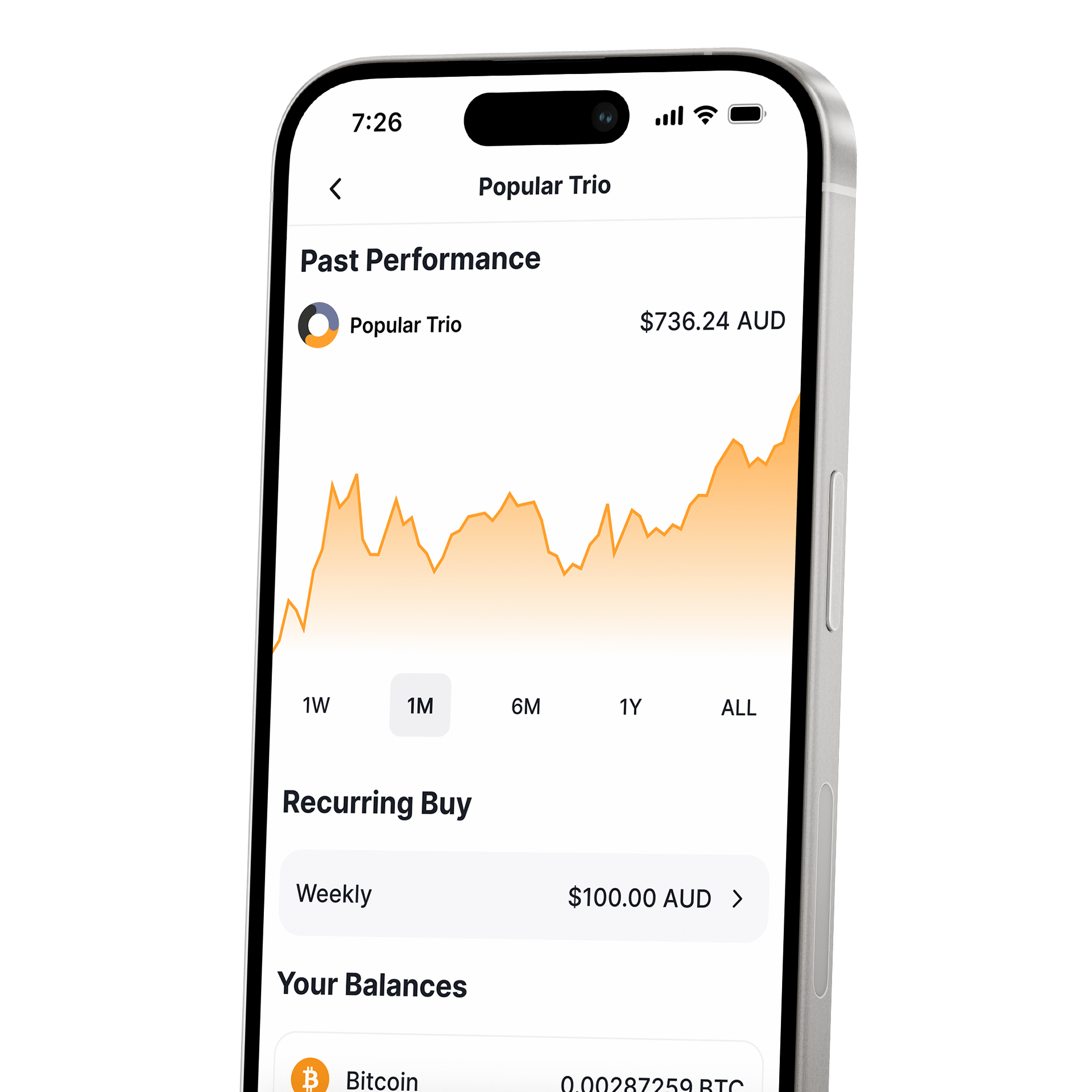
CoinJar Bundles
Pick your Bundle in the CoinJar app. Review each Bundle’s asset allocation, add to your holdings and rebalance when required. Sell your Bundle or unbundle it to manage the assets individually.
Learn moreCoinJar Bundles
Pick your Bundle in the CoinJar app. Review each Bundle’s asset allocation, add to your holdings and rebalance when required. Sell your Bundle or unbundle it to manage the assets individually.
Learn more
CoinJar Exchange
Trade with fees from 0-0.1%, using market, limit and stop-limit orders. Connect to TradingView to trade directly from your charts, or use CoinJar Exchange’s high-performance interface, built for active traders, market makers and institutions.
Explore CoinJar ExchangeCoinJar Exchange
Trade with fees from 0-0.1%, using market, limit and stop-limit orders. Connect to TradingView to trade directly from your charts, or use CoinJar Exchange’s high-performance interface, built for active traders, market makers and institutions.
Explore CoinJar Exchange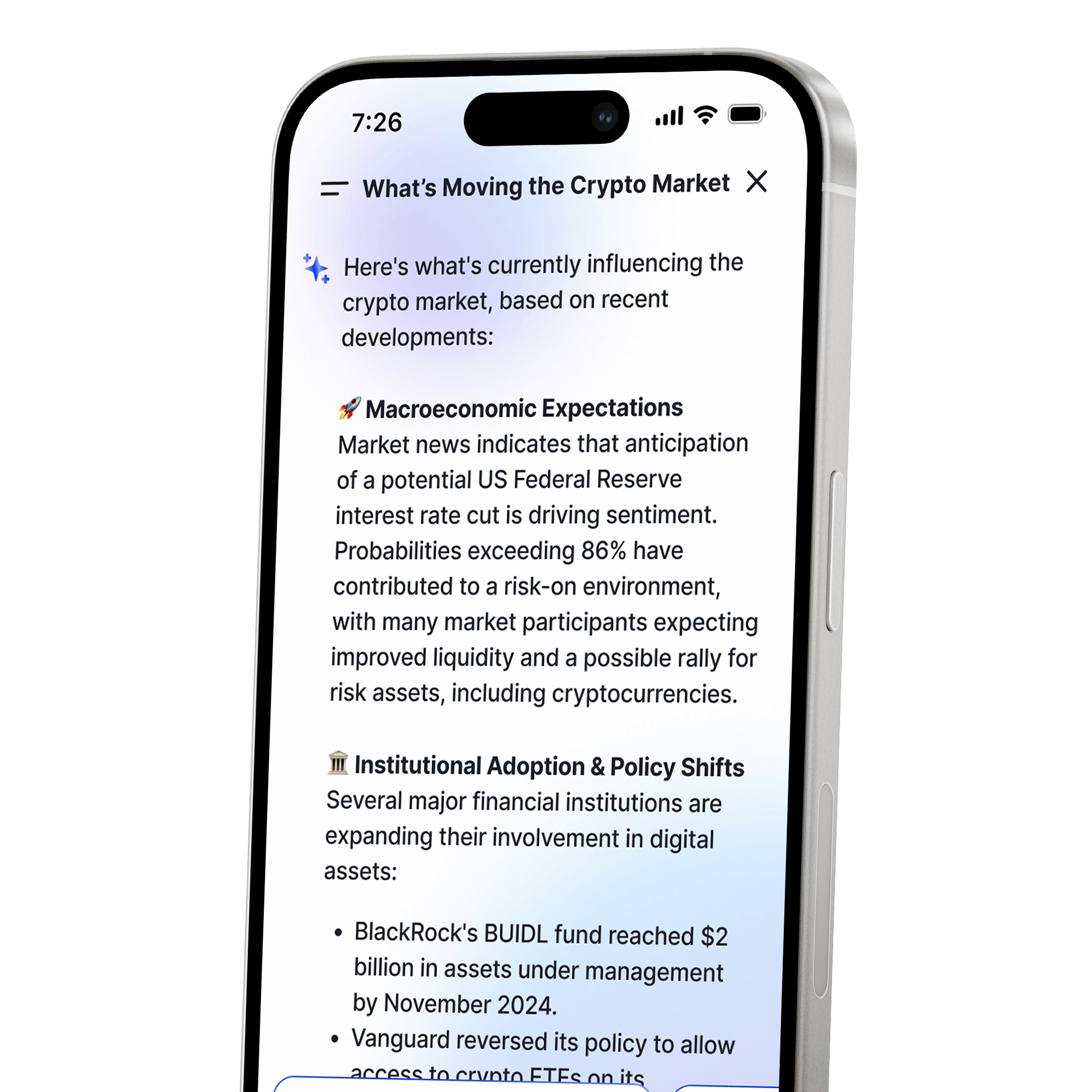
CoinJar AI
Access information about your holdings and the wider cryptocurrency market through CoinJar AI. Ask questions about portfolio changes, market developments or individual cryptocurrencies, with responses informed by your CoinJar holdings.
Learn moreCoinJar AI
Access information about your holdings and the wider cryptocurrency market through CoinJar AI. Ask questions about portfolio changes, market developments or individual cryptocurrencies, with responses informed by your CoinJar holdings.
Learn more
CoinJar OTC
For cryptocurrency trades above $50,000, CoinJar’s OTC desk provides personalised service and access to globally sourced liquidity. Work directly with a dedicated team to arrange and execute your purchase or sale. Discover OTC Services
Learn moreCoinJar OTC
For cryptocurrency trades above $50,000, CoinJar’s OTC desk provides personalised service and access to globally sourced liquidity. Work directly with a dedicated team to arrange and execute your purchase or sale. Discover OTC Services
Learn moreCoinJar does not endorse the content of, and cannot guarantee or verify the safety of any third-party websites. Visit these websites at your own risk.

CoinJar
Get the app.