
Buy Basic Attention Token
BATPast performance is not indicative of future results. All prices are sourced from CoinJar Indices.
What is Basic Attention Token?
Basic Attention Token is the cryptocurrency behind the Brave browser. The original idea was elegant: block the trackers and ads that fund the web, then offer people a private alternative where they opt in to seeing ads and get paid in BAT for their attention, with a share going to the sites and creators they read.
That still exists. What has changed is how much of Brave's business runs on it. Brave in 2026 is a browser, a search engine, an artificial intelligence assistant, a virtual private network and an advertising business, and most of that revenue is priced in ordinary currency. BAT is one part of the machine rather than the fuel for all of it, and the distance between those two descriptions is what a buyer needs to understand. Our guide to altcoins explains where tokens like BAT sit relative to Bitcoin, and our guide to Ethereum covers the network BAT was issued on.
Where did BAT come from?
Brave Software was founded in 2015 by Brendan Eich and Brian Bondy. Eich created JavaScript and co-founded Mozilla, and remains Brave's chief executive, which makes Brave unusual in this sector: the person who started it is still running it a decade later.
BAT's token sale on 31 May 2017 became a piece of crypto folklore. One billion tokens sold for 156,250 ETH, worth roughly 35 million US dollars at the time, and the sale closed in under thirty seconds, inside a handful of Ethereum blocks.
The supply was fixed at 1.5 billion tokens and has never been added to. Two thirds went to the sale, 300 million was set aside as a User Growth Pool to seed rewards and adoption, and 200 million went to the development team under an initial lock. Brave has said the great majority of the supply is now in circulation.
How Brave Rewards works in 2026
You opt in. Rewards is off by default. Turning it on means agreeing to see privacy preserving ads, matched on your own device rather than by tracking you across the web. You earn BAT for viewing eligible ads. You do not have to click anything. How much you earn depends on advertiser demand in your country, your device and how many campaigns are running. You need somewhere to be paid. Earnings are not spendable inside the browser. To receive them you connect either an account with a supported custodial partner or a self custody wallet, and monthly payouts go there. Availability is regional. Which payout route is open to you depends entirely on where you are. Some countries have a custodial partner, some are limited to self custody, and some have neither. Brave's own Brave Rewards page carries the current position, and it changes. You can support creators. One off and recurring contributions to registered websites, channels and streamers still work, and creators can now publish Ethereum and Solana addresses to receive contributions directly on chain rather than through an intermediary.
That last change is part of a broader shift toward putting BAT on chain and reducing the number of middlemen between an advertiser, a user and a creator.
What changed from the original pitch
Three things have gone, and pages that still describe them are out of date.
Virtual BAT is finished. For years, users in countries without a custodial partner accrued a browser balance that was not real, transferable BAT. That system was retired from early 2023, and the balance in the browser is no longer a substitute for a connected account.
Auto contribute has been removed. The feature that automatically divided a user's monthly BAT among the sites they spent time on was taken out of the browser in early 2025. Recurring contributions to a chosen creator replaced it. The automatic, attention weighted distribution that was central to the original whitepaper is not how it works any more.
Advertisers do not need BAT. Brave sells advertising as a normal commercial product, bought in ordinary currency through a self serve manager. Brave then buys BAT on the open market to fund the user rewards side. This matters in both directions, and it is worth being clear about it.
Where Brave's money actually comes from
Brave's commercial engine is now mostly outside BAT. Brave Search runs its own independent index and sells search advertising and an application programming interface used by other companies for search and artificial intelligence products. Leo, its assistant, has a paid tier. There is a virtual private network, premium search, and a subscription bundle. Brave has published very substantial growth in search queries and search advertising, none of which is denominated in BAT.
The connection that does exist is real and verifiable, and it is the strongest argument for the token. Brave discloses its BAT purchases publicly. When advertisers pay in ordinary currency, Brave buys BAT on exchanges to fund user rewards, and it publishes the dates, amounts and venues on its transparency page. That is genuine, recurring, advertising funded buying pressure rather than a promise. There is no burn mechanism.
Brave has also been drawn into the fights over artificial intelligence and publishing. In 2026 an association of French publishers and dozens of newspapers sued Brave over the use of their content in its search and artificial intelligence products, and a separate dispute with News Corp produced litigation in both directions. These are risks to the company rather than to the token contract, but Brave's health is what BAT ultimately depends on.
What Roadmap 4.0 promises
On 9 July 2026 Brave published BAT Roadmap 4.0, the most significant statement about the token in years. It is a plan, and should be read as one.
BravePay. A proposed stablecoin payment layer for self custodied transactions between users, creators and merchants, with human readable addresses and support for machine to machine payments. A Brave Rewards Card. A proposed virtual and physical payment card running on those stablecoin rails and traditional card networks, earning BAT on purchases. The issuer, the countries and the reward details had not been announced. A unified wallet. A redesign combining stored cards, the proposed Rewards Card, self custody crypto accounts and Rewards in one place. Agentic payments. Support in the browser for autonomous agents paying for content and interfaces on your behalf. Buybacks. Brave said a percentage of net revenue from these new sources will fund BAT buybacks feeding the User Growth Pool reserve, alongside opportunistic purchases, with timing and amounts varying by market conditions and program needs.
The buyback commitment is the closest thing BAT has ever had to value accrual, and it deserves to be read carefully. It applies to revenue from products that do not exist yet, at an unspecified percentage, with discretionary timing. It is a direction of travel, not a mechanism a holder can rely on. Brave said further tokenomics detail would follow. The roadmap itself is worth reading in full before forming a view.
It is also fair to note that Roadmap 3.0, published in late 2024, promised a long list of features, and that Brave's record of shipping everything it announces on the token side is mixed.
What are the risks of holding BAT?
No claim on Brave's revenue. BAT is not equity and carries no dividend or entitlement. The buyback proposal is a stated intention that Brave controls. Brave is a private company. There is no shareholder disclosure, no audited reporting to token holders, and no governance mechanism through which BAT holders can influence anything. Decisions about the token are made by a company. The token is not required for the business to work. Search, the search interface sold to other companies, the assistant, the virtual private network and advertising sales all function without BAT. A very successful Brave is possible without a valuable BAT. Features have been withdrawn before. Virtual BAT and auto contribute both went. Something a page describes today may not be there in two years. Regional restrictions. Whether you can earn or withdraw BAT through Brave depends on your country and on third party partners continuing to serve it. Roadmap execution risk. The payment card, the payment protocol and the buybacks are proposals. They involve regulated card issuance and stablecoin infrastructure, which is difficult, slow and dependent on partners. Litigation and platform risk. Brave faces publisher litigation over artificial intelligence and content, and competes with browsers owned by the largest companies in the world, some of which control the operating systems it runs on. Concentration. A significant allocation sits in project controlled pools, and buyback purchases would flow into a reserve Brave manages. Liquidity. BAT trades thinly compared with major assets, which widens spreads and increases the cost of getting out. Volatility. BAT is not a stablecoin. Its value moves sharply and can fall substantially. No consumer protection. Crypto assets held on a trading platform are not bank deposits. BAT is not covered by FDIC deposit insurance or by SIPC protection. You should be prepared to lose the money you put in.
Buying BAT with US dollars on CoinJar
CoinJar has operated since 2013 and lists BAT against US dollars, so you can buy, sell and hold it without converting through another cryptocurrency first. Current charges are on our fees page, and live US dollar rates are on our cryptocurrency prices page.
CoinJar, Inc. is registered with FinCEN as a money services business, NMLS ID 2492913, and holds money transmitter licenses in a growing number of states. You can check whether CoinJar operates in your state before signing up.
How is BAT taxed in the United States?
The IRS treats digital assets such as BAT as property. A taxable disposal can occur when you sell it for US dollars, trade it for another cryptocurrency, spend it or give it away.
The IRS sets out its approach on its digital assets page. Our guide to reporting your transaction history explains how to get the records you need. This is general information, not tax advice. Consider speaking to a qualified tax adviser about your circumstances.
Bank transfer (ACH and wire), or crypto?
Buy Basic Attention Token instantly with your bank account via ACH or deposit with wire transfer. Easily buy with ACH, wire cash to your account, or swap one cryptocurrency for another in a single click.

How to buy Basic Attention Token with CoinJar
Start your cryptocurrency portfolio with CoinJar by following these simple steps.
Download the app
Get the CoinJar app on iOS or Android.
Create an account
Sign up and verify your ID – it only takes a couple of minutes.
Make a purchase
Buy Basic Attention Token and more than 60 other cryptos using ACH or wire transfer.
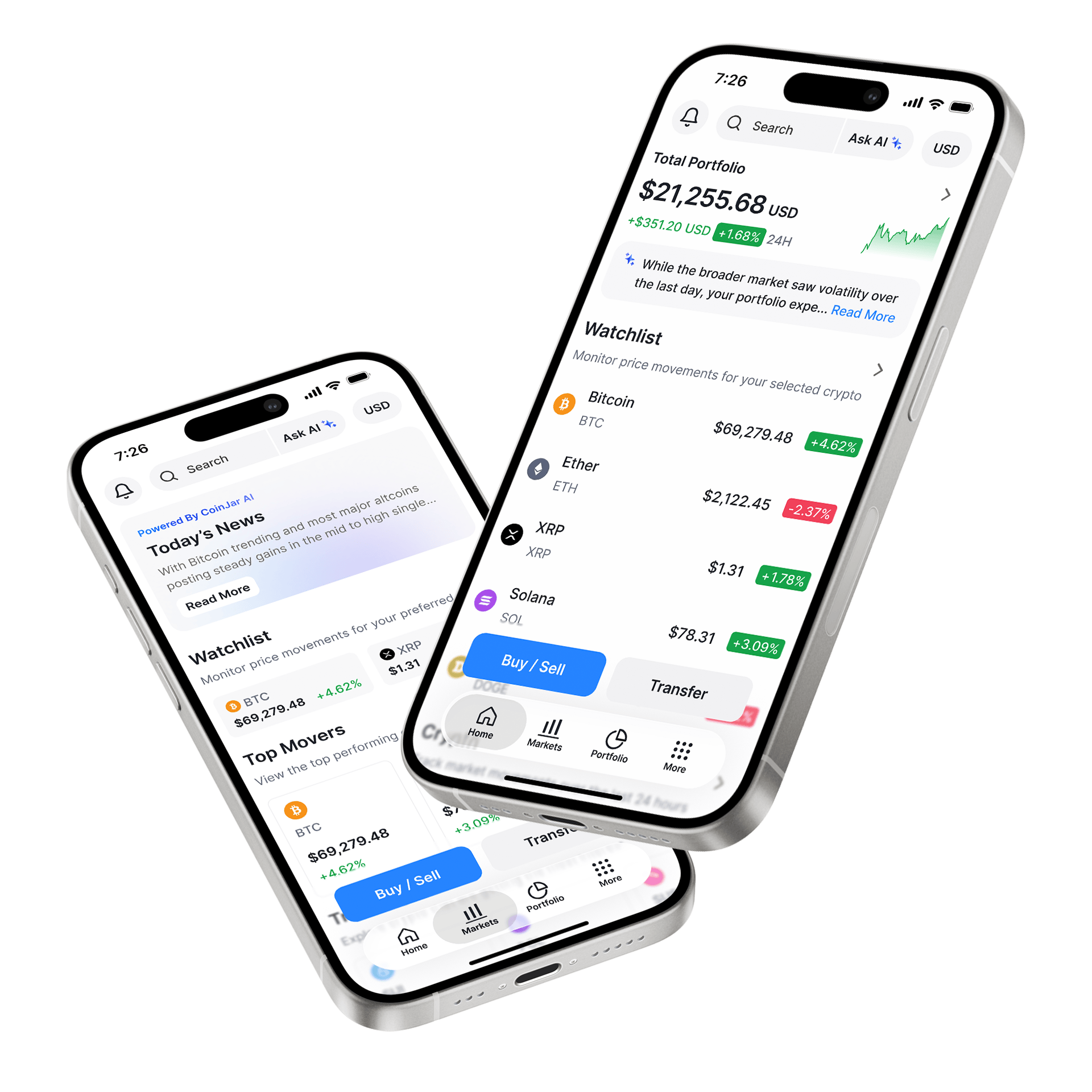
CoinJar App
Buy, sell and send your crypto with the favorite cryptocurrency app in the US.
Get the CoinJar appCoinJar App
Buy, sell and send your crypto with the favorite cryptocurrency app in the US.
Get the CoinJar app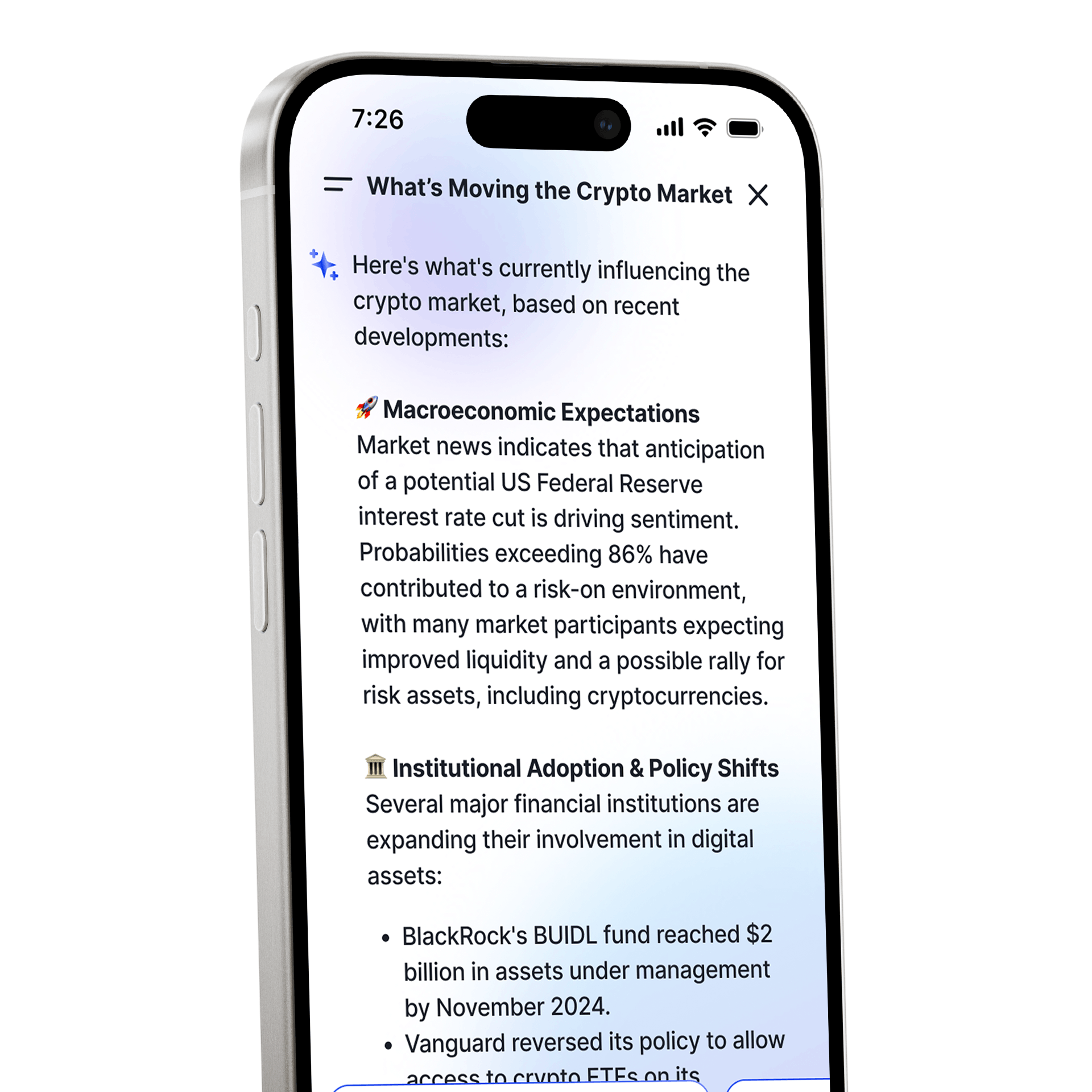
CoinJar AI
CoinJar AI understands your portfolio, tracks the market, and gives you insights that matter. Instead of searching for answers, simply ask a question to get the specific information you need.
Learn moreCoinJar AI
CoinJar AI understands your portfolio, tracks the market, and gives you insights that matter. Instead of searching for answers, simply ask a question to get the specific information you need.
Learn moreBuying, selling, and holding cryptocurrencies is subject to high market risk. The volatile and unpredictable nature of the price of cryptocurrencies may result in a significant loss. CoinJar, inc. is not responsible for any loss that you may incur from price fluctuations when you buy, sell, or hold cryptocurrencies. CoinJar, Inc. does not provide any investment, tax or legal advice; before making the decision to buy, sell or hold any cryptocurrencies, you should conduct your own due diligence and consult your financial, tax and/or legal advisor.
It is your responsibility to determine whether any investment, investment strategy or related transaction is appropriate for you according to your personal investment objectives, financial circumstances, and risk tolerance. Enter into a transaction only if you fully understand its nature, the contractual relationship into which you are entering, all relevant terms and conditions, and the nature and extent of your exposure to loss. Past performance is not a reliable indicator of future results. Geographic restrictions may apply. CoinJar does not endorse the content of, and cannot guarantee or verify the safety of any third party websites. Visit these websites at your own risk.

CoinJar
Get the app.