
Buy Bitcoin
BTCPast performance is not indicative of future results. All prices are sourced from CoinJar Indices.
What is Bitcoin?
Bitcoin (BTC) is a digital currency that runs on a public network of computers rather than through a bank. It was the first cryptocurrency ever created, launching in January 2009, and every transaction since then has been recorded on a public ledger called a blockchain that anyone can inspect.
Bitcoin's design came from a person or group using the name Satoshi Nakamoto, who published the Bitcoin whitepaper in October 2008 and then stepped away from the project. Their identity has never been confirmed.
If you want the fuller mechanics, our guide on what Bitcoin is and how it works covers it in more depth.
Bitcoin at a glance
- Ticker: BTC
- Launched: January 2009
- Maximum supply: 21 million BTC
- Mined so far: about 20.1 million BTC, roughly 95.5% of the total (July 2026)
- Current block reward: 3.125 BTC
- Next halving: expected around April 2028
- Average block time: about 10 minutes
- Smallest unit: one satoshi, or 0.00000001 BTC
Why do people buy Bitcoin?
- Fixed supply. No authority can create more than 21 million BTC, which is why some investors compare Bitcoin to gold as a potential store of value. Unlike gold, Bitcoin has a short history and has experienced extreme price swings.
- Track record. Bitcoin has run continuously since 2009 through several severe downturns and remains the most liquid, widely held cryptocurrency.
- Accessibility. Bitcoin settles every day of the year and can be sent internationally without a bank as an intermediary.
- Diversification. Some investors hold a small allocation because Bitcoin has sometimes moved differently from stocks and bonds. That relationship changes over time, and Bitcoin may fall alongside other assets during market sell-offs.
None of this removes the risk. Bitcoin has lost half its value or more within a year on multiple occasions and could lose all its value. Only use money you can afford to lose.
Can I buy part of a Bitcoin?
Yes. Each Bitcoin divides into 100 million satoshis, so you can buy a small fraction rather than a whole coin. Owning 0.01 BTC gives you the same asset and the same price exposure as owning a whole coin, just less of it. Most exchanges, including CoinJar, let you start from a small amount rather than requiring a full coin.
Buying gradually with Recurring Buy
If you'd rather buy over time than pick a single moment, a Recurring Buy places the same order on a weekly, fortnightly or monthly schedule. Spreading purchases across different prices reduces the impact of any single day, though it doesn't protect against a sustained decline or guarantee a profit. Our article on when to buy Bitcoin looks at how this plays out in practice.
Keeping your Bitcoin safe
You can leave Bitcoin with a custodial platform, which manages the private keys and security infrastructure for you, or move it to a wallet you control, which puts you in charge of the keys and the consequences of losing them. A few habits reduce your exposure either way: use an authenticator app rather than SMS for two-factor authentication, keep any recovery phrase offline rather than in a photo or cloud note, and treat unsolicited investment offers or giveaways as scams. Our guide on how to store cryptocurrency compares the options in detail.
Risks to understand before you buy
- Volatility. Double-digit percentage moves in a week are normal for Bitcoin, and its value can fall to zero.
- No federal insurance. Cryptocurrency held on an exchange isn't protected by the Federal Deposit Insurance Corporation (FDIC) or the Securities Investor Protection Corporation (SIPC). Bitcoin transactions can't be reversed.
- Regulatory change. Federal and state rules on crypto trading, custody and tax continue to evolve.
- Self-custody risk. If you hold your own keys and lose them, the coins are gone permanently.
- Scams. Fake exchanges and phishing sites remain common ways people lose cryptocurrency. The Federal Trade Commission's cryptocurrency guidance explains common warning signs.
Buying Bitcoin with CoinJar in the US
- CoinJar, Inc. is registered as a Money Services Business with the Financial Crimes Enforcement Network and licensed as a money transmitter in applicable states. NMLS ID: 2492913.
- CoinJar was founded in 2013 and serves more than 800,000 customers worldwide.
- Buy Bitcoin using ACH, or fund your USD account by wire transfer.
- Set up weekly, fortnightly or monthly Bitcoin purchases with Recurring Buy.
- Customer Bitcoin is held largely in cold storage under multi-signature controls, with no single party able to move assets alone.
Bank transfer (ACH and wire), or crypto?
Buy Bitcoin instantly with your bank account via ACH or deposit with wire transfer. Easily buy with ACH, wire cash to your account, or swap one cryptocurrency for another in a single click.

How to buy Bitcoin with CoinJar
Start your cryptocurrency portfolio with CoinJar by following these simple steps.
Download the app
Get the CoinJar app on iOS or Android.
Create an account
Sign up and verify your ID – it only takes a couple of minutes.
Make a purchase
Buy Bitcoin and more than 60 other cryptos using ACH or wire transfer.
CoinJar App
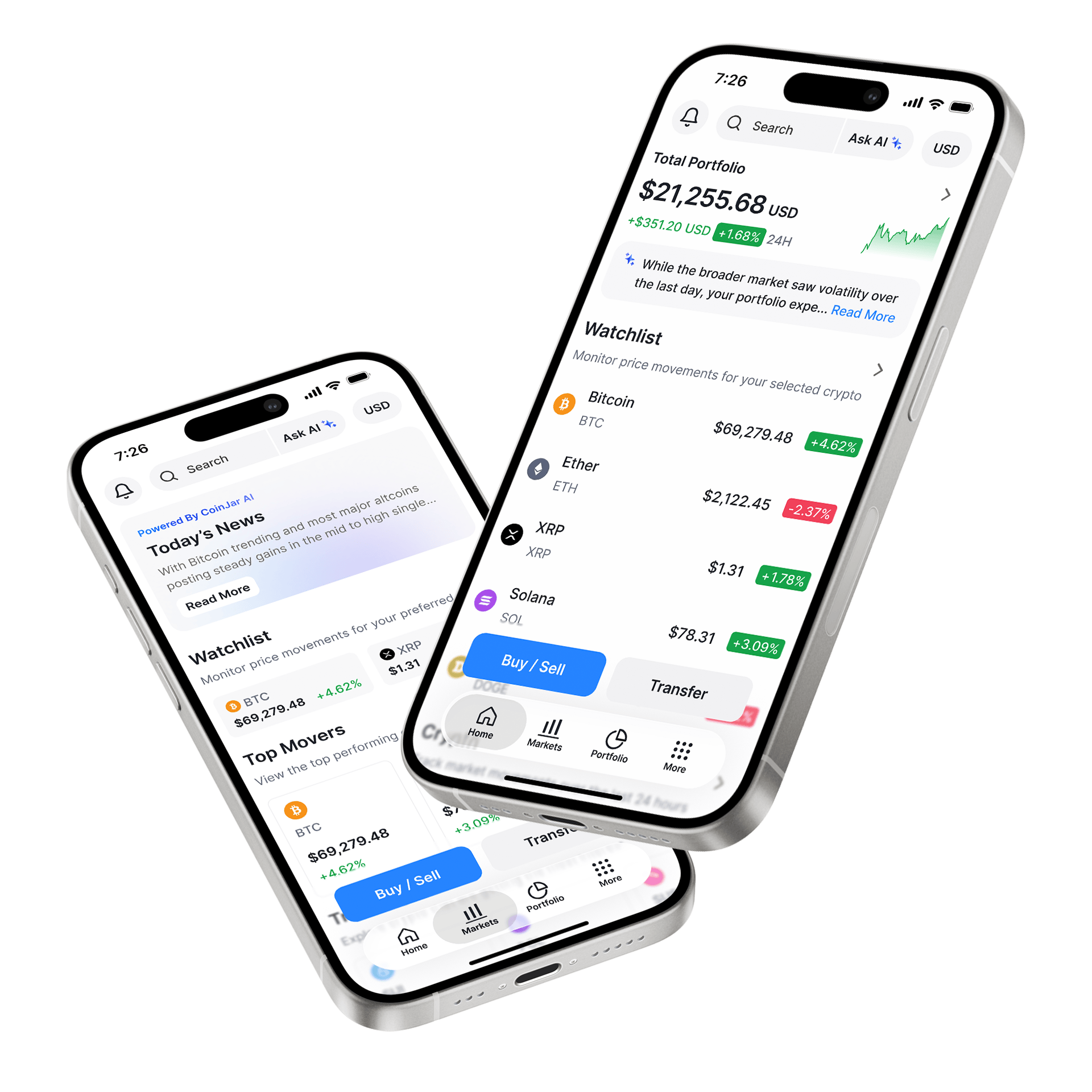
Buy, sell and send your crypto with the favorite cryptocurrency app in the US.
Get the CoinJar appCoinJar App
Buy, sell and send your crypto with the favorite cryptocurrency app in the US.
Get the CoinJar app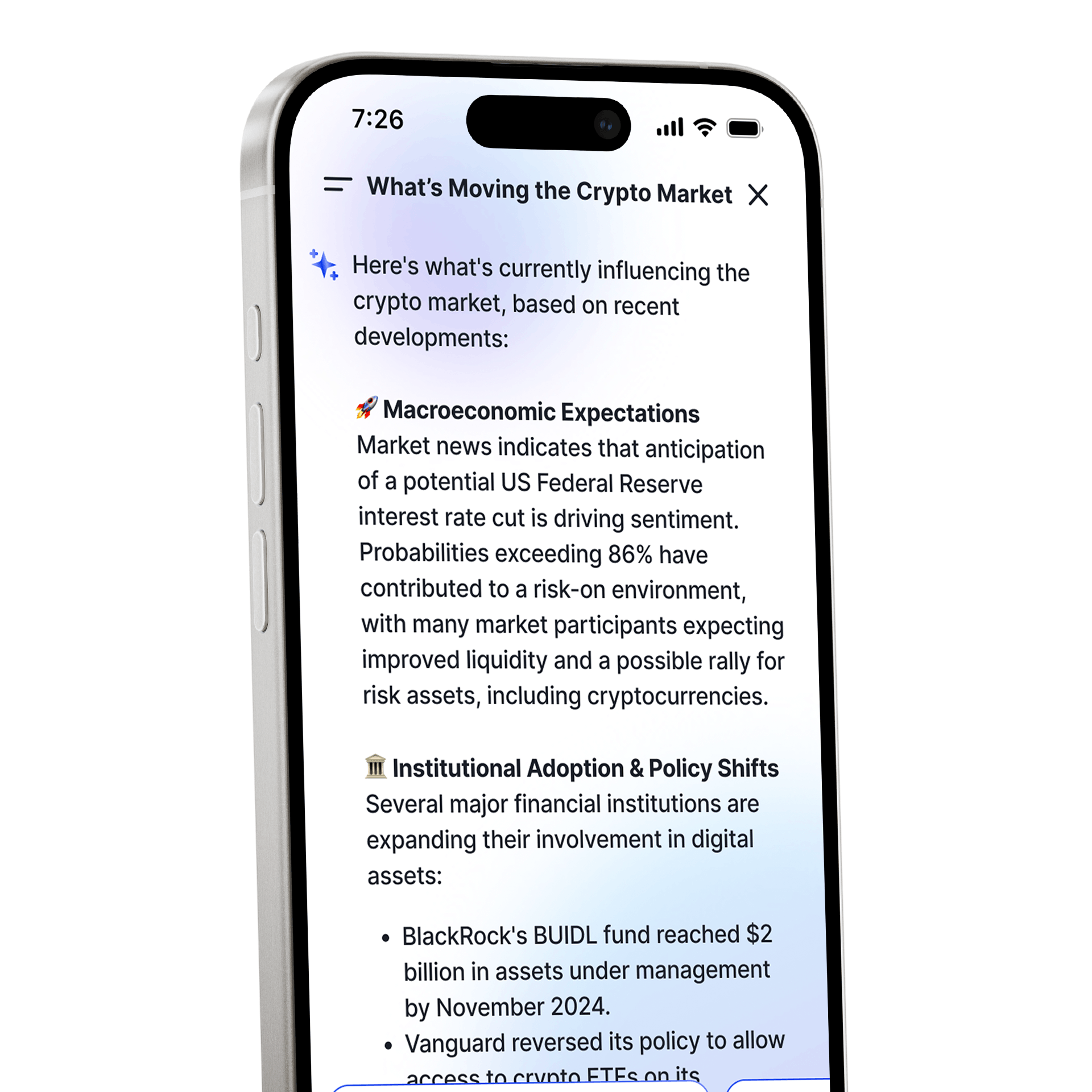
CoinJar AI
CoinJar AI understands your portfolio, tracks the market, and gives you insights that matter. Instead of searching for answers, simply ask a question to get the specific information you need.
Learn moreCoinJar AI
CoinJar AI understands your portfolio, tracks the market, and gives you insights that matter. Instead of searching for answers, simply ask a question to get the specific information you need.
Learn moreBuying, selling, and holding cryptocurrencies is subject to high market risk. The volatile and unpredictable nature of the price of cryptocurrencies may result in a significant loss. CoinJar, inc. is not responsible for any loss that you may incur from price fluctuations when you buy, sell, or hold cryptocurrencies. CoinJar, Inc. does not provide any investment, tax or legal advice; before making the decision to buy, sell or hold any cryptocurrencies, you should conduct your own due diligence and consult your financial, tax and/or legal advisor.
It is your responsibility to determine whether any investment, investment strategy or related transaction is appropriate for you according to your personal investment objectives, financial circumstances, and risk tolerance. Enter into a transaction only if you fully understand its nature, the contractual relationship into which you are entering, all relevant terms and conditions, and the nature and extent of your exposure to loss. Past performance is not a reliable indicator of future results. Geographic restrictions may apply. CoinJar does not endorse the content of, and cannot guarantee or verify the safety of any third party websites. Visit these websites at your own risk.

CoinJar
Get the app.