
Buy USDC
USDCPast performance is not indicative of future results. All prices are sourced from CoinJar Indices.
What is USDC?
USDC is a stablecoin designed to hold a value of one US dollar. It is issued by Circle, a US financial technology company, and backed by reserves held in cash and short-term US government assets. Americans typically hold USDC to trade against a dollar-denominated asset, to move value between supported platforms, or to use applications built on public blockchains.
The dollar peg is a design goal rather than a guarantee. USDC is a digital asset, not money in a bank account, and its value depends on Circle's reserves and redemption arrangements.
How does USDC work?
USDC launched in 2018 through Centre, a consortium set up by Circle and Coinbase. Circle became the sole issuer and operator of the token after the consortium was dissolved in 2023, and Circle has traded on the New York Stock Exchange since its 2025 listing.
Eligible institutional customers can create USDC by depositing dollars with Circle and redeem it for dollars at a one to one rate. That minting and redemption process is what keeps the market price close to a dollar. When USDC trades below a dollar, eligible traders can buy it cheaply and redeem it at par. When it trades above a dollar, they can create new USDC at par and sell into the higher price.
Retail buyers do not redeem directly with Circle. You access the peg through exchanges and liquidity pools, so the price can sit slightly above or below a dollar when supply, demand or access to redemptions shifts. Our guide to what a stablecoin is explains how this model compares with crypto-backed and algorithmic designs.
Does one USDC always equal one dollar?
Not exactly, and not guaranteed. Day to day, USDC trades within a fraction of a cent of a dollar because arbitrage closes any gap quickly. Under stress it can move further, and it has. The peg is best understood as a target supported by reserves and redemption rights rather than a fixed conversion rate you are entitled to as a holder.
What backs USDC?
Circle reports that USDC is fully backed by highly liquid, dollar-denominated assets. Most of the reserve sits in the Circle Reserve Fund, a government money market fund managed by BlackRock and custodied at BNY Mellon, which holds short-dated Treasury securities and overnight Treasury repurchase agreements. The remainder is held as cash at large banks.
Circle publishes reserve information on its USDC transparency page, where Deloitte provides monthly independent assurance over Circle's statements about the USDC in circulation and the assets backing it. As a listed company, Circle also files audited financial statements with the Securities and Exchange Commission.
A reserve attestation and a financial statement audit are different things. An attestation examines a specific statement about the reserves at a particular date, while an audit covers a company's financial statements across a reporting period. Circle does both, though neither removes issuer risk, banking risk, or the possibility that the token trades away from a dollar.
What is USDC used for?
- Trading. USDC provides a dollar-denominated pair for buying and selling other digital assets.
- Moving value between platforms. Blockchain settlement runs continuously, including weekends and federal holidays, when ACH and wire transfers do not.
- Cross-border payments. Businesses use USDC to send value internationally without relying on correspondent banking for the blockchain leg of the payment.
- Decentralized finance. USDC is widely used in lending markets, decentralized exchanges and liquidity pools, all of which add smart contract and counterparty risk.
- Treasury and settlement. Trading desks and payment companies hold USDC to settle obligations outside banking hours.
Which blockchain network is USDC on?
Circle issues native USDC on many blockchains, including Ethereum, Solana, Base, Arbitrum, Polygon and Avalanche. Each version lives on its own network, so the receiving wallet or platform has to support the exact network you send on.
Native USDC is issued directly by Circle. Bridged versions, often labeled USDC.e, are created by locking tokens on one network and issuing matching tokens on another, so they depend on the security and solvency of the bridge as well as on Circle. That adds smart contract and counterparty risk on top of the risks of USDC itself.
CoinJar supports USDC transfers on Ethereum and Solana. Confirm that both sides of the transfer use the same network before you send. Our list of supported cryptocurrencies and networks shows the current options, and our guide to wrong-network transfers explains why some mistakes cannot be undone.
What are the risks of buying USDC?
A stable price target does not make USDC risk free. The main risks are structural rather than price driven.
- No government protection. USDC is not a bank deposit. It is not insured by the FDIC, protected by SIPC, or guaranteed by any government agency. The reserve deposits Circle holds at banks are insured to Circle as a corporate depositor, not to you as a token holder, and there is no pass-through insurance.
- Depeg risk. USDC can trade below a dollar. In March 2023 it fell to around $0.87 after Circle disclosed that part of its reserve was held at Silicon Valley Bank, which failed. The peg recovered within days once federal authorities protected the bank's depositors and Circle resumed redemptions.
- Issuer risk. USDC depends on Circle holding sufficient reserves and meeting eligible redemption requests.
- Banking and reserve risk. The reserve relies on banks, custodians and money market infrastructure, and problems at any of them can affect confidence in the token.
- Freezing risk. Circle can freeze tokens at specific addresses to comply with sanctions, court orders or other legal requirements. Frozen USDC cannot be moved.
- Network risk. Sending USDC over an unsupported network can result in permanent loss, and bridged versions depend on third-party smart contracts.
- Smart contract risk. Bugs or exploits affecting USDC, a wallet, an exchange or a decentralized finance protocol can put funds at risk.
- No yield. USDC does not pay interest to holders, and federal stablecoin law prohibits issuers from paying yield for simply holding the token. Any product offering a return on USDC introduces separate lending, protocol and counterparty risks.
The Federal Reserve has published a neutral analysis of how the Silicon Valley Bank failure spilled into stablecoins in its FEDS Note on bank runs and stablecoins.
Is USDC regulated in the US?
USDC is the most closely regulated of the major dollar stablecoins, though that is not the same as being government guaranteed. Circle holds money transmitter licenses across most states, a BitLicense from the New York Department of Financial Services, is registered with FinCEN as a money services business, and has received approval from the OCC to operate a national trust bank that is intended to bring reserve management under federal supervision. That trust bank is not an insured depository institution.
CoinJar, Inc. is registered with FinCEN as a money services business, NMLS ID 2492913, and holds money transmitter licenses in a growing number of states. Availability of individual assets can vary by state.
How is USDC taxed in the US?
The IRS treats digital assets, including stablecoins, as property rather than currency. Holding USDC is not a taxable event, but disposing of it can be. Dispositions include selling USDC for dollars, swapping it for another digital asset, and using it to pay for goods or services.
The IRS sets out the rules on its digital assets page. This is general information, not tax advice, so speak to a qualified tax professional about your own position.
USDC compared with USDT
USDC and USDT are both designed to track the dollar, but their issuers, reserves and reporting differ. Circle issues USDC from the US and publishes monthly reserve assurance reports from Deloitte. Tether issues USDT offshore and publishes quarterly reserve attestations from BDO Italia.
USDC's reported reserves consist of cash and short-term government assets, which is the asset mix federal stablecoin law contemplates. Tether reports a broader mix that also includes gold, Bitcoin and secured loans, and it has launched a separate token, USAT, for the US market rather than bringing USDT itself inside the federal framework. USDT generally has deeper liquidity across global markets, while USDC is more widely integrated with US-regulated platforms and decentralized finance. Both have traded below a dollar in the past, and neither is a bank deposit.
Why USDC matters
USDC connects the dollar to public blockchain networks, which is why it shows up across trading, payments and decentralized finance. Its usefulness still rests on Circle, Circle's banking partners, the network you choose and the platform holding the tokens. Read the current reserve reports, treat the peg as a target rather than a promise, and always confirm the network before you move USDC.
Bank transfer (ACH and wire), or crypto?
Buy USDC instantly with your bank account via ACH or deposit with wire transfer. Easily buy with ACH, wire cash to your account, or swap one cryptocurrency for another in a single click.


How to buy USDC with CoinJar
Start your cryptocurrency portfolio with CoinJar by following these simple steps.
Download the app
Get the CoinJar app on iOS or Android.
Create an account
Sign up and verify your ID – it only takes a couple of minutes.
Make a purchase
Buy USDC and more than 60 other cryptos using ACH or wire transfer.
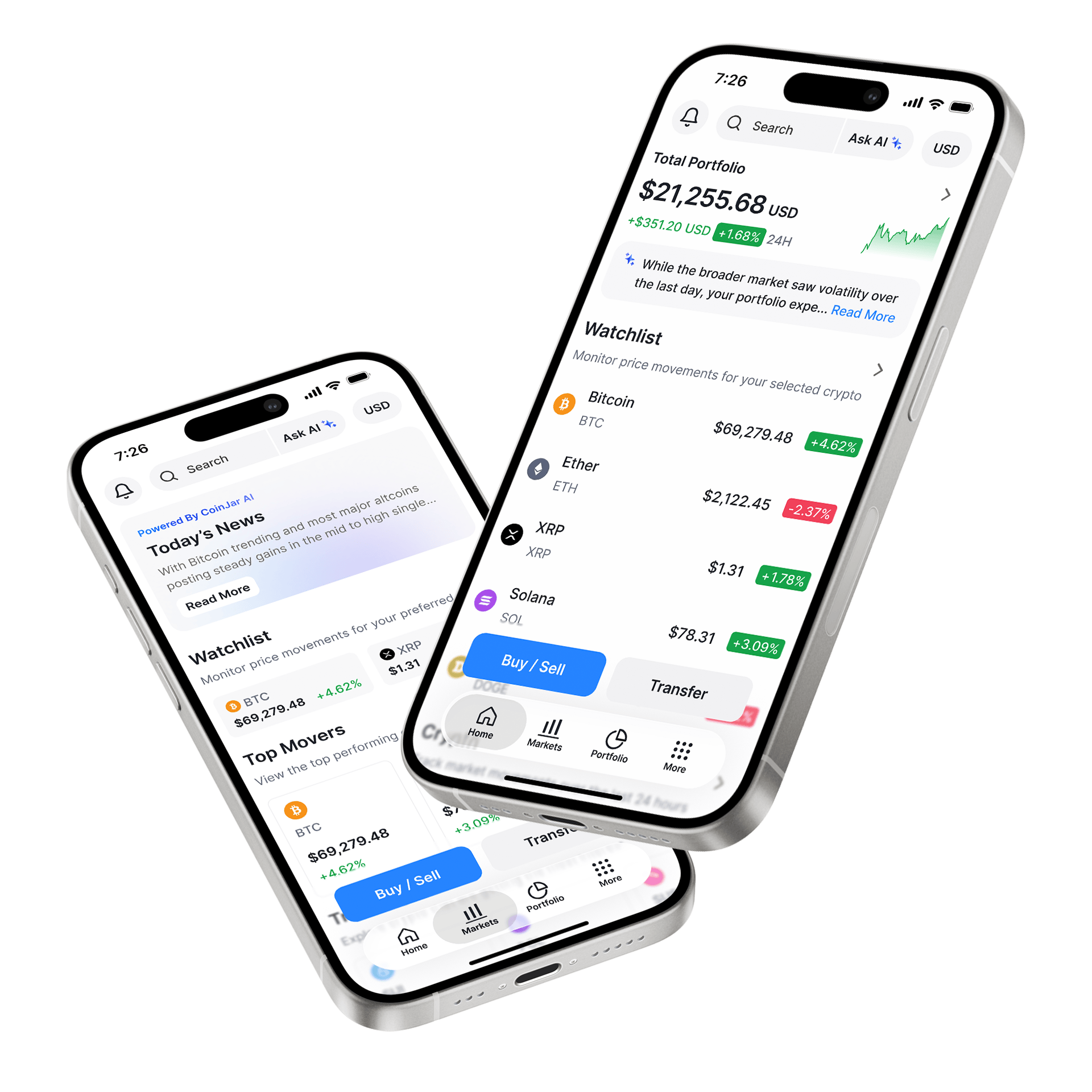
CoinJar App
Buy, sell and send your crypto with the favorite cryptocurrency app in the US.
Get the CoinJar appCoinJar App
Buy, sell and send your crypto with the favorite cryptocurrency app in the US.
Get the CoinJar app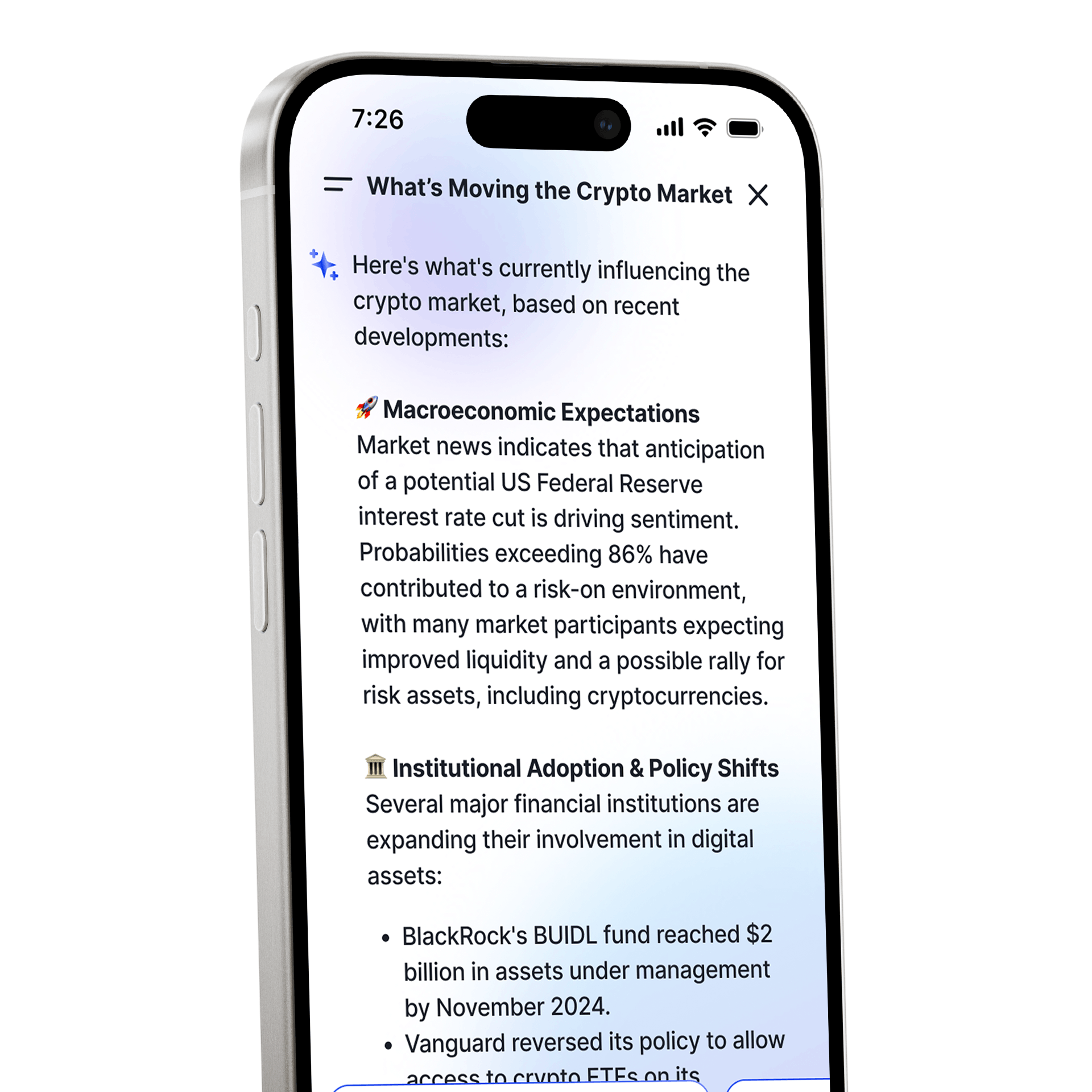
CoinJar AI
CoinJar AI understands your portfolio, tracks the market, and gives you insights that matter. Instead of searching for answers, simply ask a question to get the specific information you need.
Learn moreCoinJar AI
CoinJar AI understands your portfolio, tracks the market, and gives you insights that matter. Instead of searching for answers, simply ask a question to get the specific information you need.
Learn moreBuying, selling, and holding cryptocurrencies is subject to high market risk. The volatile and unpredictable nature of the price of cryptocurrencies may result in a significant loss. CoinJar, inc. is not responsible for any loss that you may incur from price fluctuations when you buy, sell, or hold cryptocurrencies. CoinJar, Inc. does not provide any investment, tax or legal advice; before making the decision to buy, sell or hold any cryptocurrencies, you should conduct your own due diligence and consult your financial, tax and/or legal advisor.
It is your responsibility to determine whether any investment, investment strategy or related transaction is appropriate for you according to your personal investment objectives, financial circumstances, and risk tolerance. Enter into a transaction only if you fully understand its nature, the contractual relationship into which you are entering, all relevant terms and conditions, and the nature and extent of your exposure to loss. Past performance is not a reliable indicator of future results. Geographic restrictions may apply. CoinJar does not endorse the content of, and cannot guarantee or verify the safety of any third party websites. Visit these websites at your own risk.

CoinJar
Get the app.