
Buy Maker Dai
DAIPast performance is not indicative of future results. All prices are sourced from CoinJar Indices.
What is Maker Dai?
DAI is a cryptocurrency built to hold a value close to one US dollar. It is issued by the Maker Protocol, a set of smart contracts on Ethereum now governed by the Sky ecosystem, and it is backed by other digital assets locked in public on-chain vaults rather than by cash sitting in a bank account. That makes DAI a crypto-collateralized stablecoin, and it is the reason DAI behaves differently from USDC or Tether. If stablecoins are new to you, start with our guide to what a stablecoin is.
The peg is a target, not a guarantee. DAI is designed to track the dollar through incentives, and it can trade slightly above or below one dollar.
How is DAI created and what backs it?
DAI is not issued by a company. It is created when someone deposits approved collateral into a Maker vault, originally called a Collateralized Debt Position, and generates DAI as debt against that collateral. To get the collateral back, the borrower repays the DAI plus a stability fee set by governance.
Every vault must be overcollateralized, which means the collateral is worth more than the DAI drawn against it. If the collateral value falls through the liquidation ratio for that asset, the vault is liquidated automatically and the collateral is auctioned to cover the debt. Because all of this sits in public smart contracts, anyone can inspect what is backing DAI at any time. That is not possible with stablecoins backed by off-chain bank reserves.
Approved collateral has broadened well past Ether. It now includes wrapped Bitcoin, other stablecoins held in a dedicated module, and tokenized real-world assets. The exact mix changes as governance votes change it, and the Sky protocol documentation is the primary source for current parameters.
What keeps DAI close to one US dollar?
Four mechanisms work together, and governance can adjust all of them.
- The Peg Stability Module. Anyone can swap DAI for another approved stablecoin at a fixed one-to-one rate. When DAI drifts above or below the dollar, that swap creates an immediate arbitrage loop that pulls it back.
- The stability fee. Raising the cost of borrowing DAI discourages new supply and supports the price. Lowering it encourages more DAI to be created.
- A savings rate contract. Governance can make holding DAI in a dedicated contract more or less attractive, which shifts demand.
- Liquidations. Vaults that fall below their required collateral level are auctioned off, so the outstanding DAI stays backed.
Is DAI an algorithmic stablecoin?
No. DAI is crypto-collateralized and overcollateralized. Every DAI has collateral behind it that is worth more than the DAI itself.
Algorithmic stablecoins such as the failed Terra USD tried to hold a peg by expanding and contracting token supply without dedicated collateral reserves. That design has repeatedly broken, and regulators treat the two categories separately as a result. Federal Reserve staff research on stablecoins and financial stability classifies DAI as crypto-collateralized rather than algorithmic, and analyzes the two models differently.
DAI carries real risks, covered below, but they are collateral, governance and smart contract risks, not the reflexive supply spiral that destroyed Terra USD.
How does DAI differ from USDC and Tether?
| DAI | USDC and Tether | |
|---|---|---|
| Issuer | A decentralized protocol governed by token holders | A single private company |
| Backing | Digital assets and tokenized real-world assets in on-chain vaults | Cash and short-term instruments held off-chain |
| Redemption | Redeemed for collateral through the protocol | Redeemed for fiat currency through the issuer |
| Verification | Collateral is visible on-chain in real time | Verified through issuer attestations and reports |
Neither model is automatically safer. Fiat-reserve stablecoins concentrate risk in one issuer and its banking partners. DAI spreads that risk across collateral markets, oracles, smart contracts and a governance process.
Is DAI being discontinued or replaced by USDS?
No. DAI has not been retired, and Sky has not announced a sunset date, a minting halt or any change to redemption.
In 2024 MakerDAO rebranded to Sky and launched USDS, a newer stablecoin, alongside the SKY governance token. Sky has since directed most new activity to USDS, and during 2026 a number of large global exchanges delisted DAI and converted their customers' DAI balances to USDS at one for one. DAI is therefore best understood as the legacy token of the two: still live, still minted and redeemed through Maker vaults, but no longer the token the protocol is being built around.
Two things have not changed. The DAI token contract was deliberately built so it cannot be altered, upgraded or deprecated by a governance vote, which means DAI held in self-custody cannot be converted without the holder acting. And the converter between the two tokens runs in both directions, so USDS can be swapped back to DAI at one for one just as easily as the reverse.
CoinJar lists DAI in its existing legacy form and is not converting customer DAI balances to USDS. We do not list USDS, so moving between the two is something you would do yourself, off platform. Our explainer on MKR to SKY and DAI to USDS sets out how the two sets of tokens relate.
What is DAI used for?
- Collateral and lending in decentralized finance. DAI is one of the most widely accepted assets across lending markets and derivatives platforms. Our guide to decentralized finance explains the wider ecosystem.
- A trading and settlement unit. Stablecoins act as the cash leg of on-chain markets, so positions can be quoted and settled without touching the banking system.
- Moving value across borders. DAI settles on a public network at any hour, without correspondent banks in the middle.
- Stepping out of volatility. Traders rotate into DAI to hold a dollar-denominated position without cashing out to a bank account.
Which network does DAI run on?
The canonical DAI token is an ERC-20 contract on Ethereum. If Ethereum itself is unfamiliar, our Ethereum explainer is a good starting point.
DAI also exists on several other networks, including Ethereum layer twos and sidechains. Those versions are separate bridged contracts, not the Ethereum mainnet token, and they carry the additional risk of the bridge that issued them. When you withdraw DAI, always confirm the receiving wallet supports the exact network you are sending on. Our guide to crypto bridges explains why the distinction matters.
What are the risks of holding DAI?
- Peg risk. The dollar target is maintained by incentives, not guaranteed. DAI has traded away from a dollar before and can again.
- Collateral concentration. A meaningful share of DAI's backing has shifted toward centralized stablecoins and tokenized real-world assets. That imports the counterparty risk of those issuers into DAI, and it means DAI is less independent of the traditional financial system than its design suggests.
- Smart contract and oracle risk. The protocol depends on code and on price feeds. Failures in either can cause incorrect liquidations or losses.
- Governance risk. Collateral types, fees and risk parameters are set by token holder votes. Those votes can change the risk profile of DAI without your involvement.
- Availability and liquidity risk. Several large exchanges stopped supporting DAI during 2026 and converted customer balances to USDS. Fewer venues quoting DAI can mean thinner liquidity and wider spreads than for the newer stablecoins, and it means where you hold DAI matters.
- No federal protection. Digital assets held with CoinJar are not deposits and are not insured by the FDIC, and they are not protected by SIPC. If you lose value, there is no compensation scheme to fall back on.
Buying DAI with US dollars on CoinJar
CoinJar has operated since 2013 and lists DAI against US dollars, so you can buy, sell and hold it without converting through another cryptocurrency first. Current charges are on our fees page, and live US dollar rates are on our cryptocurrency prices page.
CoinJar, Inc. is registered with FinCEN as a money services business, NMLS ID 2492913, and holds money transmitter licenses in a growing number of states. Before you sign up, check whether CoinJar operates in your state.
How is DAI taxed in the US?
The IRS generally treats DAI as property. A taxable disposal can occur when you sell it for US dollars, exchange it for another digital asset or spend it.
The IRS explains these rules on its digital assets guidance page. Our guide to exporting your transaction history for tax purposes shows how to pull the records you will need. This is general information, not tax advice. Consider speaking to a qualified tax professional about your circumstances.
Bank transfer (ACH and wire), or crypto?
Buy Maker Dai instantly with your bank account via ACH or deposit with wire transfer. Easily buy with ACH, wire cash to your account, or swap one cryptocurrency for another in a single click.


How to buy Maker Dai with CoinJar
Start your cryptocurrency portfolio with CoinJar by following these simple steps.
Download the app
Get the CoinJar app on iOS or Android.
Create an account
Sign up and verify your ID – it only takes a couple of minutes.
Make a purchase
Buy Maker Dai and more than 60 other cryptos using ACH or wire transfer.
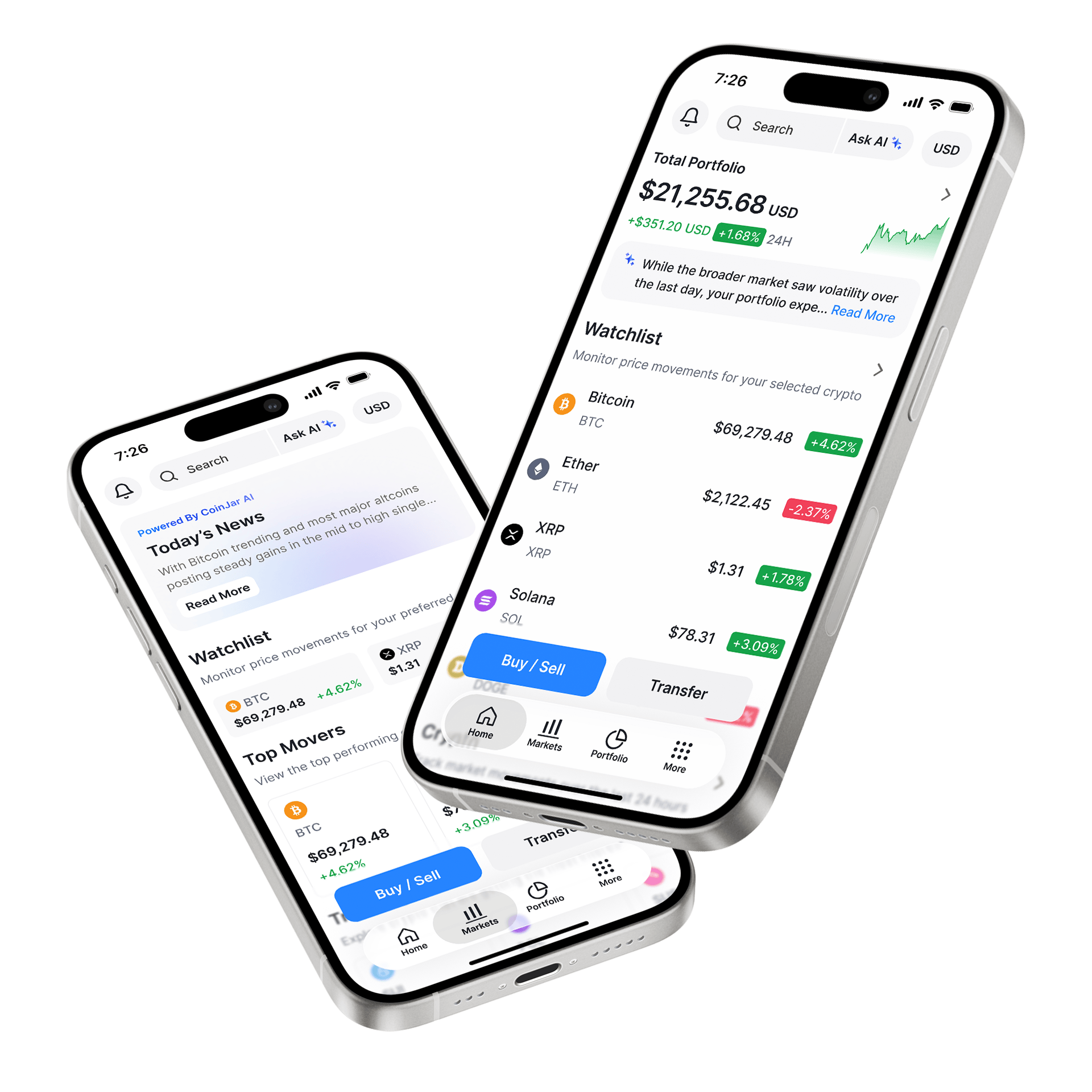
CoinJar App
Buy, sell and send your crypto with the favorite cryptocurrency app in the US.
Get the CoinJar appCoinJar App
Buy, sell and send your crypto with the favorite cryptocurrency app in the US.
Get the CoinJar app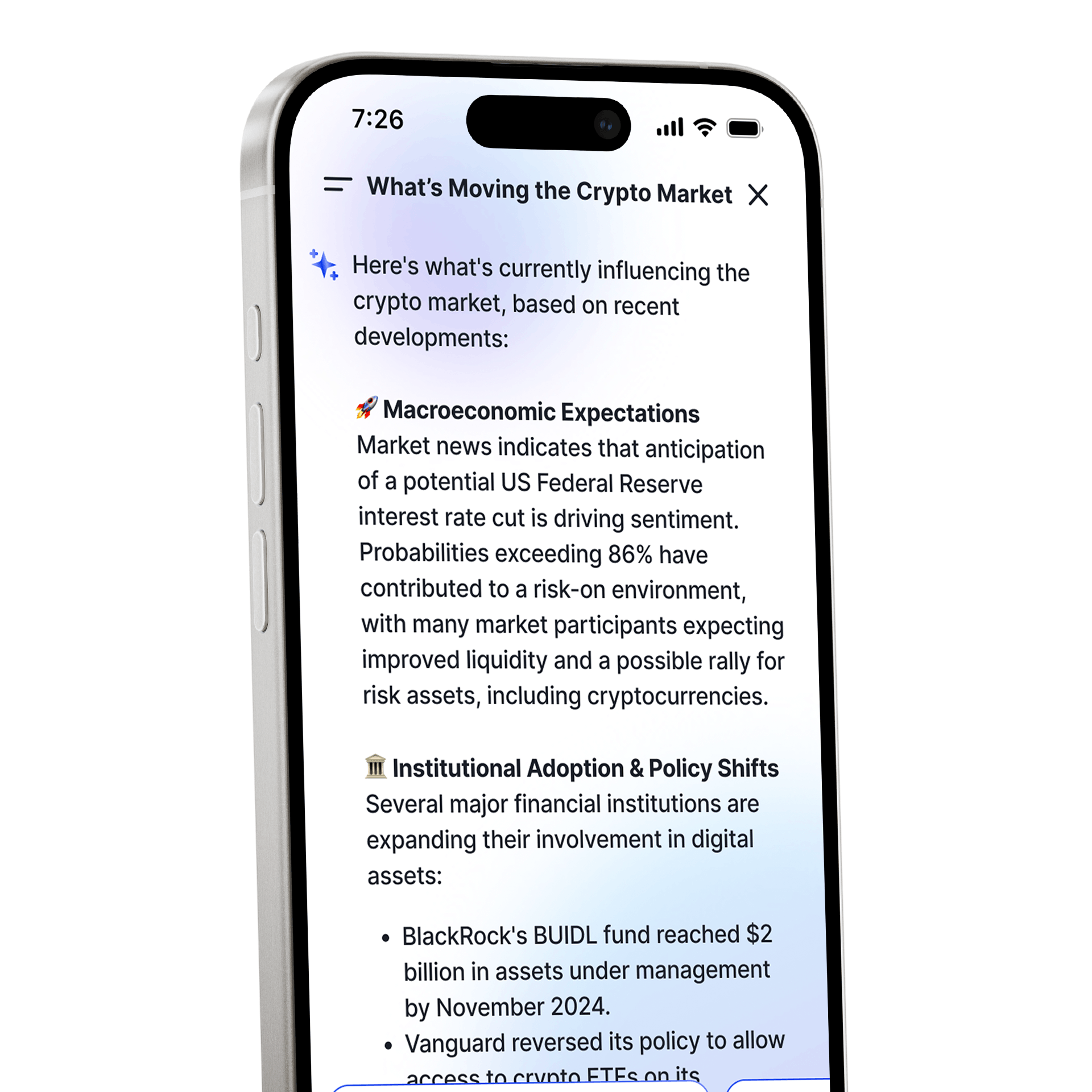
CoinJar AI
CoinJar AI understands your portfolio, tracks the market, and gives you insights that matter. Instead of searching for answers, simply ask a question to get the specific information you need.
Learn moreCoinJar AI
CoinJar AI understands your portfolio, tracks the market, and gives you insights that matter. Instead of searching for answers, simply ask a question to get the specific information you need.
Learn moreBuying, selling, and holding cryptocurrencies is subject to high market risk. The volatile and unpredictable nature of the price of cryptocurrencies may result in a significant loss. CoinJar, inc. is not responsible for any loss that you may incur from price fluctuations when you buy, sell, or hold cryptocurrencies. CoinJar, Inc. does not provide any investment, tax or legal advice; before making the decision to buy, sell or hold any cryptocurrencies, you should conduct your own due diligence and consult your financial, tax and/or legal advisor.
It is your responsibility to determine whether any investment, investment strategy or related transaction is appropriate for you according to your personal investment objectives, financial circumstances, and risk tolerance. Enter into a transaction only if you fully understand its nature, the contractual relationship into which you are entering, all relevant terms and conditions, and the nature and extent of your exposure to loss. Past performance is not a reliable indicator of future results. Geographic restrictions may apply. CoinJar does not endorse the content of, and cannot guarantee or verify the safety of any third party websites. Visit these websites at your own risk.

CoinJar
Get the app.