
Buy Origin Protocol
OGNPast performance is not indicative of future results. All prices are sourced from CoinJar Indices.
What is Origin Protocol?
Origin Protocol builds yield bearing tokens. Its products take an asset you already hold, such as ether or dollars, and issue a token that represents the same asset while automatically earning a return from strategies running underneath. OGN is the protocol's token.
Origin is unusual among tokens of its era in having changed direction completely and survived it. It launched in 2017 with an ambition to build peer to peer commerce on the blockchain, spent several years on marketplaces and an NFT launchpad, and eventually concentrated on decentralized finance, where its products found an audience. Our guide to decentralized finance covers the wider category, and our guide to Ethereum covers the network Origin is built on.
What Origin actually makes
The common design across Origin's products is a token that grows in your wallet. Rather than accruing a claim you have to collect, the balance itself increases as yield is earned, which is called rebasing.
Origin Ether. A token backed one for one by ether, which routes the underlying assets into liquid staking and related strategies and passes the return through to holders. Super Origin Ether. A version of the same idea deployed on Base, Coinbase's layer two network, designed to boost returns using concentrated liquidity. Origin Dollar. A dollar denominated token that earns yield by allocating its backing into established lending markets. Origin Sonic. The same approach applied on the Sonic network, issued under the ticker OS and backed by Sonic's native token. Automated redemption vaults. A newer product that earns by arbitraging the difference between the market price of liquid staking tokens and their redemption value.
Notice what all of these have in common: they sit on top of other protocols. Origin's skill is allocation, packaging and risk management rather than operating the underlying yield source itself. That is a legitimate business, and it means Origin inherits the risk of everything it builds on.
How OGN is meant to capture value
This is the part that distinguishes OGN from most governance tokens, and it is the reason to look at it seriously.
Origin directs protocol revenue from its products into buying OGN on the open market, and distributes those purchased tokens to holders who stake. Staking is done by locking OGN for a chosen period, which produces a separate staked position known as xOGN, carrying voting power weighted by how long you lock for. Locks run from one month up to a maximum of one year, a much shorter horizon than the four year maximum used by Origin's earlier governance token.
So the design links product revenue to the token in two ways at once: buying pressure from the buybacks, and a distribution to people who stake rather than merely hold.
Three caveats belong with that. The revenue depends entirely on how much value sits in the products and what yields they can generate, both of which move with the market. The policy of directing revenue to buybacks is a governance decision and can be changed by another governance decision. And rewards go to stakers, so simply holding OGN in an exchange account does not participate in the distribution.
The OGV merger
For a period Origin ran two tokens: OGN for the original protocol, and a separate governance token for the decentralized finance products.
In 2024 holders of both voted to consolidate them into a single token. Conversion was offered at a fixed ratio through an official migration portal, which opened in May 2024 and remained available for one year before closing in May 2025.
That window has now passed. If you are researching Origin using older material you will find references to that second token and to its staked version, describing a structure that no longer exists. Anyone still holding a legacy balance should check Origin's official documentation for the current position rather than assuming a conversion route is still open, and should be extremely careful with any website offering to migrate tokens. Fake migration pages that ask you to connect a wallet and approve a transaction are one of the most reliable ways people lose tokens.
The 2020 Origin Dollar exploit
In November 2020, shortly after Origin Dollar launched, an attacker used a flash loan combined with a flaw in the vault's accounting to artificially inflate the token's supply and drain roughly seven million dollars in assets.
Origin published a root cause analysis, put together a compensation plan that let affected users make claims, and relaunched the product after further auditing.
It is old news, and the code has changed substantially since. It is included here because a page about this asset that omits it would be selling rather than informing, and because the underlying point still applies: protocols that automate yield across other protocols are complex, and complexity is where these failures live.
Which network is your OGN on?
OGN is natively an ERC-20 token on Ethereum. Origin's products are deployed across several networks, including Base and Sonic, but that does not mean an OGN balance can be sent to any of them freely.
Addresses are not interchangeable between networks. Sending OGN to an address on a network the receiving wallet or exchange does not support is one of the most common ways people permanently lose tokens, and it usually cannot be reversed. Before any transfer, confirm which network the destination expects and make sure the network you are sending from matches. Our guide to sending crypto on the wrong network covers what can and cannot be recovered.
What are the risks of holding OGN?
Stacked smart contract risk. Origin's products allocate into other protocols, so a failure in any of those dependencies, or in Origin's own contracts, can cause losses. Origin has been exploited before. Revenue is not guaranteed. Buybacks are funded by fees from the products. If deposits shrink or yields compress, the revenue supporting the token shrinks with them. Policy can change. Directing revenue to buybacks is a governance choice, not a hard coded property of the token. A future vote could redirect it. Rewards require staking. The value accrual is aimed at people who lock tokens. Passive holders get the buyback pressure but not the distribution. Formidable competition. Liquid staking and yield bearing dollars are dominated by much larger protocols with deeper liquidity and stronger integrations. Yield concentration. Returns depend on conditions in staking and lending markets. Compressed yields across the sector affect every product Origin runs at once. Governance and administrative control. Parameters, strategies and upgrades are managed through governance and multisignature arrangements, which concentrate practical control in a small group. Volatility and liquidity. OGN can move sharply, and market depth can be thin when conditions deteriorate. No consumer protection. Crypto assets are high risk and your capital is at risk. OGN is not insured by the Federal Deposit Insurance Corporation and it is not protected by the Securities Investor Protection Corporation. You should be prepared to lose all the money you put in.
Buying OGN with US dollars on CoinJar
CoinJar has operated since 2013 and lists OGN against US dollars, so you can buy, sell and hold it without converting through another cryptocurrency first. Current charges are on our fees page, and live US dollar rates are on our cryptocurrency prices page.
CoinJar, Inc. is registered with FinCEN as a money services business and holds money transmitter licenses in a growing number of states, NMLS ID 2492913. You can check whether CoinJar operates in your state before you sign up.
How is OGN taxed in the US?
The IRS generally treats OGN as property. A taxable event can occur when you sell it for US dollars, exchange it for another cryptocurrency, spend it or give it away.
The IRS explains these rules on its digital assets guidance page. Our guide to downloading your transaction history for tax shows how to get the records you need. This is general information, not tax advice. Consider speaking to a qualified tax professional about your circumstances.
Bank transfer (ACH and wire), or crypto?
Buy Origin Protocol instantly with your bank account via ACH or deposit with wire transfer. Easily buy with ACH, wire cash to your account, or swap one cryptocurrency for another in a single click.


How to buy Origin Protocol with CoinJar
Start your cryptocurrency portfolio with CoinJar by following these simple steps.
Download the app
Get the CoinJar app on iOS or Android.
Create an account
Sign up and verify your ID – it only takes a couple of minutes.
Make a purchase
Buy Origin Protocol and more than 60 other cryptos using ACH or wire transfer.
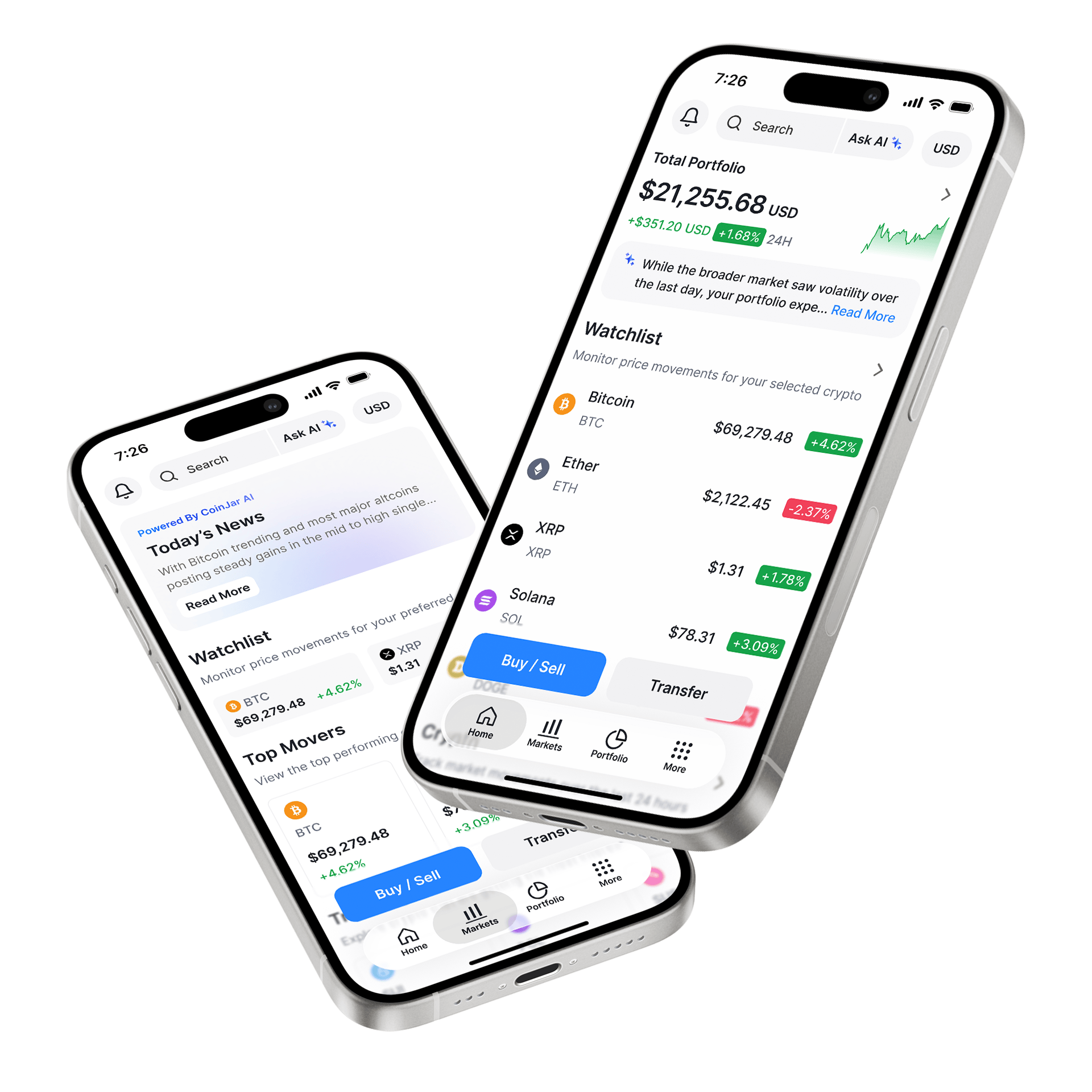
CoinJar App
Buy, sell and send your crypto with the favorite cryptocurrency app in the US.
Get the CoinJar appCoinJar App
Buy, sell and send your crypto with the favorite cryptocurrency app in the US.
Get the CoinJar app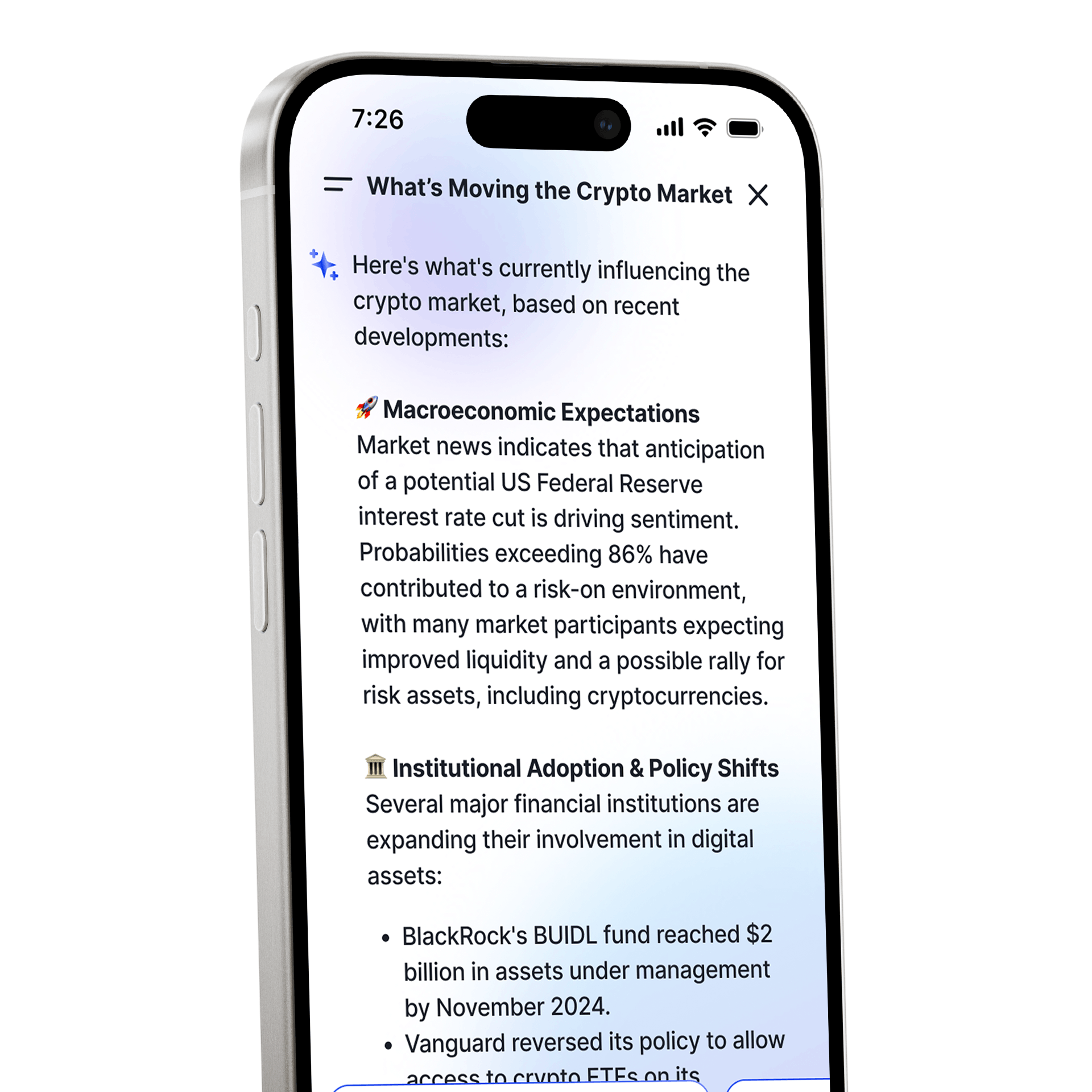
CoinJar AI
CoinJar AI understands your portfolio, tracks the market, and gives you insights that matter. Instead of searching for answers, simply ask a question to get the specific information you need.
Learn moreCoinJar AI
CoinJar AI understands your portfolio, tracks the market, and gives you insights that matter. Instead of searching for answers, simply ask a question to get the specific information you need.
Learn moreBuying, selling, and holding cryptocurrencies is subject to high market risk. The volatile and unpredictable nature of the price of cryptocurrencies may result in a significant loss. CoinJar, inc. is not responsible for any loss that you may incur from price fluctuations when you buy, sell, or hold cryptocurrencies. CoinJar, Inc. does not provide any investment, tax or legal advice; before making the decision to buy, sell or hold any cryptocurrencies, you should conduct your own due diligence and consult your financial, tax and/or legal advisor.
It is your responsibility to determine whether any investment, investment strategy or related transaction is appropriate for you according to your personal investment objectives, financial circumstances, and risk tolerance. Enter into a transaction only if you fully understand its nature, the contractual relationship into which you are entering, all relevant terms and conditions, and the nature and extent of your exposure to loss. Past performance is not a reliable indicator of future results. Geographic restrictions may apply. CoinJar does not endorse the content of, and cannot guarantee or verify the safety of any third party websites. Visit these websites at your own risk.

CoinJar
Get the app.