
Buy The Sandbox
SANDPast performance is not indicative of future results. All prices are sourced from CoinJar Indices.
What is The Sandbox?
The Sandbox is a creator platform built around a voxel world, a marketplace and a set of tools for making games without writing code. SAND is its token: an ERC-20 token on Ethereum used as the currency of that economy, as a governance vote, and, in the project's plans, as the gas token of a network of its own.
It is worth saying plainly at the top that this is not the same project it was in 2021. The Sandbox rose on the metaverse land boom, and in 2025 its parent company took direct control, cut more than half the staff and repositioned the business around the creator economy rather than virtual real estate. Anyone assessing SAND today is assessing that pivot. Our guide to NFTs covers the asset type the platform is built on, and our guide to Ethereum covers the network SAND actually lives on.
Where did The Sandbox come from?
The Sandbox started as a mobile game with no blockchain in it at all. Pixowl, founded in 2011 by Arthur Madrid and Sebastien Borget, released the original Sandbox in 2012 as a conventional pixel art building game.
Animoca Brands acquired Pixowl in 2018 and moved the intellectual property into a subsidiary, TSB Gaming, with a plan to rebuild it as a 3D blockchain world. SAND followed in 2020, alongside sales of LAND, the platform's virtual parcels.
What came next was the metaverse cycle. Hundreds of brands bought parcels, celebrity announcements arrived weekly, and virtual land changed hands at valuations that made sense only inside the assumption that large numbers of people would soon be spending their time there. That assumption did not hold, and the platform has spent the years since looking for a business underneath it.
The 2025 restructuring, and why it matters
In August 2025, Animoca Brands restructured The Sandbox directly. More than half of a workforce of roughly 250 people was cut, several offices were closed, and Animoca's chief executive Robby Yung was installed as chief executive of The Sandbox. Co-founder Arthur Madrid moved to chairman and co-founder Sebastien Borget to global ambassador, both out of executive roles. Animoca confirmed the restructuring publicly and pointed to generative artificial intelligence as part of the reason a much leaner team was viable.
This is the single most important thing to understand about SAND, and most of the material written about the token predates it. The founders who built the project no longer run it. The parent company does. And the strategy has moved from populating a virtual world to building financial rails for online creators, which is a different business with a different set of competitors.
What is SAND, technically?
It is an ERC-20 token on Ethereum. SAND has no chain of its own today. Transfers on Ethereum are Ethereum transactions, confirmed by Ethereum validators, with fees paid in ETH rather than in SAND.
Its maximum supply is three billion tokens. That figure was set when the token was created and there is no protocol mechanism that issues more.
It also exists on Polygon. The project runs a bridge between the two networks, and Polygon is where most in platform activity and the old staking programs ran. The official token documentation covers both deployments.
It carries no claim on the company. Holding SAND does not make you a shareholder in TSB Gaming or Animoca Brands, does not entitle you to platform revenue and does not pay anything.
It is a governance token, within limits. Those limits matter, and are set out below.
LAND, ASSETs, and what SAND does not buy you
The economy has several distinct pieces, and confusing them is the most common mistake people make here.
LAND is a parcel in the map, issued as an ERC-721 non-fungible token. The map is finite by design at 166,464 parcels, and adjacent parcels can be combined into larger holdings called ESTATEs.
ASSETs are the objects creators make, issued under the ERC-1155 standard so that multiple copies of the same item can exist under one contract.
GEMs and CATALYSTs are consumable items used in the creation of ASSETs, setting their rarity and the attributes they can carry.
SAND is the fungible currency that all of the above is priced and paid in.
Buying SAND does not give you LAND. They are separate assets with separate markets, and the price of one does not track the other.
What happened to SAND staking?
This is worth its own section, because a great deal of the writing about SAND still describes staking as a live way to earn on the token.
It is not. SAND staking ran as a liquidity pool program on Polygon, required bridging SAND across first, and paid rewards that included GEMs for creators. The project's own staking documentation records that the pools closed and rewards ended in June 2025. Staked positions could still be withdrawn, but they stopped generating anything.
If you find a guide telling you to stake SAND for yield, check the date on it.
What is SANDchain?
SANDchain is the project's current strategic bet: an Ethereum layer two of its own, announced in 2025 and built with the ZK Stack in partnership with ZKsync and Caldera, aimed at online creators rather than at the voxel world.
The design puts SAND at the center of it. SAND is intended to be the network's gas token, and the chain is organized around a set of creator instruments: SAND Points for network reputation and loyalty, Creator Points for backing individual creators, and Creator Tokens, tradable tokens tied to a creator's own brand and paired against SAND to give them a market. Vaults are meant to pool capital for creator loans and bring external revenue on chain. The SANDchain site sets out the pitch.
Two caveats deserve equal billing with it. The testnet launched in October 2025 and mainnet has not followed, so this is a plan in progress rather than infrastructure anyone is using. And the model itself is unproven: tokenized creator economies have been attempted repeatedly and have generally struggled to hold attention past the launch window.
A related product, Corners, launched on Base in late 2025 as an invite only platform for coining and trading collections of internet content, with SAND as its main utility token. Our guide to blockchain layers explains where networks like SANDchain and Base sit relative to Ethereum.
Does SAND actually govern anything?
There is a real process. The Sandbox DAO runs Sandbox Improvement Proposals, discussed on a public forum and voted through Snapshot, with voting weight drawn from SAND and LAND held on Ethereum and Polygon and a small minimum holding required to take part. LAND carries a fixed SAND equivalent weight, so parcel owners vote heavily relative to token holders. The DAO has funded creator grants and settled contest and event parameters.
Be clear about the scope. The DAO decides what has been delegated to it, which is largely ecosystem and community matters. It does not control TSB Gaming, Animoca Brands, the roadmap, hiring, the intellectual property or the direction of SANDchain. The 2025 restructuring was a corporate decision, not a vote.
An honest look at adoption
The Sandbox accumulated an unusually large number of brand partnerships during the boom, more than two hundred by its own count, spanning luxury fashion, music, banking and film. Most of those were one off marketing activations. The parcels are still on the map. The campaigns behind them largely are not.
What the platform does still have is a creator community and a steady run of content: seasonal releases with dozens of playable experiences, game jams and contests, a rewards program for avatar and LAND owners, and continuing upgrades to Game Maker and the game client. In 2025 the project began pushing generative artificial intelligence tools for building games, and a mobile client has been in internal playtesting rather than general release.
The gap between that and the original ambition is the point. A finite map of 166,464 parcels was priced on the assumption of mass consumer adoption of a virtual world. That has not happened here, and it has not happened anywhere else either. The company's own response has been to change the business rather than wait for it.
What are the risks of holding SAND?
Pivot risk. The project has changed direction, and the new direction is early. SAND's case now rests on a creator economy strategy and a network that has not launched, not on the virtual world most buyers associate with the name.
Concentrated corporate control. The Sandbox is controlled by Animoca Brands, a private company. Animoca has replaced the leadership, cut the workforce and reset the strategy without a token holder vote, and can do so again.
Delivery risk. SANDchain is in testnet. Layer two networks are hard to ship and harder to fill, and a chain whose main use case is creator tokens has no proven demand behind it.
Narrowing utility. Staking rewards ended in 2025, which removed the most widely cited reason to hold SAND. The replacements are planned rather than live.
Virtual land exposure. Much of the ecosystem's value was built on LAND. Demand for virtual land has been weak for a long time across every platform that sold it, and that weakness feeds back into demand for SAND.
Limited governance. SAND voting covers what the company delegates to the DAO. It is not ownership and it is not control.
Supply overhang. The maximum supply is fixed, but allocations to the team, the company reserve and the ecosystem unlock over time, so the supply actually available to the market can grow independently of demand.
Competition. The Sandbox competes for creators and players with Roblox, Fortnite and Minecraft, none of which require a token, and for creator monetization with established platforms that already pay creators in ordinary money.
Regulatory uncertainty. SAND has been the subject of United States enforcement claims that were later dropped without a ruling, and the classification of platform and creator tokens remains unsettled in several jurisdictions.
Volatility. SAND is not a stablecoin. Its value moves sharply and can fall substantially.
No consumer protection. Cryptocurrency held with CoinJar is not covered by FDIC or SIPC protection. If the value of SAND falls, there is no compensation scheme to make you whole.
Buying SAND with US dollars on CoinJar
CoinJar has operated since 2013 and lists SAND against US dollars, so you can buy, sell and hold it without converting through another cryptocurrency first. Current charges are on our fees page, and live US dollar rates are on our cryptocurrency prices page.
CoinJar, Inc. is registered with the Financial Crimes Enforcement Network as a money services business, NMLS ID 2492913, and holds money transmitter licenses in a growing number of states. That registration covers anti money laundering obligations. It is not an endorsement of CoinJar's products and it is not approval of any cryptocurrency listed on the platform. You can check whether CoinJar operates in your state before signing up.
How is SAND taxed in the US?
The IRS treats cryptocurrency as property. A disposal can occur when you sell SAND for US dollars, trade it for another cryptocurrency, spend it or give it away.
The IRS sets out its approach on its digital assets page. Our guide to pulling your transaction history together at tax time provides a practical overview. This is general information, not tax advice. Consider speaking to a qualified tax professional about your circumstances.
Bank transfer (ACH and wire), or crypto?
Buy The Sandbox instantly with your bank account via ACH or deposit with wire transfer. Easily buy with ACH, wire cash to your account, or swap one cryptocurrency for another in a single click.

How to buy The Sandbox with CoinJar
Start your cryptocurrency portfolio with CoinJar by following these simple steps.
Download the app
Get the CoinJar app on iOS or Android.
Create an account
Sign up and verify your ID – it only takes a couple of minutes.
Make a purchase
Buy The Sandbox and more than 60 other cryptos using ACH or wire transfer.
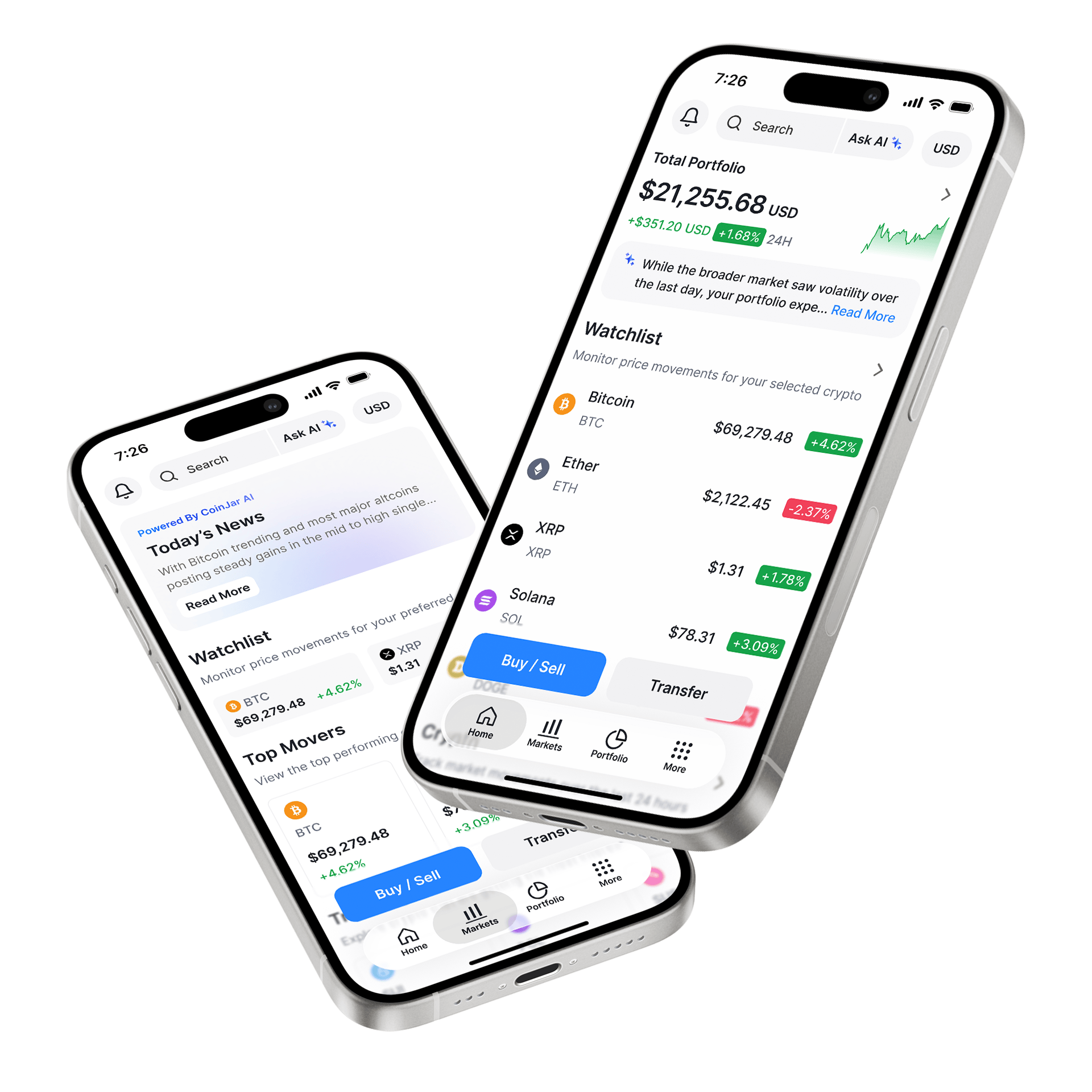
CoinJar App
Buy, sell and send your crypto with the favorite cryptocurrency app in the US.
Get the CoinJar appCoinJar App
Buy, sell and send your crypto with the favorite cryptocurrency app in the US.
Get the CoinJar app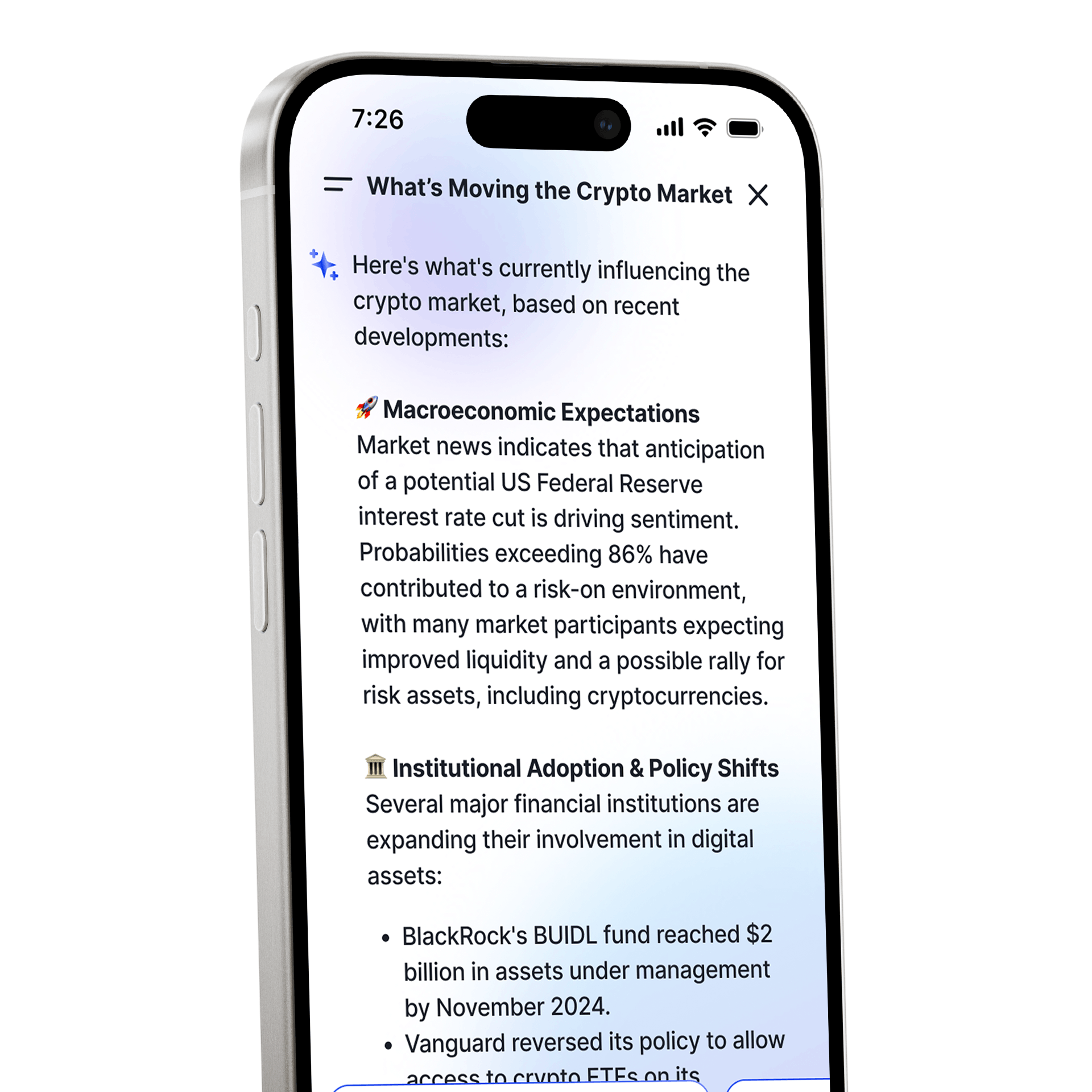
CoinJar AI
CoinJar AI understands your portfolio, tracks the market, and gives you insights that matter. Instead of searching for answers, simply ask a question to get the specific information you need.
Learn moreCoinJar AI
CoinJar AI understands your portfolio, tracks the market, and gives you insights that matter. Instead of searching for answers, simply ask a question to get the specific information you need.
Learn moreBuying, selling, and holding cryptocurrencies is subject to high market risk. The volatile and unpredictable nature of the price of cryptocurrencies may result in a significant loss. CoinJar, inc. is not responsible for any loss that you may incur from price fluctuations when you buy, sell, or hold cryptocurrencies. CoinJar, Inc. does not provide any investment, tax or legal advice; before making the decision to buy, sell or hold any cryptocurrencies, you should conduct your own due diligence and consult your financial, tax and/or legal advisor.
It is your responsibility to determine whether any investment, investment strategy or related transaction is appropriate for you according to your personal investment objectives, financial circumstances, and risk tolerance. Enter into a transaction only if you fully understand its nature, the contractual relationship into which you are entering, all relevant terms and conditions, and the nature and extent of your exposure to loss. Past performance is not a reliable indicator of future results. Geographic restrictions may apply. CoinJar does not endorse the content of, and cannot guarantee or verify the safety of any third party websites. Visit these websites at your own risk.

CoinJar
Get the app.