
Buy Venice Token
VVVPast performance is not indicative of future results. All prices are sourced from CoinJar Indices.
What is Venice Token?
Venice is an AI platform that gives people access to open-source text, image and video models, with fewer content restrictions than mainstream chatbots and an emphasis on privacy. It was founded by crypto entrepreneur Erik Voorhees and is run by Venice.ai, a company based in Wyoming in the US, according to its terms of service.
VVV is Venice's token. It launched in January 2025 as an ERC-20 token on Base, a layer 2 network that settles on Ethereum. Half of the starting supply was airdropped to Venice users and to AI projects on Base, with the rest split between the company, its team, an incentive fund and trading liquidity, according to launch coverage. There was no presale, and Venice took no venture funding at launch, according to Venice. For wider context on how these sectors overlap, see our guide to AI in crypto.
Do you need VVV to use Venice?
No. Venice offers free access and paid subscriptions, so you can use the platform without ever holding VVV. The token's practical role comes from staking. According to Venice's documentation, staking VVV:
- earns staking rewards, paid in newly issued VVV
- lets you lock your staked VVV to create DIEM, a separate token that provides a fixed daily allowance of Venice API credit while it is staked
Staking a minimum amount of VVV also unlocks Venice's Pro features, a benefit Venice says it can withdraw at its discretion. Unstaking VVV has a seven-day cooldown before tokens are released. For background on how this works in general, see our guide to staking.
What does holding VVV entitle you to?
Holding VVV does not give you shares in Venice.ai, a dividend or a legal claim on the company's revenue. VVV is not a governance token either. Voorhees has said explicitly that VVV is not a governance token, and Venice is run as a company rather than a DAO, as Milk Road's analysis notes.
Venice uses part of its revenue to buy VVV on the open market and burn it, permanently removing it from supply. It began periodic buybacks in late 2025 and in April 2026 added automatic buybacks triggered by new subscriptions, according to Venice's announcement. In July 2026 it extended these automatic buybacks to purchases of Venice API credit, as set out in a later update. Venice has also cut the rate of new VVV issued to stakers several times since launch, as Crypto Briefing reported. These are company policies, not holder rights. They depend on Venice's revenue and decisions, and they can change.
Who controls Venice and VVV?
Venice.ai controls the platform and the token's economics. The VVV token contract is owned by Venice's staking contract, which mints new VVV at a publicly visible emission rate. That staking contract is controlled by a multisig wallet, which needs several signers to approve changes, according to Venice's FAQs. Venice says there is no function for minting arbitrary amounts of VVV, but any change to the minting logic would require a contract upgrade approved by that multisig, so the power to change it sits with the company's signers.
Venice also holds a large VVV treasury and has said it does not plan to sell those tokens, as Crypto Briefing reported. In July 2026, Venice raised its first outside funding, a Series A equity round led by Dragonfly, as The Defiant reported. Those investors own shares in the company, which VVV holders do not, and also received a vesting VVV grant and warrants to buy more VVV, according to Crypto Briefing.
Track record
Venice has grown quickly, but VVV's history includes real friction points:
- Launch-week sell-off and insider-selling allegations, January 2025. VVV fell sharply in the days after launch amid allegations that insiders had sold tokens early, as CoinDesk covered. Venice later said part of the team's unlocked allocation had been sold on launch day with its approval, and that it had bought back and burned an equivalent amount to address doubts about its commitment, in a March 2025 post.
- Airdrop burn, March 2025. When the airdrop claim window closed, Venice burned all unclaimed tokens, a large share of the original supply, as set out in the same post. The decision was made by the company, not by a holder vote.
- Misuse research, May 2025. Security firm Certo reported that Venice's lightly restricted models would produce phishing emails and malware code on request, as Cybernews reported. This is a reputational and regulatory issue for the platform rather than a fault in VVV itself.
- Online safety rules, July 2025. Venice began requiring a credit card for all UK users, citing the UK's Online Safety Act, according to Venice's announcement. It shows how content regulation can directly change how the platform operates.
- DIEM and staking changes, August 2025. Venice introduced DIEM, changed how staking rewards are shared between stakers and the company and cut emissions, as described in Venice's DIEM launch post. These changes were made by the company.
Risks to understand
- Company control. Emissions, buybacks, DIEM settings and staking benefits are set by Venice, and the staking contract can be upgraded by a company-controlled multisig. Holders have no vote.
- Value depends on one business. VVV's usefulness rests on Venice's AI platform staying popular and well funded. Larger AI companies could add similar privacy features, and buybacks shrink if revenue falls.
- Shareholders and token holders are different groups. Venice now has equity investors with ownership rights that VVV holders do not share, and their interests may not always line up.
- Supply from the treasury, team and investors. Venice holds a large VVV treasury, team tokens are still vesting until early 2027 according to Milk Road, investors hold a vesting VVV grant and warrants to buy more, and new staking rewards continue to be issued at a reduced rate. Any of these can add to the tokens available for sale.
- Content and regulatory risk. Venice's lightly moderated models attract scrutiny. Rules on AI content, online safety and crypto tokens could affect where and how Venice operates.
- Smart contract risk. Staking and DIEM rely on smart contracts on Base. A bug or a harmful upgrade could affect staked tokens.
- No government protection. VVV is not a bank deposit. It is not FDIC insured and not SIPC protected.
Send VVV on the right network
VVV is an ERC-20 token on Base, not Ethereum mainnet. It is also separate from staked VVV (sVVV) and DIEM, which are different tokens with their own contracts. Only send VVV on the network CoinJar specifies for your deposit or withdrawal, and be wary of fake VVV tokens and unsolicited airdrop claims. Our guides to transferring crypto on the wrong network and avoiding airdrop scams explain what to check.
Buying VVV on CoinJar
CoinJar has operated since 2013 and lists VVV against US dollars, so you can buy, sell and hold it without converting through another cryptocurrency first. Current charges are on our fees page, and live US dollar rates are on our cryptocurrency prices page. Before you buy, check whether CoinJar operates in your state.
Bank transfer (ACH and wire), or crypto?
Buy Venice Token instantly with your bank account via ACH or deposit with wire transfer. Easily buy with ACH, wire cash to your account, or swap one cryptocurrency for another in a single click.


How to buy Venice Token with CoinJar
Start your cryptocurrency portfolio with CoinJar by following these simple steps.
Download the app
Get the CoinJar app on iOS or Android.
Create an account
Sign up and verify your ID – it only takes a couple of minutes.
Make a purchase
Buy Venice Token and more than 60 other cryptos using ACH or wire transfer.
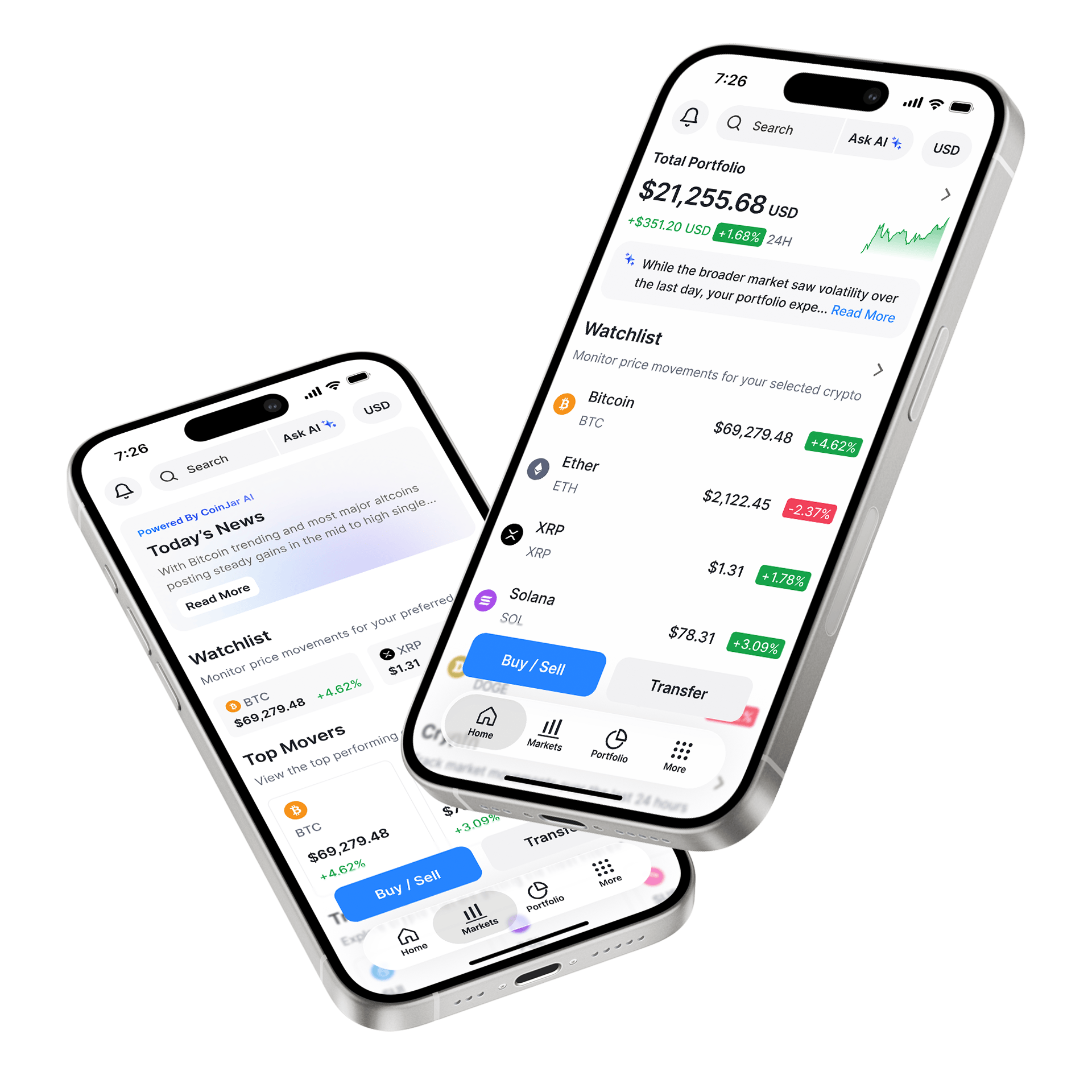
CoinJar App
Buy, sell and send your crypto with the favorite cryptocurrency app in the US.
Get the CoinJar appCoinJar App
Buy, sell and send your crypto with the favorite cryptocurrency app in the US.
Get the CoinJar app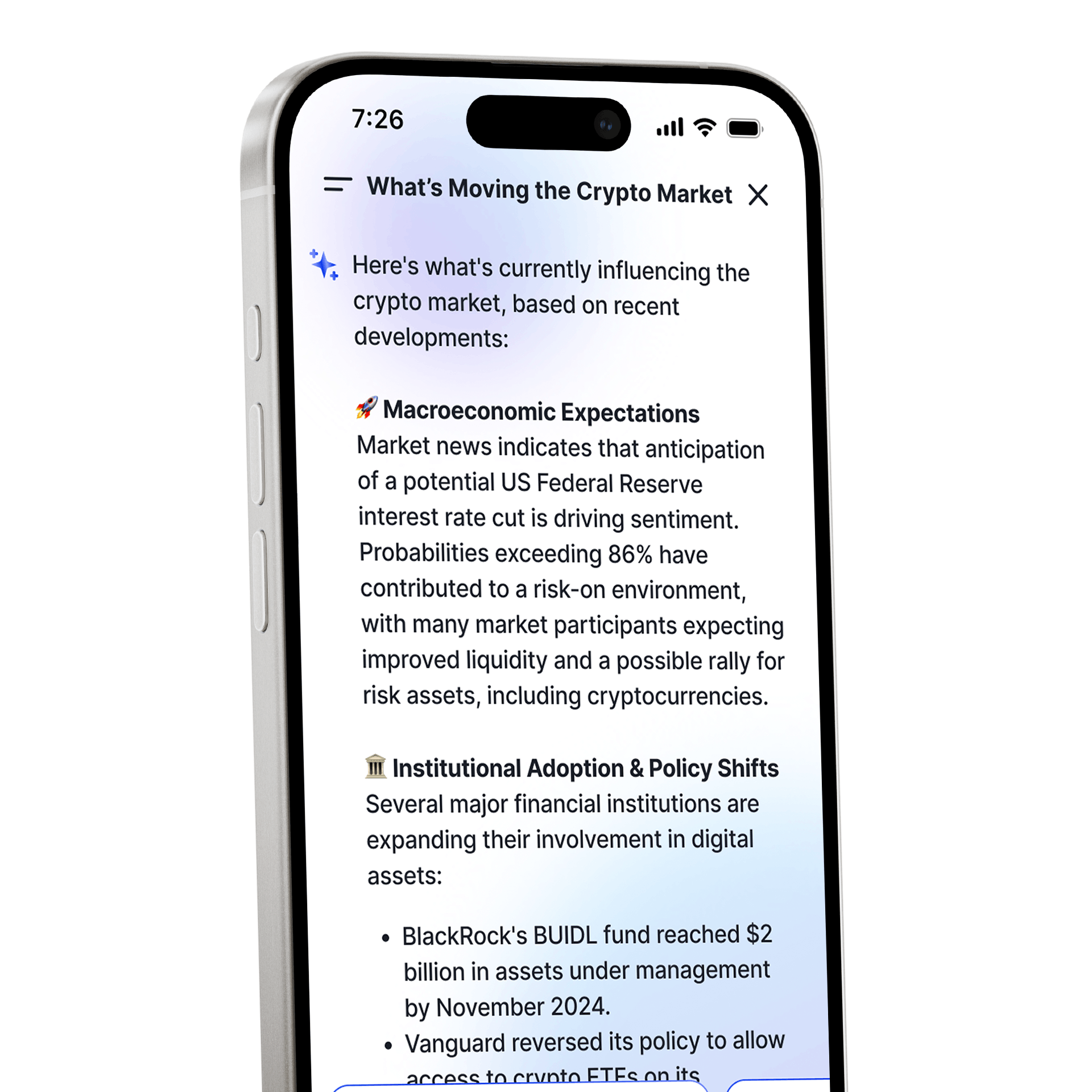
CoinJar AI
CoinJar AI understands your portfolio, tracks the market, and gives you insights that matter. Instead of searching for answers, simply ask a question to get the specific information you need.
Learn moreCoinJar AI
CoinJar AI understands your portfolio, tracks the market, and gives you insights that matter. Instead of searching for answers, simply ask a question to get the specific information you need.
Learn moreFrequently Asked Questions
Buying, selling, and holding cryptocurrencies is subject to high market risk. The volatile and unpredictable nature of the price of cryptocurrencies may result in a significant loss. CoinJar, inc. is not responsible for any loss that you may incur from price fluctuations when you buy, sell, or hold cryptocurrencies. CoinJar, Inc. does not provide any investment, tax or legal advice; before making the decision to buy, sell or hold any cryptocurrencies, you should conduct your own due diligence and consult your financial, tax and/or legal advisor.
It is your responsibility to determine whether any investment, investment strategy or related transaction is appropriate for you according to your personal investment objectives, financial circumstances, and risk tolerance. Enter into a transaction only if you fully understand its nature, the contractual relationship into which you are entering, all relevant terms and conditions, and the nature and extent of your exposure to loss. Past performance is not a reliable indicator of future results. Geographic restrictions may apply. CoinJar does not endorse the content of, and cannot guarantee or verify the safety of any third party websites. Visit these websites at your own risk.

CoinJar
Get the app.