
Buy Bancor
BNTPast performance is not indicative of future results. All prices are sourced from CoinJar Indices.
What is Bancor?
Bancor is one of the oldest projects in decentralized finance. It ran one of the largest token sales of 2017 and shipped an early version of the automated market maker, the design in which people trade against a pool of tokens priced by a formula rather than against other traders on an order book. Almost every decentralized exchange in use today is a descendant of that idea. BNT is Bancor's token.
Its history since then has been eventful, and a page about BNT that skips the difficult parts is not much use. The impermanent loss protection Bancor was best known for has been paused since 2022, the project's flagship product today is a different piece of software called Carbon, and its attempt to enforce patents over automated market maker technology was dismissed in court. Our guide to decentralized finance covers the wider category, and our guide to Ethereum covers the network Bancor was built on.
How the original Bancor design worked
The classic Bancor automated market maker used BNT as a common denominator. Rather than every pool being a direct pair between two arbitrary tokens, each token was paired with BNT, so a trade from one asset to another routed through BNT in the middle.
That had a real advantage in the early days, because it meant a new token only needed one pool to be tradeable against everything else on the network. It also created a structural demand for BNT, since liquidity across the whole system had to be matched by it.
Bancor's second distinctive feature was single sided liquidity. On most automated market makers you must supply both sides of a pair. Bancor let you deposit one token, with the protocol minting BNT to sit on the other side of the pool.
Impermanent loss protection, and what happened to it
Impermanent loss is the gap that opens up between simply holding two tokens and supplying them to a liquidity pool when their prices move apart. It is the main reason providing liquidity can lose money even when fees are being earned.
Bancor's pitch was that it would absorb that loss for you. Protection accrued over time, and when a liquidity provider withdrew at a loss the protocol would mint BNT to cover the shortfall. It was the single most distinctive product in the sector, and it worked while trading fees and BNT's value were sufficient to fund it.
In June 2022, amid a broad market collapse and heavy selling, Bancor paused the mechanism that distributed BNT to cover those deficits. Liquidity providers who withdrew afterwards could take out less than they put in. Bancor's own documentation continues to describe that distribution as paused.
This is the central fact in any honest assessment of BNT. The protection was funded by issuing more BNT, which meant the promise was ultimately underwritten by the token's own value, and it did not hold under stress. Anyone reading older material describing guaranteed protection against impermanent loss should treat it as historical.
Carbon DeFi and what Bancor builds now
The project's current flagship is Carbon, which is a different kind of design and does not depend on BNT.
Carbon lets a maker create on chain strategies that behave more like an order book than a traditional pool. You can set a range at which you are willing to sell and a separate range at which you are willing to buy, and the strategy rotates between them automatically as it is filled, without being pushed back the other way by arbitrage. It is built to resist sandwich attacks, and makers do not pay trading fees on filled orders, though they still pay network fees to create and manage a strategy.
Alongside it sits arbitrage infrastructure that keeps prices in line with other venues, plus a simulator and other developer tools. Carbon is deployed on several networks.
The important point for a token holder is the disconnect. Carbon is the product with the clearest reason to exist, and it does not require BNT the way the original automated market maker did.
What is BNT actually used for?
Governance. BNT holders govern the Bancor protocols through the Bancor DAO, voting on proposals and parameters. Voting rights through vBNT. Historically, staking BNT for governance produced vBNT, a separate token representing voting power that could itself be traded and burned. Its role has been the subject of ongoing governance discussion, including proposals to phase it out. Protocol liquidity in the classic automated market maker. BNT is the asset the older pools are built around, and the protocol can mint it to provide the matching side of liquidity.
There is no proof of stake network here, no gas paid in BNT, and no automatic distribution of protocol revenue to holders.
Supply is elastic, and that is the risk
BNT does not have a fixed cap. The protocol can mint new BNT to co-invest in pools and, historically, to cover the shortfalls that impermanent loss protection was designed to absorb. Mechanisms have also existed to buy and burn tokens using a share of fees, pushing in the other direction.
The net effect is that BNT's supply is a policy outcome rather than a fixed schedule, and during the period when protection was being paid out, issuance and price moved against each other in a way that ultimately forced the mechanism to be stopped. Anyone evaluating the token needs to look at the issuance and burn settings that governance has in force, not at a headline supply number.
The patent case against Uniswap
Entities associated with Bancor, including the foundation that supports the protocol and its original developer, sued Uniswap in the United States alleging that automated market maker technology infringed their patents.
A federal judge dismissed the case, finding that the patents claimed abstract ideas, such as exchanging one currency for another, which are not eligible for patent protection under United States law. The decision was widely reported as a significant result for open source development in the sector.
It matters here for reputational reasons as much as legal ones. The suit was unpopular in a community that values open source, and it did not succeed.
Which network is your BNT on?
BNT is natively an ERC-20 token on Ethereum. Bancor's newer products are deployed across several networks compatible with the Ethereum Virtual Machine, and bridged representations of tokens can exist on those chains.
Addresses are not interchangeable between networks. Sending BNT to an address on a network the receiving wallet or exchange does not support is one of the most common ways people permanently lose tokens, and it usually cannot be reversed. Before any transfer, confirm which network the destination expects and make sure the network you are sending from matches. Our guide to sending crypto on the wrong network covers what can and cannot be recovered.
What are the risks of holding BNT?
A broken flagship feature. Impermanent loss protection, the thing Bancor was known for, was paused under stress and left liquidity providers with losses. That damage to trust is not easily repaired. Weak link between products and token. Carbon, the project's most compelling current product, does not require BNT. Growth in usage does not automatically create demand for the token. Elastic supply. BNT can be minted by the protocol. Dilution is a live consideration rather than a theoretical one. Competition. Decentralised exchange activity is heavily concentrated in a handful of venues with far deeper liquidity, and the design ideas Bancor pioneered have been widely adopted and improved on by others. Smart contract risk. Bancor's contracts are complex and have been through several major versions. Automated market makers are a frequent target for exploits across the sector. Governance concentration. Voting is token weighted and turnout in decentralized autonomous organizations is typically low, so a small number of holders can carry decisions. Liquidity and volatility. BNT can move sharply, and market depth can be thin when conditions deteriorate. No consumer protection. Crypto assets are high risk and your capital is at risk. BNT is not insured by the Federal Deposit Insurance Corporation and it is not protected by the Securities Investor Protection Corporation. You should be prepared to lose all the money you put in.
Buying BNT with US dollars on CoinJar
CoinJar has operated since 2013 and lists BNT against US dollars, so you can buy, sell and hold it without converting through another cryptocurrency first. Current charges are on our fees page, and live US dollar rates are on our cryptocurrency prices page.
CoinJar, Inc. is registered with FinCEN as a money services business and holds money transmitter licenses in a growing number of states, NMLS ID 2492913. You can check whether CoinJar operates in your state before you sign up.
How is BNT taxed in the US?
The IRS generally treats BNT as property. A taxable event can occur when you sell it for US dollars, exchange it for another cryptocurrency, spend it or give it away.
The IRS explains these rules on its digital assets guidance page. Our guide to downloading your transaction history for tax shows how to get the records you need. This is general information, not tax advice. Consider speaking to a qualified tax professional about your circumstances.
Bank transfer (ACH and wire), or crypto?
Buy Bancor instantly with your bank account via ACH or deposit with wire transfer. Easily buy with ACH, wire cash to your account, or swap one cryptocurrency for another in a single click.


How to buy Bancor with CoinJar
Start your cryptocurrency portfolio with CoinJar by following these simple steps.
Download the app
Get the CoinJar app on iOS or Android.
Create an account
Sign up and verify your ID – it only takes a couple of minutes.
Make a purchase
Buy Bancor and more than 60 other cryptos using ACH or wire transfer.
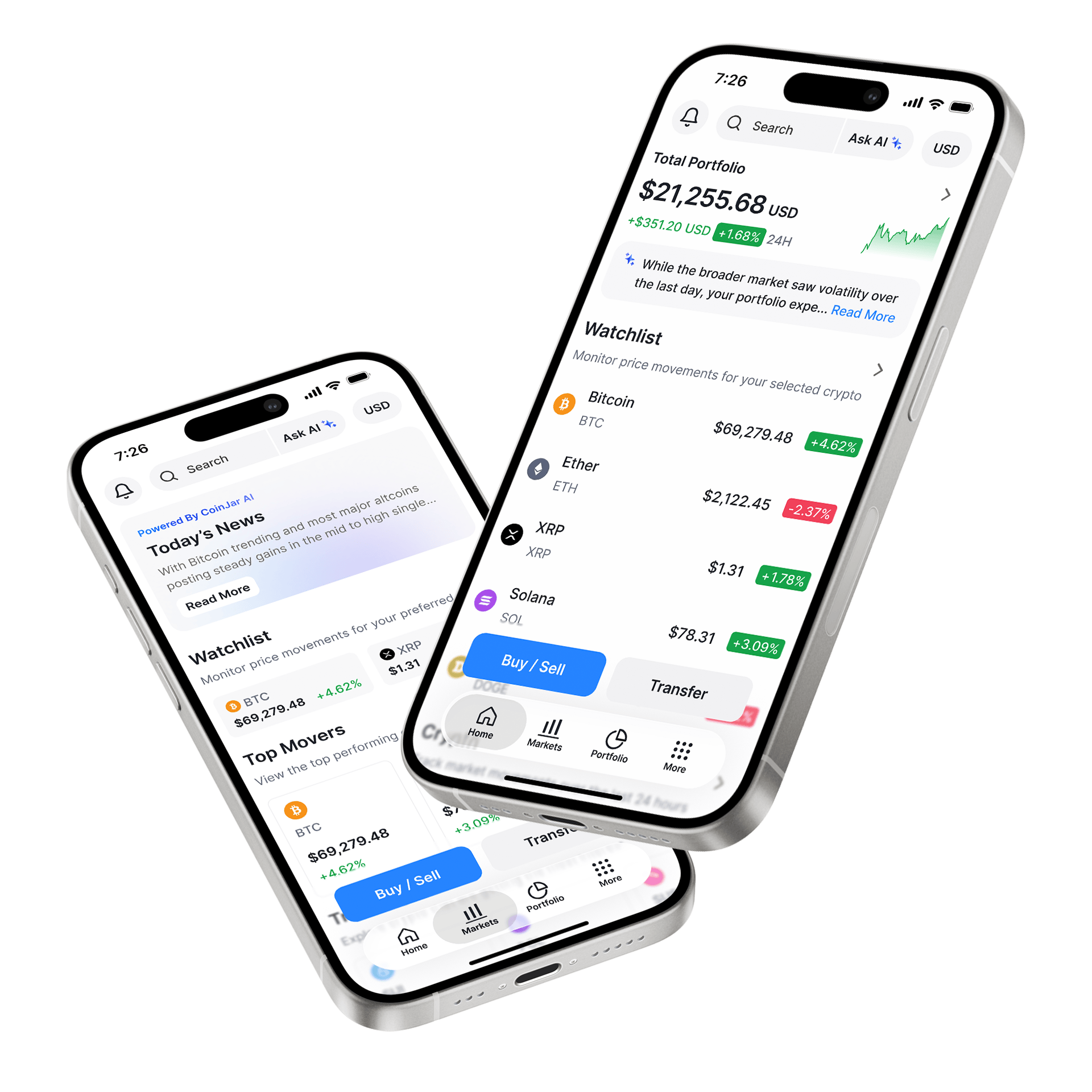
CoinJar App
Buy, sell and send your crypto with the favorite cryptocurrency app in the US.
Get the CoinJar appCoinJar App
Buy, sell and send your crypto with the favorite cryptocurrency app in the US.
Get the CoinJar app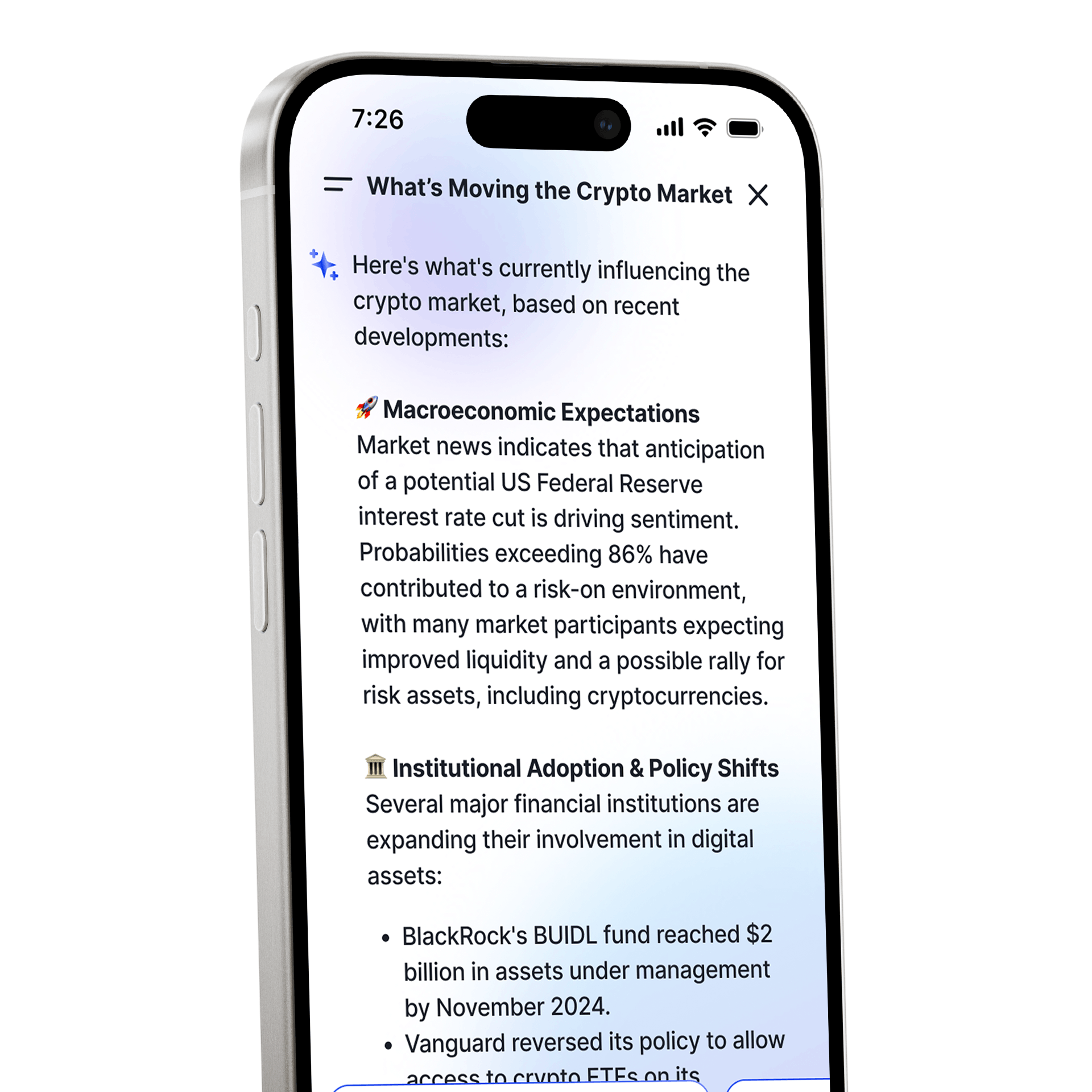
CoinJar AI
CoinJar AI understands your portfolio, tracks the market, and gives you insights that matter. Instead of searching for answers, simply ask a question to get the specific information you need.
Learn moreCoinJar AI
CoinJar AI understands your portfolio, tracks the market, and gives you insights that matter. Instead of searching for answers, simply ask a question to get the specific information you need.
Learn moreBuying, selling, and holding cryptocurrencies is subject to high market risk. The volatile and unpredictable nature of the price of cryptocurrencies may result in a significant loss. CoinJar, inc. is not responsible for any loss that you may incur from price fluctuations when you buy, sell, or hold cryptocurrencies. CoinJar, Inc. does not provide any investment, tax or legal advice; before making the decision to buy, sell or hold any cryptocurrencies, you should conduct your own due diligence and consult your financial, tax and/or legal advisor.
It is your responsibility to determine whether any investment, investment strategy or related transaction is appropriate for you according to your personal investment objectives, financial circumstances, and risk tolerance. Enter into a transaction only if you fully understand its nature, the contractual relationship into which you are entering, all relevant terms and conditions, and the nature and extent of your exposure to loss. Past performance is not a reliable indicator of future results. Geographic restrictions may apply. CoinJar does not endorse the content of, and cannot guarantee or verify the safety of any third party websites. Visit these websites at your own risk.

CoinJar
Get the app.