
Buy SushiSwap
SUSHIPast performance is not indicative of future results. All prices are sourced from CoinJar Indices.
What is SushiSwap?
SushiSwap, now usually branded as Sushi, is a decentralized trading platform. Its original product is an automated market maker where people swap tokens against pools supplied by other users. It now also routes trades across external liquidity and offers cross-chain swaps on supported routes.
SUSHI is the protocol's governance and staking token. It is not required to trade or provide liquidity, and its connection to platform revenue depends on the SushiBar and xSUSHI fee mechanism operating as documented. Sushi remains active in 2026, but control has shifted from the early DAO ideal toward Sushi Labs, councils and a new executive team. Our guide to decentralized finance explains the wider category, and our guide to crypto exchange liquidity covers why trading pools matter.
Where did SushiSwap come from?
SushiSwap launched in August 2020 as a fork of Uniswap. Its pseudonymous founder, Chef Nomi, offered SUSHI rewards to liquidity providers who moved assets from Uniswap into Sushi's new pools. The strategy became known as a vampire attack because it used incentives to transfer liquidity from an established competitor.
Days later, Chef Nomi withdrew developer-fund tokens worth millions of dollars, triggering accusations of an exit scam. Control was handed temporarily to Sam Bankman-Fried, then the head of FTX and Alameda Research. Chef Nomi returned the funds, apologized and left the project.
Sushi continued under community governance and a changing group of contributors. That history still shapes the project: it began without a conventional company or stable leadership, then spent years building legal, operational and treasury structures around a DAO.
What does Sushi offer in 2026?
Sushi V2. Traditional constant-product pools. Liquidity providers deposit both assets in a pair and receive a share of trading fees.
Sushi V3. Concentrated-liquidity pools. Providers choose price ranges, improving capital efficiency while increasing the risk that their position moves out of range.
Sushi aggregator. The Route Processor searches Sushi pools and external liquidity sources to find a route for a trade. Sushi can therefore facilitate a swap without the whole transaction executing against Sushi-owned liquidity.
SushiXSwap. A cross-chain interface that combines swaps and bridging on supported routes. It introduces bridge, relayer and destination-chain risks in addition to ordinary trading risk.
Sushi has also announced Blade, Kubo, Susa and Wara as attempts to expand into new market-making designs, perpetuals, order books and Solana trading. Their status has varied across announcements and integrations. They should be treated as developing products rather than evidence that every feature is universally live.
The core swap interface remains available at Sushi. Network, pool and route availability can change without the SUSHI token itself changing.
How Sushi pools work
A V2 pool normally holds two assets and quotes prices according to the balance between them. A trader pushes one asset in and receives the other, paying a fee shared according to the pool's settings.
A V3 liquidity provider chooses a price range. Their capital earns fees only while the market price remains inside that range. This can use capital more efficiently but requires more management.
Liquidity providers receive a position representing their share. They can lose money even when the pool earns fees because the relative price of the assets can move. This is commonly called impermanent loss, although the loss becomes real when the position is withdrawn.
Sushi's aggregator is different. It may route through several pools or external protocols, so the interface can show a Sushi trade even when much of the liquidity came from elsewhere. Aggregator volume is not the same as liquidity deposited into Sushi contracts.
What is Sushi Labs?
Sushi Labs was created in 2024 as the product-development and execution arm of the ecosystem. It took responsibility for building products, pursuing integrations and carrying out strategy, while Sushi said the DAO would continue alongside it.
The restructuring was controversial because it moved practical authority and treasury resources away from a purely open DAO model toward Labs and specialized councils. Critics argued that the proposal concentrated control and transferred community assets with limited accountability. Supporters said professional execution was necessary after years of slow governance and financial pressure.
The exact division is hybrid.
Sushi Labs and executives direct product development, partnerships and daily operations. Sushi DAO votes on selected structural, tokenomics and treasury proposals. Councils and multisignature wallets execute approved spending and administrative actions. Core contributors control which proposals become binding under the published governance process.
This is not a fully permissionless organization where any token-holder vote automatically changes the protocol. It is a Labs-led project with DAO components.
Who leads Sushi now?
Jared Grey became Sushi's Head Chef in 2022 and later managing director of Sushi Labs. He led the restructuring, treasury debates and expansion plan.
In December 2025 Grey stepped down from operational leadership and moved into an advisory role. Alex McCurry, founder of Synthesis, became chief executive after Synthesis made a strategic investment and acquired more than 10 million SUSHI.
That purchase aligned the new operator with the token but also concentrated influence in one strategic holder. An executive buying tokens is not the same as token holders owning the company or controlling its board.
Sushi has continued shipping and integrating products, so there is no evidence that it is being wound down. The repeated leadership and governance changes remain a core dependency.
What does SUSHI actually do?
Governance. SUSHI and certain related positions supply voting power on Sushi proposals.
SushiBar staking. A holder can deposit Ethereum-based SUSHI into the SushiBar contract and receive xSUSHI, representing a proportional share of the staked pool.
Fee value accrual. Sushi documentation says part of the fee from eligible trades is used to buy SUSHI and add it to the SushiBar, increasing the amount represented by each xSUSHI.
Liquidity incentives. Governance can direct SUSHI emissions to encourage liquidity or participation in selected products.
A person does not need SUSHI to swap two other assets. They pay with the token being sold and the native gas asset of the relevant network. A liquidity provider also needs the pool assets, not SUSHI, unless SUSHI is one side of the pool or an incentive is specifically offered.
Does xSUSHI still receive fees?
Current Sushi documentation describes SushiBar as an active staking mechanism. Under the standard V2 example, 0.05 percent of a 0.30 percent swap fee is directed toward buying SUSHI for xSUSHI holders, while liquidity providers receive the other 0.25 percent.
That formula is not universal. V3 pools, aggregator routes, cross-chain products and deployments on other networks can use different fee settings. Governance has also redirected fees away from xSUSHI in the past under treasury initiatives before later restoring the model.
There is no fixed yield. The return depends on eligible trading fees, the amount staked, contract operation and governance decisions. xSUSHI also introduces another smart contract and must be converted back into SUSHI before an ordinary holder can sell it.
The SushiBar guide explains the intended mechanism, but any quoted return should be checked against the live contract rather than an old article.
Is SUSHI hard capped?
No. Older summaries often quote a maximum of 250 million SUSHI, but current Sushi tokenomics documentation states that ongoing block rewards mean there is no hard-capped maximum.
SUSHI began with extremely high emissions to attract liquidity, then reduced them. Governance can adjust reward rates and direct incentives to selected products.
This means supply policy is a governance decision rather than a Bitcoin-style limit. New emissions can attract liquidity but dilute holders, while reducing them can make pools less competitive.
I found no token migration, replacement ticker or mandatory swap in 2025 or 2026. The asset remains SUSHI, and xSUSHI remains a staking receipt rather than a new version everybody must adopt.
Security history
Sushi has experienced several material incidents.
RouteProcessor2 exploit, April 2023. A flaw in a newly deployed routing contract allowed an attacker to manipulate an approval parameter and take assets from users who had approved the contract. Approximately 3.3 million US dollars was affected. White-hat researchers recovered part of the money, while other claims required a separate process.
Ledger Connect Kit compromise, December 2023. Malicious code inserted into a widely used third-party connection library affected several decentralized applications, including Sushi's interface. Users who interacted during the affected period could sign transactions sending assets to the attacker. The underlying Sushi pools were not themselves exploited.
I found no comparably material direct Sushi contract exploit publicly documented between 2024 and August 2026 in the sources reviewed for this page. That does not remove risks from new routers, cross-chain routes, wallet libraries or individual pools.
Sushi maintains a bug bounty and publishes contract scope information. Audits reduce risk but cannot guarantee that a new product or integration has inherited the security history of the older AMM.
Governance and regulatory history
In March 2023 Sushi and Jared Grey received a subpoena from the United States Securities and Exchange Commission. Governance approved a legal defence fund to cover the response.
The subpoena was a request for information, not a public finding that SUSHI was unlawful. I found no announced SEC enforcement outcome against Sushi or Grey arising from it in the sources reviewed for this page.
SUSHI was not among the crypto assets named as digital commodities in the joint interpretation published by the United States Securities and Exchange Commission and Commodity Futures Trading Commission on 17 March 2026. That is not a finding against SUSHI. It means the asset was not addressed either way.
The movement from a loosely organized DAO to Labs, councils and legal entities reflects this environment. Formal structures can improve accountability while also concentrating power.
What are the risks of holding SUSHI?
No compulsory trading demand. Users can swap and provide liquidity without owning SUSHI. Platform activity does not force every user to buy the token. Variable value accrual. xSUSHI fee flows depend on eligible trades, contracts and governance. They are not a permanent entitlement. Inflation. SUSHI has no hard maximum under current documentation. New incentive emissions can dilute holders. Governance concentration. Labs, core contributors, councils and large strategic holders have substantial practical influence. Treasury controversy. The transfer of authority and assets toward Sushi Labs remains a source of disagreement over who ultimately controls community resources. Leadership risk. Sushi has repeatedly changed leaders and organizational models since launch. Smart contract risk. Pools, routers, staking contracts and cross-chain systems can fail or be exploited. Approval risk. The 2023 router incident showed that approving a contract can expose assets even when they are not deposited in a Sushi pool. Cross-chain risk. SushiXSwap depends on bridges, relayers and contracts on several networks. A failure can leave a transaction delayed or assets stranded. Liquidity-provider risk. Pool fees may not offset impermanent loss, out-of-range positions or a collapse in one asset. Product execution risk. Blade, Kubo, Susa and Wara have ambitious designs, but announcements do not guarantee durable adoption or revenue. Competition. Sushi competes with Uniswap, Curve, Balancer, PancakeSwap, 1inch and chain-specific exchanges with stronger local liquidity. Liquidity. SUSHI trades thinly compared with major assets, which can widen spreads and increase the cost of getting out. Volatility. SUSHI is not a stablecoin. Its value moves sharply and can fall substantially. No consumer protection. Crypto assets held on a trading platform are not bank deposits. SUSHI is not covered by FDIC deposit insurance or by SIPC protection. You should be prepared to lose the money you put in.
Buying SUSHI with US dollars on CoinJar
CoinJar has operated since 2013 and lists SUSHI against US dollars, so you can buy, sell and hold it without converting through another cryptocurrency first. Current charges are on our fees page, and live US dollar rates are on our cryptocurrency prices page.
CoinJar, Inc. is registered with FinCEN as a money services business, NMLS ID 2492913, and holds money transmitter licenses in a growing number of states. You can check whether CoinJar operates in your state before signing up.
How is SUSHI taxed in the United States?
The IRS treats digital assets such as SUSHI as property. A taxable disposal can occur when you sell it for US dollars, trade it for another cryptocurrency, spend it or give it away.
The IRS sets out its approach on its digital assets page. Our guide to reporting your transaction history explains how to get the records you need. This is general information, not tax advice. Consider speaking to a qualified tax adviser about your circumstances.
Bank transfer (ACH and wire), or crypto?
Buy SushiSwap instantly with your bank account via ACH or deposit with wire transfer. Easily buy with ACH, wire cash to your account, or swap one cryptocurrency for another in a single click.


How to buy SushiSwap with CoinJar
Start your cryptocurrency portfolio with CoinJar by following these simple steps.
Download the app
Get the CoinJar app on iOS or Android.
Create an account
Sign up and verify your ID – it only takes a couple of minutes.
Make a purchase
Buy SushiSwap and more than 60 other cryptos using ACH or wire transfer.
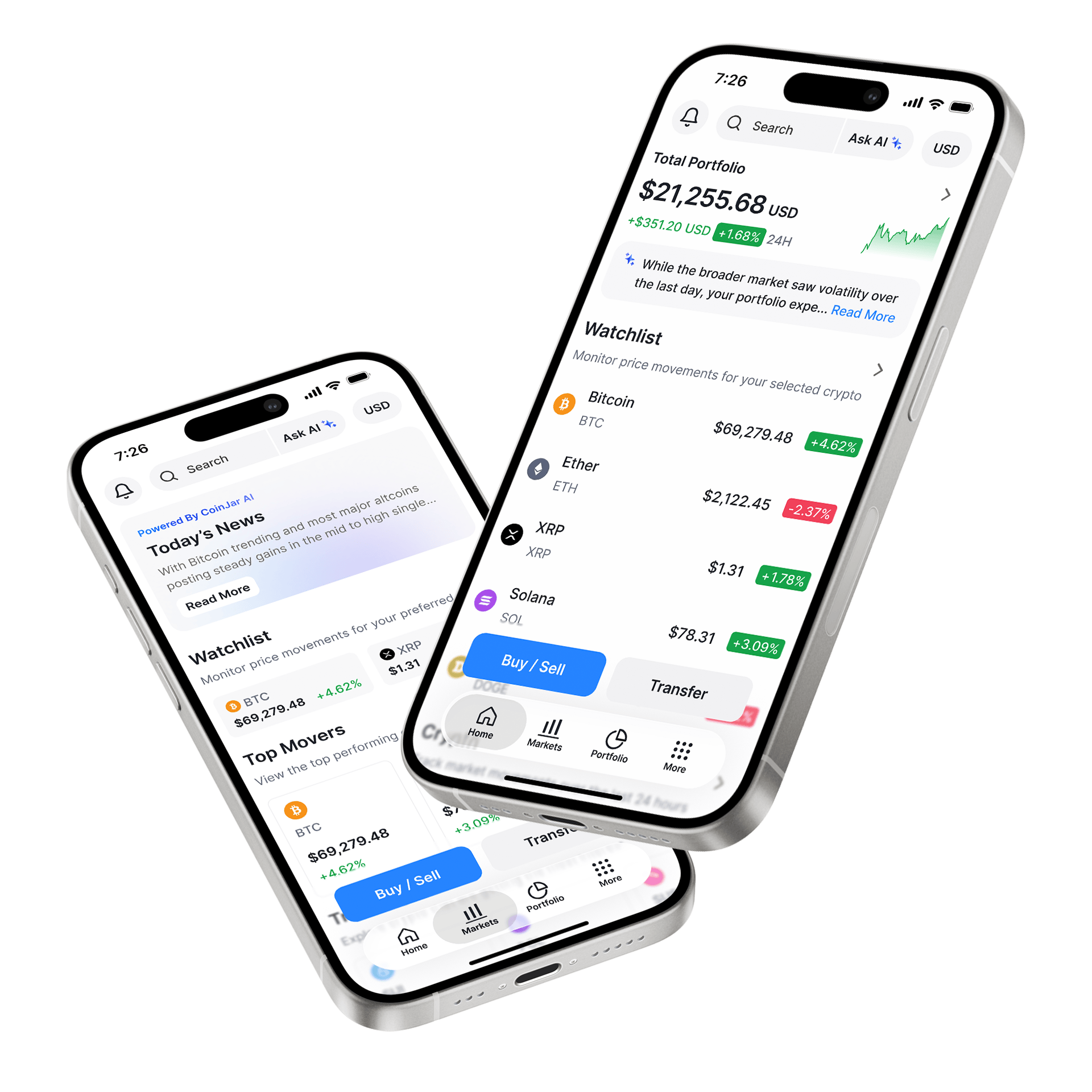
CoinJar App
Buy, sell and send your crypto with the favorite cryptocurrency app in the US.
Get the CoinJar appCoinJar App
Buy, sell and send your crypto with the favorite cryptocurrency app in the US.
Get the CoinJar app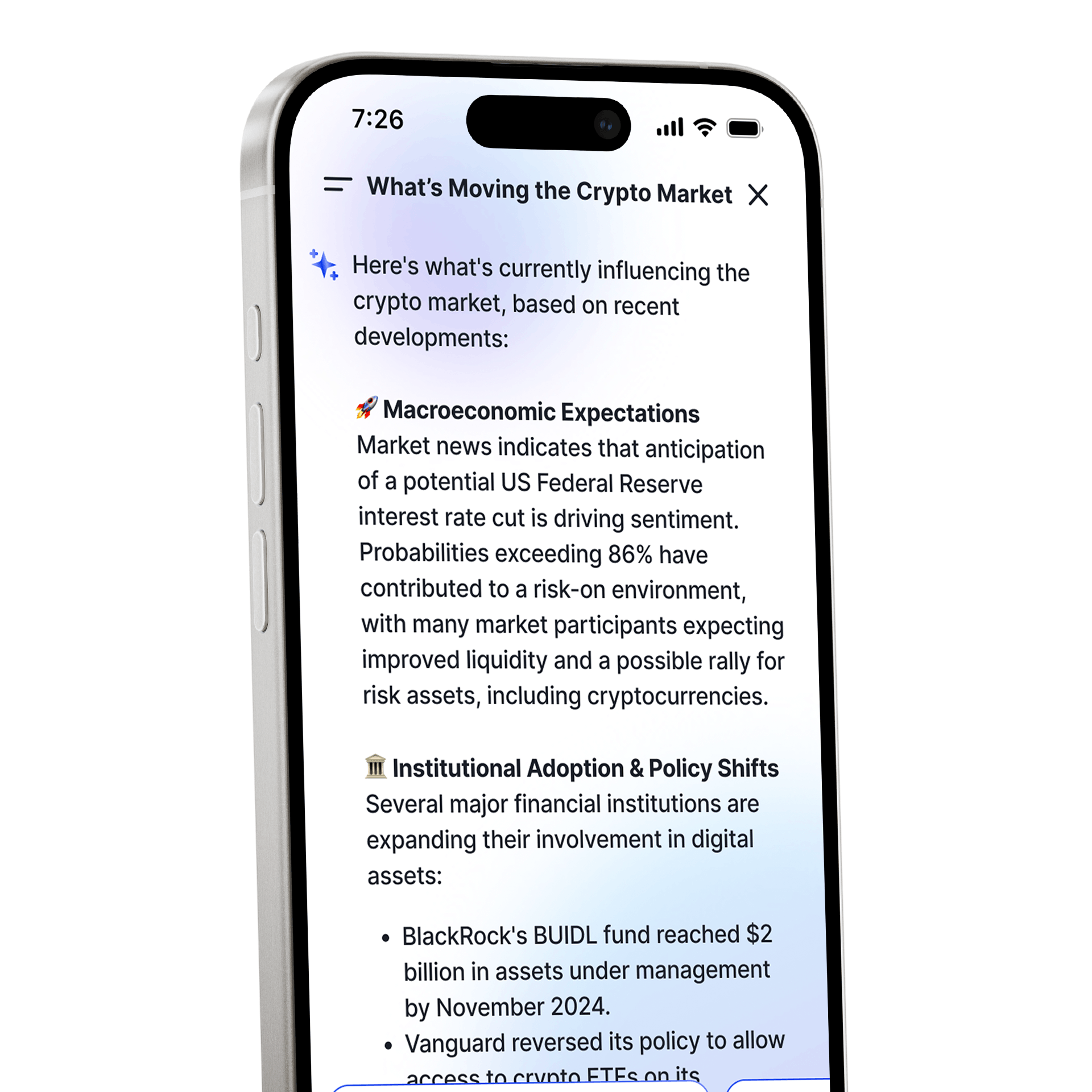
CoinJar AI
CoinJar AI understands your portfolio, tracks the market, and gives you insights that matter. Instead of searching for answers, simply ask a question to get the specific information you need.
Learn moreCoinJar AI
CoinJar AI understands your portfolio, tracks the market, and gives you insights that matter. Instead of searching for answers, simply ask a question to get the specific information you need.
Learn moreBuying, selling, and holding cryptocurrencies is subject to high market risk. The volatile and unpredictable nature of the price of cryptocurrencies may result in a significant loss. CoinJar, inc. is not responsible for any loss that you may incur from price fluctuations when you buy, sell, or hold cryptocurrencies. CoinJar, Inc. does not provide any investment, tax or legal advice; before making the decision to buy, sell or hold any cryptocurrencies, you should conduct your own due diligence and consult your financial, tax and/or legal advisor.
It is your responsibility to determine whether any investment, investment strategy or related transaction is appropriate for you according to your personal investment objectives, financial circumstances, and risk tolerance. Enter into a transaction only if you fully understand its nature, the contractual relationship into which you are entering, all relevant terms and conditions, and the nature and extent of your exposure to loss. Past performance is not a reliable indicator of future results. Geographic restrictions may apply. CoinJar does not endorse the content of, and cannot guarantee or verify the safety of any third party websites. Visit these websites at your own risk.

CoinJar
Get the app.