
Buy Axie Infinity
AXSPast performance is not indicative of future results. All prices are sourced from CoinJar Indices.
What is Axie Infinity?
Axie Infinity is a game about collecting and battling creatures called Axies, and AXS, formally Axie Infinity Shards, is its governance token. It is not the currency you earn by playing, it is not the token that pays for transactions on the network the game runs on, and it does not pay holders a share of anything.
That last point is worth sitting with before anything else, because Axie Infinity is one of the most misunderstood assets in crypto. It was the project that made play to earn famous, it drew millions of players, its economy collapsed, and its network suffered the largest theft in the history of decentralized finance. Almost everything written about it online describes a version of the project that no longer exists. Our guide to NFTs covers the ownership model the game is built on, and our guide to blockchain layers is relevant because the network underneath Axie changed category entirely in 2026.
Where did Axie Infinity come from?
Axie Infinity was built by Sky Mavis, a studio founded in 2018 by a Vietnamese founding team including Trung Nguyen, Aleksander Leonard Larsen and Jeffrey Zirlin, with its principal corporate entity in Singapore. The company is a private business, not a foundation or a decentralized organization, and the Sky Mavis site is the front door to its products.
The game launched on Ethereum, where the cost of ordinary in-game transactions quickly became impossible, and moved to Ronin, a network Sky Mavis built for the purpose, in 2021.
What happened next is the part everyone remembers. Through 2021 Axie Infinity became the most played blockchain game in the world, with daily user numbers in the millions and a very large concentration of players in the Philippines. A lending model grew up around it, usually called scholarships, in which managers lent Axies to players who could not afford the entry cost and took a share of what they earned. For a period, people were making a meaningful income from it.
The economy did not hold. It depended on new buyers funding the rewards paid to existing players, and when growth slowed the mechanism ran in reverse. The in-game token collapsed, player numbers fell back to where they had started, and a lot of people who had borrowed to buy in were left badly out of pocket.
What is AXS, technically?
It is an ERC-20 token on Ethereum. AXS was issued on Ethereum and the Ethereum contract remains the canonical one. It also exists on Ronin, where the game and marketplace actually run, and moving between the two requires a bridge.
Its supply is capped. The maximum supply is 270 million AXS, set at issuance, with the allocation and vesting schedule laid out in the project's whitepaper. The distribution schedule ran for years and the great majority of that supply is now released.
It is one of several tokens in the ecosystem, and the distinctions matter. AXS is the governance token. SLP, Smooth Love Potion, was the in-game earning token that hyperinflated and collapsed. RON is the gas token of the Ronin network and a separate asset with separate economics. bAXS is a non-transferable reward token backed one for one by AXS that Sky Mavis introduced in 2026 to pay in-game rewards. Buying AXS gets you AXS and none of the others.
What does AXS actually do?
Three things are claimed for AXS. It is worth taking each on its merits.
Governance. AXS holders who stake can vote in the Axie governance portal, with voting weight derived from the amount staked and from an Axie Score reflecting badges, in-game achievements and NFTs held. The important qualification is who sets the agenda: under the current system, proposals can only be created by Sky Mavis. Holders vote on what the company puts in front of them.
The clearest test of that came in September 2025, when AIP-002, a proposed Axie Constitution that would have established a formal community decision making structure over the Community Treasury, was put to holders and rejected, falling short of the supermajority it required. Control of the treasury was not transferred. Sky Mavis has described progressive decentralization as the intention since 2021, and it remains an intention.
Staking. AXS can be locked to earn rewards. Those rewards are newly issued AXS, not a share of revenue, which means the reward comes from the token's own supply schedule and dilutes holders who do not stake. In late 2025 Sky Mavis revamped the model so that staking rewards decline by a fixed percentage every nine days, designed to continue indefinitely at a shrinking rate rather than stop. The announcement of that change sets out the mechanics.
The Community Treasury. The treasury collects fees from marketplace trades and from breeding. The long stated plan is that AXS stakers will govern it. As above, the vote to formalize that failed. Fees accruing to a treasury that holders do not control are not a return to holders.
Put plainly: AXS gives you a constrained vote on proposals a private company writes, and a reward paid in more of the same token. It does not give you revenue, dividends or a claim on any asset.
What is Ronin, and what changed in 2026?
Ronin is the network Axie Infinity runs on, built by Sky Mavis and launched in 2021. For its first five years it was an independent sidechain: EVM compatible, cheap and fast, secured by its own small validator set, and not settling to Ethereum in any meaningful sense.
That changed in May 2026. Ronin hard forked and migrated to become an Ethereum layer two built on the OP Stack, with roughly ten hours of downtime while it happened, keeping RON as its gas token. The Ronin documentation describes the current design.
The detail that matters is where the data goes. Ronin uses EigenDA rather than Ethereum for data availability, which makes it what the research site L2BEAT classifies as an optimium rather than a full rollup. In practice that means the network gets some of Ethereum's settlement guarantees but relies on a separate system to keep the data available. If that system fails to produce the data, the security argument weakens considerably. L2BEAT documents the specific trust assumptions, and it is a better source on this than any project's own material.
Alongside the migration Ronin reset RON's economics, cutting network inflation sharply and redirecting tokens previously earmarked for staking rewards to its own treasury. None of that changes AXS directly, but it is a reminder that the terms underneath these assets are set by the operator and get rewritten.
The bridge hack, and why it still matters
In March 2022 the Ronin bridge was drained of assets worth close to 620 million dollars, the largest theft of its kind at the time. The mechanism was not a clever contract exploit. An attacker obtained enough validator signing keys to authorize withdrawals directly: five of the nine keys then required, one of which was a key belonging to the Axie DAO that Sky Mavis had been given permission to sign with during a traffic spike months earlier, a permission that was never revoked.
It went undetected for six days. It was noticed when a user could not complete a withdrawal.
The United States Treasury attributed the theft to Lazarus Group, a North Korean state sponsored group, and sanctioned the mixing service used to launder the proceeds. Sky Mavis raised 150 million dollars in an emergency round led by Binance and reimbursed affected users.
There was a second, smaller incident in August 2024, when a flawed bridge upgrade allowed roughly 12 million dollars to be withdrawn before the bridge was paused. In that case the funds were taken by white hat operators and returned.
Two things follow. Users were made whole in both cases because a well funded company chose to make them whole, which is a corporate decision and not a protocol guarantee. And bridges remain the weakest link in this design, which is why our guide to bridges in crypto is worth reading before you move anything.
What is Sky Mavis building now?
The company has spent the years since the collapse trying to rebuild Axie as a game people play because it is fun rather than because it pays, and to turn Ronin into a network other studios build on.
Axie Infinity Origins, the card battler, runs in seasons and is the main live product. Homeland, the land game, was shut down in June 2026 and replaced with Terrariums, a passive land system. Atia's Legacy, an MMO, has been in playtesting rather than released. Ronin has been opened to third party games, and some of them have drawn more players than Axie itself.
The company reduced headcount by around a fifth in late 2024. Its founders have described this as repositioning rather than distress, which may be true, and is also what companies say.
What are the risks of holding AXS?
Single company risk. AXS's value depends on the commercial performance of one private studio. There is no protocol that continues meaningfully without it.
Governance that is not really governance. Only Sky Mavis can put proposals to a vote. The proposal that would have given holders formal control of the treasury was rejected. Voting power is weighted by factors other than tokens held.
Dilution. Staking rewards are newly issued AXS. Holders who do not stake are diluted, and the schedule is set by the issuer.
A proven demand problem. Axie's economy collapsed once, comprehensively, and player numbers have never returned to anything close to their peak. Rebuilding demand for a game is hard and the record here is not encouraging.
Network and bridge risk. Ronin has suffered the largest bridge theft in the sector's history and a second bridge failure two years later. It has now changed its entire architecture, and it relies on an external data availability system rather than posting data to Ethereum.
Operator discretion. Emissions, reward tokens, game economies, land systems and network economics have all been changed by the company, sometimes abruptly. Anyone relying on the current settings should not assume they persist.
Sector risk. Blockchain gaming has absorbed enormous capital and produced very few titles with durable player bases. Attention in the category has moved on repeatedly.
Volatility. AXS is not a stablecoin. Its value moves sharply and can fall substantially.
No consumer protection. Cryptocurrency held with CoinJar is not covered by FDIC or SIPC protection. If the value of AXS falls, there is no compensation scheme to make you whole.
Buying AXS with US dollars on CoinJar
CoinJar has operated since 2013 and lists AXS against US dollars, so you can buy, sell and hold it without converting through another cryptocurrency first. Current charges are on our fees page, and live US dollar rates are on our cryptocurrency prices page.
CoinJar, Inc. is registered with the Financial Crimes Enforcement Network as a money services business, NMLS ID 2492913, and holds money transmitter licenses in a growing number of states. That registration covers anti money laundering obligations. It is not an endorsement of CoinJar's products and it is not approval of any cryptocurrency listed on the platform. You can check whether CoinJar operates in your state before signing up.
How is AXS taxed in the US?
The IRS treats cryptocurrency as property. A disposal can occur when you sell AXS for US dollars, trade it for another cryptocurrency, spend it or give it away.
The IRS sets out its approach on its digital assets page. Our guide to pulling your transaction history together at tax time provides a practical overview. This is general information, not tax advice. Consider speaking to a qualified tax professional about your circumstances.
Bank transfer (ACH and wire), or crypto?
Buy Axie Infinity instantly with your bank account via ACH or deposit with wire transfer. Easily buy with ACH, wire cash to your account, or swap one cryptocurrency for another in a single click.


How to buy Axie Infinity with CoinJar
Start your cryptocurrency portfolio with CoinJar by following these simple steps.
Download the app
Get the CoinJar app on iOS or Android.
Create an account
Sign up and verify your ID – it only takes a couple of minutes.
Make a purchase
Buy Axie Infinity and more than 60 other cryptos using ACH or wire transfer.
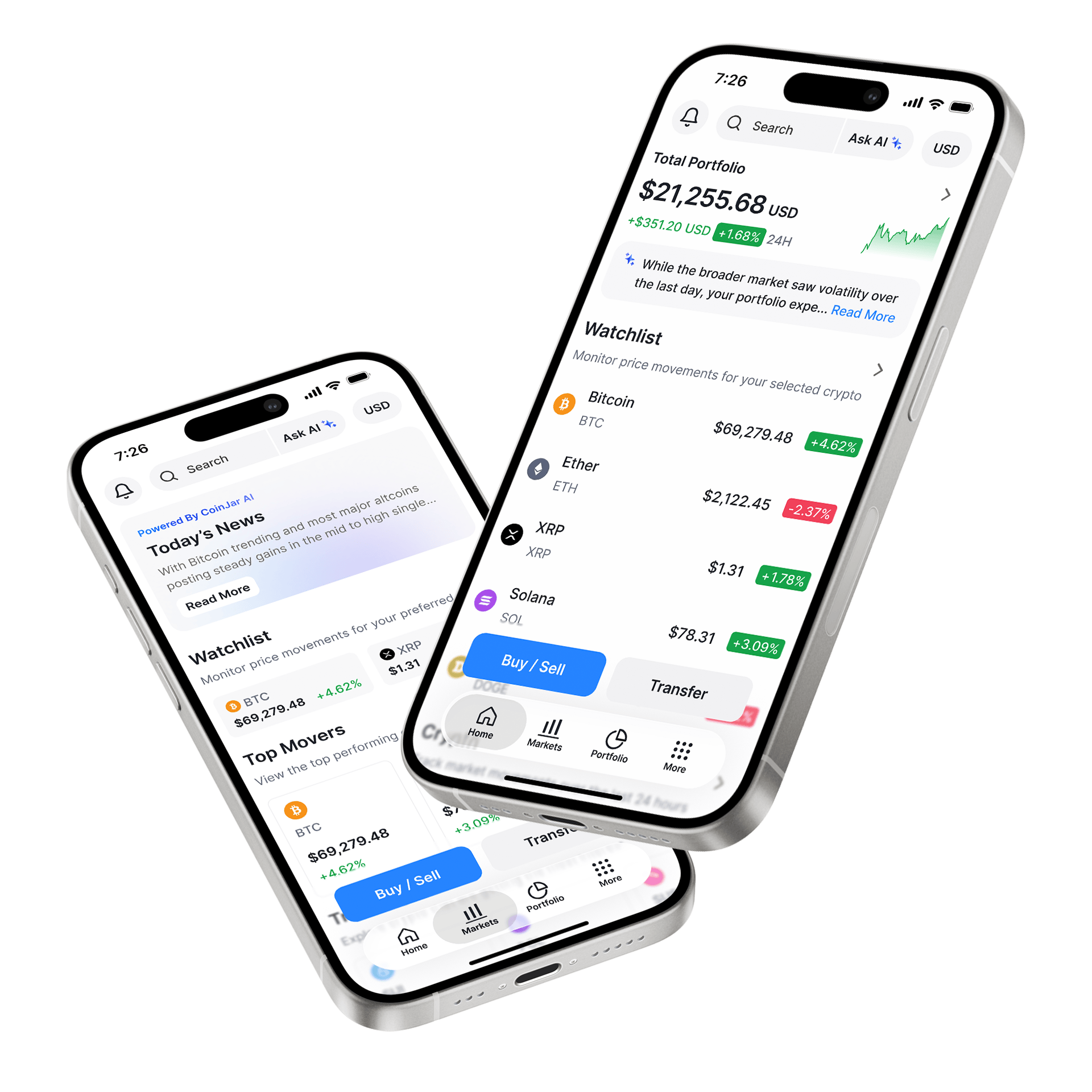
CoinJar App
Buy, sell and send your crypto with the favorite cryptocurrency app in the US.
Get the CoinJar appCoinJar App
Buy, sell and send your crypto with the favorite cryptocurrency app in the US.
Get the CoinJar app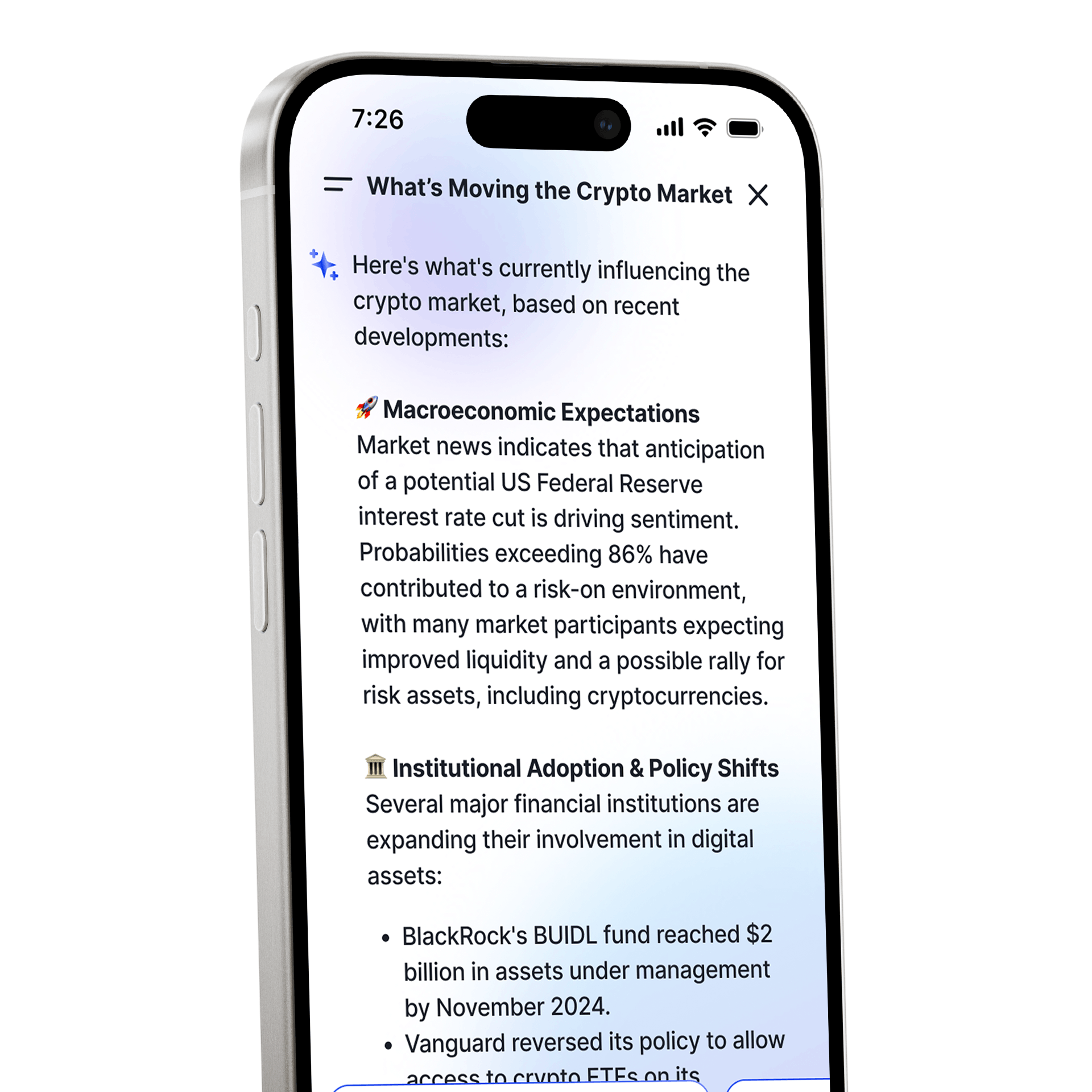
CoinJar AI
CoinJar AI understands your portfolio, tracks the market, and gives you insights that matter. Instead of searching for answers, simply ask a question to get the specific information you need.
Learn moreCoinJar AI
CoinJar AI understands your portfolio, tracks the market, and gives you insights that matter. Instead of searching for answers, simply ask a question to get the specific information you need.
Learn moreBuying, selling, and holding cryptocurrencies is subject to high market risk. The volatile and unpredictable nature of the price of cryptocurrencies may result in a significant loss. CoinJar, inc. is not responsible for any loss that you may incur from price fluctuations when you buy, sell, or hold cryptocurrencies. CoinJar, Inc. does not provide any investment, tax or legal advice; before making the decision to buy, sell or hold any cryptocurrencies, you should conduct your own due diligence and consult your financial, tax and/or legal advisor.
It is your responsibility to determine whether any investment, investment strategy or related transaction is appropriate for you according to your personal investment objectives, financial circumstances, and risk tolerance. Enter into a transaction only if you fully understand its nature, the contractual relationship into which you are entering, all relevant terms and conditions, and the nature and extent of your exposure to loss. Past performance is not a reliable indicator of future results. Geographic restrictions may apply. CoinJar does not endorse the content of, and cannot guarantee or verify the safety of any third party websites. Visit these websites at your own risk.

CoinJar
Get the app.