
Buy Sky
SKYPast performance is not indicative of future results. All prices are sourced from CoinJar Indices.
What is Sky?
SKY is the governance token of Sky, the decentralized finance protocol formerly known as MakerDAO. It is not a stablecoin. Sky issues the stablecoins USDS and DAI, and SKY is the volatile token that governs the system and absorbs its losses.
That distinction is the most important thing on this page. Buying SKY is not a way to hold a dollar equivalent. It is a position in the governance and risk-bearing layer of a lending business, and it behaves accordingly. Our guide to Maker, MKR, DAI and USDS covers the rebrand in detail, and our guide to decentralized finance explains the category.
From MakerDAO to Sky
MakerDAO was founded in 2015 by Rune Christensen and became one of the foundational projects in decentralized finance. Its product was DAI, a stablecoin issued against crypto collateral locked in smart contracts rather than against dollars held at a bank. MKR was its governance token.
In August 2024 the project announced a rebrand to Sky, with new tokens launching the following month. MKR became SKY and DAI was joined by USDS, a new stablecoin. The reception was mixed enough that within two months the founder was publicly floating a return to the Maker brand. That reversal never happened. The project still operates as Sky, and SKY is the sole governance token.
It is worth naming that sequence plainly, because it tells you something about how decisions get made here. A brand change of that scale, reversed in public within weeks of launch and then not reversed after all, is a governance signal as much as a marketing one.
If you still hold MKR, this part matters
MKR converts to SKY at a rate of 1 MKR to 24,000 SKY. Governance moved to SKY, so MKR no longer votes.
Conversion was originally free and worked in both directions. Governance has since approved a Delayed Upgrade Penalty, which began at one percent in September 2025 and increases by one percentage point every three months. In other words, the longer MKR sits unconverted, the less SKY it produces, on a schedule that has been running for some time. The intended end state is a one way conversion rather than a two way one.
The official upgrade documentation is the authoritative source, and because the penalty steps up on a timetable, you should check the live rate before converting rather than relying on any figure quoted in an article.
Two practical warnings. Conversion of MKR held in self custody is not automatic and nobody does it for you. And a token conversion is one of the most reliably exploited settings in crypto, so treat any site offering to convert MKR for you with suspicion unless you reached it through Sky's own domain.
What SKY actually is
A governance token. SKY holders vote on protocol parameters, collateral types, spending and upgrades, either directly or by delegating. Voting happens through Sky's governance portal. A backstop. This is the part people miss. If Sky's loan book takes losses that exceed its reserves, the system's remedy is to issue new SKY and sell it to cover the shortfall. SKY holders are, in effect, the capital of last resort. The upside of that role is a claim on the protocol's success. The downside is dilution precisely when things are going badly. Not a dividend. Holding SKY does not entitle you to interest, revenue share or a distribution. Value returns to holders, when they happen, come through governance-approved buybacks and burns.
Where Sky's money comes from
Sky is a lending business. It earns from interest on loans issued against collateral, and from the yield on the reserves backing its stablecoins.
The composition of that backing has changed substantially since the early days. A large share now sits in off-chain, real world assets, including tokenized money market funds holding short term US Treasury bills, run by managers including BlackRock and Janus Henderson. Sky targets stablecoin reserves in a band of roughly twenty to thirty percent of total assets.
This is the strategic trade at the heart of Sky, and it is worth understanding before you buy the token. The original pitch for MakerDAO was a stablecoin backed by crypto, censorship resistant and outside the traditional system. What Sky runs today is substantially a fund holding government debt through regulated intermediaries, wrapped in on-chain governance. That is safer in credit terms and much more exposed in regulatory and counterparty terms.
Surplus earnings above what is retained can be used to buy back and burn SKY. That program is a governance parameter, not a protocol guarantee. Governance has cut it sharply on at least one occasion in order to rebuild reserves, and it can do so again. Any calculation that treats the buyback as a fixed return is assuming something the system does not promise.
USDS, DAI and the freeze question
Sky issues two stablecoins. DAI still exists and still functions. USDS is the newer one, and it is the focus of development.
There is a meaningful technical difference between them that rarely makes it into consumer coverage. The DAI contract is not upgradeable and has no freeze function, so Sky cannot blacklist an address or stop a DAI transfer. The USDS contract is upgradeable and contains the hooks to support a freeze capability, which governance could activate by vote.
Whether that is progress or regression depends entirely on what you wanted from the product. For an issuer trying to work with regulated institutions and satisfy sanctions obligations, it is a necessity. For anyone who chose DAI specifically because nobody could freeze it, it is the thing they were avoiding. Our guide to stablecoins covers how the different models compare.
None of this applies to SKY itself. SKY is a governance token, not a stablecoin, and it is not the subject of that mechanism.
Spark, Grove and the wider Sky ecosystem
Sky's structure devolves activity into semi-independent units, originally called Stars and now generally referred to as agents. Each runs its own strategy, and some issue their own tokens.
Spark is the most significant. It is a lending protocol built on Sky's stablecoins, it grew to be one of the larger protocols in decentralized finance, and it launched its own SPK token by airdrop, with claiming closed at the end of 2025. Grove is another agent within the ecosystem.
The relationship runs both ways. Sky capitalizes these units, and it can also reclaim assets from them if the core system needs the capital. As a SKY holder you have no direct claim on any agent's token or revenue, and holding SKY did not entitle you to the SPK airdrop.
What a credit rating agency said about Sky
In August 2025 S&P Global Ratings assigned Sky Protocol an issuer credit rating of B minus with a stable outlook. That sits well inside speculative territory.
It is genuinely unusual for a decentralized protocol to be rated at all, and Sky should get some credit for submitting to the exercise. The reasoning is what makes it useful reading. S&P credited Sky with a track record of limited losses on its crypto-backed lending since 2020, and with serious smart contract auditing and bug bounty practice.
Against that it cited high depositor concentration, governance it described as highly centralized and transitional, weak risk-adjusted capitalization, regulatory uncertainty around decentralized finance, revenue that moves with crypto market cycles, and key-person risk attached to the founder.
That last one deserves attention. A rating agency naming founder dependency as a rating constraint on a protocol whose entire premise is decentralized governance is a substantive criticism, not a technicality.
What are the risks of holding SKY?
SKY absorbs the losses. If the protocol's collateral fails or its loan book takes a hit large enough to exhaust reserves, the designed response is to issue and sell more SKY. Holders are diluted exactly when the position is worst. No entitlement to revenue. Buybacks and burns are governance decisions that can be reduced or stopped, and have been cut sharply before. Real world asset and counterparty exposure. A substantial share of the backing sits off-chain with regulated intermediaries. That introduces custody, legal and counterparty risk that on-chain collateral does not have, and it is not something a holder can independently verify by looking at a blockchain. Governance concentration and key-person risk. Both critics and S&P have flagged that decision making is more centralized than the structure suggests, and that the project remains closely identified with its founder. Regulatory exposure. A protocol issuing dollar stablecoins backed largely by government debt sits directly in the path of stablecoin regulation in multiple jurisdictions. Smart contract risk. Sky is a large, complex and much-forked codebase. Auditing reduces this risk. It does not remove it. Complexity as a risk in itself. Between SKY, USDS, DAI, sUSDS, agent tokens and multiple staking and savings products, this is a difficult system to hold an accurate mental model of, and confusion is how people lose money. Brand and identity instability. The rebrand, the near-reversal and the ongoing token migration have all created lasting ambiguity about what this asset is called, which makes holders easier targets for fraudulent migration and conversion sites. Competition. Sky competes with centralized stablecoin issuers with far greater distribution, and with newer yield-bearing stablecoin protocols. Volatility. SKY is not a stablecoin and its value moves sharply. No federal protection. Crypto assets are not covered by FDIC deposit insurance or SIPC protection. You should be prepared to lose everything you put in.
Buying SKY with US dollars on CoinJar
CoinJar has operated since 2013 and lists SKY against US dollars, so you can buy, sell and hold it without converting through another cryptocurrency first. Current charges are on our fees page, and live US dollar rates are on our cryptocurrency prices page.
CoinJar, Inc. is registered with FinCEN as a money services business and holds money transmitter licenses in a growing number of states, NMLS ID 2492913. You can check whether CoinJar operates in your state before signing up. Registration and licensing cover how CoinJar operates as a business. They are not an endorsement of any crypto asset listed on the platform.
How is SKY taxed in the US?
The IRS treats crypto assets such as SKY as property. A taxable disposal can occur when you sell SKY for US dollars, exchange it for another crypto asset, spend it or give it away, and gains or losses are generally reported on your federal return.
The IRS sets out its approach on its digital assets page. Our guide to pulling a transaction history for tax reporting covers the practical side. This is general information, not tax advice. Consider speaking to a qualified tax professional about your circumstances.
Bank transfer (ACH and wire), or crypto?
Buy Sky instantly with your bank account via ACH or deposit with wire transfer. Easily buy with ACH, wire cash to your account, or swap one cryptocurrency for another in a single click.


How to buy Sky with CoinJar
Start your cryptocurrency portfolio with CoinJar by following these simple steps.
Download the app
Get the CoinJar app on iOS or Android.
Create an account
Sign up and verify your ID – it only takes a couple of minutes.
Make a purchase
Buy Sky and more than 60 other cryptos using ACH or wire transfer.
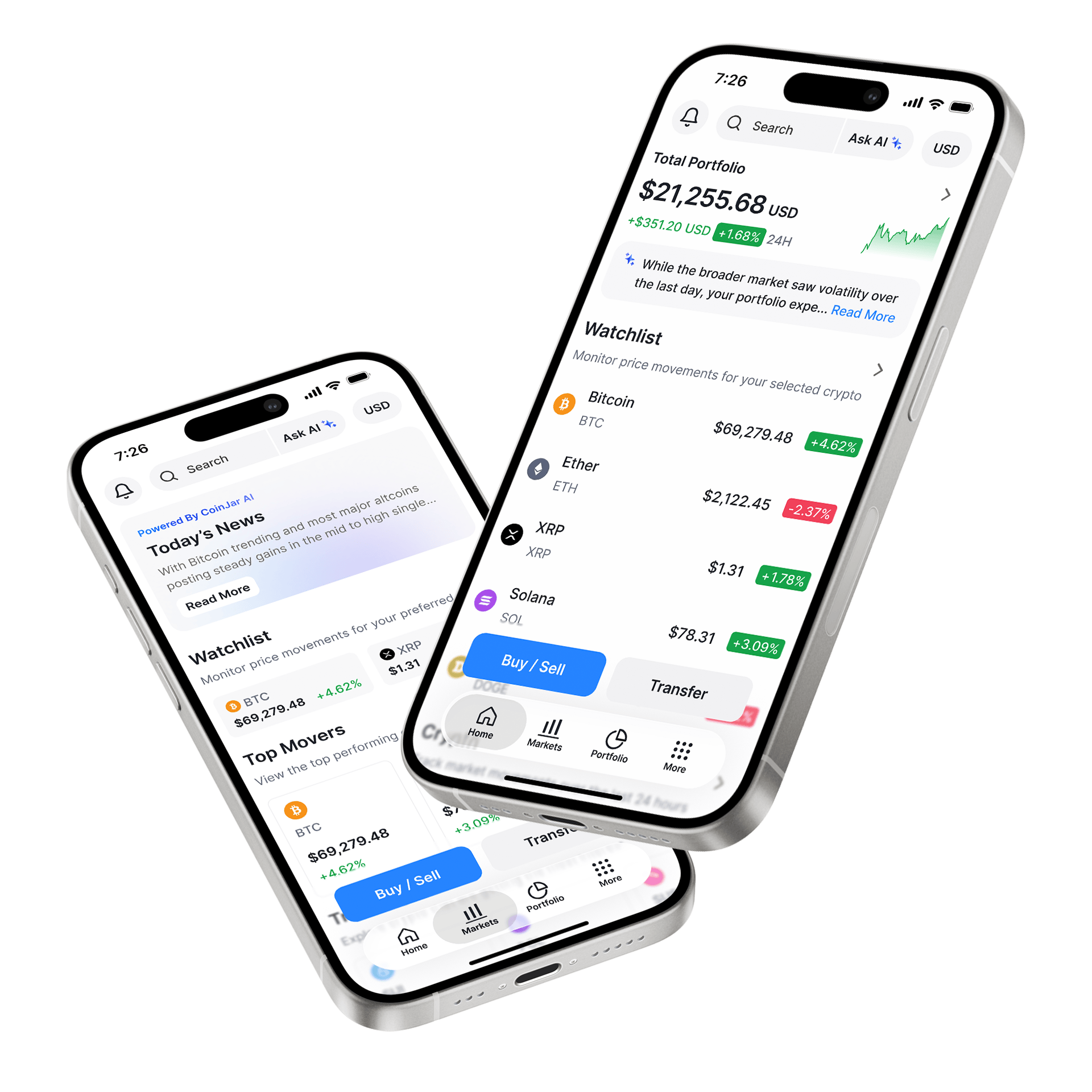
CoinJar App
Buy, sell and send your crypto with the favorite cryptocurrency app in the US.
Get the CoinJar appCoinJar App
Buy, sell and send your crypto with the favorite cryptocurrency app in the US.
Get the CoinJar app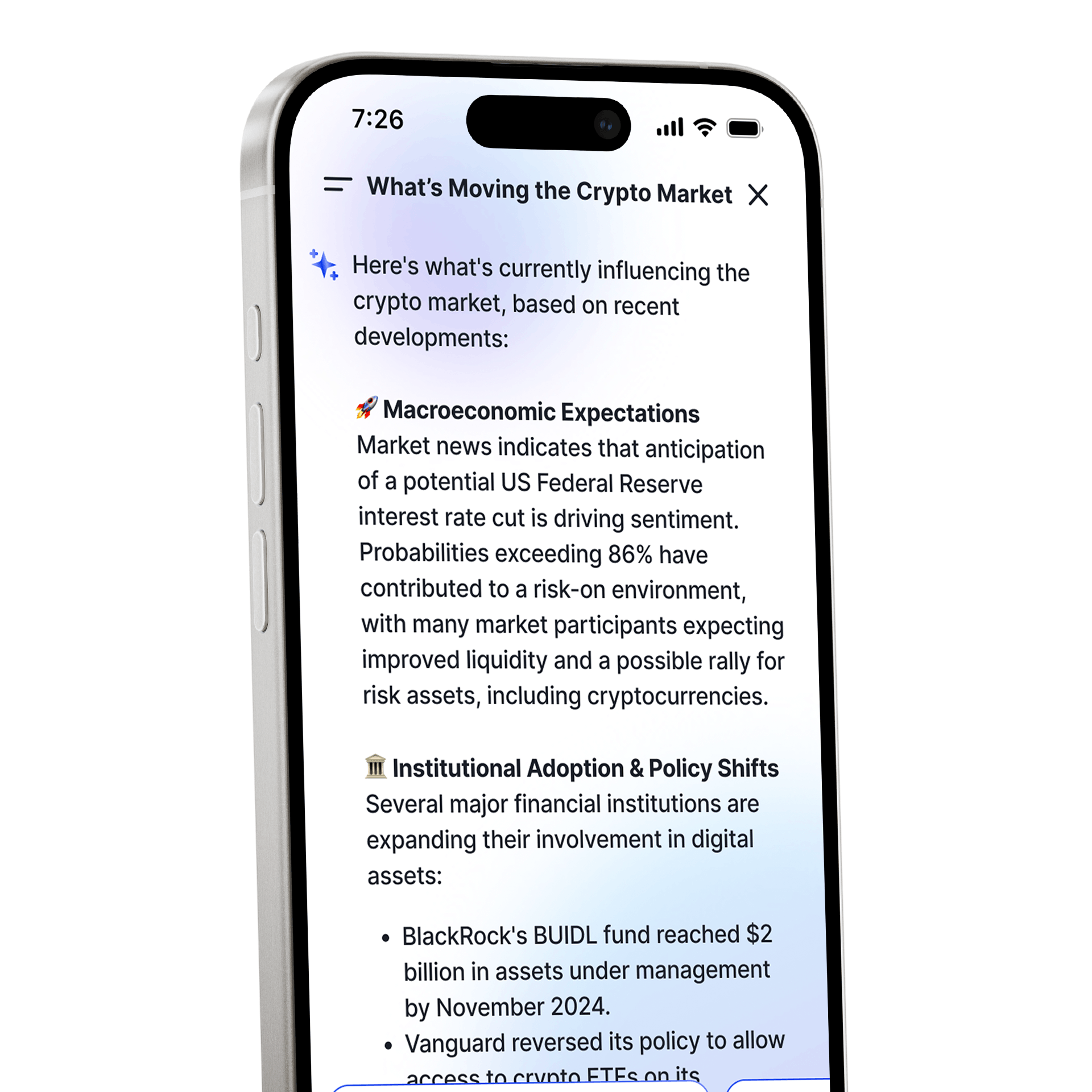
CoinJar AI
CoinJar AI understands your portfolio, tracks the market, and gives you insights that matter. Instead of searching for answers, simply ask a question to get the specific information you need.
Learn moreCoinJar AI
CoinJar AI understands your portfolio, tracks the market, and gives you insights that matter. Instead of searching for answers, simply ask a question to get the specific information you need.
Learn moreBuying, selling, and holding cryptocurrencies is subject to high market risk. The volatile and unpredictable nature of the price of cryptocurrencies may result in a significant loss. CoinJar, inc. is not responsible for any loss that you may incur from price fluctuations when you buy, sell, or hold cryptocurrencies. CoinJar, Inc. does not provide any investment, tax or legal advice; before making the decision to buy, sell or hold any cryptocurrencies, you should conduct your own due diligence and consult your financial, tax and/or legal advisor.
It is your responsibility to determine whether any investment, investment strategy or related transaction is appropriate for you according to your personal investment objectives, financial circumstances, and risk tolerance. Enter into a transaction only if you fully understand its nature, the contractual relationship into which you are entering, all relevant terms and conditions, and the nature and extent of your exposure to loss. Past performance is not a reliable indicator of future results. Geographic restrictions may apply. CoinJar does not endorse the content of, and cannot guarantee or verify the safety of any third party websites. Visit these websites at your own risk.

CoinJar
Get the app.